

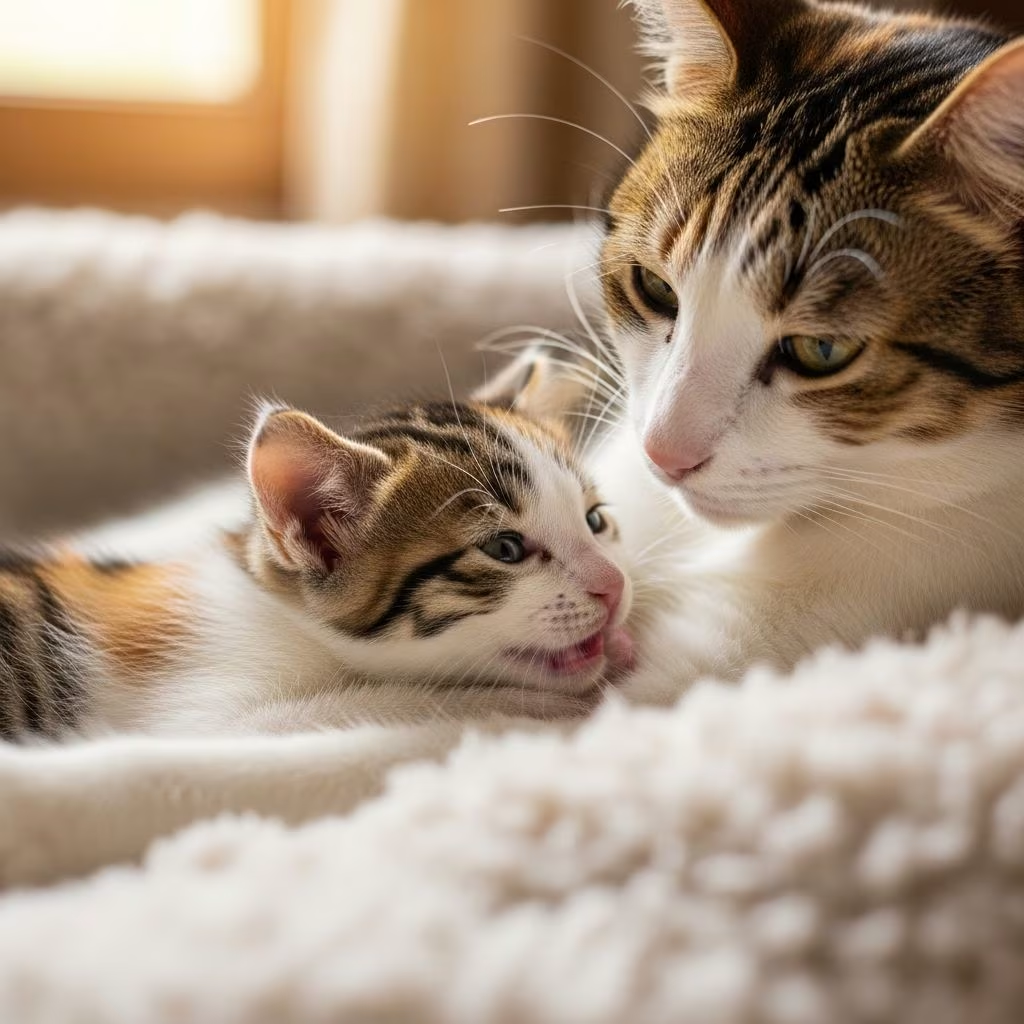
Kittens typically nurse from their mother for **6 to 8 weeks**, though some may continue intermittently up to 10 weeks. This period provides essential nutrition, warmth, and antibodies from colostrum to build their immune systems. Understanding these stages helps caregivers ensure healthy development, whether nursing from mom or bottle-feeding orphans.
Why Nursing Matters in Early Kitten Development
Nursing is crucial beyond nutrition. Mother’s milk offers high-calorie sustenance and colostrum, rich in antibodies that protect against diseases. Warmth from nursing prevents hypothermia in newborns, who cannot regulate body temperature. For orphaned kittens, kitten milk replacer (KMR) mimics this, but professional guidance is key. Prolonged nursing past 10 weeks can hinder growth if solid foods aren’t introduced, as older kittens need diverse nutrients.
How Long Do Kittens Typically Nurse?
The standard nursing duration is **6-8 weeks**, with full weaning by 8-10 weeks. Mother cats naturally reduce sessions as kittens explore solids around 4 weeks. Some kittens with mom may nurse occasionally longer if eating well, but exclusive nursing beyond 8 weeks risks nutritional gaps. Orphaned kittens follow similar timelines via gradual bottle-to-solid transitions.
- Typical timeline: Birth to 4 weeks: Exclusive nursing.
- 4-6 weeks: Introduce softened solids; nursing decreases.
- 6-8 weeks: Mostly solids; minimal nursing.
- 8-10 weeks: Fully weaned, ready for adoption and vaccines.
Stages of Kitten Nursing and Growth
Birth to Two Weeks: Newborn Dependence
Newborn kittens are blind, deaf, and helpless, instinctively finding nipples within an hour of birth. They rely solely on mother’s milk for survival.
- Feeding frequency: Every 1-2 hours, day and night (up to 45 minutes per session).
- Nutrition: Colostrum then milk; high calories, antibodies.
- Behavior: Sleep, nurse, minimal movement.
- Growth monitoring: Double birth weight by week 2; weigh daily.
Bottle-feeders must mimic this schedule. Cold kittens won’t nurse—keep at 85-90°F.
Two to Four Weeks: Emerging Independence
Eyes open around week 2; kittens become alert, kneading to stimulate milk. Baby teeth erupt by week 3, signaling weaning prep.
- Feeding frequency: Every 2-3 hours.
- Behavior: Active nursing initiation; brief explorations.
- Development: Triple/quadruple birth weight by week 3-4.
- Health check: Steady weight gain essential.
Still no solids; milk remains primary.
Four to Six Weeks: Weaning Begins
Kittens show weaning readiness: mobility, play, teeth. Introduce wet kitten food mixed with KMR.
- Feeding: 3-4 small meals daily of softened food; nurse less.
- Behavior: Less mom time; self-feeding attempts.
- Mother’s role: Weans naturally by refusing or reducing milk.
By 6 weeks, solids dominate.
Six to Eight Weeks: Transition to Solids
Full independence nears. Kittens eat wet/dry kitten food confidently, drink water.
- Nursing: Occasional only.
- Diet: Kitten-specific food for growth nutrients.
- Health: Vet visit for vaccines, deworming as maternal antibodies fade.
Ready for new homes post-8 weeks.
When Do Kittens Typically Stop Nursing?
Most stop between **6-8 weeks**, fully weaned by 8-10. Variations depend on health, litter size, mom availability. Monitor: Active, gaining weight, interested in food signals completion. Prolonged nursing okay if supplemental solids; discourage exclusive past 10 weeks.
Signs Kittens Are Ready to Wean
- Increased mobility and play.
- Teeth fully in (canine by 4 weeks).
- Rejecting milk for food.
- Weight gain plateaus on milk alone.
Weaning Kittens: Process and Tips
Weaning is gradual, 4-8 weeks. Mom handles naturally; caregivers replicate.
| Week | Nursing | Solids Introduction | Tips |
|---|---|---|---|
| 4 weeks | Primary | Soaked kibble/KMR slurry | Offer small amounts; no force. |
| 5-6 weeks | Decreasing | Wet food, gruel | 3-4 meals/day. |
| 7-8 weeks | Minimal | Full wet/dry kitten food | Monitor stool, energy. |
For orphans: Reduce formula gradually; use shallow dishes. Separate from mom? Keep litter together till 8 weeks.
Preventing Maternal Issues
Milk reduction prevents mastitis (swollen glands). If engorged, vet care needed. Cold compresses, hand-milking help.
Caring for Orphaned or Bottle-Fed Kittens
Follow same timeline with KMR, not cow milk (dangerous). Feed every 2-3 hours initially; warm formula to body temp. Stimulate elimination till 3 weeks. Socialize 4-8 weeks. Vet consult vital for weight/formula amounts.
Nutrition After Weaning
Switch to AAFCO-approved kitten food: high protein/fat for growth. Wet aids hydration; dry for teeth. Fresh water always.
Common Challenges and Health Monitoring
Watch for failure-to-thrive: lethargy, poor gain. Vaccinate at 8 weeks. Deworm routinely.
- Red flags: Diarrhea, refusal to eat, cold extremities.
Frequently Asked Questions (FAQs)
Can kittens nurse too long?
Yes, beyond 10 weeks exclusive nursing stunts growth. Encourage solids.
How often do newborn kittens nurse?
Every 1-2 hours, 24/7.
When can kittens leave their mother?
Minimum 8 weeks for health/socialization.
What if mom rejects kittens?
Bottle-feed; seek vet/surrogate.
How to wean bottle-fed kittens?
Gradual formula reduction from 4 weeks; solids by 5-6.
Bottom Line
Kittens nurse 6-8 weeks for optimal start. Gradual weaning ensures nutrition, immunity, independence. Foster/owners: Monitor growth, vet early. Healthy weaning builds resilient cats.
References
- How Long Do Kittens Nurse? Stages of Growth Explained — Kinship. 2023. https://www.kinship.com/cat-health/how-long-do-kittens-nurse
- How Long Do Kittens Nurse — Dutch. 2024. https://www.dutch.com/blogs/cats/how-long-do-kittens-nurse
- Weaning Kittens: When and How To Introduce Solid Food — PetMD. 2024. https://www.petmd.com/cat/general-health/weaning-kittens
- Caring for young kittens and their moms — Animal Humane Society. 2023. https://www.animalhumanesociety.org/resource/caring-young-kittens-and-their-moms
- Caring for Kittens from Birth to Eight Weeks — University of Wisconsin Shelter Medicine Program. 2024. https://sheltermedicine.wisc.edu/library/guidebooks/guide-to-raising-underage-kittens/caring-for-kittens-from-birth-to-eight-weeks



