

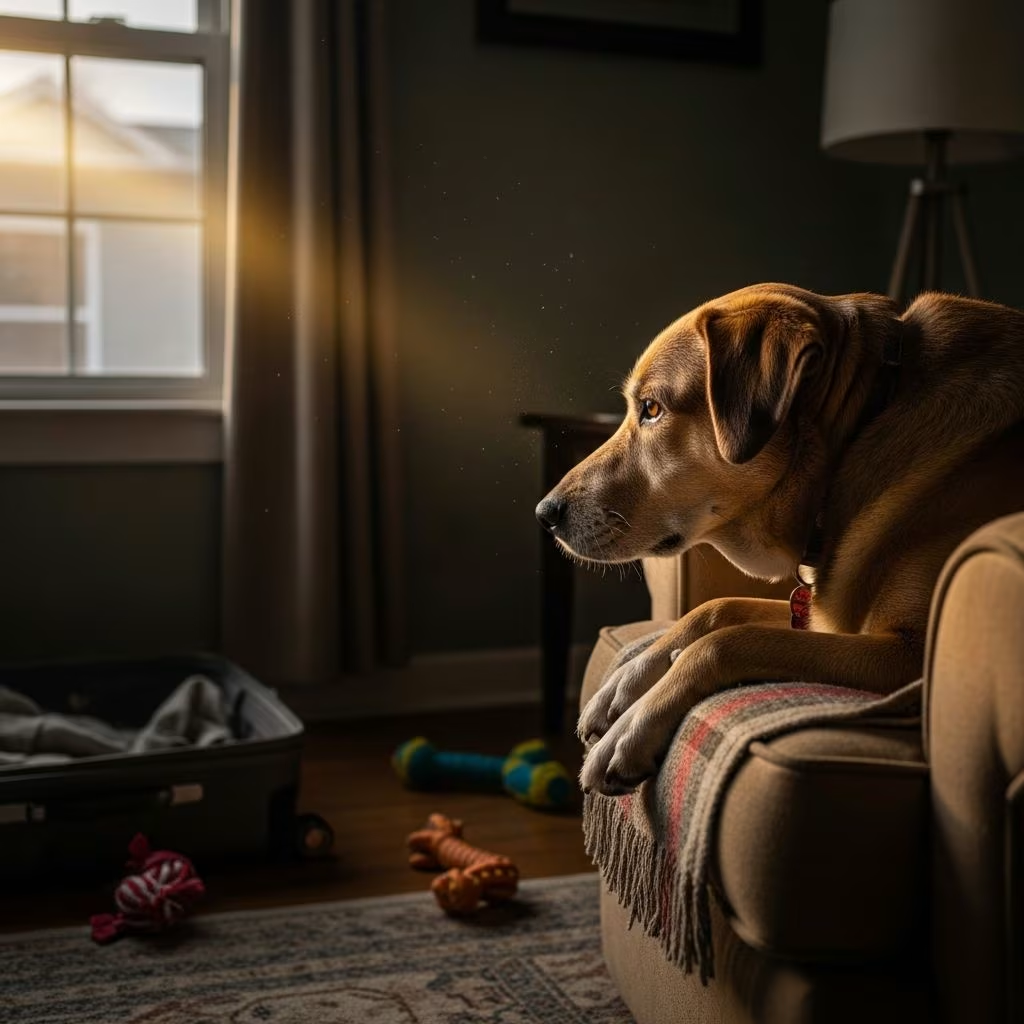
Determining how long you can safely leave your dog alone depends on factors like age, breed, training, and individual temperament. Puppies need frequent check-ins, while adult dogs can handle longer periods with proper preparation. Research shows that extended isolation can lead to stress behaviors like vocalization, pacing, and destruction, impacting welfare.
How Long Can You Leave a Puppy Alone?
Puppies have small bladders and high energy levels, limiting their alone time. Generally, they can hold their bladder for one hour per month of age, plus one—up to a maximum of 6-8 hours for adults. For example, an 8-week-old puppy can only manage 2-3 hours.
- 8-10 weeks: 1-2 hours max. Frequent potty breaks prevent accidents.
- 3 months: 3 hours. Introduce crate training gradually.
- 6 months: 4-6 hours. Incorporate mental stimulation toys.
Studies indicate puppies left alone for 1.5 hours show active behavior initially but become passive, lying down 77.4% of the time, signaling potential boredom or stress.
How Long Can You Leave an Adult Dog Alone?
Adult dogs (1-7 years) tolerate 4-8 hours alone, but not exceeding 8-10 hours daily. A Swedish study found dogs left 0.5, 2, or 4 hours showed no distress during absence but increased greeting intensity (tail wagging, lip licking) after longer separations, indicating arousal buildup.
- Healthy adults: 6-8 hours. Ideal for workdays with midday breaks.
- Senior dogs: 4-6 hours. Account for mobility issues and incontinence.
- High-energy breeds: Shorter periods; provide exercise before leaving.
During COVID-19, reduced alone time led to clinginess and excitement upon returns, raising SRB risks when routines resumed.
Signs Your Dog Can’t Be Left Alone
Monitor for separation-related behaviors (SRBs) like barking, howling, pacing, destruction, or toileting, signaling negative emotional states. Other indicators include:
- Excessive panting, drooling, or trembling by the door.
- Destructive chewing not linked to teething.
- Escalated greetings: intense jumping, whining.
Dogs waiting calmly by the door may just be excited, not anxious—relaxed body language (no pacing, ears perked) differentiates this.
How to Safely Leave Your Dog Alone: Step-by-Step Training
Gradual desensitization prevents anxiety. Start with short absences and build up.
- Build positive associations: Leave treats or toys only during departures.
- Practice short exits: 1-5 minutes, ignore excited greetings.
- Extend gradually: To 30 minutes, then hours over weeks.
- Use calming aids: Puzzle toys, frozen Kongs for distraction.
- Video monitor: Apps like Furbo observe behavior remotely.
Research supports structured alone time training to ease transitions without stress.
Dog Breeds That Can (and Can’t) Be Left Alone
| Breed Type | Alone Time Tolerance | Examples | Notes |
|---|---|---|---|
| Independent | 8+ hours | Basenji, Shiba Inu, Greyhound | Low clinginess, self-entertaining. |
| Velcro Dogs | 2-4 hours | Labrador, Golden Retriever, Vizsla | High attachment, prone to SRBs. |
| Working Breeds | 4-6 hours | German Shepherd, Border Collie | Need mental tasks to avoid boredom. |
| Seniors/Smalls | 3-5 hours | Chihuahua, Bulldog | Bladder limits, health concerns. |
Breeds with strong pack instincts struggle more; match lifestyle to breed traits.
What Do Dogs Do When Left Alone?
Dogs’ alone time activities vary: some nap 83% of the time if with companions, others pace or watch windows. Common behaviors:
- Sleeping or relaxing by the door (non-anxious).
- Window watching birds/squirrels calmly.
- Pacing or ‘naughty play’ like counter surfing (excitement, not always distress).
Anxious dogs destroy or vocalize; relaxed ones cycle sleep-wake cycles.
Alternatives to Leaving Your Dog Alone All Day
- Dog walkers/daycare: Midday breaks for exercise/socialization.
- Doggy cams: Interactive treats remotely.
- Companion dog: Pairs reduce stress; one study showed 83% lying time.
- Pet sitters: Scheduled visits.
These options mitigate SRB risks, especially post-pandemic.
Can Dogs Tell Time When Left Alone?
Dogs anticipate returns based on routines, showing heightened activity before longer absences end (e.g., physical activity spikes before 2-4 hour reunions). They don’t grasp clocks but learn patterns, leading to excited greetings after extended times.
Separation Anxiety in Dogs: Causes and Prevention
SRBs stem from hyper-attachment, changes like pandemics reducing alone practice. Prevent with early training, avoiding dramatic departures/returns. Lip licking/body shaking post-separation may signal stress or reinstatement.
Frequently Asked Questions
Is it okay to leave my dog alone overnight?
No—dogs need bathroom breaks. Crate max 8 hours; use pet relief pads or sitters for longer.
How do I know if my dog has separation anxiety?
Look for destruction, vocalizing, pacing only when alone (confirm via camera). Excited but calm greetings are normal.
Can I leave my dog alone for 12 hours?
Rarely; only trained adults with breaks. Risks health/welfare issues.
What if my dog sleeps all day alone?
That’s fine if relaxed—no SRBs. Evening exercise balances it.
How to train a rescue dog left alone?
Start slower: micro-absences, counter-condition with treats. Patience key.
References
- The effect of time left alone at home on dog welfare — Rehn, T. & Keeling, L.J. Applied Animal Behaviour Science. 2011. https://slunik.slu.se/kursfiler/DO0031/40007.1213/The_effect_of_time_left_alone_at_home_on_dog_welfare.pdf
- Impact of Changes in Time Left Alone on Separation-Related Behaviours in Dogs — Konok, V. et al. Animals (PMC). 2022-02-16. https://pmc.ncbi.nlm.nih.gov/articles/PMC8868415/
- What Do Our Dogs Actually Do When We Leave Them Alone? — Kinship. N/A. https://www.kinship.com/dog-behavior/what-do-dogs-do-when-we-leave-them-alone



