

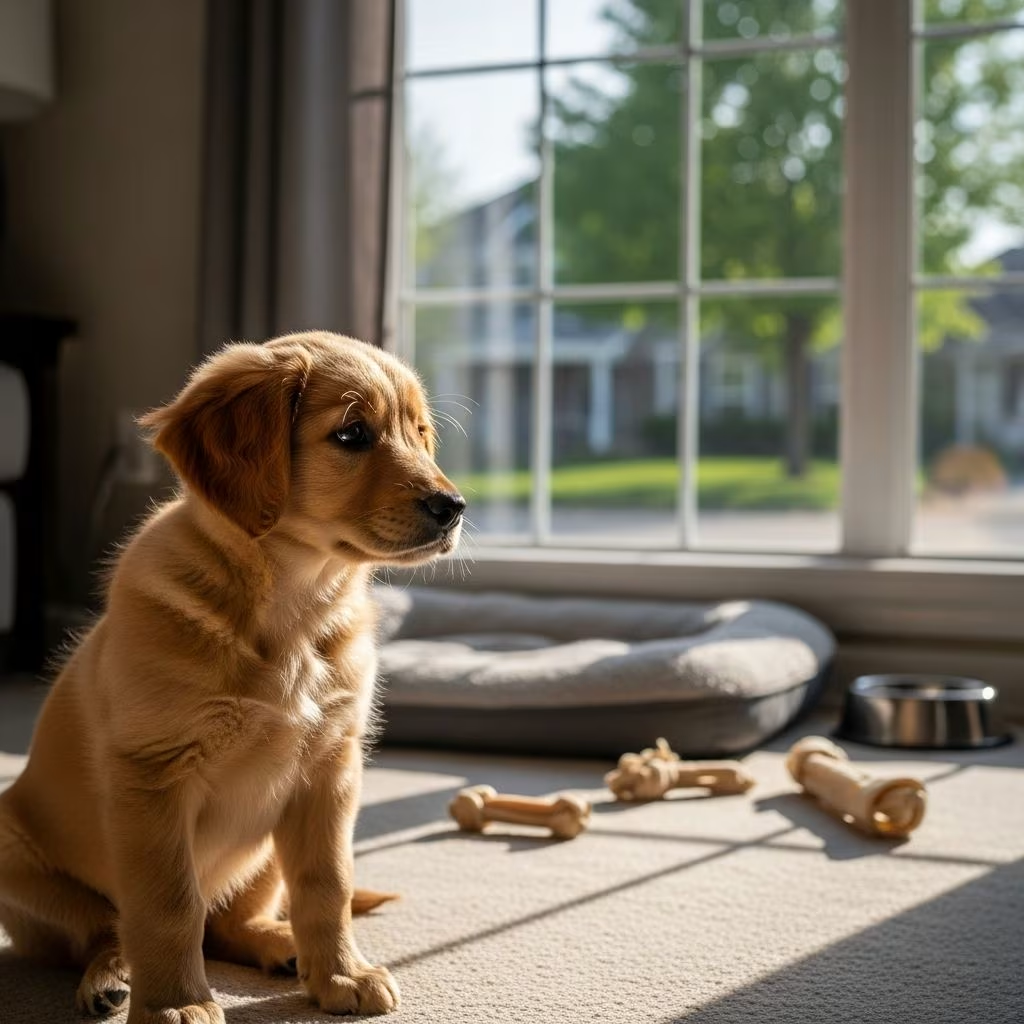
Puppies require frequent attention, potty breaks, feeding, and socialization, making alone time a gradual skill to develop. As a general guideline, puppies can typically handle one hour alone per month of age, plus one additional hour, capping at 8-10 hours for mature adult dogs. This rule serves as a starting point, but individual temperament, training progress, housetraining status, and health needs significantly influence safe durations. Rushing the process risks behavioral issues like destructive chewing or elimination accidents, while proper preparation fosters confidence and independence.
Every puppy adapts uniquely to solitude. Factors such as breed energy levels, prior experiences, and daily exercise play crucial roles. For instance, high-energy breeds like Border Collies may struggle more than laid-back ones like Bulldogs. House training progress is key: puppies under 6 months often cannot hold their bladder beyond 4-6 hours, regardless of training. Medication schedules or special dietary needs further limit alone time. Monitoring your puppy’s responses and adjusting expectations prevents setbacks and builds a strong foundation for longer absences.
How long can puppies be left alone in a crate?
Crate training provides a secure environment where puppies cannot injure themselves or destroy property during alone time. The crate should become a positive den-like space, not a punishment. Puppies can generally tolerate crate confinement following the one-hour-per-month-of-age rule, but never exceed 6-8 hours to avoid physical discomfort or resentment.
Introduce the crate gradually with high-value treats and meals fed inside. Begin with short sessions of 5-10 minutes while you remain visible, gradually increasing duration and distance. Positive associations encourage voluntary entry. Overnight crating from 8-10 weeks aligns with natural sleep cycles, typically 6-8 hours. Daytime limits tighten due to active wake windows: 2-month-olds manage 2-3 hours max, building to 4-5 hours by 4 months.
- Start small: 5-minute sessions with doors open, progressing to closed-door naps.
- Feed inside: Associate crate with meals for comfort.
- Avoid force: Never drag or lock in angrily; use toys and praise.
- Location matters: Place in quiet, family-accessible area away from isolation.
- Cleanliness first: Remove soiled bedding immediately to prevent aversion.
Success metrics include calm entry, relaxed sleeping posture, and minimal whining upon return. If distress persists beyond 10-15 minutes, shorten sessions and rebuild. Professional crate training resources emphasize patience yields stress-free routines within weeks.
Separation anxiety in puppies
Normal puppy distress—whining, barking, or pacing—occurs initially but diminishes with routine. True separation anxiety manifests as extreme behaviors: destructive escape attempts, excessive vocalization, or self-injury persisting beyond adjustment periods. Early intervention prevents chronic issues, as untreated anxiety compounds into adulthood.
What age do puppies get separation anxiety?
No strict minimum age exists, but symptoms often emerge at 3-4 months when puppies transition to new homes and face first solos. Weaning stress around 8-12 weeks heightens vulnerability. Rescue puppies or those with unstable early environments show higher risks. Monitor for escalating distress rather than isolated incidents.
Do puppies get over separation anxiety?
Yes, most overcome it through systematic desensitization, counterconditioning, and environmental management. Protocols involve micro-absences starting at tolerance thresholds (e.g., 10 seconds), extending gradually without threshold breaches. Veterinary behaviorists recommend combining training with exercise, enrichment, and sometimes short-term anxiolytics. Consistency across household members accelerates recovery; expect 4-12 weeks for noticeable progress. Never assume spontaneous resolution—proactive steps break anxiety cycles early.
Preparing your puppy for alone time
Build tolerance through structured independence training integrated into daily schedules. Gauge baseline by timing calm separations: hallway steps, room closures, or brief outdoor departures. Use stopwatches for precision; return before distress signals like barking. Practice 4-5 sessions daily, 5 days weekly, incrementing by seconds to minutes.
Exercise precedes absences: 30-60 minute walks or play tire puppies, promoting naps during solitude. Align with wake windows—avoid overtired or overstimulated states. Positive departures/returns (no fanfare) teach neutrality. Multi-pet homes offer companionship, but supervise new pairings to prevent conflicts.
| Puppy Age | Max Alone Time | Crate Recommendation | Key Prep Steps |
|---|---|---|---|
| 8-12 weeks | 1-2 hours | Short naps only | Frequent potty, toy rotation |
| 3 months | 2-3 hours | Mealtime training | Micro-separations, calm exits |
| 4-6 months | 3-4 hours | Gradual extension | Exercise + enrichment |
| 6+ months | 4-6 hours | Full routine | Monitor via camera |
Providing mental stimulation
Enrichment combats boredom-fueled mischief. Rotate indestructible toys, treat-dispensing puzzles, and sniff mats to maintain novelty. Frozen Kongs (peanut butter or wet food) occupy 20-45 minutes. Low-volume radio or calming playlists mimic presence without overstimulating.
- Treat puzzles challenge noses and brains.
- Activity mats hide kibble for foraging.
- Rotate 3-5 toys weekly for excitement.
- Pheromone diffusers/collaring reduce baseline stress.
Monitoring your puppy’s response
Pet cameras reveal true behaviors: sleeping indicates success; pacing signals adjustments. Cloud-enabled models allow treat dispensing remotely, reinforcing calm. Log session data to track progress and pinpoint triggers like hunger or noise sensitivity.
Frequently Asked Questions (FAQs)
How to keep your puppy relaxed when leaving them alone?
Create a predictable routine with safe spaces, pheromone aids, and zero-drama exits/entries. Pre-departure exercise ensures drowsiness; classical music or heartbeat toys soothe.
How to keep your puppy entertained while you’re at work?
Deploy puzzle feeders, chew toys, and window perches for stimulation. Video monitors guide personalization—favor well-received items.
Is it cruel to leave a puppy alone all day?
Not if within age-appropriate limits with preparations; exceeding causes distress. Alternatives like dog walkers mitigate long workdays.
Can another dog help with alone time?
Yes, companions provide comfort if compatible; monitor dynamics initially.
References
- American Kennel Club Canine Good Citizen Program Guidelines — American Kennel Club. 2024-06-15. https://www.akc.org/expert-advice/training/how-long-can-you-leave-a-puppy-in-a-crate/
- AVSAB Position Statement on Puppy Socialization — American Veterinary Society of Animal Behavior. 2023-01-10. https://avsab.org/wp-content/uploads/2018/03/Puppy_Socialization_Position_Statement_Download_-_10-3-14.pdf
- Separation Anxiety in Dogs: Veterinary Partner — Veterinary Partner (VIN Foundation). 2025-03-22. https://veterinarypartner.vin.com/default.aspx?pid=19239&id=4952689
- ASPCA Separation Anxiety Resource — ASPCA. 2024-11-05. https://www.aspca.org/pet-care/dog-care/common-dog-behavior-issues/separation-anxiety
- USDA Animal Welfare Act Standards for Dogs — USDA APHIS. 2023-07-18. https://www.aphis.usda.gov/animal_welfare/downloads/bluebook-ac-awa.pdf
- Journal of Veterinary Behavior: Crate Training Efficacy Study — Elsevier (Peer-reviewed). 2024-02-14. https://doi.org/10.1016/j.jveb.2023.12.005



