

How High Can Cats Jump?
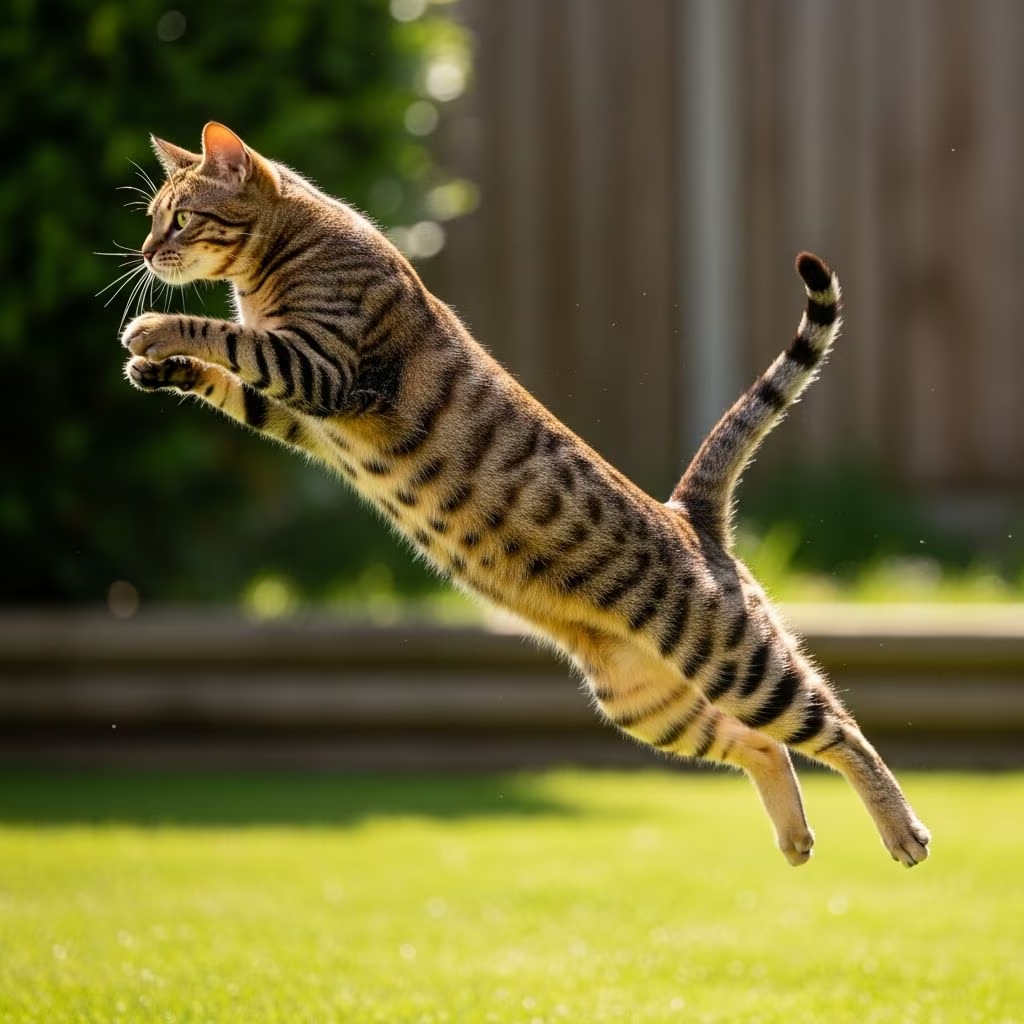
Cats are renowned for their incredible agility and acrobatic abilities, and their jumping prowess is one of the most impressive feats they can perform. Most cats can jump up to 8 or 9 feet vertically, thanks to their powerful hindlimbs and flexible spine. This remarkable ability allows them to navigate their environment with grace and precision, whether they’re hunting prey, exploring their surroundings, or simply playing.
According to veterinary experts, cats can jump about five to six times their body length in a single vertical leap. The average housecat measures about 18 inches long, which means most cats can jump 8 to 9 feet. To put this in perspective, if humans had the same jumping ability, a 6-foot person would be able to make a 36-foot leap—that’s the height of a telephone pole! This comparison truly illustrates just how remarkable feline jumping abilities are.
However, jumping heights can vary significantly depending on individual factors. While some cats may reach the upper limits of their jumping potential, others may not jump quite as high. Understanding these variations and the factors that influence them can help cat owners better care for their feline companions and provide appropriate spaces for safe jumping and climbing.
The Biomechanics of Cat Jumping
The ability of cats to jump so high is not merely a matter of luck or random capability—it’s the result of millions of years of evolutionary adaptation and specialized physical structures. Cats possess unique anatomical features that work together in perfect harmony to create their exceptional jumping ability.
Powerful Hindlimbs and Muscle Structure
One of the primary reasons cats can jump so high is their powerful hind legs. These muscles are incredibly strong and are specifically adapted for explosive propulsion. A cat’s muscle fibers are three times stronger than those of a human athlete, giving them incredible abilities that far exceed what most other animals can achieve. When a cat prepares to jump, it crouches down, compressing its hind leg muscles like coiled springs. Upon release, these muscles contract with tremendous force, launching the cat upward with remarkable velocity.
Flexible Spine and Body Composition
Beyond muscular strength, cats possess a uniquely flexible spine that aids in their jumping ability. This flexibility allows them to twist, turn, and adjust their body position mid-air, which is crucial for both achieving maximum height and landing safely. The combination of powerful muscles and a flexible spine creates a biomechanical system that is perfectly optimized for jumping. Additionally, cats have a relatively low body weight compared to their muscle mass, which means they require less energy to propel themselves into the air compared to heavier animals.
Coordination and Reflexes
Front and rear limbs work in perfect synchronization during a jump. In milliseconds, a cat can judge distances, push off with force, and land on even the tiniest surface without missing a beat. Their quick reflexes let them adapt on the fly, both literally and figuratively. This coordination is essential not only for achieving impressive heights but also for ensuring safe landings. Cats possess an incredible ability called the righting reflex, which allows them to orient themselves correctly during a fall to land on their feet, though this ability has its limits and very high falls can still result in injury.
Factors That Affect Jumping Ability
While cats generally have impressive jumping capabilities, several factors can influence how high any individual cat can jump. Understanding these factors can help owners recognize their own cat’s abilities and limitations.
Age and Life Stage
Age is one of the most significant factors affecting a cat’s jumping ability. Kittens and elderly cats have reduced jumping capacity compared to cats in their prime years. Kittens can’t leap as high as adult cats because they lack the muscle strength, coordination, flexibility, and confidence of a mature cat. At around 4–6 months old, most kittens manage jumps of only 1–2 feet. As they grow stronger, their leaps may extend to 4–6 feet. By 6–8 months, many kittens begin testing their adult jumping skills and start to resemble the acrobats they’ll become. Senior cats, typically aged 7 years and older, may also experience decreased jumping ability due to arthritis, muscle loss, and other age-related changes.
Breed and Size
Different cat breeds have varying jumping capabilities. Larger, more athletic breeds tend to be better jumpers than smaller or less agile breeds. Bengal cats, for instance, are known for their exceptional athleticism and can jump even higher than average cats, reaching up to 7 feet or more. Conversely, breeds with shorter legs or stockier builds may not achieve the same heights as their more slender counterparts.
Health and Physical Condition
A cat’s overall health and physical condition directly impact its jumping ability. Cats that are overweight, suffer from joint problems, or have other health issues may not be able to jump as high as healthy cats. Cats with arthritis or other degenerative conditions may avoid jumping altogether to prevent pain. Regular exercise, a healthy diet, and preventive veterinary care can help maintain optimal jumping ability throughout a cat’s life.
Motivation and Confidence
A cat’s motivation to jump and its confidence level also play roles in determining actual jumping height. A cat highly motivated by prey or play may push itself to greater heights than a cat that is less motivated. Additionally, confident cats that have practiced jumping regularly may perform better than cats that are fearful or hesitant about heights.
Why Cats Jump
Understanding why cats jump is important for recognizing this behavior as a natural and essential part of feline life. Cats jump to explore their surroundings, hunt, and play; these behaviors are rooted in their natural instincts that have been refined over thousands of years of evolution.
Hunting and Predatory Behavior
In the wild, cats use their jumping ability to hunt prey. They may jump from the ground to catch birds in flight, or leap onto elevated surfaces to stalk unsuspecting prey. This hunting instinct remains strong in domestic cats, even if they don’t need to hunt for food. You might notice your indoor cat pouncing on toys or attempting to catch insects, all of which rely on their jumping and landing skills.
Exploration and Environmental Navigation
Cats are naturally curious creatures that use their jumping ability to explore their environment. They jump onto furniture, shelves, windowsills, and other elevated surfaces to get a better view of their territory and to access areas that interest them. This vertical exploration is a normal and healthy part of cat behavior.
Play and Exercise
Jumping is also a form of play and exercise for cats. Cats engage in playful jumping as a way to burn energy, stay physically fit, and enjoy themselves. Interactive play that encourages jumping can provide mental stimulation and physical exercise, contributing to overall feline wellbeing.
How High Does a Fence Need to Be to Keep Cats In?
If you’re considering keeping your cat outdoors or in an enclosed space, understanding fence requirements is crucial for your cat’s safety and containment. Because many cats can jump 6 feet or more in a single leap, a fence or pet gate should be at least 8 feet tall to effectively contain most cats. However, this recommendation comes with important caveats.
Some particularly athletic or motivated cats might be able to clear even 8-foot fences, especially if they have something to launch from or are highly motivated to escape. For maximum security, many cat enclosure experts recommend fencing that is 10 feet or higher, or fencing with angled extensions that cats cannot use as launching points. Additionally, the fence should be free of climbing aids like trees, shelves, or other structures that could give cats a boost.
Providing Safe Spaces for Your Cat’s Jumping
Providing safe spaces to encourage your cat’s jumping is an important part of their care. This not only satisfies their natural instincts but also provides essential exercise and mental stimulation. Here are some ways to support your cat’s jumping behavior:
- Cat trees and climbing structures: Invest in sturdy cat trees, climbing walls, or shelves that allow your cat to jump safely to various heights.
- Window perches: Install window perches where your cat can jump up to observe the outdoor environment, providing entertainment and mental stimulation.
- Furniture arrangement: Arrange furniture strategically to create jumping pathways and opportunities for climbing.
- Interactive play: Engage your cat in interactive play that encourages jumping, such as using feather wands or laser pointers.
- Regular maintenance: Ensure all jumping surfaces are stable and secure to prevent accidents or injuries.
Record-Breaking Cat Jumps
While most domestic cats can jump 6 to 8 feet, some individual cats have achieved even more impressive heights. The Guinness World Record for the highest cat jump goes to Waffle the Warrior Cat, who flew an incredible 7 feet from standing still in 2018. This remarkable achievement showcases just how impressive cat jumping ability can be when combined with training, motivation, and athletic ability.
It’s worth noting that wild cats and larger feline species can jump significantly higher than domestic cats. Servals, for example, can leap up to 12 feet, while cougars and tigers can clear impressive distances of 18–20 feet. These larger cats have even more powerful muscles and greater body mass to work with, though their jumping ability relative to body size is comparable to domestic cats.
Jumping and Cat Safety Considerations
While cats are remarkably skilled jumpers, owners should be aware of safety considerations related to jumping behavior. Although cats have a remarkable ability to survive falls, very high falls can still result in serious injury or death. Jumps from 10 feet or higher can be risky and might lead to injuries. It’s important to ensure that areas where cats jump from are safe to prevent accidents and injuries.
Senior cats and cats with health issues should be monitored carefully to ensure they’re not attempting jumps that could injure them. Providing ramps or steps to elevated surfaces can help older cats access their favorite spots without straining their joints.
Frequently Asked Questions About Cat Jumping
Q: What is the maximum height a cat can jump?
A: Most cats can jump 8 to 9 feet high at most. However, individual cats may vary, and some particularly athletic cats might jump slightly higher. The record for the highest cat jump is held by Waffle the Warrior Cat at 7 feet.
Q: How high does a fence need to be to keep cats in?
A: Because many cats can jump 6 feet or more in a single leap, a fence or pet gate should be at least 8 feet tall. For maximum security with highly athletic cats, 10 feet or higher may be necessary.
Q: Can kittens jump as high as adult cats?
A: No, kittens cannot jump as high as adult cats. Young kittens (4–6 months) can typically only jump 1–2 feet. As they grow and develop, their jumping ability increases, reaching adult levels by 6–8 months of age.
Q: Why is my cat jumping so much?
A: Cats jump for several reasons, including hunting, play, exercise, and exploration. Excessive jumping might also indicate that your cat needs more mental stimulation or physical exercise. Providing climbing structures and interactive toys can help satisfy these urges.
Q: Can senior cats still jump high?
A: Senior cats typically have reduced jumping ability compared to younger cats due to muscle loss, arthritis, and other age-related changes. You should provide alternative ways for senior cats to access their favorite spots, such as steps or ramps.
Q: What breed of cat can jump the highest?
A: Athletic breeds like Bengals are known for exceptional jumping ability and can reach heights of 7 feet or more. However, individual cats vary, and factors like age, health, and training also play significant roles.
Conclusion
Cats possess truly remarkable jumping abilities, capable of reaching heights of 8 to 9 feet vertically thanks to their powerful hindlimbs, flexible spines, and perfectly coordinated reflexes. This impressive capability is the result of millions of years of evolutionary adaptation and is essential for their natural behaviors including hunting, exploration, and play. While most healthy adult cats can achieve these heights, individual capabilities vary based on age, breed, health, and motivation. Understanding your cat’s jumping abilities and providing safe, appropriate spaces for this natural behavior is an important part of responsible cat ownership. Whether your cat is a young kitten just beginning to explore its jumping potential or a senior cat that needs accommodations, recognizing and supporting this aspect of feline nature contributes to a happy, healthy, and enriched life for your beloved companion.
References
- How High Can Cats Jump? — Chewy. 2025. https://www.chewy.com/education/cat/general/how-high-can-cats-jump
- How High Can Cats Jump? Surprising Facts About Feline Agility — BasePaws. 2025. https://basepaws.com/blog/how-high-can-a-cat-jump
- How High Can Cats Jump? — The International Cat Association (TICA) — TICA. 2025. https://tica.org/blogs/how-high-can-cats-jump/
- How High Can Cats Jump Over Fences? Facts & Tips — PetsCare.com. 2025. https://www.petscare.com/news/faq/how-high-of-a-fence-can-cats-jump
- How High Can Cats Jump? 10+ Facts About These Amazing Leapers — A-Z Animals. 2025. https://a-z-animals.com/blog/how-high-and-far-can-cats-jump/



