

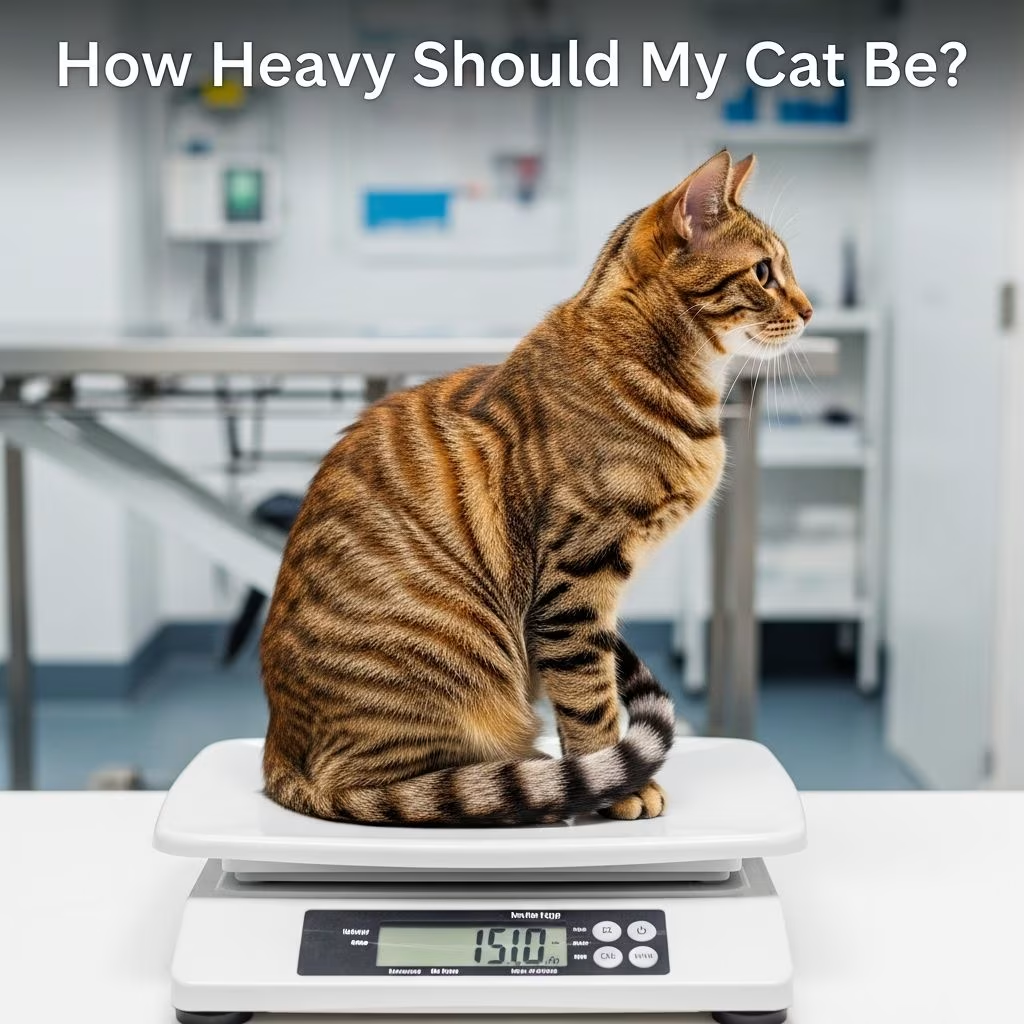
Understanding your cat’s ideal weight is crucial for their overall health and longevity. Approximately **60 percent of cats** are classified as overweight or obese, putting them at higher risk for serious conditions like osteoarthritis, heart disease, and diabetes. Maintaining a healthy weight helps prevent these issues and ensures your feline companion enjoys a vibrant, active life. This guide breaks down ideal weights by breed, age, and life stage, offers tips for assessment, and provides strategies for weight management.
Ideal Weight for Cats
The average healthy adult cat weighs between **8 to 15 pounds**, with most falling around **10 to 12 pounds**. However, ideal weight varies significantly based on breed, body frame, muscle mass, and neuter status. Smaller breeds like Siamese may thrive at 6-10 pounds, while larger breeds like Maine Coons can reach 15-25 pounds healthily. Use the following guidelines to gauge if your cat is in a healthy range:
- Slim breeds (e.g., Siamese, Oriental Shorthair): 6-10 pounds
- Average domestic shorthair: 8-12 pounds
- Large breeds (e.g., Maine Coon, Norwegian Forest Cat): 12-25 pounds
- Muscular breeds (e.g., Bengal, Savannah): 10-20 pounds
To determine your cat’s ideal weight precisely, consult body condition scoring (BCS). A BCS of 4-5 out of 9 indicates ideal weight: you should feel ribs with slight fat cover, see a visible waist from above, and an abdominal tuck from the side.
Cat Weight Chart by Age and Life Stage
Cats’ weight needs evolve through life stages. Kittens grow rapidly, adults stabilize, and seniors may fluctuate due to metabolism changes. Here’s a comprehensive chart based on veterinary guidelines:
| Life Stage | Age | Average Weight Range | Daily Calorie Needs (per kg body weight) |
|---|---|---|---|
| Kitten | 0-6 months | 0.5-5.5 lbs (at 4 months: 4-5.5 lbs) | 200 kcal/kg |
| Junior | 6-12 months | 5-10 lbs | 80-100 kcal/kg |
| Adult | 1-7 years | 8-15 lbs | 50-70 kcal/kg |
| Senior | 7-10 years | 8-14 lbs | 40-60 kcal/kg |
| Geriatric | 11+ years | 7-13 lbs (monitor for loss) | Adjust for muscle wasting |
Kittens: Rapid growth demands high calories—up to **200 kcal/kg/day** at 10 weeks, dropping to 80 kcal/kg by 10 months. Feed 2-3 ounces per pound of body weight daily, split into 3-4 meals.
Adults: Steady at **70 x (weight in kg)^0.75** calories daily. A 10-lb (4.5 kg) cat needs ~240 kcal/day.
Seniors: Metabolism slows; some need fewer calories, but others require high-protein diets to combat muscle wasting.
Signs Your Cat Is Overweight
Spotting excess weight early prevents health complications. Look for these tell-tale signs:
- Round body shape: No visible waist from above or side.
- Heavy gait: Thick, stiff limbs and difficulty jumping.
- Rib check failure: Can’t feel ribs without pressing hard.
- Abdominal sag: No tuck; belly hangs low.
- Behavior changes: Lethargy, reduced play, or grooming issues.
If your cat matches 2+ signs, schedule a vet visit. Obesity affects **60% of cats** and links to joint pain, diabetes, and hepatic lipidosis.
How to Help Your Cat Lose Weight Safely
Safe weight loss is gradual: aim for **0.5-2% body weight per week** (e.g., <7 oz/week for a 20-lb cat). Rapid loss risks metabolic issues. Strategies include:
- Calorie control: Use the formula **70 * (kg)^0.75** and reduce by 20-30% for overweight cats.
- Portion feeding: Measure food precisely; avoid free-feeding.
- Increase activity: Play sessions mimicking hunting (laser toys, puzzle feeders).
- Diet switch: High-protein, low-carb foods; prefer wet food for lower calories.
- Vet monitoring: Weekly weigh-ins and bloodwork.
Feeding Charts for Weight Management
Adjust portions based on food type:
| Weight (lbs) | Dry Food (kcal/day) | Wet Food (oz/day, ~80 kcal/3oz can) |
|---|---|---|
| 5-7 | 170-180 | 6-7 oz (2 cans) |
| 8-10 | 240-250 | 9-10 oz (3 cans) |
| 11-13 | 280-290 | 10-12 oz (3-4 cans) |
| 14-16 | 320-330 | 12-13 oz (4 cans) |
| 17-20 | 360-370 | 13-15 oz (4-5 cans) |
Combining Wet and Dry Food
Mix for balance: e.g., 60% dry (150 kcal), 40% wet (100 kcal) for 250 kcal total in a 10-lb cat. Wet adds hydration; dry aids dental health.
Special Considerations by Life Stage
- Pregnant/Nursing: Increase calories 20-50%; free-feed if needed.
- Neutered: 25-30% lower needs due to slowed metabolism.
- Indoor vs. Outdoor: Indoor cats need 20% fewer calories.
- Health Conditions: Diabetes or hyperthyroidism require prescription diets.
Preventing Obesity in Cats
Proactive steps from kittenhood:
- Follow feeding guides on labels, adjust per vet.
- Use puzzle feeders to slow eating and boost activity.
- High-protein diets curb appetite and support kidneys.
- Regular vet checkups for BCS scoring.
Frequently Asked Questions (FAQs)
What’s the ideal weight for an average cat?
An average adult domestic cat should weigh **10-12 pounds**, but check BCS for accuracy.
How do I know if my cat is overweight?
Feel ribs (slight cover), check waist visibility, and abdominal tuck. Vet confirmation is best.
How much should I feed my cat to maintain weight?
Use **70 x (weight kg)^0.75** for calories; e.g., 240 kcal for 10-lb cat. Split into 2 meals.
Can kittens be overweight?
Yes; prevent with measured feeding and activity. Neutering increases risk.
How fast should my cat lose weight?
**0.5-2% per week** safely; consult vet for plans.
Is wet food better for weight control?
Yes, lower calorie density aids portion control and hydration.
References
- Feeding Your Cat: How Much Should I Feed My Cat? Cat Feeding Chart and Tips — Embrace Pet Insurance. 2023. https://www.embracepetinsurance.com/waterbowl/article/feeding-your-cat
- 2021 AAHA/AAFP Feline Life Stage Guidelines: Nutrition and Weight: Kittens — American Animal Hospital Association (AAHA). 2021-06-01. https://www.aaha.org/resources/2021-aaha-aafp-feline-life-stage-guidelines/nutrition-and-weight-kittens/
- Is Your Cat Overweight? — Kinship. Accessed 2026. https://www.kinship.com/cat-nutrition/how-heavy-should-my-cat-be
- Cat Feeding Guide: From Kittens to Seniors — Dr. Elsey’s. 2024. https://drelseys.com/cat-feeding-guide-from-kittens-to-seniors/
- Kitten Weight Chart: Track Your Cat’s Ideal Weight by Age — Adopt-a-Pet.com. 2023. https://www.adoptapet.com/blog/health/kitten-weight-chart
- 2021 AAHA/AAFP Feline Life Stage Guidelines — AAHA (primary veterinary guideline). 2021. https://www.aaha.org/resources/2021-aaha-aafp-feline-life-stage-guidelines/



