

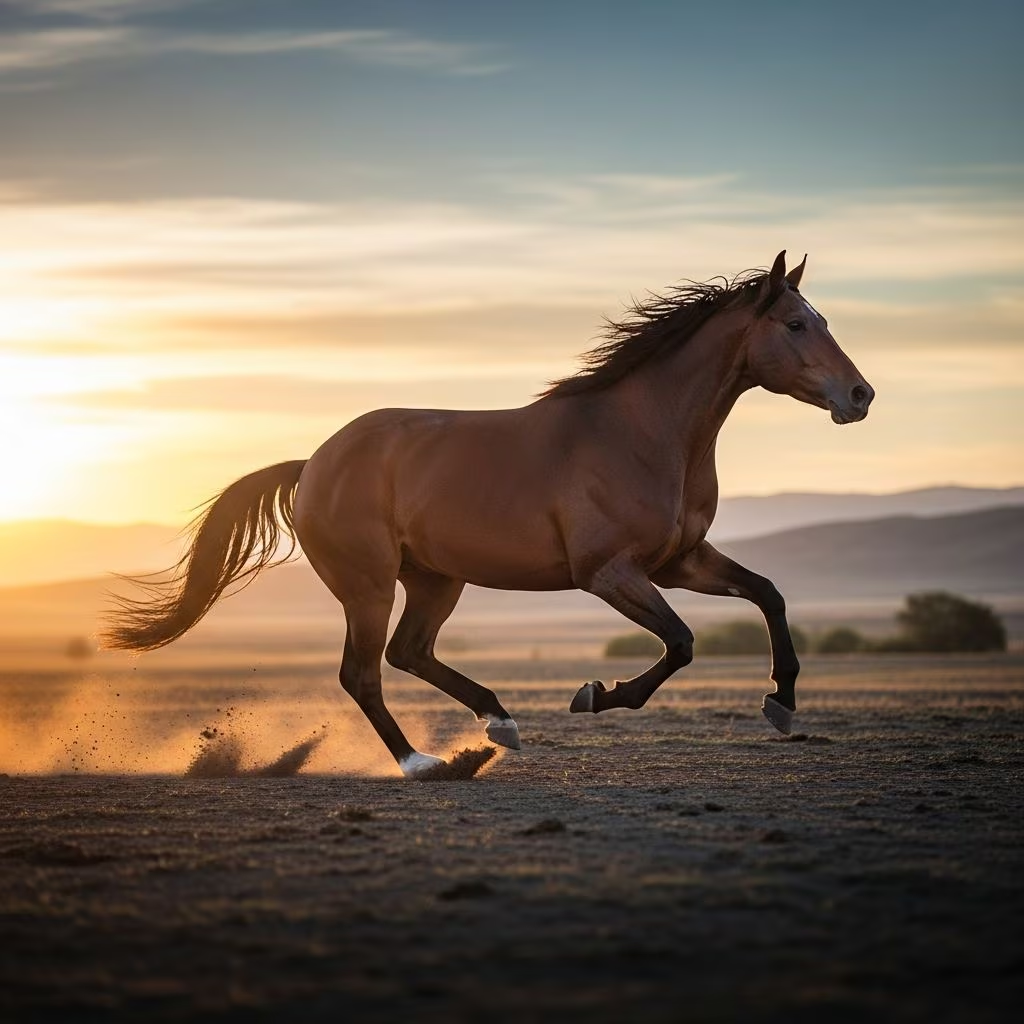
From Ponies to Racehorses: How Fast Can Horses Run?
Horses have captivated humans for centuries with their incredible athleticism and grace. One of the most impressive aspects of these magnificent animals is their speed. Whether you’re watching a leisurely trail ride or witnessing the thundering hooves of racehorses on the track, understanding how fast horses can run provides fascinating insight into their physical capabilities. The speed a horse can achieve varies dramatically depending on the breed, training, and individual fitness level, ranging from modest speeds for smaller ponies to extraordinary velocities for specially bred racehorses.
Understanding Horse Speed Categories
Horse speeds vary significantly based on the type and size of the horse. Different categories of equines have distinctly different speed capabilities, reflecting their breeding purpose and physical structure. Understanding these categories helps horse enthusiasts appreciate the diversity within the equine world and recognize why certain breeds excel in specific disciplines.
Ponies and Small Horses
Ponies represent the smallest members of the equine family and have correspondingly modest speed capabilities. Ponies typically reach speeds of 10 to 15 mph during their fastest gaits. While this may seem slow compared to larger horses, it’s important to remember that ponies were traditionally bred for hauling and working in confined spaces rather than for speed. Small horses, which are slightly larger than ponies but smaller than standard riding horses, can achieve speeds between 15 and 20 mph. These horses still maintain excellent maneuverability and strength despite their compact size.
Large Horses
Large horses, which include most standard riding and working breeds, demonstrate more impressive speed capabilities. These horses typically reach speeds between 20 and 25 mph during their fastest gait. This speed category encompasses popular breeds used for pleasure riding, trail work, and general ranch activities. Large horses combine reasonable speed with the strength and endurance necessary for sustained work.
Racehorses
Racehorses represent the pinnacle of equine speed capabilities. These animals have been selectively bred for generations specifically to maximize velocity and athletic performance. Racehorses typically achieve speeds between 35 and 40 mph during competitive racing. However, the most exceptional specimens, particularly Quarter Horses and Thoroughbreds, can exceed these averages significantly. The fastest recorded speed of a horse was 55 mph, achieved by a Quarter Horse during a short sprint, typically a quarter mile—hence the breed’s distinctive name. Thoroughbreds, while not reaching quite the same peak speeds as Quarter Horses, typically race at about 35 mph over longer distances, usually 1¼ miles. This difference reflects the distinct breeding purposes: Quarter Horses were developed for explosive speed over short distances, while Thoroughbreds were bred for sustained speed over longer courses.
The Four Gaits and Their Speeds
Horses don’t move at a single uniform speed; instead, they employ four distinct gaits, each with its own characteristic speed and rhythm. Understanding these gaits is fundamental to comprehending horse locomotion and performance.
| Gait | Average Speed (mph) | Average Speed (km/h) | Characteristics |
|---|---|---|---|
| Walk | 3-4 mph | 4.8-6.4 km/h | Slowest gait, four-beat rhythm, relaxed pace |
| Trot | 8-12 mph | 12.9-19.3 km/h | Two-beat rhythm, diagonal leg movement, moderate speed |
| Canter | 10-17 mph | 16-27.3 km/h | Three-beat rhythm, smooth and elegant, medium to fast speed |
| Gallop | 25-30 mph | 40.2-48.3 km/h | Four-beat rhythm, fastest gait, maximum velocity |
The Walk
The walk is the slowest gait, with horses typically achieving speeds of 3 to 4 mph. This four-beat gait involves the horse moving one leg at a time in a specific sequence. The walk is an economical gait that allows horses to cover distance while conserving energy, making it ideal for long journeys and casual movement.
The Trot
The trot is a two-beat gait where diagonal legs move together, creating a distinctive bouncing sensation. Most horses trot at speeds between 8 and 12 mph. This gait is commonly used in riding disciplines and is efficient for moderate-distance travel. The trotting speed varies based on the horse’s training and the rider’s preferences.
The Canter
The canter is a three-beat gait that many riders find smooth and pleasant. Speeds during a canter typically range from 10 to 17 mph, though the actual velocity depends on how collected or extended the horse is moving. The canter provides a middle ground between the trot and gallop, offering speed without maximum exertion.
The Gallop
The gallop is the horse’s fastest gait and employs a four-beat rhythm. During a gallop, horses reach their maximum velocity, typically between 25 and 30 mph for average horses. This is the gait associated with racehorses and depicts horses at their most athletic and powerful. The gallop requires significant energy expenditure and cannot be sustained indefinitely.
Factors That Influence Horse Speed
Multiple factors work together to determine how fast any individual horse can run. Understanding these influences helps explain why different horses achieve different speeds and why the same horse might vary in performance under different conditions.
Breed Characteristics
Perhaps the most significant factor determining a horse’s speed potential is its breed. Different breeds were developed for different purposes, resulting in vastly different speed capabilities. American Quarter Horses, bred specifically for explosive speed over short distances, represent some of the fastest horses ever recorded. Thoroughbreds, developed for racing over longer distances, achieve impressive sustained speeds. Draft breeds like Clydesdales and Belgian horses, selected for strength and pulling power rather than speed, typically reach only 20 to 35 mph. Andalusians, known for their elegance and athletic ability, typically race at 45 to 50 mph.
Physical Conditioning
A horse’s level of fitness dramatically affects its speed capabilities. A well-conditioned horse can reach its fastest speeds between 25 to 30 mph consistently. Horses that are specially bred for speed and undergo rigorous training regimens can achieve even higher velocities. Without proper conditioning, even horses with genetic potential for speed cannot reach their maximum performance.
Age and Experience
A horse’s age influences both its speed capacity and endurance. Young horses may have natural athleticism but lack the muscle development and training necessary for optimal performance. Mature horses in their prime typically demonstrate the best combination of speed and strength. Advanced age can reduce a horse’s ability to generate maximum speed due to changes in muscle mass and joint flexibility.
Terrain and Surface Conditions
The surface on which a horse runs significantly affects its speed. Track surfaces designed specifically for racing, such as dirt, polytrack, or turf, provide optimal footing for speed. Rocky, muddy, or uneven terrain reduces a horse’s ability to run at maximum velocity. Weather conditions, including wet or slippery surfaces, also impact performance.
Stride Rate and Stride Angle
Two biomechanical factors particularly influence horse speed: stride rate and stride angle. Stride rate refers to the number of strides a horse completes in a given time period. Racehorses typically achieve stride rates of 130 to 140 strides per minute, though champion racehorses can exceed 160 strides per minute. Stride angle represents the angle between a horse’s front and back feet measured at the rear foot push-off point. Horses with higher, superior stride angles are generally faster and cover more ground with each stride. These biomechanical advantages are partially hereditary but can also be improved through training and conditioning.
Racehorse Performance Records
Throughout racing history, certain horses have achieved remarkable speed records that demonstrate the extraordinary athletic capabilities of the species. The fastest recorded speed for a horse in a race is just under 44 mph, achieved by Winning Brew, a Thoroughbred who ran the quarter mile in 20 seconds at the Penn National Race Course in 2008. This record, measured under saddle with a rider aboard, represents exceptional performance. The fastest gallop ever recorded was 88.5 kilometers per hour (approximately 55 mph), achieved by an American Quarter Horse during a short sprint. For longer distances, speeds necessarily decrease due to the demands of sustained effort. Secretariat set the record for a one-mile race at 37.5 mph, demonstrating that while top speed drops over longer distances, elite racehorses still maintain impressive velocities.
How Horses Achieve Maximum Speed
Reaching top velocity is a complex process that involves the coordination of powerful muscles, proper technique, and mental focus. Horses take only a few strides to reach full speed, utilizing their powerful hindquarters to push off and extend their strides. This rapid acceleration demonstrates the explosive power stored in a horse’s muscular system. However, horses cannot maintain their top speed indefinitely. A horse can only maintain its top speed in short bursts; it takes only a few minutes or even seconds before fatigue sets in. Racehorses often need days to recover from a race, including rest and proper hydration. This recovery period is essential because running at maximum speed places enormous physiological stress on the horse’s cardiovascular, respiratory, and muscular systems.
Record-Breaking Horses by Breed
Different horse breeds hold different speed records based on their breeding purposes and physical characteristics. American Quarter Horses average speeds of 45 to 50 mph and hold the record for the highest top speed ever recorded. Thoroughbreds, the most common racehorse breed, typically achieve 35 to 44 mph. Standardbreds, primarily used in harness racing, average around 30 mph with recorded speeds up to 46.5 mph. Andalusians typically run at 45 to 50 mph. Other breeds like Mustangs (35 to 50 mph), Akhal-Tekes (35 to 45 mph), and Orlov Trotters (45 mph) demonstrate the diversity of speed capabilities across equine breeds.
Speed with Riders versus Without Riders
The presence of a rider significantly affects a horse’s maximum speed. A horse carrying a rider’s weight naturally moves more slowly than it would unencumbered. Most horses achieve their fastest speeds of 25 to 30 mph when ridden by a skilled, lightweight rider. However, some horses specially bred for speed can run even faster under saddle. The record under saddle remains Winning Brew’s 43.97 mph, demonstrating that well-conditioned racehorses can achieve impressive speeds even while carrying a rider.
Frequently Asked Questions About Horse Speed
Q: What is the average speed of a domestic horse?
A: On average, a domestic horse will normally achieve a running speed of around 30 miles per hour (mph). However, this can vary significantly based on breed, conditioning, and individual capability.
Q: How fast can a Quarter Horse run?
A: American Quarter Horses are among the fastest horse breeds, typically achieving speeds of 45 to 50 mph, with the record being 55 mph during short sprints of a quarter mile or less.
Q: Can horses maintain their top speed for long distances?
A: No, horses cannot maintain their top speed for extended periods. They can only maintain maximum speed for seconds to a few minutes before fatigue sets in, which is why racehorses need significant recovery time after racing.
Q: Why are some horses faster than others?
A: Speed differences result from a combination of factors including breed genetics, physical conditioning, age, terrain, stride rate, stride angle, and individual athletic ability. Horses bred specifically for speed, like racehorses, naturally possess greater speed potential.
Q: How does a horse’s gait affect its speed?
A: Different gaits produce different speeds. The walk is slowest at 3-4 mph, followed by the trot (8-12 mph), the canter (10-17 mph), and the gallop (25-30 mph), which is the fastest gait.
Q: What is the difference between a Quarter Horse and a Thoroughbred’s speed?
A: Quarter Horses achieve higher peak speeds, reaching up to 55 mph over short distances like a quarter mile. Thoroughbreds achieve slightly lower peak speeds but maintain better speed over longer distances, typically around 35 mph for a mile.
References
- How Fast Can Horses Run? (Top & Average Speed) — Wild Jolie. https://wildjolie.com/blogs/guide/horse-speed
- How Fast Can a Horse Run? — Britannica. https://www.britannica.com/topic/How-Fast-Can-Horses-Run
- The Science of Horse Racing: Who is the Fastest? — Twin Spires. https://www.twinspires.com/edge/racing/features/the-science-of-horse-racing-who-is-the-fastest/
- How Fast Can a Horse Run with a Rider? — Huntley Equestrian. https://www.huntleyequestrian.com/blogs/press/how-fast-can-a-horse-run-with-a-rider
- How Far And For How Long Can A Horse Run? — Volunteer Encounter. https://volunteerencounter.com/how-far-and-for-how-long-can-a-horse-run/
- How Fast Can a Horse Run? Answers Supplied by Experts — Prime Stables. https://www.primestables.co.uk/blog/how-fast-can-a-horse-run/



