

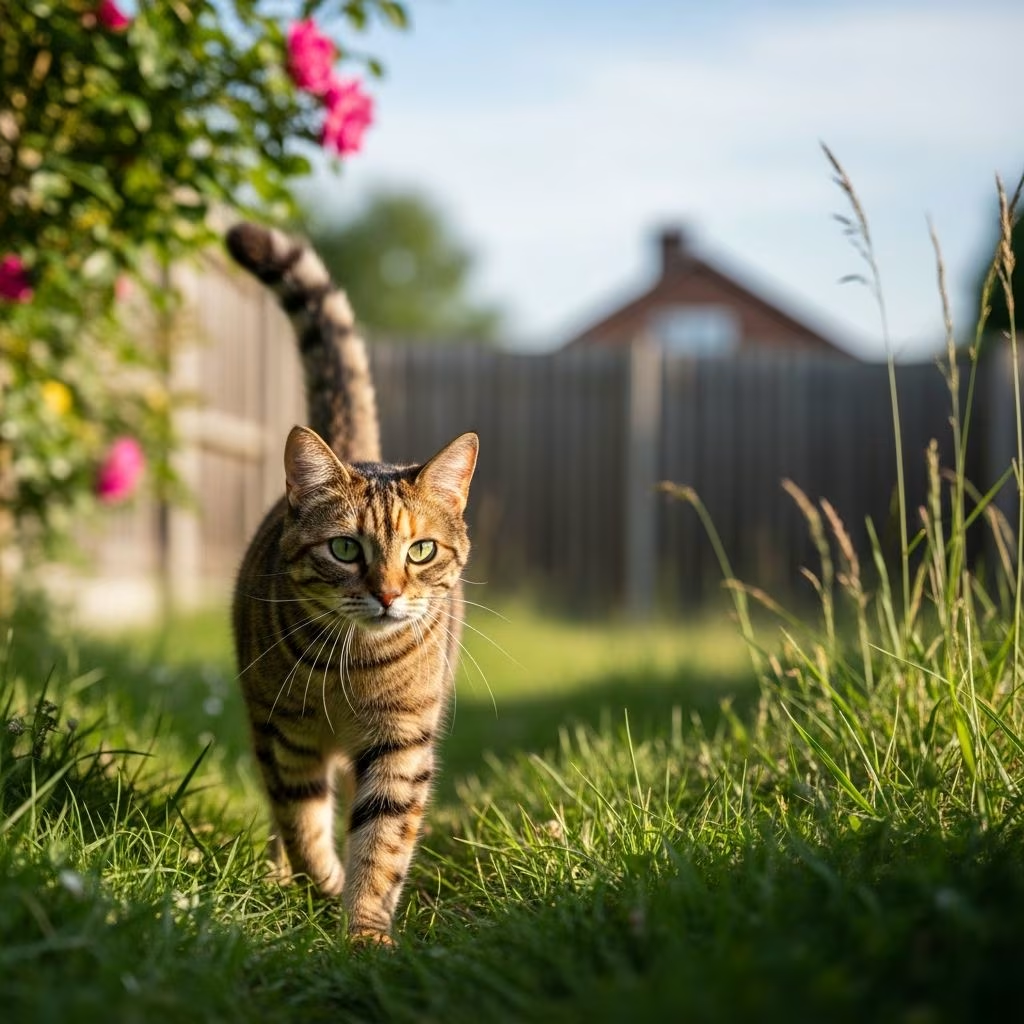
Domestic cats with outdoor access exhibit fascinating roaming behaviors, typically staying close to home but venturing farther under certain conditions. A comprehensive GPS study of 97 companion cats in Denmark revealed that cats spend a median of 5 hours away from home daily, traveling a median distance of 2.4 km, with a 95% home range of 5 hectares.
Cats Can Roam Pretty Far!
While many pet cats prefer the comforts of home, those allowed outdoors can cover surprising distances driven by instincts like hunting, mating, and territory marking. Most domesticated cats remain within **50 meters (about 164 feet)** of their home for 79% of their outdoor time, according to GPS tracking data. However, motivated individuals—especially unneutered males—may roam up to 3-5 km.
On average, house cats explore 130 to 650 feet (40-200 meters) around their property. Hormonal urges can extend this: a female in heat might attract toms from a mile away. Daily jaunts are usually local, but rural cats exploit open spaces more than urban ones.
How Far Do Cats Roam from Home?
Roaming distances vary widely based on GPS studies worldwide. In Denmark, the median daily movement was **2.37 km** (IQR: 1.34-3.68 km), with home ranges averaging 5 ha in suburban areas. UK studies report median home ranges of 1.28 ha in urban settings.
| Cat Type | Average Roaming Distance | Source |
|---|---|---|
| Indoor Cats | A few hundred feet (if any) | |
| Neutered Male (Outdoor) | 500–1,000 meters | |
| Unneutered Male (Outdoor) | Up to 3–5 km | |
| Female (Outdoor) | 200–800 meters | |
| Rural Outdoor Cat | Up to 6 km/day | |
| Urban Cats (General) | Max avg. 352 meters |
Feral and farm cats roam farther, up to 2-3 miles (3.2 km), with territories spanning 40-140 acres. In New Zealand, urban cats had medians of 1 ha, rural 18 ha.
Factors That Affect How Far Cats Roam
Several intrinsic and extrinsic factors influence feline home ranges:
- Sex and Neutering Status: Unneutered males roam farthest (up to 5 km) seeking mates; neutered males limit to 500-1,000 m. Females stay closer (200-800 m) but hunt efficiently.
- Age: Younger cats like suburban Penny in New Zealand covered over 3 square miles in days; adults settle smaller ranges.
- Environment: Rural cats median 5.6 ha, suburban 5 ha, urban 3.4 ha. Open spaces allow expansion; dense areas restrict.
- Personality: Adventurous cats cover 25+ acres (7% in one study); timid ones hug the home.
- Availability of Resources: Abundant food/prey nearby reduces need to roam far.
Neutering significantly curbs long-distance roaming, with studies showing neutered cats less likely to venture far.
What Is a Cat’s Territory Size?
A cat’s territory, or home range, is the area they regularly patrol for food, mates, and safety. GPS data defines it via 95% BBKDE (Buffer and Backtransformed Kernel Density Estimation), yielding medians of 5 ha in Denmark (IQR 2.9-8.5 ha). This equates to several acres, larger in rural (mean 16.8 ha) vs. urban (mean 5.2 ha) settings.
In Australia, urban means were 2.17 ha; South Africa urban-edge up to 31.65 ha (MCP method). US farm cats ranged 4-10 ha seasonally. Most pet cats’ core areas stay within 50 m of home, expanding outward as needed.
How Far Do Cats Roam for Mating?
Mating strongly motivates roaming, especially for intact cats. Unneutered toms detect pheromones up to 1 mile away, traveling 3-5 km to reach receptive queens. Females roam less but signal availability, drawing suitors. Neutering reduces this drive, shrinking ranges by limiting wanderlust.
Risks of Cats Roaming
Outdoor roaming exposes cats to dangers despite their homing instincts:
- Traffic: Roads claim many; urban cats near structures face higher risks.
- Predators: Coyotes, dogs, foxes in rural areas.
- Toxins/Poisons: Antifreeze, rodenticides.
- Fights: Abscesses from territorial scraps.
- Diseases: FIV, FeLV from contacts; parasites.
- Getting Lost: Rare, but unfamiliar areas disorient (though 90%+ return).
Most stay close (79% within 50 m), minimizing some risks, but adventurers cover km.
Should You Let Your Cat Roam Freely?
Free roaming offers exercise and stimulation but heightens risks. Many vets recommend supervised or no outdoor access. Alternatives include:
- Enclosed Catios: Safe outdoor enclosures.
- Harness Walks: Controlled exploration.
- Indoor Enrichment: Toys, scratching posts, windows.
Neutering, microchipping, and collars with ID reduce issues for roamers. Balance benefits against local hazards.
How Can You Track Your Cat’s Roaming?
GPS collars provide precise data. Devices like Tractive or PetRadar log locations, showing patterns like Denmark’s 2.4 km medians. Apps alert for far roams. Studies used 50 m home radii accounting for GPS error (13.1 m avg).
- Attach lightweight GPS tracker.
- Monitor via app for real-time position.
- Review maps for habits, ranges.
Indoor cats rarely need this; outdoor ones benefit from safety monitoring.
How to Stop Cats from Roaming Too Far
Discourage excessive roaming with:
- Neutering/Spaying: Reduces mating drives dramatically.
- Enrich Home: Food puzzles, vertical spaces keep them engaged indoors.
- Scheduled Meals: Hunger motivates return.
- Cat-Proof Fencing: Roller tops prevent escapes.
- Deterrents: Motion sprinklers, citrus scents at boundaries.
These shrink ranges without full confinement.
Frequently Asked Questions (FAQs)
Do indoor cats roam far from home?
No, indoor cats rarely venture far, hiding nearby if escaped due to fear.
How far do outdoor cats roam in a day?
Average territory is ~0.2 miles (0.5 km)/day, but some cover 2-6 km.
Do cats come back if they roam far?
Most do, thanks to strong homing; search and lure if lost.
Do female cats roam as far as males?
No, females roam 200-800 m vs. males’ up to 5 km, focusing on hunting.
How does neutering affect roaming distance?
Neutered cats roam much less, staying closer to home.
References
- Movement Patterns of Roaming Companion Cats in Denmark—A Pilot Study Using GPS Tracking — Horn JA, et al. PMC. 2022-07-20. https://pmc.ncbi.nlm.nih.gov/articles/PMC9311815/
- How Far Do Cats Roam? Understanding Feline Territory, Roaming Behavior & Safety Tips — SeeWorld GPS. Accessed 2026. https://www.seeworldgps.com/knowledge/how-far-do-cats-roam-understanding-feline-territory-roaming-behavior-safety-tips/
- Where does my cat go when outside? Study reveals they’re close by — Jerusalem Post. 2021-03-15. https://www.jpost.com/science/article-705477
- How Far Do Cats Roam? Vet-Verified Facts & Safety Tips — Catster. Accessed 2026. https://www.catster.com/lifestyle/how-far-do-cats-roam/
- How Far Do Cats Travel From Home? The Surprising Answer — PetRadar. Accessed 2026. https://www.petradar.org/en/articles/how-far-do-cats-travel-from-home-the-surprising-answer
- Study reveals where pet cats roam outdoors — Purely Pets Insurance. Accessed 2026. https://www.purelypetsinsurance.co.uk/blogs/study-reveals-where-pet-cats-roam-outdoors/



