

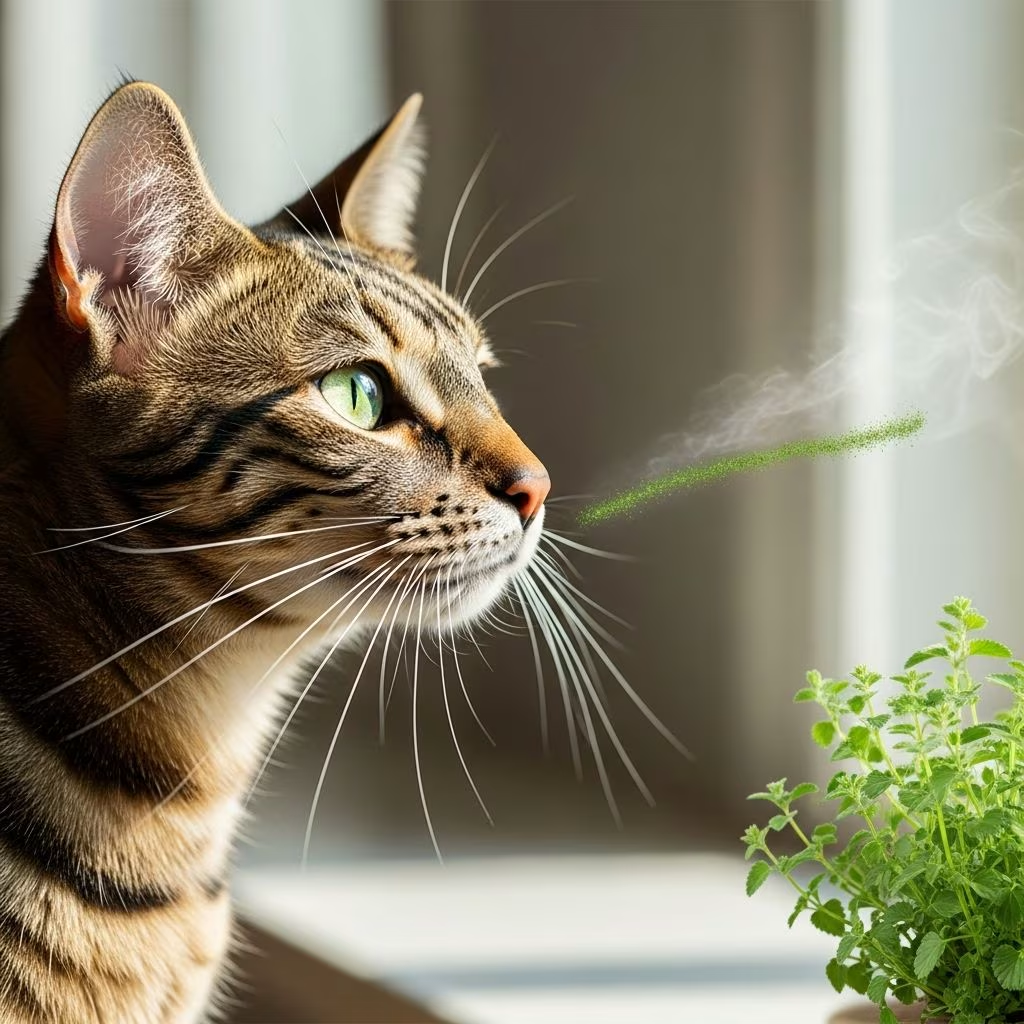
Cats possess an extraordinary sense of smell that allows them to detect catnip from distances ranging from 1.5 to 4 miles away, depending on environmental conditions like wind, humidity, and nepetalactone concentration.
This remarkable ability stems from their highly developed olfactory system, which includes approximately 200 million scent receptors—over 30 times more than the 6 million in humans—enabling them to pick up scents at incredibly low concentrations, such as one part per billion of catnip’s active compound.
The Remarkable Range of Feline Olfaction
The feline nose is a superpower in the animal kingdom, far surpassing human capabilities. Cats can detect catnip, a member of the mint family containing nepetalactone, from astonishing distances. Studies and observations suggest this range spans 1.5 to 4 miles under optimal conditions.
This distance is not arbitrary; it draws from research on cats’ homing abilities, where felines navigated 1 to 3 miles back home, relying heavily on scent cues. For catnip specifically, while direct field tests are limited, the sensitivity implies similar feats. Anecdotal evidence supports this: cats have been observed racing toward fresh catnip leaves from 50 yards or more, even ignoring food.
Key factors influencing detection range include:
- Wind direction and speed: Favorable breezes carry nepetalactone molecules farther, potentially extending range beyond 4 miles on gusty days.
- Humidity levels: Moderate humidity helps scents linger in the air, while extreme dryness or wetness can disperse them.
- Air temperature: Warmer air aids scent molecule movement, enhancing detectability.
- Catnip freshness and quantity: Fresh catnip releases more potent volatiles than stale dried varieties.
- Obstacles: Urban environments or dense foliage can block scents, reducing effective range.
In open rural areas, a cat might sniff out a catnip patch from miles away, triggering excited behaviors like meowing or sprinting. Indoors, the distance shrinks but remains impressive—cats often locate hidden catnip toys from across a house.
The Science Behind Cats’ Catnip Detection
Cats’ olfactory prowess relies on two interconnected systems: the main olfactory epithelium in the nose and the vomeronasal organ (VNO), or Jacobson’s organ, located in the roof of the mouth.
The nose’s 200 million receptors bind to odor molecules, sending signals to the brain’s olfactory bulb, which dedicates a larger brain portion to smell than in humans. The VNO specializes in pheromones and subtle scents like nepetalactone, analyzing them at concentrations as low as 1 part per billion or even 1 per trillion.
When a cat detects catnip, it often displays the Flehmen response: opening the mouth, curling the upper lip, and flicking the tongue to shuttle air over the VNO. This ‘scent tasting’ provides detailed chemical analysis, confirming the allure.
| Human vs. Cat Olfactory Comparison | Humans | Cats |
|---|---|---|
| Scent Receptors | 6 million | 200 million |
| Sensitivity to Nepetalactone | Undetectable | 1 part per billion |
| Secondary Organ (VNO) | Rudimentary/None | Fully functional |
| Brain Area for Smell | Small | Large (1,000x more sensitive overall) |
This table highlights why cats excel at long-range scent detection. Evolution honed these traits for hunting, territory marking, and mating, making catnip an irresistible mimic of feline pheromones.
Understanding Catnip’s Effects
Nepetalalactone, the essential oil in catnip (Nepeta cataria), binds to neural receptors, mimicking sexual pheromones and triggering euphoria in sensitive cats.
About 66-79% of cats are genetically responsive, with sensitivity emerging between 3-6 months to 1 year old. Kittens under 3 months and some adults lack this trait. Neutered cats may show reduced responses.
Typical reactions include:
- Rolling and rubbing against the catnip source
- Head pressing and cheek rubbing
- Purring and drooling
- Increased playfulness, zoomies, or batting
- Occasional vocalizing or lethargy post-peak
Effects peak in 5-15 minutes, followed by a 30-minute to several-hour refractory period where the cat ignores catnip. It’s non-addictive, safe, and equivalent to mild intoxication without toxicity.
Alternatives like silver vine (79% response rate) or tatarian honeysuckle offer similar effects for non-responders.
Safe Usage and Best Practices
Harness catnip for enrichment without overdoing it. Start with 1 tablespoon of dried catnip or a pinch of fresh for sessions.
- Fresh vs. Dried: Fresh is 3-10x more potent; crush leaves to release oils.
- Storage: Airtight containers in cool, dark places preserve potency for months.
- Dosage: Small amounts prevent overstimulation or tummy upset from excess ingestion.
- Frequency: 1-2 times weekly avoids tolerance buildup.
- Toys: Sprinkle on scratchers or kickers; rotate to maintain novelty.
Monitor for rare vomiting or diarrhea from overeating. Consult vets for health-compromised cats. Outdoors, plant catnip strategically but protect from neighborhood cats.
Frequently Asked Questions (FAQs)
How far away can cats smell catnip, and what affects their ability to detect it?
Cats can detect catnip 1.5-4 miles away under ideal conditions. Wind, humidity, temperature, and nepetalactone strength influence this range.
Why do some cats react to catnip while others do not?
Genetic sensitivity affects 66-79% of cats, developing around 6 months. Kittens, some breeds, and neutered cats may not respond.
What behaviors do cats typically show when exposed to catnip, and how long do these effects last?
Behaviors include rolling, purring, rubbing, and playfulness, lasting 5-15 minutes, followed by a refractory period.
How does a cat’s sense of smell work to detect catnip and other scents?
200 million receptors and the vomeronasal organ detect scents at ppb levels, with Flehmen response for analysis.
Is catnip safe for cats, and how much should I use?
Yes, it’s non-addictive and safe in moderation (1 tbsp dried). Store properly and watch for overstimulation.
Can kittens smell or react to catnip?
Kittens under 3-6 months typically cannot, as sensitivity develops later.
What if my cat doesn’t respond to catnip?
Try silver vine or honeysuckle, which affect more cats.
This comprehensive guide equips cat owners with knowledge to leverage catnip safely, enhancing their pet’s environment through nature’s feline favorite.
References
- How Far Away Can Cats Smell Catnip? The Ultimate Guide — PetsCare. 2023. https://www.petscare.com/news/post/how-far-cats-smell-catnip
- How Far Away Can My Cat Smell Catnip? Science-Based Facts — Hepper. 2023. https://articles.hepper.com/how-far-away-can-cat-smell-catnip/
- From how far away can a cat sense catnip? — Straight Dope Message Board. 2002-01-14. https://boards.straightdope.com/t/from-how-far-away-can-a-cat-sense-catnip/328217
- The Effects of Catnip on Cats — Animal Care Center of Castle Pines. 2023. https://www.animalcarectr.com/blog/the-effects-of-catnip-on-cats
- Understanding Catnip: The Age Cats & Kittens Start to Smell — Kitty Kickstix. 2023. https://www.kittykickstix.com/blogs/cat-resources/understanding-catnip-age-cats-kittens-smell
- Why Try Catnip On Your Cat? And How It Works — Preventive Vet. 2023. https://www.preventivevet.com/cats/catnip-why-you-should-try-it-on-your-cat
- Catnip Isn’t the Only Plant Scent Cats May Love — Vetstreet. 2023. https://www.vetstreet.com/our-pet-experts/eufloria-catnip-isnt-the-only-plant-scent-cats-may-love



