

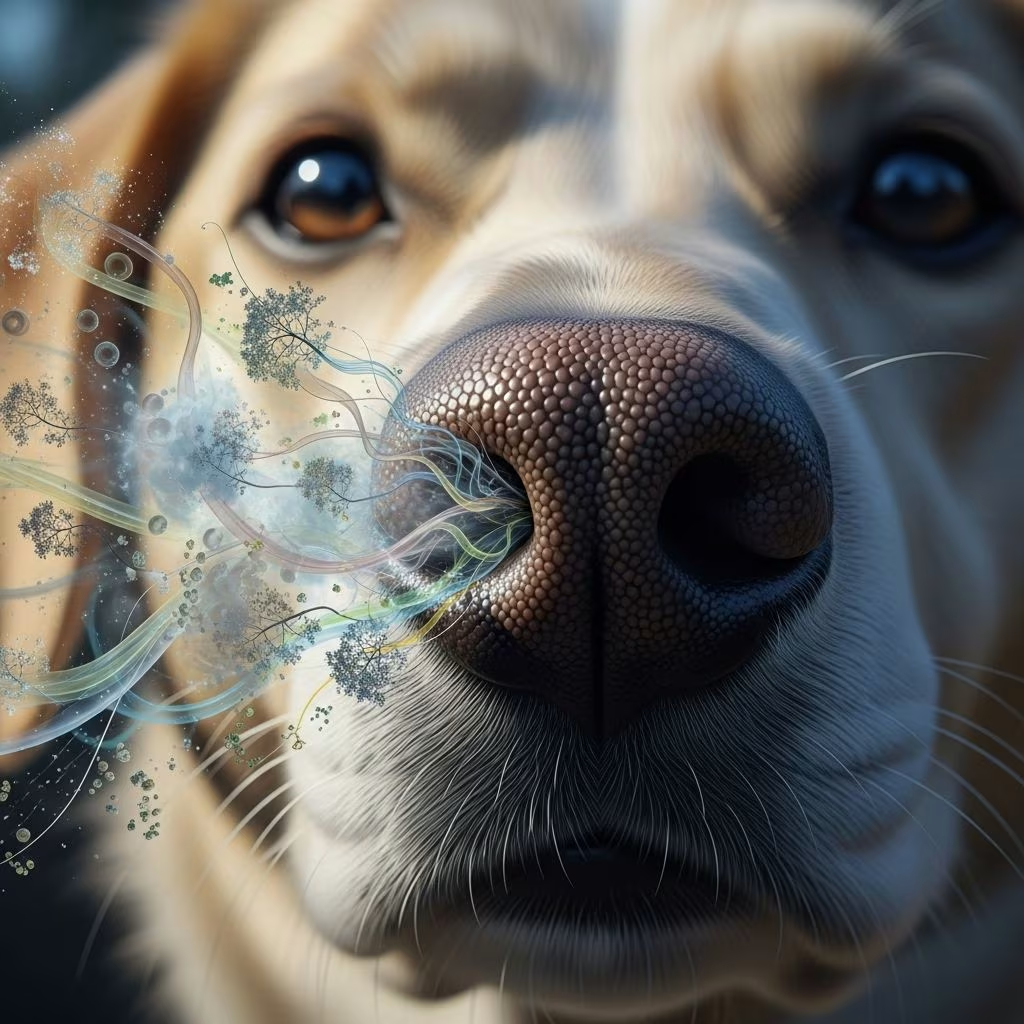
How Dogs Use Smell to Perceive the World
Dogs experience the world in a fundamentally different way than humans do. While we rely heavily on our vision to navigate and understand our surroundings, dogs depend primarily on their sense of smell. By simply sniffing, a dog can determine if a new friend is male or female, happy or aggressive, healthy or ill. This remarkable ability to interpret scents allows dogs to perceive information that remains completely invisible to human senses. Understanding how dogs use smell to perceive the world provides valuable insight into their behavior, their needs, and the unique way they interact with their environment and the people they love.
The Extraordinary Power of Canine Olfaction
Dogs possess one of the most sophisticated olfactory systems in the animal kingdom. Dogs get a general idea about each other with just a few sniffs, gathering information that would take humans significant time and investigation to discover. This incredible capability stems from the sheer power and complexity of the canine nose and brain working in concert.
Dogs have more than 100 million sensory receptor sites in the nasal cavity compared to only 6 million in people. This means that for every scent receptor a human possesses, a dog has approximately 50. The area of the canine brain devoted to analyzing odors is about 40 times larger than the comparable part of the human brain. In fact, it has been estimated that dogs can smell anywhere from 1,000 to 10,000 times better than people, with some scientists reporting that a dog’s sense of smell is 10,000 to 100,000 times more acute than a human’s.
These statistics alone demonstrate why dogs are so effective at tasks requiring olfactory detection. Whether tracking a missing person, identifying contraband, or simply greeting another dog, their nose provides them with a data stream of information that humans can barely comprehend.
The Anatomy of a Dog’s Olfactory System
To understand how dogs perceive the world through smell, we must first understand the anatomy that makes this perception possible. The canine olfactory system is remarkably different from the human olfactory system, allowing dogs to process scent information in ways humans cannot.
The Nasal Cavity and Airflow
Dogs have a specialized nasal structure that differs significantly from humans. Unlike humans, dogs have an additional olfactory tool that increases their ability to smell. When dogs sniff, they do not simply inhale air into their lungs like humans do. Instead, about 12% to 13% of inhaled air is separated through an upper pathway that leads straight to the olfactory epithelium, a thin layer of tissue responsible for detecting odors. The remaining air travels through a lower pathway to the lungs.
Additionally, dogs have mobile nostrils that help them determine the direction of a scent. When actively sniffing, air enters toward the center edges of the nostrils, then exits in a separate tract at the sides of the nostrils. This allows fresh air to be drawn in quickly and continuously without being pushed out by exhaled air, so a dog can pick up on even more scent signals. Dogs inhale up to 300 times per minute in short breaths, meaning that their olfactory cells are constantly supplied with new odor particles.
The lower pathway is also used for exhalation, allowing odor molecules to accumulate on the receptors. This efficient system means that odor molecules accumulate on the olfactory epithelium with every breath, helping dogs smell the world around them in extraordinary detail.
The Wet Nose Advantage
A dog’s cold, wet nose is not merely an aesthetic feature—it serves important olfactory functions. A coating of mucus on a dog’s damp nose helps it smell by capturing scent particles. Scent particles stick to a wet nose better than a dry one, allowing a pup to capture more information. A dog can lick their nose to transfer captured scent particles to the vomeronasal organ for additional analysis.
Humidity also plays a crucial role in olfactory performance. Humidity improves a dog’s ability to detect scents, due to lingering odors trapped by water vapor and increased humidity within the dog’s nose. Higher temperatures increase the presence of odor molecules in the air, especially at the level of a dog’s nose, but can kill bacteria useful in detecting scents and decrease a dog’s ability to work.
The Vomeronasal Organ: An Extra Olfactory Tool
One of the most fascinating aspects of canine smell is the vomeronasal organ, also known as Jacobsen’s organ. Unlike humans, dogs have an additional olfactory tool that increases their ability to smell. The vomeronasal organ is a special organ located just above the roof of the mouth in dogs. It is responsible for detecting pheromones—chemical signals used by animals to communicate with others of the same species.
Jacobsen’s organ communicates with the part of the brain that deals with mating. By identifying pheromones, it provides male and female dogs with the information they need to determine if a member of the opposite sex is available for breeding. It also enhances newborn puppies’ sense of smell so they can find the mother’s milk, and allows a pup to distinguish its mother from other nursing dogs. With a quick sniff, a pup placed between two females will migrate to its own mother. Pups also have heat sensors in their noses that help them locate their mothers if they wander away.
The two separate parts of the dog’s odor detection system, the nose and Jacobsen’s organ, work together to provide delicate sensibilities that neither system could achieve alone. When dogs curl their lips and flare their nostrils, they open up Jacobsen’s organ, increase the exposure of the nasal cavity to aromatic molecules, and essentially become remarkably efficient smelling machines.
Asymmetrical Smelling: The Right and Left Nostril Difference
Dogs possess a remarkable ability that many people never notice: they can smell separately with each nostril. A phenomenon called “sniffing lateralization” allows dogs to sniff with each nostril separately, and this ability serves specific purposes in how they gather and process information.
Dogs sniff primarily with the right nostril when they first start sniffing, as the right hemisphere of the brain processes novel information. For familiar or non-aversive scents such as food, they tend to switch to the left nostril, which controls behavioral responses to familiar stimuli. For aversive, threatening or arousing scents, they stick with the right nostril. This sophisticated system allows dogs to categorize scents and determine the appropriate behavioral response even before conscious awareness of what they are smelling.
When dogs sniff, they start by using only their right nostril. If they are comfortable with the smell, they then begin using their left nostril. This supports the theory that dogs process novel information using the right hemisphere of their brain, and the left for reacting to familiar situations.
Brain Power Dedicated to Smell
A great part of a dog’s brain is dedicated to acquiring and interpreting odors, using its nose as a guide in sniffing in order to follow a trail. The olfactory bulb is a rounded mass of tissue in the brain that contains several types of nerve cells responsible for your sense of smell. One study found that dogs have a larger olfactory bulb compared to other mammals with similarly sized brains.
This massive neural investment in smell processing demonstrates that olfaction is not a peripheral sense in dogs—it is central to how they understand and navigate their world. The molecular and sensory information dogs gather through their noses is processed with the same complexity and detail that humans process visual information.
Individual Variations in Smelling Ability
While all dog breeds have an excellent sense of smell, not all noses are created equal. Brachycephalic breeds—dogs with short noses, such as bulldogs—have been found to have the least sensitivity to odor compared to non-brachycephalic breeds. Dogs with elongated noses perform better than dogs with flat noses. Additionally, larger dogs have a better sense of smell than smaller dogs.
Certain breeds are known for their exceptional olfactory abilities. The bloodhound takes the lead with approximately 300 million scent receptors. Other sporting breeds such as the Bluetick Coonhound, Labrador Retriever, and herding breeds such as the German Shepherd follow closely behind. These breeds were often selectively bred for their tracking and detection abilities, resulting in enhanced olfactory capabilities.
How Age Affects Canine Smell
As your dog gets older, you may notice that their senses, such as vision and hearing, start to decrease. Well, it turns out that olfaction—or sense of smell—actually decreases with age, too. In one study, researchers found atrophy of the olfactory epithelium in the nasal cavity in dogs over 14 years of age, and senile changes in the olfactory bulb of the brain are similar to what occurs in humans.
This age-related decline is a natural part of the aging process and should be considered when evaluating changes in your senior dog’s behavior or performance in smell-related activities.
Remarkable Applications of Canine Smell
The extraordinary smelling abilities of dogs have been harnessed for numerous practical applications that benefit human society.
Disease Detection
Dogs’ powerful noses are being used in medicine to detect diseases, sniffing them out in a less invasive manner than the currently available diagnostic tests, in some cases. Dogs have been able to accurately detect cancer, predict seizures, and identify people with low blood sugar—just by using their noses.
A dog’s sense of smell is so subtle that they can notice the slightest change in human scent caused by disease. The tiniest shifts in hormones or volatile organic compounds released by diseased cells can be picked out by dogs. Consequently, dogs have been trained to sniff out the markers of disease that might even go unnoticed with medical tests.
Tracking and Search and Rescue
Dogs have often been used as trackers by police and search and rescue teams. Studies show that dogs can pick up a scent from as far away as 1.6 miles in a rural environment. The optimal conditions for scent tracking include winds in the range of 3 to 10 km/h. Wind also has an effect on a dog’s sense of smell—winds which are too low decrease effective range, while winds which are too high make detection difficult. Turbulence reduces a dog’s ability to track scents.
Understanding Human-Dog Relationships
Your dog recognizes your scent—and loves it! A study conducted at Emory University placed trained dogs in a functional MRI and presented them with five scents: a familiar human, an unfamiliar human, a familiar dog, an unfamiliar dog, and the dog’s own scent. Only the familiar human scent activated the part of the brain associated with positive expectations and social rewards, suggesting that dogs associate our scents with good things.
How Dogs Perceive Time Through Smell
Recent research suggests that dogs may be able to use their keen sense of smell to determine what time of day it is. This temporal perception through olfaction adds another dimension to how dogs experience and understand their world, allowing them to anticipate events and maintain internal rhythms based on scent cues that change throughout the day.
Frequently Asked Questions
Q: How much better can dogs smell than humans?
A: Dogs can smell anywhere from 1,000 to 10,000 times better than humans, with some research suggesting their sense of smell is 10,000 to 100,000 times more acute. This is due to having more than 100 million sensory receptors in their nasal cavity compared to 6 million in humans, and a brain area devoted to smell analysis that is 40 times larger than the human equivalent.
Q: What is the vomeronasal organ and what does it do?
A: The vomeronasal organ, also called Jacobsen’s organ, is located just above the roof of the mouth in dogs. It detects pheromones and helps dogs determine information about mating availability, recognize their mothers, and locate food. It works together with the nose to provide enhanced olfactory perception.
Q: Why do dogs have wet noses?
A: A dog’s wet nose helps them smell more effectively. The mucus coating captures scent particles more efficiently than a dry nose, and dogs can lick their nose to transfer scent particles to the vomeronasal organ for additional analysis.
Q: Can dogs smell through walls or closed doors?
A: Yes, dogs can detect scents that seep under doors and through walls. Their extraordinary sensitivity means they can pick up on odor molecules that escape even from well-sealed spaces, which is why they can often detect what is happening in adjacent rooms.
Q: Do all dog breeds have the same smelling ability?
A: No. While all dogs have excellent smell, breeds with longer noses generally smell better than brachycephalic breeds with short noses. Larger dogs typically have better olfactory abilities than smaller dogs. Bloodhounds, with approximately 300 million scent receptors, are among the best smellers, followed by sporting and herding breeds.
Q: Does a dog’s smelling ability decrease with age?
A: Yes, like other senses, a dog’s sense of smell decreases with age. Studies have found atrophy of the olfactory epithelium in dogs over 14 years old, similar to age-related changes that occur in human brains.
References
- How Dogs Use Smell to Perceive the World — VCA Animal Hospitals. 2024. https://vcahospitals.com/know-your-pet/how-dogs-use-smell-to-perceive-the-world
- Dog Sense of Smell — Wikipedia. 2024. https://en.wikipedia.org/wiki/Dog_sense_of_smell
- The Science of Sniffs: Disease Smelling Dogs — Understanding Animal Research. 2024. https://www.understandinganimalresearch.org.uk/news/the-science-of-sniffs-disease-smelling-dogs
- 13 Fun Facts About Your Dog’s Sense of Smell — CareCredit Well-U. 2024. https://www.carecredit.com/well-u/pet-care/how-well-can-your-dog-smell/
- Fun Facts About the Dog Sense of Smell — Bond Vet. 2024. https://bondvet.com/blog/dog-sense-of-smell
- 8 Surprising Things Your Dog Can Sense — PetMD. 2024. https://www.petmd.com/dog/behavior/surprising-things-your-dog-can-sense
- Dogs Tell Time With Their Noses, Expert Says — American Kennel Club. 2024. https://www.akc.org/expert-advice/news/dogs-tell-time-with-their-noses-expert-says/



