

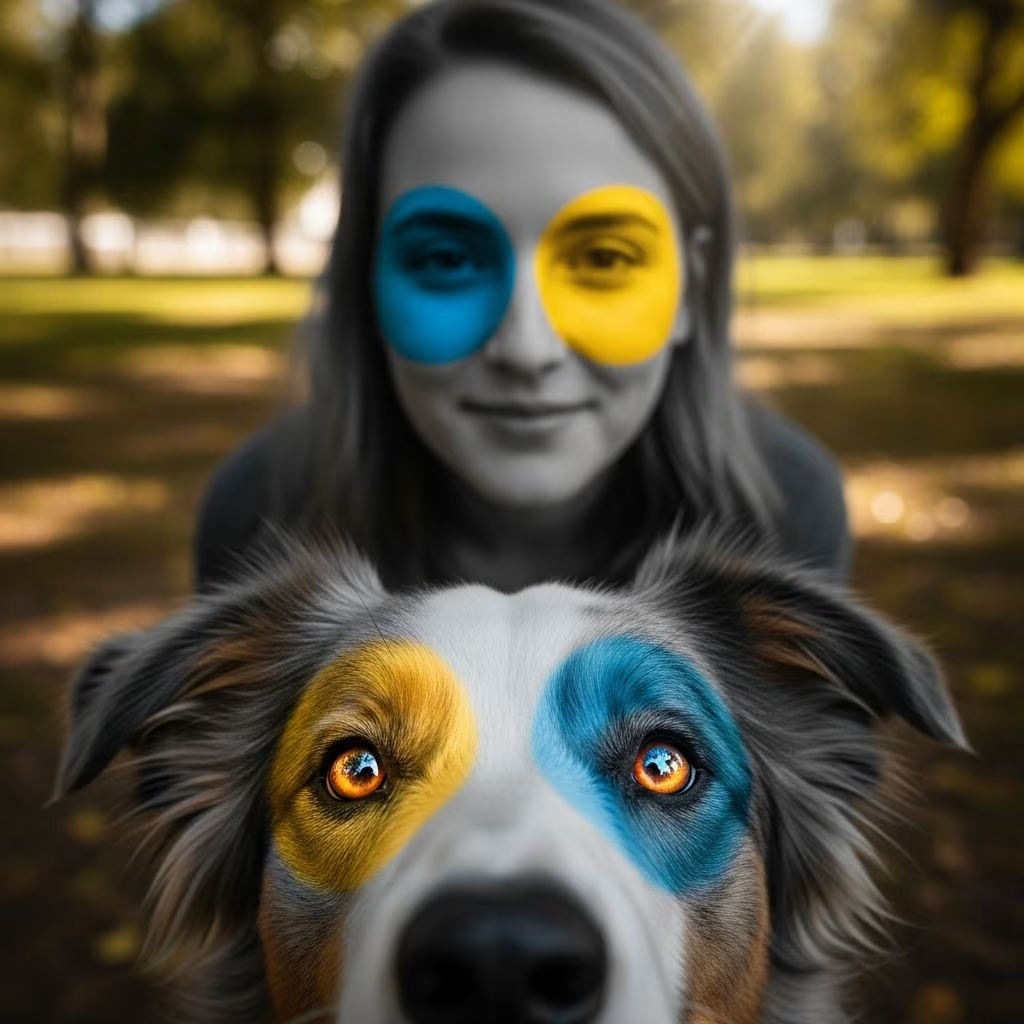
How Dogs See Humans: Understanding Canine Perception
Dogs have evolved alongside humans for thousands of years, developing a unique ability to perceive and understand us in ways that go far beyond simple companionship. Rather than viewing humans as just food providers or authority figures, dogs process complex information about our emotions, intentions, and behaviors through multiple sensory channels. This sophisticated perception forms the foundation of one of the strongest human-animal bonds in existence.
Facial Recognition and Visual Understanding
One of the most remarkable aspects of how dogs perceive humans is their exceptional ability to recognize and interpret human faces. Research using brain imaging shows that a dog’s brain responds more strongly to human faces than to other dogs or objects, demonstrating that facial recognition is a prioritized cognitive function. Dogs use this facial recognition ability to identify familiar people, read emotions, and anticipate the actions of their human companions.
Dogs are particularly skilled at interpreting human eyes, which play a crucial role in bonding and communication. They have developed the ability to spontaneously focus on the eyes to infer where humans are looking, what captures their interest, and even what they intend to do next. This eye-tracking ability provides dogs with essential social information, ranging from communicative gestures to understanding the attentional states of their human companions.
Emotional Expression Recognition
Dogs demonstrate an impressive capacity to distinguish between happy, angry, and neutral facial expressions. When they observe these different emotional states, they often alter their behavior in response. A smile may invite playful interaction, while a frown might prompt caution or a more subdued response. This ability helps dogs navigate the social environments of their households and understand the emotional tone of their surroundings.
The recognition of human emotions isn’t limited to facial expressions alone. Dogs can integrate multiple sources of sensory information to form comprehensive emotional assessments. Research has shown that dogs spontaneously combine human faces displaying different emotional valences—such as happy versus angry—with vocalizations matching those emotions. When researchers presented dogs with incongruent stimuli, such as an angry face paired with a happy voice, dogs exhibited extended looking and apparent confusion, demonstrating that they expected visual and auditory emotional cues to align.
Emotional Sensing and Empathetic Response
One of the most remarkable aspects of dog cognition is their ability to sense and respond to human emotions. Dogs possess an almost intuitive understanding of our emotional states, picking up on subtle changes through multiple channels including vocal tone, body language, and even scent. When humans are happy, dogs often respond with excitement and enthusiasm. Conversely, when people are sad, anxious, or stressed, dogs may become subdued or actively offer comfort to their companions.
This empathetic response stems from thousands of years of co-evolution, during which dogs evolved specifically to live alongside humans and benefit from understanding our emotional states. Functional MRI studies demonstrate that dogs process emotional sounds in a similar way to humans, especially those associated with sadness and distress. When a dog perceives fear in a person through smell, body language, or facial expressions, it can result in behavior mirroring, where the dog mirrors the anxiety or stress they sense.
Dogs also form strong emotional bonds with humans and show signs of empathy and stress detection that rival those observed in primate studies. This capacity for emotional attunement allows dogs to serve as effective emotional support animals and therapy dogs, providing comfort precisely when their humans need it most.
Understanding Human Communication and Body Language
Dogs are experts at reading human body language and interpreting non-verbal communication. They can follow pointing gestures, interpret head direction, and understand some spoken words through association rather than linguistic comprehension. While dogs don’t process language the way humans do, they associate certain words with specific actions, objects, or emotional responses.
Multi-Modal Communication Processing
Dogs process human language using both brain hemispheres and recognize intonation and body language to interpret the meaning of words. The tone of voice, facial expression, and body posture combined provide far more information to a dog than the words themselves. If you smile and excitedly say “let’s go for a walk!”, your dog will likely wag their tail enthusiastically. If you utter those exact same words in a gruff voice with a frown, your dog may instead cower or whine.
Beyond vocabulary, dogs rely heavily on non-verbal cues to understand human intentions. They watch posture, hand movements, and facial expressions to gauge what their humans want them to do. Research suggests that dogs understand these gestures better than even chimpanzees, highlighting the unique evolutionary relationship between canines and humans. This sophisticated ability to decode human communication makes training more effective and bonding easier and more rewarding.
Gesture Recognition and Cooperation
One of the best examples of dogs’ socio-cognitive skills is their ability to properly respond to human cues in cooperative contexts. Numerous studies have shown that dogs can reliably follow basic human cues, including distal and proximate pointing, head turns, and eye glances. Dogs can also flexibly generalize this behavior to novel human movements, such as cross-pointing, leg pointing, gestures with reversed movement direction, and different arm extensions.
Dogs even demonstrate an understanding of human perspective and visual access to information. In studies where two humans provided information about food locations, dogs showed they could understand that they should rely on the person who could actually see where the food was hidden, using cues like whether eyes were open and directed toward hiding locations. This demonstrates that dogs don’t simply subordinate their own perspective to humans; they take their own informed knowledge into account when interpreting human commands and requests.
Social Learning and Behavioral Mirroring
Dogs are highly skilled social learners, meaning they often mirror the behavior and energy of the people around them. In multi-person households, dogs observe interactions between family members and adapt their responses accordingly. A calm household environment typically results in a calm, well-adjusted dog, while chaotic or stressful environments may lead to anxiety and behavioral issues.
This mirroring extends beyond observable behavior to include mood, activity levels, and vocal cues. Dogs pick up on the emotional temperature of their environment and adjust their own demeanor to match. They even engage in a behavior called overimitation, where they copy actions beyond what’s necessary to achieve a goal, demonstrating how deeply they attend to and learn from the humans in their lives.
Spatial Awareness and Environmental Understanding
Dogs possess sophisticated spatial awareness that allows them to form detailed mental maps of their environment and the people within it. This spatial understanding includes knowledge of room locations, object placement, other animals, and importantly, where humans can be found. Dogs remember the typical locations where family members spend time and can track movement patterns and daily routines.
This environmental mapping extends beyond physical space to include social positioning. Dogs notice who leads, who follows, and who gives commands within their household. They use this information to navigate household dynamics and adjust their behavior accordingly. Understanding your dog’s internal map can help improve training effectiveness and reduce anxiety, especially during major changes such as moving to a new home or welcoming new household members.
Individual Assessment and Opinion Formation
Perhaps most intriguingly, dogs don’t view all humans as a uniform group. Instead, they form specific opinions about individual people based on their experiences and observations. Research demonstrates that dogs can judge human intentions and behavior with remarkable accuracy. Dogs are more likely to trust and cooperate with people who are kind, helpful, and consistent in their interactions.
In one notable study, dogs actively avoided people who had refused to help their owners, even when those unhelpful people later offered assistance. This ability to assess character and form opinions about people highlights the depth of their social intelligence. Dogs remember how people have treated them and their owners, and they make decisions about future interactions based on these memories.
Species Recognition and Self-Awareness
Despite their sophisticated understanding of humans, dogs clearly recognize that we are not fellow dogs. Your dog does recognize that you’re a different species entirely. According to veterinary behaviorists, “Dogs can clearly distinguish a species difference,” meaning they understand that humans operate under different rules, have different capabilities, and communicate differently than canines.
This species recognition doesn’t diminish their attachment or their ability to form bonds with humans. Rather, it reflects their cognitive capacity to categorize beings according to their characteristics and evolutionary origins. Dogs understand that humans walk upright, lack fur in most places, possess limited olfactory abilities compared to dogs, and communicate primarily through vocalization and facial expressions rather than scent marking and body positioning.
The Multi-Modal Representation of Humans
When you combine all these individual abilities, a comprehensive picture emerges of how dogs perceive humans. Dogs don’t see us as one-dimensional beings. Instead, they form rich, multi-modal representations that integrate emotional, sensory, cognitive, and social information. This includes facial recognition, vocal analysis, body language interpretation, emotional assessment, behavioral tracking, and personal history with specific individuals.
Dogs analyze our expressions, listen to our words and tone, track our daily routines and habits, remember where we typically spend time, and respond dynamically to our emotional states. They form opinions about our character and reliability. They adapt their behavior based on household dynamics and social positioning. They demonstrate understanding of our visual perspectives and attentional states. All of this combines to create a remarkably sophisticated understanding of the humans in their lives.
Practical Implications for Dog Owners
Understanding how dogs perceive humans has several practical implications for dog owners and trainers:
- Consistency matters: Because dogs form detailed observations of our behavior patterns and remember our interactions, consistency in training, commands, and emotional responses helps dogs understand expectations clearly.
- Tone and body language are primary: Rather than relying solely on words, ensure your tone, facial expressions, and posture align with the message you’re trying to communicate.
- Dogs mirror household energy: Creating a calm, stable environment directly benefits your dog’s emotional well-being and behavior.
- Your emotional state matters: Dogs respond to your moods and anxiety, so managing your own stress benefits your dog’s behavior and training progress.
- Individual relationships are recognized: Don’t assume your dog will treat all people the same; relationships matter and are based on individual experiences.
Frequently Asked Questions
Q: Do dogs actually understand what I’m saying when I talk to them?
A: Dogs understand some spoken words through association, but they rely far more heavily on your tone of voice, body language, and facial expressions. They pick up on emotional intent more than specific words, which is why the same command said happily versus angrily produces different responses.
Q: Can dogs tell when I’m sad or stressed?
A: Yes, dogs demonstrate a remarkable ability to sense human emotions through multiple channels including vocal tone, body language, and scent. Many dogs respond to their owners’ sadness or anxiety with subdued behavior or attempts to provide comfort.
Q: Does my dog recognize me as a specific person or just as their owner?
A: Dogs recognize you as a specific individual person. They can recall your face upon hearing your voice and form detailed memories and opinions about you based on your behavior patterns and interactions with them.
Q: Why does my dog behave differently with different family members?
A: Dogs form individual assessments of each person in their household based on their specific experiences and observations. They notice who is kind, who gives commands, and household social dynamics, adjusting their behavior accordingly.
Q: Can dogs understand when I’m being insincere?
A: Dogs are sensitive to incongruence between verbal and non-verbal cues. When your words don’t match your tone or body language, dogs notice the mismatch and may show confusion or extended attention to try to understand the correct message.
Q: Does my dog think I’m a dog?
A: No, dogs clearly recognize that humans are a different species. They understand that humans have different capabilities, behaviors, and communication styles than other dogs.
References
- How Dogs Perceive Humans & How Humans Should Treat Dogs — National Center for Biotechnology Information (NCBI). Accessed January 14, 2026. https://pmc.ncbi.nlm.nih.gov/articles/PMC7772310/
- How Dogs See Humans: Beyond the Bond — Dan’s Pet Care. Accessed January 14, 2026. https://danspetcare.com/pets/khzn5x5866s4mcd2pznr7hjck627cb
- Do Dogs Understand Our Conversations? — VCA Animal Hospitals. Accessed January 14, 2026. https://vcahospitals.com/know-your-pet/eavesdropping-dogsdo-dogs-understand-our-conversations
- Does My Dog Think I’m A Dog? — Rover.com. Accessed January 14, 2026. https://www.rover.com/blog/does-my-dog-think-im-a-dog/
- How Dogs Think — American Psychological Association. October 2025. https://www.apa.org/monitor/2025/10/how-dogs-think
- 8 Surprising Things Your Dog Can Sense — PetMD. Accessed January 14, 2026. https://www.petmd.com/dog/behavior/surprising-things-your-dog-can-sense



