

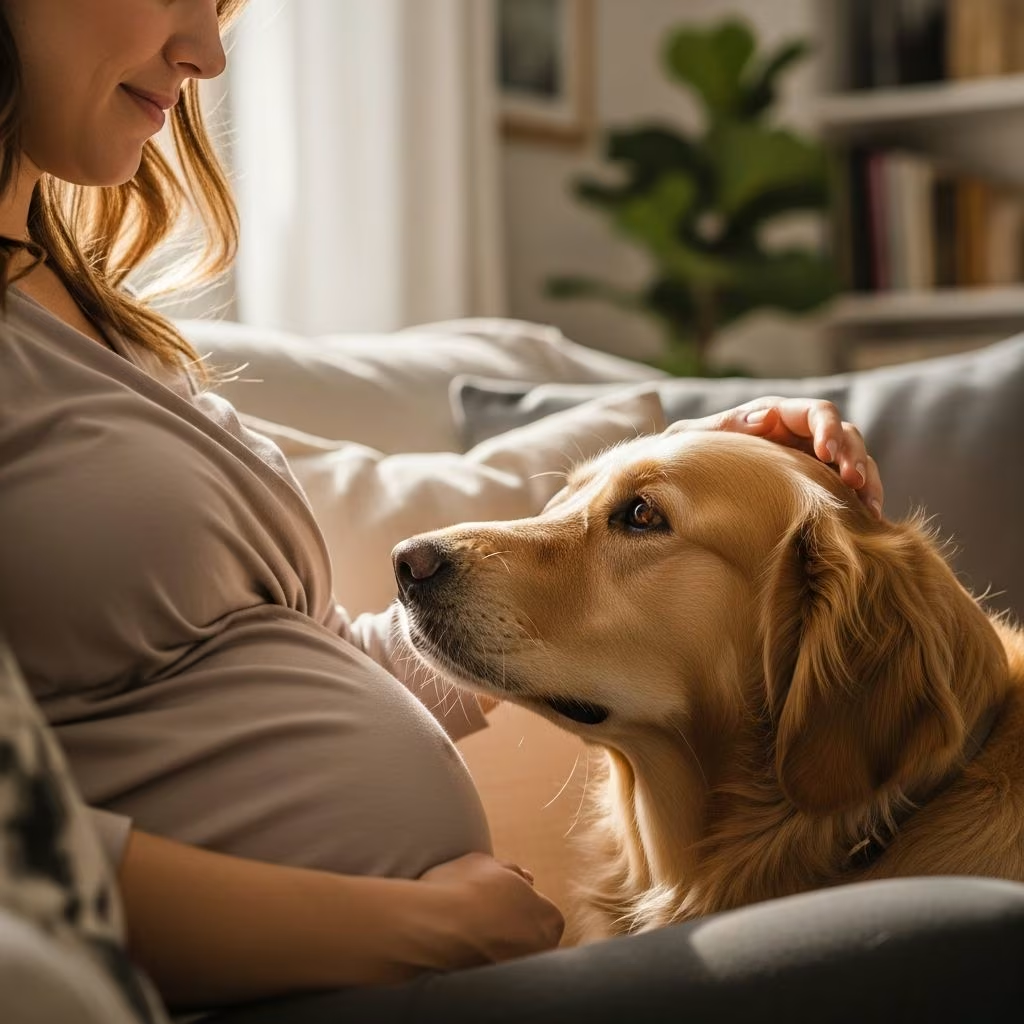
How Dogs React to Pregnant Women
When you’re expecting, your body undergoes profound changes that extend far beyond what’s visible to the human eye. Your hormones shift dramatically, your physical movements transform, and your daily routine often becomes disrupted. While these changes are significant for you and your growing baby, they can also be remarkably apparent to your four-legged companion. Dogs possess extraordinary sensory abilities that allow them to detect these transformations, and their reactions to your pregnancy can vary widely depending on their individual personality, temperament, and prior experiences.
Why Dogs React to Pregnancy
Dogs detect pregnancy through multiple sensory channels that humans simply cannot access. The most prominent of these is their exceptional sense of smell. A dog’s olfactory system is dramatically more powerful than that of humans, enabling them to perceive minute chemical changes in your body. When you become pregnant, your hormones—particularly progesterone—surge rapidly to support your pregnancy. These hormonal fluctuations create subtle shifts in your scent that your dog can easily detect, even if you have no visible baby bump yet.
Beyond scent detection, dogs are incredibly attuned to physical changes in your body. As pregnancy progresses, your posture and gait naturally shift. The loosening of your joints and the physical burden of carrying another person in your abdomen creates a distinctly different way of moving. This “pregnant kangaroo stance” and waddling gait are far from subtle to your observant pup, who is sensitive to even the most minute shifts in your movement patterns and body positioning.
Environmental and lifestyle changes also play a crucial role in how dogs perceive pregnancy. Expecting parents often rearrange furniture in anticipation of the baby’s arrival, adjust their schedules to accommodate more doctor appointments, and redirect their attention toward nursery preparation. These alterations to your dog’s familiar environment and routine can trigger noticeable behavioral shifts, independent of any hormonal or physical changes they might perceive.
Common Behavioral Changes in Dogs During Pregnancy
Dogs don’t all respond to pregnancy in the same way. Some dogs undergo dramatic behavioral transformations, while others remain remarkably unchanged throughout the entire nine months. Understanding the spectrum of possible reactions can help you prepare for what your own dog might experience.
Increased Affection and Protectiveness
One of the most commonly reported behavioral changes is heightened affection and protectiveness. Many dogs become more attached to their pregnant owners, choosing to stay close by their side more often than before. This protective instinct may manifest as your dog positioning themselves between you and other people, following you from room to room, and showing reluctance to leave your side. Some dogs develop an almost shadow-like behavior, accompanying you to the bathroom, kitchen, bedroom, and living spaces throughout the day.
This increased protectiveness can extend to guarding your belly, with some dogs resting their heads on your growing bump, licking and nuzzling your abdomen, or positioning themselves defensively when others approach you. One owner reported that her dog began rubbing his head on her belly and actively pushed people away from it, standing as a physical barrier between his pregnant owner and others.
Enhanced Responsiveness to Cues
Some pregnant owners notice that their dogs become more responsive and obedient during pregnancy. Dogs may listen more attentively to commands, follow directions more consistently, and appear more engaged with their owners than they were before the pregnancy began. This heightened attentiveness may reflect the dog’s awareness that something significant is occurring with their owner, prompting them to pay closer attention to their behavior and mood.
Changes in Physical Behavior
Dogs may also exhibit unusual physical behaviors during their owner’s pregnancy. These can include gentle paw offerings, increased nuzzling, smelling your face and belly more frequently, and attempting to lick your legs and abdomen. Some dogs transition from rough, boundary-pushing behavior to remarkably gentle interactions. One owner described her greyhound’s transformation from shoving her paw into her pregnant belly for attention to gently offering her paw and asking for pets and cuddles during the third trimester.
Negative Behavioral Changes
Not all dogs respond positively to pregnancy. Some dogs develop separation anxiety, display house-training regression by urinating or defecating indoors, engage in destructive behavior by chewing furniture or other items, or become less engaged and distant. These negative reactions may stem from jealousy over reduced attention, confusion about changes in routine, or stress related to household disruptions.
Other dogs may become more reactive on walks, displaying increased aggression or reactivity toward other dogs or strangers. Some pregnant owners report that their dogs become growly, snappy, or unexpectedly aggressive—particularly toward their partners or other household members. In rare cases, dogs may develop a fearful or suspicious response to their pregnant owner, preferring to keep their distance and observe from afar.
Withdrawal and Avoidance
Some dogs become distant and less engaging during their owner’s pregnancy. They may lose their appetite, spend more time hiding in different rooms, or show reduced interest in interactive play and bonding activities. This withdrawal can be concerning to expecting parents but often resolves once the baby arrives and the household stabilizes into a new routine.
Timing of Behavioral Changes
Dog behavior changes during pregnancy don’t necessarily occur at the same time for every dog or during the same trimester. Some dogs show no reaction during the first two trimesters but become noticeably gentler and more attentive during the third trimester when the pregnancy is most physically apparent. Other dogs respond immediately to the scent changes of early pregnancy, while some may not show any behavioral changes until after the baby is born and the household dynamics shift.
Interestingly, dogs may also change their behavior differently with each successive pregnancy. A dog’s reaction to a first pregnancy may be completely different from how they respond to a second or third pregnancy. Additionally, the pregnant owner’s own stress levels and emotional state can significantly influence how their dog behaves. One owner noted that her dog became reactive and protective during her second pregnancy when she experienced prenatal anxiety, but remained calm and normal during her third pregnancy when she had no anxiety issues.
Are Dogs Actually Detecting Pregnancy?
The question of whether dogs can truly sense pregnancy is more nuanced than a simple yes or no. While dogs undoubtedly possess the sensory capability to detect changes associated with pregnancy, there is no definitive scientific proof that they understand the concept of pregnancy itself. Dogs can certainly perceive the hormonal and physical changes occurring in your body, but they cannot comprehend that these changes indicate an incoming baby.
What dogs are likely detecting is a combination of scent changes, physical movement alterations, mood fluctuations, and routine disruptions. Their behavioral responses reflect their awareness that something significant has changed in their owner’s physiology and environment, even if they cannot identify pregnancy specifically. This distinction is important: your dog is responding to perceivable changes, not to pregnancy as a concept.
Protective Behaviors Extending to Newborns
Remarkably, some dogs’ protective instincts developed during pregnancy extend directly to the newborn baby. Dogs who become protective of their pregnant owners sometimes transition that protectiveness to guarding the baby once they arrive. One owner reported that her dog was protective of her during pregnancy, not allowing other dogs near her on walks, and continued this protective behavior toward the baby after birth, being reluctant to allow unfamiliar dogs near the infant.
Dogs Who Show No Change
It’s important to recognize that not all dogs undergo behavioral changes during pregnancy. In fact, many dogs remain entirely unaffected by their owner’s pregnancy throughout all nine months. These dogs continue exhibiting their normal behavior, maintaining their typical energy levels, routines, and engagement patterns. One owner mentioned that she was “totally expecting a change” in her dog’s behavior but her pet remained “her normal self”. Another owner noted that while her dog showed increased interest in sniffing her, her behavior otherwise remained unchanged. This lack of change is completely normal and does not indicate that your dog is unaware of the pregnancy—it simply means your particular dog is less reactive to environmental shifts.
Postpartum Behavioral Changes
Just as dogs’ behavior may shift during pregnancy, their behavior often shifts again after the baby arrives. Some dogs return to their pre-pregnancy behavioral baseline once they adjust to the new family member and household routine. One owner noted that her dog’s increased reactivity on walks during pregnancy resolved completely once the baby was born, and he returned to his “old carefree self”. However, other dogs maintain heightened reactivity or protective behaviors even after the baby’s arrival, requiring ongoing training and management.
Practical Considerations for Expecting Dog Owners
Understanding that your dog may react to your pregnancy allows you to prepare appropriately. If your dog becomes anxious or exhibits behavioral problems, consulting with a veterinary behaviorist or certified dog trainer can help address these issues before the baby arrives. If your dog becomes overprotective or reactive, training to manage these behaviors now will be beneficial once your newborn is home.
Maintaining your dog’s routine as much as possible during pregnancy can help minimize stress-related behavioral changes. Keeping regular exercise schedules, maintaining consistent feeding times, and preserving familiar spaces can provide stability for your dog during this period of transition. Additionally, preparing your dog for the baby’s arrival through exposure to baby sounds, smells, and equipment can ease the transition when your newborn comes home.
Frequently Asked Questions
Q: Can dogs actually smell pregnancy hormones?
A: While dogs possess extraordinarily sensitive olfactory systems capable of detecting disease-related changes in human blood and urine, there is no definitive scientific evidence that they can specifically smell pregnancy hormones. However, given their exceptional sense of smell and the significant hormonal changes during pregnancy, it is a plausible explanation for behavioral changes.
Q: How early can dogs detect pregnancy?
A: Some dogs show behavioral changes very early in pregnancy, even before a visible baby bump appears, suggesting they can detect early hormonal shifts. However, timing varies significantly among individual dogs, with some not showing changes until the third trimester.
Q: Is my dog’s negative behavior during pregnancy normal?
A: Yes, negative behavioral changes such as increased reactivity, destructive behavior, house-training regression, or withdrawal are common during pregnancy. These often stem from stress related to routine changes, reduced attention, or environmental disruptions rather than the pregnancy itself.
Q: Will my dog’s behavior return to normal after the baby is born?
A: Many dogs’ behavior does return to their pre-pregnancy baseline once they adjust to the new family member and routine, though this is not universal. Some dogs maintain changed behaviors even after the baby arrives.
Q: Should I be concerned if my dog shows no behavioral changes during my pregnancy?
A: No, a lack of behavioral change is completely normal. Not all dogs react visibly to pregnancy, and this does not indicate that your dog is unaware or that anything is wrong.
Q: How can I prepare my dog for the baby’s arrival?
A: Maintain your dog’s routine as much as possible, expose them to baby sounds and equipment, consult with a veterinary behaviorist if behavioral issues arise, and consider working with a certified trainer to address any problematic behaviors before the baby arrives.
References
- How Dogs React to Pregnant Women — Kinship, Karen B. London, PhD, CAAB, CPDT-KA. https://www.kinship.com/dog-behavior/reactions-pregnant-women
- Understanding Dog Behavior During Pregnancy — Dog Meets Baby Expert. https://www.dogmeetsbaby.expert/post/understanding-dog-behavior-during-pregnancy-2
- Can Dogs Sense Pregnancy & Predict Labor? Research Says Maybe — Healthline. https://www.healthline.com/health/pregnancy/can-dogs-sense-pregnancy
- Does Your Dog Know When You’re Pregnant? — American Kennel Club. https://www.akc.org/expert-advice/lifestyle/can-dogs-sense-pregnancy/
- Can Dogs Sense Pregnancy in Humans? — The Bump. https://www.thebump.com/a/can-dogs-sense-pregnancy
- How Soon Can Your Dog Tell if a Family Member Is Pregnant? — Psychology Today. https://www.psychologytoday.com/us/blog/canine-corner/202506/does-your-dog-know-when-a-family-member-is-pregnant
- Owning a dog when you’re pregnant: your questions answered — Dogs Trust. https://www.dogstrust.org.uk/dog-advice/life-with-your-dog/at-home/owning-a-dog-when-pregnant



