

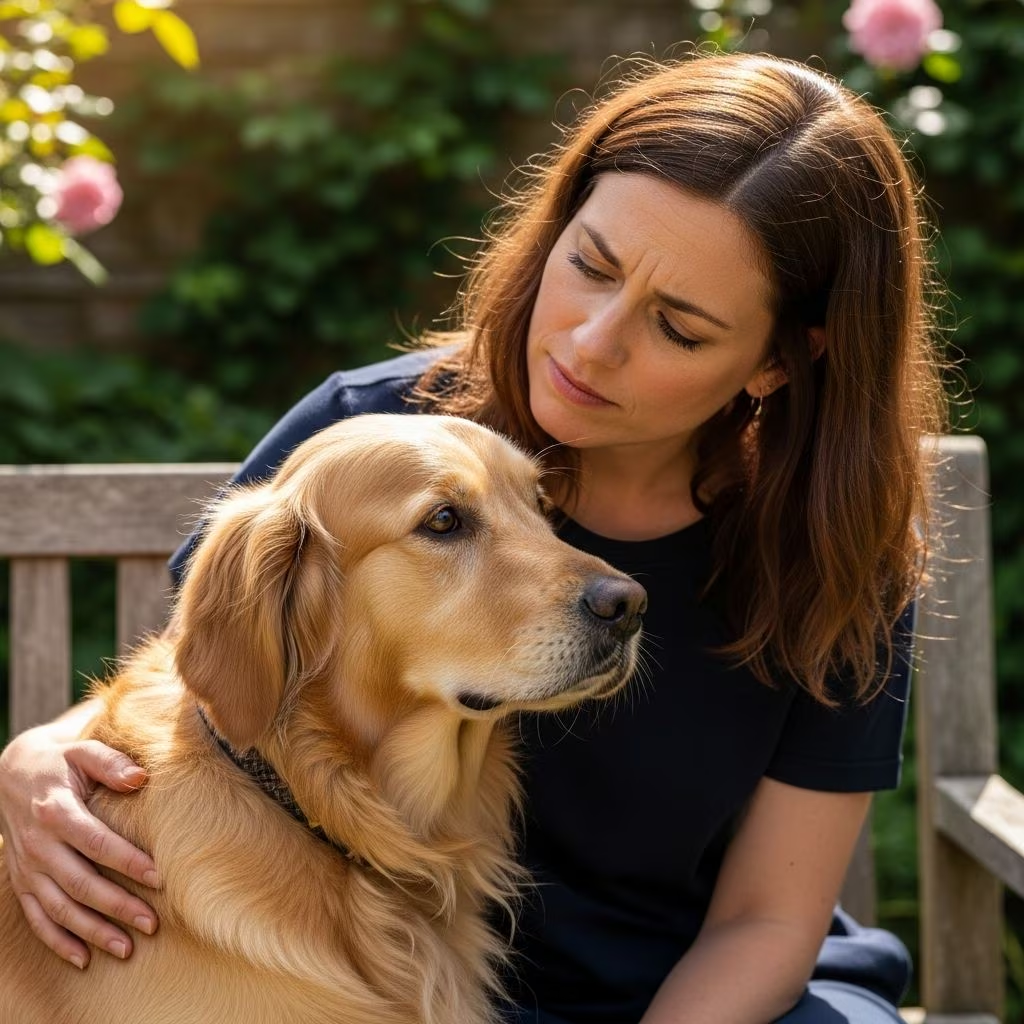
Dogs Mirror Human Stress Levels: What Science Reveals
Many dog parents sense that their pups pick up on their moods, but research now shows that this is more than a feeling: dogs can mirror their human’s long-term stress levels, and their bodies often reflect what we are going through.
This article unpacks what that means, how scientists measured it, what factors influence canine stress, and practical ways to support a calmer life for both you and your dog.
What Does It Mean When Dogs “Mirror” Human Stress?
When researchers say dogs mirror human stress, they are talking about a measurable, biological pattern where the dog’s stress hormone levels track those of the person they live with over time.
In this context, stress is not just a feeling—it is a physical state in which the body releases hormones like cortisol to help respond to challenges.
- Short-term stress: Brief spikes in cortisol and heart rate during something exciting or challenging, like a vet visit or agility run.
- Long-term stress: Elevated cortisol sustained over weeks or months, which can be captured in hair samples.
In key studies, dogs living with highly stressed owners also showed higher long-term cortisol levels, while dogs living with calmer humans had lower levels.
How Scientists Measured Stress in Dogs and Owners
To examine stress mirroring, scientists relied on physiological markers rather than self-reported emotions. A leading study from Linköping University in Sweden measured cortisol in hair to reflect stress over several months.
| Measure | What It Shows | How It Was Used |
|---|---|---|
| Hair cortisol | Long-term stress (weeks to months) | Samples taken from both dogs and owners to compare chronic stress levels. |
| Saliva cortisol | Short-term stress (minutes to hours) | Used in other work to track stress changes during specific events. |
| Heart rate | Moment-to-moment arousal and stress | Used in more recent research to show heart rate changes tracking between dogs and owners. |
| Questionnaires | Personality and lifestyle factors | Owners answered surveys about their own and their dogs’ traits. |
By combining these measures, researchers could determine whether elevated stress in people was linked with similar patterns in their dogs.
Key Findings: Dogs and Owners Share Long-Term Stress
The Swedish research team studied dozens of dogs and their humans and reached a striking conclusion: long-term cortisol levels were synchronized between the two.
- Owners with high hair cortisol tended to have dogs with high hair cortisol.
- Owners with low hair cortisol tended to have dogs with lower levels.
- The relationship held over multiple months, indicating a stable, long-term pattern rather than a one-time spike.
This suggests dogs are not simply reacting to occasional stressful events, but may be living in a similar stress climate as their humans over extended periods.
Who Influences Whom? Evidence Points to Humans
One of the central questions is whether dogs stress out their owners or owners stress out their dogs. The available evidence points more strongly toward dogs mirroring people rather than the other way around.
- The strongest predictor of a dog’s long-term cortisol was the owner’s personality and stress level, not the dog’s own personality.
- The study authors concluded that the dog appears to mirror the human more than the human mirrors the dog.
- Similar patterns of emotional and stress synchrony have been seen in other relationships, such as between children and mothers.
More research is needed to fully untangle cause and effect, but current data support the idea that the human’s emotional world sets the tone for the dog.
Dog and Human Personalities: What Matters Most?
To explore personality, owners completed validated questionnaires about themselves and their dogs. These included traits such as openness, calmness, and emotional stability.
- Owner personality showed a strong relationship with the dog’s long-term stress.
- Dog personality had surprisingly little impact on long-term cortisol.
This suggests that a naturally nervous or bold dog is not the primary driver of shared stress. Instead, the human’s coping style, daily habits, and emotional patterns are more influential in shaping the dog’s physiological stress state.
The Role of Activity, Training, and Lifestyle
Researchers also asked whether physical activity or competition training played a role in stress levels.
- Dogs wore activity collars to log how much they moved during daily life.
- Some dogs were family companions, while others were actively competing in obedience or agility.
Findings included:
- Physical activity did not significantly affect long-term hair cortisol in dogs.
- Competing dogs showed an even stronger synchrony with their owners’ stress compared with purely companion dogs.
One explanation is that competition dogs engage in more intensive, goal-directed interaction with their humans. The closer and more focused the teamwork, the easier it may be for stress levels to align.
Short-Term Interactions: Dogs Also Help Lower Human Stress
Long-term synchronization is only one side of the story. Other research shows that simply spending time with a friendly dog can lower human stress in the short term.
- In a study involving university students, just 15 minutes of interaction with a dog reduced self-reported stress, heart rate, and salivary cortisol.
- The dogs also benefitted: fecal cortisol levels were lower a week after the sessions, suggesting a reduction in longer-term stress.
These findings show that while dogs can absorb our stress, they can also be powerful stress relievers—for us and for themselves—when interactions are positive and supportive.
Heart Rate Synchrony: Real-Time Emotional Echoes
Newer work from Queen’s University Belfast adds another piece of evidence: dogs’ heart rates can track changes in their owner’s heart rate during shared experiences.
- When an owner’s heart rate rose or fell, the dog’s heart rate often shifted in a corresponding way.
- This real-time coupling suggests that dogs are sensitive to moment-to-moment changes in our arousal and emotional state.
Combined with earlier cortisol research, this supports the view that humans and dogs form a physiological unit in many situations, not just a behavioral bond.
Why Dogs Are So Sensitive to Human Emotions
Dogs have evolved alongside humans for thousands of years, during which time they developed a remarkable ability to read our cues.
Factors that may help explain stress mirroring include:
- Co-evolution: Dogs that were better at responding to human signals and emotions likely had survival advantages, leading to stronger emotional attunement over generations.
- Close daily contact: Most companion dogs live in the home, sleep near people, and share routines, making emotional cross-influence almost unavoidable.
- Non-verbal sensitivity: Dogs are tuned into our body language, tone of voice, facial expressions, and even smell, allowing them to sense subtle changes in our mood and stress.
Essentially, dogs are constantly collecting information about us. In doing so, they may also internalize the emotional atmosphere we create.
Breed, Training Style, and Future Questions
So far, detailed cortisol synchronization work has focused on certain breeds, particularly herding dogs like Border Collies and Shetland Sheepdogs.
Researchers are now exploring questions such as:
- Do independent working breeds (for example, some hunting dogs) show the same degree of stress mirroring, or are they less affected by human stress?
- Does the sex of the owner influence the strength of stress synchronization?
- How do different training methods—reward-based versus punishment-heavy—shape stress levels in both dog and owner?
Answers to these questions could help match certain dogs with owners whose lifestyles and emotional patterns are most compatible from a stress perspective.
How to Support a Calmer Dog–Human Life
The encouraging news is that anything you do to reduce your own stress can also be an investment in your dog’s well-being.
1. Take Care of Your Own Stress First
Because your emotional state is so influential, managing your stress is a key part of caring for your dog.
- Build predictable routines around feeding, walks, and rest to create a stable environment.
- Use personal stress-management tools such as exercise, mindfulness, or breathing techniques.
- Seek professional support when chronic stress, anxiety, or burnout becomes hard to manage on your own.
2. Create a Low-Stress Home for Your Dog
Simple environmental choices can greatly affect your dog’s daily stress levels.
- Provide a quiet, comfortable safe space where your dog can rest undisturbed.
- Limit exposure to repeated stressors like yelling, chaotic noise, or constant conflict.
- Introduce changes—new people, pets, or routines—gradually whenever possible.
3. Focus on Positive Interaction and Training
Positive, reward-based training builds confidence and can reduce stress for both of you.
- Use treats, toys, and praise to reward desirable behavior rather than punishing mistakes.
- Keep training sessions short, fun, and frequent.
- Watch for signs that your dog is overwhelmed and give breaks when needed.
4. Use Play and Affection as Stress Relief
Evidence shows that even brief friendly interactions with a dog can significantly lower stress markers in people—and can also benefit dogs.
- Schedule daily play sessions (fetch, tug, scent games) as shared stress relief.
- Enjoy calm petting and cuddle time if your dog seeks it.
- Use these interactions intentionally when you notice your own stress rising.
5. Watch for Signs of Chronic Stress in Your Dog
While only lab tests can measure cortisol, your dog’s behavior and body language may signal ongoing stress.
- Changes in appetite or sleep patterns
- Increased reactivity, barking, or restlessness
- Withdrawal, hiding, or loss of interest in play
- Repetitive behaviors, like excessive licking or pacing
If you notice persistent changes, consult a veterinarian or a qualified behavior professional.
Frequently Asked Questions (FAQs)
Q: Can my stress really make my dog sick?
A: Chronic stress is linked to health issues in many species, including dogs, through long-term elevation of hormones like cortisol. While research shows that dogs can mirror their owner’s long-term stress levels, more work is needed to pinpoint exactly how this contributes to specific illnesses. Managing your own stress is a proactive way to support your dog’s overall health.
Q: Are certain breeds more likely to mirror human stress?
A: Current studies have focused heavily on herding breeds such as Border Collies and Shetland Sheepdogs, which are bred to work closely with humans. These dogs showed strong stress synchronization with their owners. Ongoing research is exploring whether more independent breeds show the same degree of mirroring.
Q: Does more exercise always lower stress for dogs?
A: Not necessarily. In the long-term cortisol study, physical activity levels did not significantly affect hair cortisol in dogs. Exercise is still important for health and mental stimulation, but emotional factors—like the owner’s stress level and the quality of interactions—also play a major role in a dog’s stress state.
Q: How quickly can my dog pick up on my stress?
A: Some research indicates that dogs’ heart rates can change in relation to their owner’s heart rate during shared situations, suggesting a rapid, moment-to-moment emotional connection. Dogs also respond quickly to changes in our tone of voice, body language, and behavior.
Q: Is it enough to just spend more time with my dog to reduce stress?
A: Quality and context matter. Studies show that 15 minutes of positive interaction with a dog can significantly reduce human stress, and may decrease canine stress over time as well. However, if you spend more time together while remaining highly stressed, your dog may also internalize that tension. Combining positive time with your own stress management is ideal.
References
- Long-term stress levels are synchronized in dogs and their owners — Ann-Sofie Sundman et al., Scientific Reports. 2019-06-06. https://www.sciencedaily.com/releases/2019/06/190606102036.htm
- Playing with dogs relieves stress in humans and canines alike — Jaruwan Khonmee et al., reported via Phys.org (PLOS One study). 2025-03-07. https://phys.org/news/2025-03-playing-dogs-relieves-stress-humans.html
- Long-term stress levels are synchronized in dogs and their owners (News link) — NCBI / The Guardian summary. 2019. https://www.ncbi.nlm.nih.gov/search/research-news/4238
- Dogs Mirror Our Stress and We Know More About How and Why — Marc Bekoff, Psychology Today. 2019-06-07. https://www.psychologytoday.com/us/blog/animal-emotions/201906/dogs-mirror-our-stress-and-we-know-more-about-how-and-why
- Dogs mirror stress levels of their owner – first evidence — International Animal Health Journal. 2019. https://international-animalhealth.com/dogs-mirror-stress-levels-of-their-owner-first-evidence/
- Dogs mirror human stress levels, Queen’s University study finds — The Irish Times, reporting on Queen’s University Belfast research. 2024-12-03. https://www.irishtimes.com/ireland/education/2024/12/03/dogs-mirror-human-stress-levels-queens-university-study-finds/



