

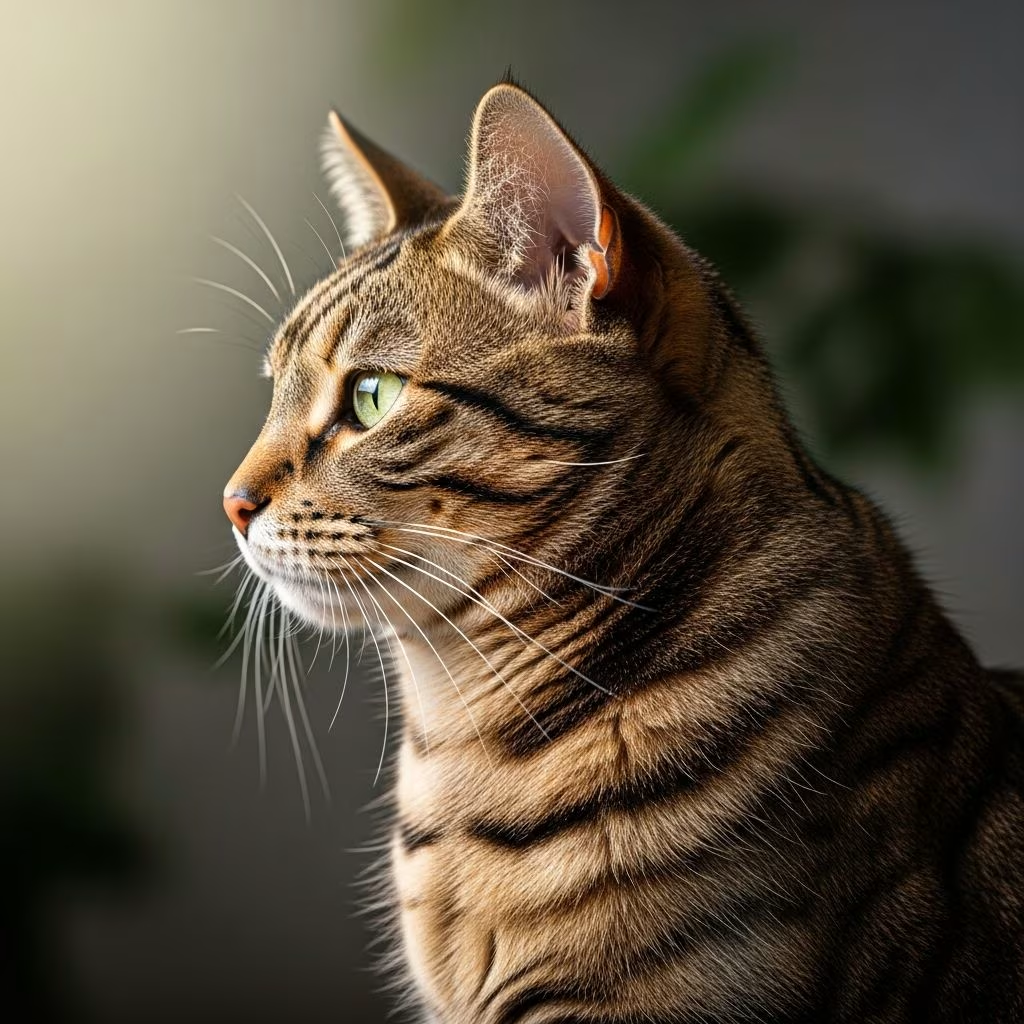
Tabby cats, with their iconic striped patterns, captivate cat lovers worldwide. These markings aren’t random but result from intricate genetic and developmental processes that begin in the womb. Researchers have pinpointed key genes like Tabby, Taqpep, and Dkk4 that dictate stripe formation, drawing parallels between domestic tabbies and wild felids like cheetahs.
This article delves into the biology behind tabby stripes, covering pattern types, genetic mechanisms, fetal development, and evolutionary insights. Understanding these processes highlights why tabby patterns persist across cat breeds and species.
What Is a Tabby Cat?
A tabby cat features a coat with distinctive stripes, swirls, or spots, often accented by the classic “M” mark on the forehead. Contrary to popular belief, tabby isn’t a breed but a coat pattern found in many, including Domestic Shorthairs. The agouti gene allows banded hairs, creating the tabby effect, while the pattern itself stems from specific alleles.
Tabby patterns evolved for camouflage in wild ancestors, aiding hunting in grasslands. Domestic selection has diversified them, but the core mechanism remains rooted in ancient feline genetics.
Tabby Cat Patterns Explained
Tabby cats exhibit four main patterns, each governed by genetic variations:
- Mackerel Tabby: The most common, with thin vertical stripes, narrow lines on legs and tail, and unbroken necklaces on the chest. Resembles wild cats like the African wildcat.
- Classic (Blotched) Tabby: Features bold swirls and marbled patterns, popular in shows. Mutations expand dark areas into whorls.
- Spotted Tabby: Breaks stripes into spots, seen in breeds like the Egyptian Mau.
- Ticked Tabby: Lacks stripes; hairs are banded, as in Abyssinians.
These arise from interactions between genes like Taqpep, where mutations shift mackerel to blotched, mirroring king cheetah spot coalescence.
The Genetics of Tabby Stripes
The Tabby (Taqpep) gene is central. In mackerel tabbies, it promotes stripes; mutations cause blotched patterns by altering pigment distribution. Studies on feral cats identified SNPs linking Taqpep to pattern variation.
Another key player, Dkk4, acts as a Wnt inhibitor. In fetuses, Dkk4 expression thickens skin in stripe areas, inhibiting pigment there for light bands, while activators pigment ridges. This reaction-diffusion mechanism, theorized by Alan Turing, uses diffusing molecules to self-organize patterns.
Tabby and Dkk4 operate in the same pathway, predestining skin cells before hair follicles form. Mutations inactivating Dkk4 blur markings in breeds like Abyssinian.
| Gene | Function | Mutation Effect |
|---|---|---|
| Tabby (Taqpep) | Controls stripe organization | Blotched/whorled patterns |
| Dkk4 | Inhibits Wnt for light areas | Loss of stripes, uniform coat |
| Agouti | Bands hairs for tabby look | Solid color if mutated |
How Tabby Patterns Develop in the Womb
Stripe formation starts early in feline embryos, around the late-7-week human equivalent. Epidermal ridges emerge as the first visual stripes, predestining pigment areas before melanocytes arrive.
Single-cell analysis of feral cat fetuses revealed Dkk4 activation in thick skin ridges, suppressing melanin for stripes. Light areas stay thin, allowing full pigmentation. This “prepattern” persists lifelong: kittens hatch with adult patterns, and regrown hairs match originals, as in cheetahs’ unchanging spot count.
Melanocytes, pigment cells, follow this map, depositing eumelanin (dark) in ridges and phaeomelanin (light) in valleys. Endothelin3 (Edn3) coordinates localized differences.
Tabby Genes in Wild Cats
The same genetics pattern wild felids. Taqpep mutations cause king cheetahs’ blotchy stripes; Tabby links domestic and cheetah markings.
Turing’s model explains spots (leopard) vs. stripes (tiger): inhibitor diffusion range determines pattern scale. In cats, moderate diffusion yields stripes.
Domestic-wild hybrids could reveal more on complex markings.
Why Do Some Cats Lack Stripes?
Non-tabby cats result from dominant solid-color mutations overriding tabby, or recessive ticked patterns. Breeds like Siamese have point coloration from temperature-sensitive enzymes, masking tabby.
Dkk4 inactivation in Abyssinians/Singapura shrinks spots to invisibility. Selection for novelty diversifies patterns.
Frequently Asked Questions (FAQs)
What causes a tabby cat’s stripes?
Stripes arise from genes like Taqpep and Dkk4, which prepattern fetal skin via Wnt inhibition, creating ridges for dark fur and valleys for light.
Are all tabby cats the same breed?
No, tabby is a pattern, not a breed, appearing across Domestic Shorthair, Maine Coon, and others.
Can tabby patterns change over time?
No, patterns are set at birth and maintained lifelong as hairs regrow identically.
Do wild cats have tabby genes?
Yes, Taqpep and Tabby govern cheetah spots and other felid patterns.
How was the stripe gene discovered?
Via feral cat genomics, single-cell fetal analysis, and cheetah comparisons.
Conclusion: The Timeless Appeal of Tabby Stripes
Tabby stripes blend evolutionary utility with genetic elegance. From Turing’s theory validated in cats to genes bridging domestic pets and wild predators, this pattern exemplifies nature’s precision. Future research may unlock more feline secrets.
References
- How cats get their stripes — Science | AAAS. 2018-11-16. https://www.science.org/content/article/how-cats-get-their-stripes
- How the Tabby Got Its Stripes — DNA Science – PLOS. 2021-09-23. https://dnascience.plos.org/2021/09/23/how-the-tabby-got-its-stripes/
- How the tabby cat got its stripes — EveryCat Health Foundation. N/A. https://everycat.org/cat-health/how-the-tabby-cat-got-its-stripes/
- Feline Find: How the Tabby Cat Got Its Stripes — Live Science. N/A. https://www.livescience.com/23348-how-the-tabby-cat-got-its-stripes.html
- Spots, stripes and blotches: Color patterns of cat fur tracked to a key developmental gene — Stanford Medicine. 2021-09. https://med.stanford.edu/news/all-news/2021/09/cat-fur-color-patterns.html
- HudsonAlpha researchers discover mechanism of cat fur color pattern establishment — HudsonAlpha. N/A. https://www.hudsonalpha.org/hudsonalpha-researchers-discover-mechanism-of-cat-fur-color-pattern-establishment/



