

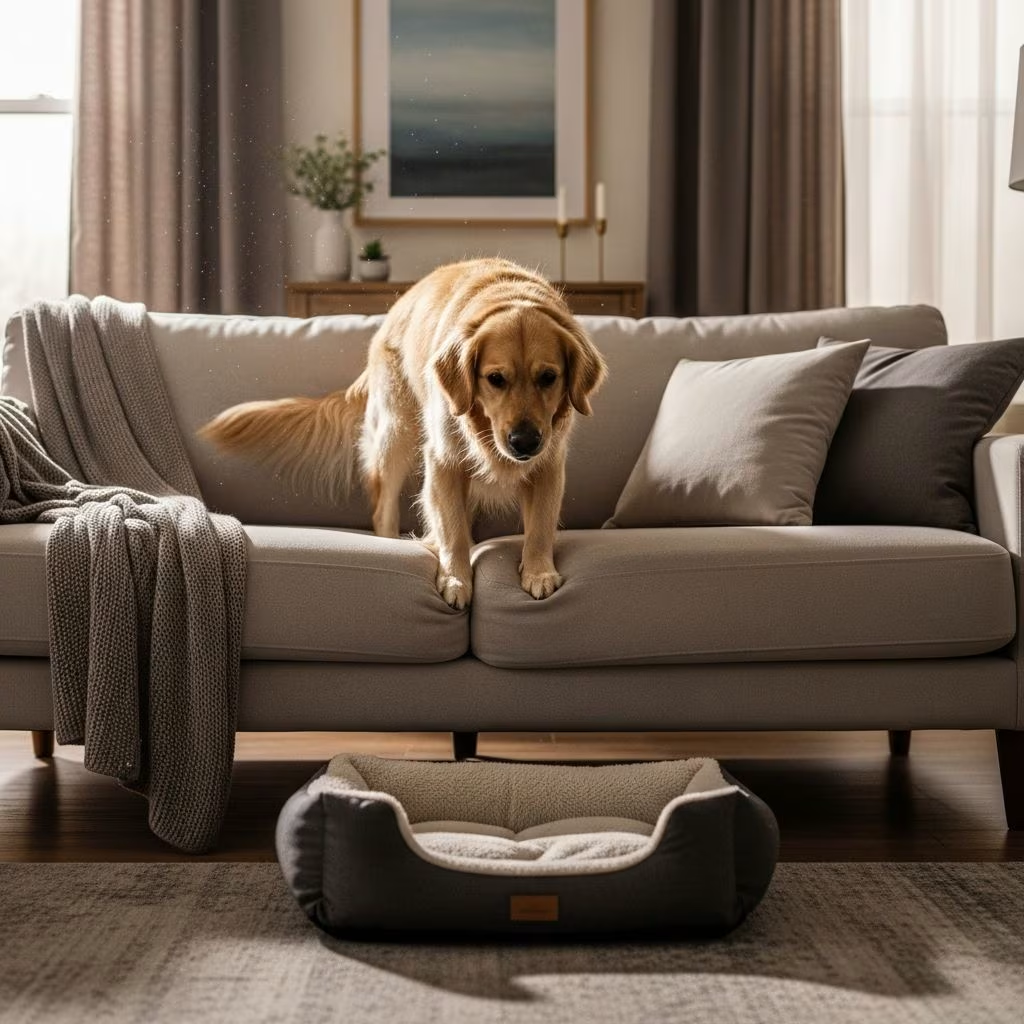
Many dog owners face the challenge of keeping their pets off the sofa. Dogs are naturally drawn to comfortable furniture for closeness, warmth, and elevated views, but establishing boundaries is essential for household rules and hygiene. This guide provides step-by-step strategies, from training commands to preventive measures, ensuring a harmonious home without compromising your bond with your dog.
Why Do Dogs Like the Sofa?
Dogs gravitate toward sofas for several instinctual reasons. Primarily, they seek proximity to their owners, as the sofa places them at eye level for interaction and affection. Even when alone, the furniture retains familiar scents, providing comfort and reducing loneliness.
Additionally, sofas offer an advantageous vantage point. Positioned near windows, they allow dogs to survey the outdoors, alerting to potential intruders or stimuli. The soft, elevated surface mimics natural high perches where wild canids might rest safely. Puppies, in particular, may not recognize this as off-limits if not explicitly taught, assuming it’s permissible after occasional invitations.
- **Closeness to family:** Dogs are pack animals craving connection.
- **Comfort and scent:** Furniture smells like home and pack members.
- **Better view:** Elevated spots enhance security and observation.
- **Warmth:** Cushions retain body heat effectively.
Understanding these motivations helps tailor training, addressing root causes rather than just symptoms.
Decide on Your Household Rules
Before training begins, establish clear, consistent rules. Inconsistency confuses dogs; if one family member allows sofa access while others forbid it, behavioral issues arise. Decide unanimously: full restriction, invitation-only, or limited access.
For families, discuss pros and cons. Allowing access may foster bonding but risks dirt, hair, aggression over resources, or hierarchy confusion—dogs on the same level as humans might question leadership roles. Restriction promotes discipline and cleaner spaces, especially as puppies grow larger.
| Access Level | Best For | Challenges |
|---|---|---|
| Free Access | Well-behaved adult dogs | Risks inconsistency; potential dominance issues |
| Invitation Only | Balanced bonding with control | Hard to enforce consistently |
| No Access | Puppies, multi-dog homes, hygiene-focused | Requires initial effort and deterrents |
Commit early—puppies form habits quickly, and larger breeds become harder to redirect.
Train the “Off” Command
The foundational “off” command signals dogs to leave furniture immediately. Use positive reinforcement for best results.
- Prepare treats:** High-value rewards like small chicken pieces.
- Lure off:** When dog is on sofa, hold treat at ground level, say “off” calmly, and guide them down. Reward instantly upon all paws touching floor.
- Practice repeatedly:** Start with short sessions, 5-10 times daily. Gradually fade lure, using verbal cue alone.
- Add distance:** Practice from across room; reward compliance.
- Generalize:** Apply to all furniture types.
Never push or yell—force breeds fear or defiance. Sessions should end positively. Expect progress in 1-2 weeks with daily practice.
Use Positive Reinforcement
Reinforce desired behaviors proactively. Provide an appealing alternative bed in a quiet spot, praising lavishly when used. Ignore sofa attempts, redirecting to bed with cues like “place” or “bed.”
Clicker training accelerates learning: Click for correct action, follow with treat. Consistency across household members prevents mixed signals. Track progress in a journal to monitor improvements and adjust.
- **Reward calm floor time:** Treats every few minutes initially.
- **Ignore jumping:** No attention until off sofa.
- **Family buy-in:** All enforce same rules.
Management and Prevention During Training
While training, block access physically. Use baby gates, aluminum foil, or double-sided tape on sofa edges—dogs dislike sticky textures. Commercial deterrents like scat mats emit mild shocks or vibrations safely.
Supervise constantly; crate or confine when unsupervised. Remove temptations by covering sofa or using inflatable blockers. These prevent rehearsal of bad habits, making training easier.
For persistent jumpers, leash training indoors: Short leash attached to you, gentle lead down if approaching sofa.
What If They Growl or Get Aggressive?
Aggression when removed signals resource guarding or poor leadership perception. Furniture represents high-value resources; unrestricted access can blur pack hierarchy, leading to defensive snaps.
Address immediately:
- Cease all furniture privileges temporarily.
- Use muzzle during retraining if needed for safety.
- Consult professional trainer for behavior assessment—root often lies in overall leadership deficits, not sofa alone.
- Desensitize: Toss treats from sofa while saying “off,” rebuilding positive associations.
Early intervention prevents escalation; statistics from veterinary behaviorists show resource guarding affects 20-30% of dogs with furniture privileges.
Alternatives to the Sofa
Dogs need comfy spots. Invest in elevated dog beds mimicking sofa height, placed near family areas. Orthopedic foams suit older dogs; cooling gels for hot climates.
Enrich environment with puzzle toys on bed to associate positively. Rotate beds to maintain novelty.
- K9 Ballistics chew-proof beds.
- Big Barker orthopedic options.
- Furniture-style crates for dual use.
Common Mistakes to Avoid
- **Inconsistency:** Undermines trust.
- **Punishment:** Creates fear, not understanding.
- **Late starts:** Habits solidify after 6 months.
- **No alternatives:** Dogs seek comfort elsewhere disruptively.
- **Overlooking reasons:** Address boredom or anxiety fueling behavior.
Frequently Asked Questions
Can I ever let my dog on the sofa again?
Yes, after solid training, invitation-only access works for reliable dogs. Always enforce “off” promptly.
Is it okay for puppies but not adults?
No—early habits persist. Train from day one.
What if my dog ignores “off”?
Revert to management tools and intensify rewards. Seek pro help if persistent.
Does sofa access cause dominance?
Not directly, but poor leadership combined with it can. Control resources firmly.
How long until trained?
1-4 weeks for puppies; longer for adults with habits. Patience key.
Implementing these strategies creates clear boundaries, reducing stress for all. Consistent, humane training yields obedient, happy dogs respecting home rules.
References
- AVMA Canine Behavior Guidelines — American Veterinary Medical Association. 2024-06-15. https://www.avma.org/resources-tools/pet-owners/petcare/canine-behavior
- Positive Reinforcement Training for Dogs — ASPCA. 2023-11-20. https://www.aspca.org/pet-care/dog/training
- Resource Guarding in Dogs — Journal of Veterinary Behavior (Peer-reviewed). 2022-05-10. https://doi.org/10.1016/j.jveb.2022.03.005
- Should Dogs Be Allowed on Furniture? — Thriving Canine Training. 2023-08-12. https://www.thrivingcanine.com/blog/should-dogs-be-allowed-furniture/
- Training Puppies Off Furniture — AKC Canine Health Foundation. 2024-02-28. https://www.akc.org/expert-advice/training/puppy-training-furniture/



