

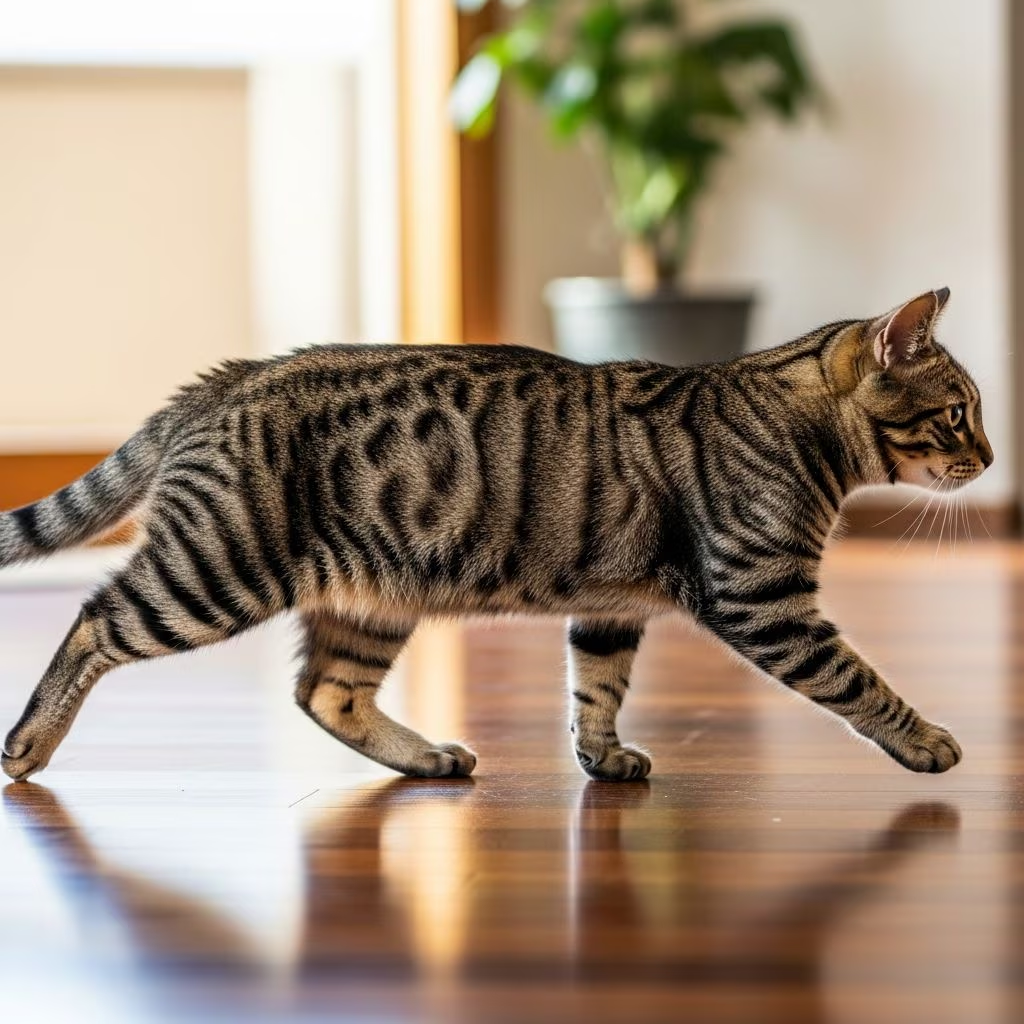
Cats are renowned for their graceful, silent, and efficient movement, which stems from specialized anatomy and precise gaits. Understanding how cats walk reveals much about their predatory nature, balance, and overall health.
Cat Paw Anatomy
The foundation of a cat’s walking ability lies in its paws. Cats are digitigrade animals, meaning they walk on their toes and the balls of their feet rather than flat-footed like humans. Each front paw has five toes, while the hind paws have four, totaling 18 toes across all paws. These toes are equipped with sharp, curved claws that retract for stealthy movement and extend for gripping, climbing, protection, and balance. The fleshy, hairless pads on the paws provide cushioning, sensitivity to surfaces, and shock absorption, enabling quiet stalking and precise footing.
This digitigrade posture allows cats to move quickly and silently, essential for their role as stealthy predators. The pads also contain sweat glands, helping with temperature regulation and traction on various terrains.
How Do Cats Walk? Cat Walking Gait Explained
The standard cat walk is a four-beat gait, where each paw contacts the ground at distinct times during the stride. This ensures at least two feet are always on the ground for stability. In a slow walk, such as stalking prey, three or even four feet may contact the ground simultaneously. The sequence typically follows a diagonal pattern: left hind, left front, right hind, right front.
Cats are energy-efficient walkers, often placing hind paws directly into the prints left by front paws. The head remains at shoulder height or slightly varied, with the tail straight out or upright. This gait conserves energy during leisurely strolls.
Other Cat Gaits
Beyond the basic walk, cats employ several gaits depending on speed, terrain, and purpose:
- Trot: A two-beat gait for purposeful movement, with diagonally opposite paws (e.g., left front and right hind) hitting the ground together. The head lowers below shoulders, tail extends straight or slightly tilted. This stable, efficient gait suits missions or curiosity-driven travel.
- Canter: A three-beat gait faster than trotting but slower than running. At least one paw always contacts the ground, sometimes three. It features a ‘lead leg’—the advance paw from either front or hind legs—allowing right or left leads. This provides controlled acceleration.
- Amble: A variation of the four-beat gait resembling a running walk or slow pace. Limbs on one side move nearly simultaneously, creating a rolling motion. Cats switch between walk, amble, or intermediates based on individual preference and speed.
- Run/Gallop: For high speeds, cats use bounding or galloping patterns, leveraging spine flexion for extended strides.
Why Do Cats Walk the Way They Do?
The cat’s supple, flexible spine is key to its distinctive walk. This vertebral column compresses and extends dramatically, adding inches to stride length and speed. At faster speeds, cats lead with opposite fore and rear feet, enabling overreaching. Extension just before the last limb lifts prolongs the stride, mimicking a longer body.
Body orientation also signals intent; cats point their bodies toward their direction of movement, crouching sideways for quick escapes if needed. Paws’ retractable claws and pads ensure silent, precise steps, optimized for hunting.
Why Do Cats Climb? How Do Cats Climb?
Climbing is integral to feline locomotion, allowing access to high vantage points for safety, hunting, or exploration. Breeds like Siamese excel at this, scaling trees, roofs, or furniture. The limb sequence mirrors walking—a four-beat rhythm—but hurries into a gallop pattern when rushed.
Claws aid gripping but aren’t always necessary; declawed cats can relearn climbing. The flexible spine and strong limbs facilitate upward and downward movement, with hind legs pushing powerfully while forepaws secure holds.
Gaze and Stride Coordination in Cats
Cats synchronize eye movements with strides for navigation, even in darkness. During walking, gaze shifts away (forward) and fixations align with forelimb swings. On flat surfaces, gaze behaviors like shifts toward the body, fixations, constant gaze, and slow drifts coordinate tightly with stride phases.
On complex terrains like ladders or stony paths, coordination intensifies: cats look closer, with behaviors concentrating in preferred stride phases, slightly delayed at higher speeds. ‘Gaze stepping’—forward shift followed by fixation—dominates, ensuring precise foot placement.
| Gait/Surface | Gaze Behavior | Stride Phase Alignment |
|---|---|---|
| Flat (Dark/Light) | Shifts away, fixations | Forelimb swing start to mid |
| Ladder/Stones | Gaze stepping, slow gaze | Tighter, later in cycle |
| Faster Speeds | All behaviors | Further ahead, enhanced sync |
Why Is My Cat Walking Weird? Cat Walking Abnormalities
Normal gaits indicate health; deviations signal issues. Careful or careful walking, pacing, or circling may stem from pain, musculoskeletal problems, neurological issues, or stress. Increased resting, appetite loss, or behavioral changes accompany these.
- Lameness: Limping from injury, arthritis, or paw issues alters gait symmetry.
- Stiff Walk: Age-related joint problems or pain cause shorter strides.
- Pacing/Circling: Rare but can indicate anxiety, cognitive dysfunction, or vestibular disease.
- Drunken Gait: Balance loss from ear infections or toxins.
Monitor for asymmetry, reluctance to jump, or vocalizing during movement. Consult a vet for diagnostics like X-rays or bloodwork.
Cat Limping: When to See a Vet
Seek veterinary care if limping persists beyond 24-48 hours, affects appetite, or involves swelling/bleeding. Minor sprains may resolve with rest, but fractures, infections, or tumors require intervention. Early detection prevents chronic issues.
Frequently Asked Questions
Why do cats walk so quietly?
Cats walk silently due to soft paw pads, retractable claws, and digitigrade posture that minimizes noise.
How can you tell if your cat is in pain from its walk?
Signs include limping, stiff gait, reluctance to move, or avoiding jumps, often with behavioral changes.
Do all cats walk the same way?
No, individuals vary in gaits like amble vs. walk, influenced by breed, age, and speed.
Why do cats place hind paws in front paw prints?
This energy-efficient technique, called hind foot placement, conserves energy and erases tracks while hunting.
Can declawed cats still climb?
Yes, though they may need time to relearn; claws aid but aren’t essential.
References
- Feline Locomotive Behavior — Veterian Key. 2016. https://veteriankey.com/feline-locomotive-behavior/
- Gaze coordination with strides during walking in the cat — PMC (NCBI). 2022-06-28. https://pmc.ncbi.nlm.nih.gov/articles/PMC9260858/
- What Movement and Gait Tell You About Your Cat — Fear Free Happy Homes. Accessed 2026. https://www.fearfreehappyhomes.com/what-movement-and-gait-tell-you-about-your-cat/



