

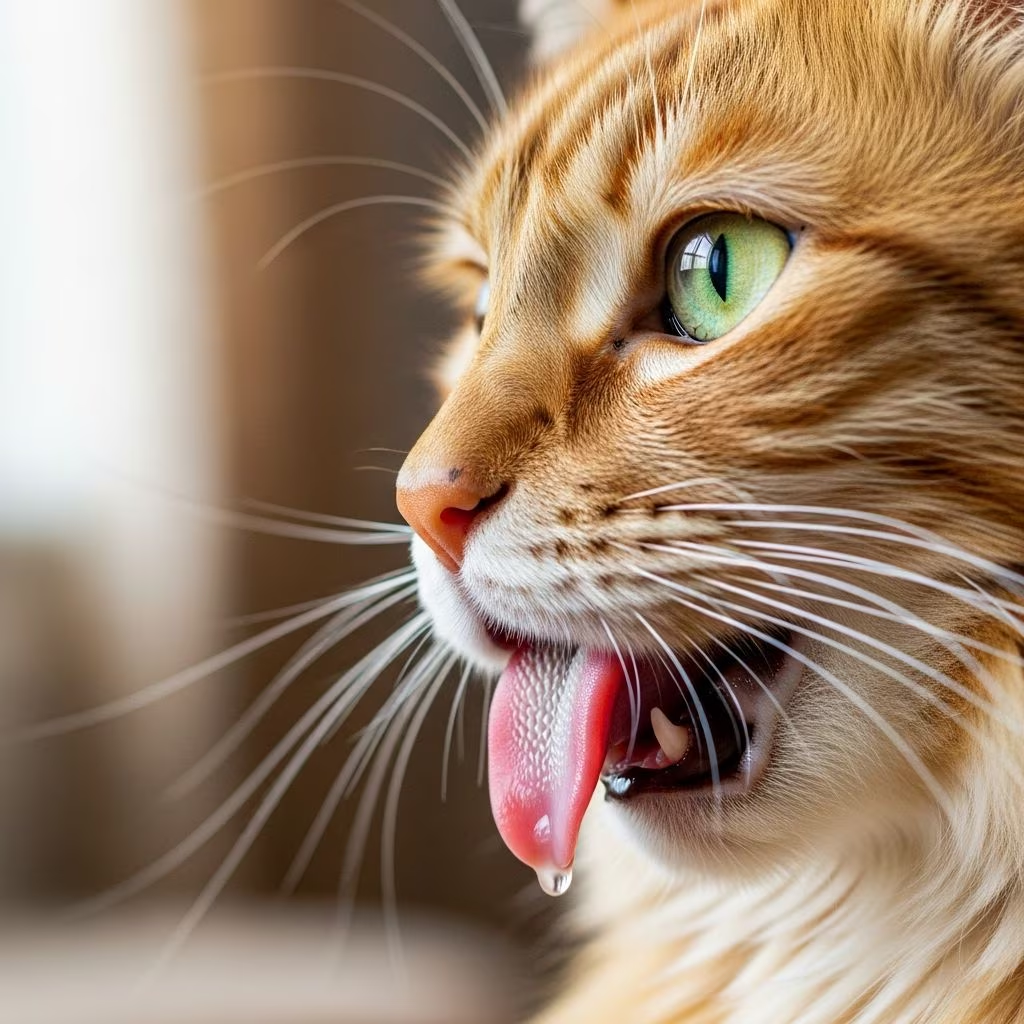
Cats possess a specialized sense of taste adapted to their obligate carnivorous diet, featuring around 470-500 taste buds compared to humans’ 9,000. This allows them to detect umami, salty, sour, and bitter flavors effectively, but they cannot taste sweetness due to a pseudogenized Tas1r2 gene.
Cat Taste Buds: Fewer but Specialized
Cats have approximately 470 to 500 taste buds, significantly fewer than the 9,000 in humans, yet these are highly tuned for meat-based nutrients. As obligate carnivores, their taste system prioritizes proteins, fats, and umami compounds over carbohydrates.
- Fewer taste buds: Cats’ 470-500 buds focus on savory meat flavors rather than diverse plant-based tastes.
- Carnivore adaptation: Evolved to detect amino acids, nucleotides, and fats essential in prey.
- Comparison to humans: Humans have more buds for broader tastes including sweets; cats’ system is streamlined for hunting efficiency.
This specialization means cats reject carb-heavy foods, preferring freshly killed prey simulations like warm, meaty meals around 100°F.
The Five Basic Tastes for Cats
Cats perceive four primary tastes like humans—salty, sour, bitter, umami—but lack sweet detection. Their taste profile emphasizes meat indicators.
| Taste | Cat Sensitivity | Human Comparison | Purpose for Cats |
|---|---|---|---|
| Umami | High (Tas1r1-Tas1r3 receptor active for nucleotides, amino acids) | Similar, but cats show synergy with IMP and L-Histidine | Detects proteins in meat |
| Bitter | High (12 receptors, sensitive to toxins like PTC, PROP) | Cats less sensitive to some (e.g., PROP), more to denatonium | Avoids poisons |
| Salty | Moderate | Similar | Electrolyte balance |
| Sour | Moderate | Similar | Spoiled food detection |
| Sweet | None (Tas1r2 pseudogene) | High | Not needed for carnivores |
Umami: The Carnivore’s Delight
Umami, mediated by Tas1r1-Tas1r3, is cats’ primary appetitive taste. Cats express Tas1r1 in fungiform papillae and respond strongly to nucleotides like IMP (inosine monophosphate) and certain L-amino acids like histidine, especially in mixtures. Tuna’s palatability stems from high IMP and free L-Histidine synergy.
- Nucleotides (e.g., IMP) are potent agonists.
- L-Amino acids enhance when mixed with nucleotides.
- Explains preference for meaty, savory foods over bland carbs.
Bitter: A Built-In Toxin Detector
Cats have about 12 bitter receptors (Tas2r family), matching humans in number but differing in sensitivity. Tas2r38 responds less to PTC; Tas2r43 is more sensitive to denatonium. This protects against poisonous prey like certain reptiles.
Bitter sensitivity complicates medicating cats, as many drugs taste unpleasant.
No Sweet Tooth: Evolutionary Loss
Cats cannot taste sweets due to a defective Tas1r2 gene, confirmed by genetic studies and behavioral tests showing no response to sucrose or other sugars. This aligns with their strict meat diet, where sugars are absent.
“The sense of taste in cats appears similar to that of other mammals with the exception of an inability to taste sweet stimuli.”
When cats encounter sweets, they may detect other flavors (e.g., texture or fat) but not sweetness itself.
Jacobson’s Organ: Taste-Smell Superpower
Beyond taste buds, cats use Jacobson’s organ (vomeronasal organ) on the roof of their mouth for “taste-smelling.” They transfer scents via tongue flehmen response, analyzing pheromones, food essences, and environmental odors.
- Location: Roof of mouth.
- Function: Enhances flavor perception by combining smell and taste.
- Behavior: Open-mouth grimace (flehmen) to process scents.
This organ amplifies cats’ sensory experience, making aromas integral to “taste.”
Temperature and Texture Matter Too
Cats prefer food at 100°F, mimicking fresh prey warmth, and reject cold refrigerator meals. Texture influences appeal; crunchy or soft meats engage their senses.
- Warm food: Increases palatability.
- Avoids cold: Signals spoiled or unappealing prey.
- Fats and ATP: Possible additional receptors for meat energy signals.
Why Cats Are Picky Eaters
Their taste adaptations make cats finicky: hypersensitive to off-flavors, bitter meds, and non-meaty foods. Breeders and vets note preferences for umami-rich foods like tuna.
Commercial foods leverage this with meat flavors, avoiding sugars. Understanding feline taste helps owners choose better diets.
Frequently Asked Questions (FAQs)
Can cats taste sweet flavors?
No, cats lack functional sweet taste receptors due to a pseudogenized Tas1r2 gene, confirmed by genetic and behavioral studies.
Why do cats love tuna so much?
Tuna’s high IMP and L-Histidine create synergistic umami, highly appetitive to cats’ Tas1r1-Tas1r3 receptors.
Do cats taste bitter differently than humans?
Yes, cats have similar numbers of bitter receptors but different sensitivities (e.g., less to PROP, more to denatonium).
How many taste buds do cats have?
Cats have about 470-500 taste buds, specialized for carnivorous needs.
What is Jacobson’s organ in cats?
A vomeronasal organ for taste-smelling pheromones and food scents via flehmen response.
Why do cats prefer warm food?
It simulates freshly killed prey at around 100°F, enhancing appeal.
Implications for Cat Owners
Knowing cat taste profiles guides feeding: prioritize high-protein, umami-rich wet foods; warm them slightly; avoid sugary treats. For meds, use flavored coatings to mask bitterness.
Research continues on ATP receptors and fat detection, potentially revolutionizing pet food.
References
- Umami taste perception and preferences of the domestic cat (Felis catus) — Oxford Academic. 2023-10-01. https://academic.oup.com/chemse/article/doi/10.1093/chemse/bjad026/7238703
- Is my cat bitter, or does he just taste that way? — Science | AAAS. 2010-07-28. https://www.science.org/content/article/my-cat-bitter-or-does-he-just-taste-way
- The Five Senses According to Cats: Taste — Cats on Broadway Animal Hospital. Accessed 2026. https://www.catsonbroadwayhospital.com/the-five-senses-according-to-cats-taste/
- Can Cats Taste Sweet Things? — PetMD. Accessed 2026. https://www.petmd.com/cat/nutrition/can-cats-taste-sweet-things
- Cats Lack a Sweet Taste Receptor — PMC – NIH. 2005-09-13. https://pmc.ncbi.nlm.nih.gov/articles/PMC2063449/



