

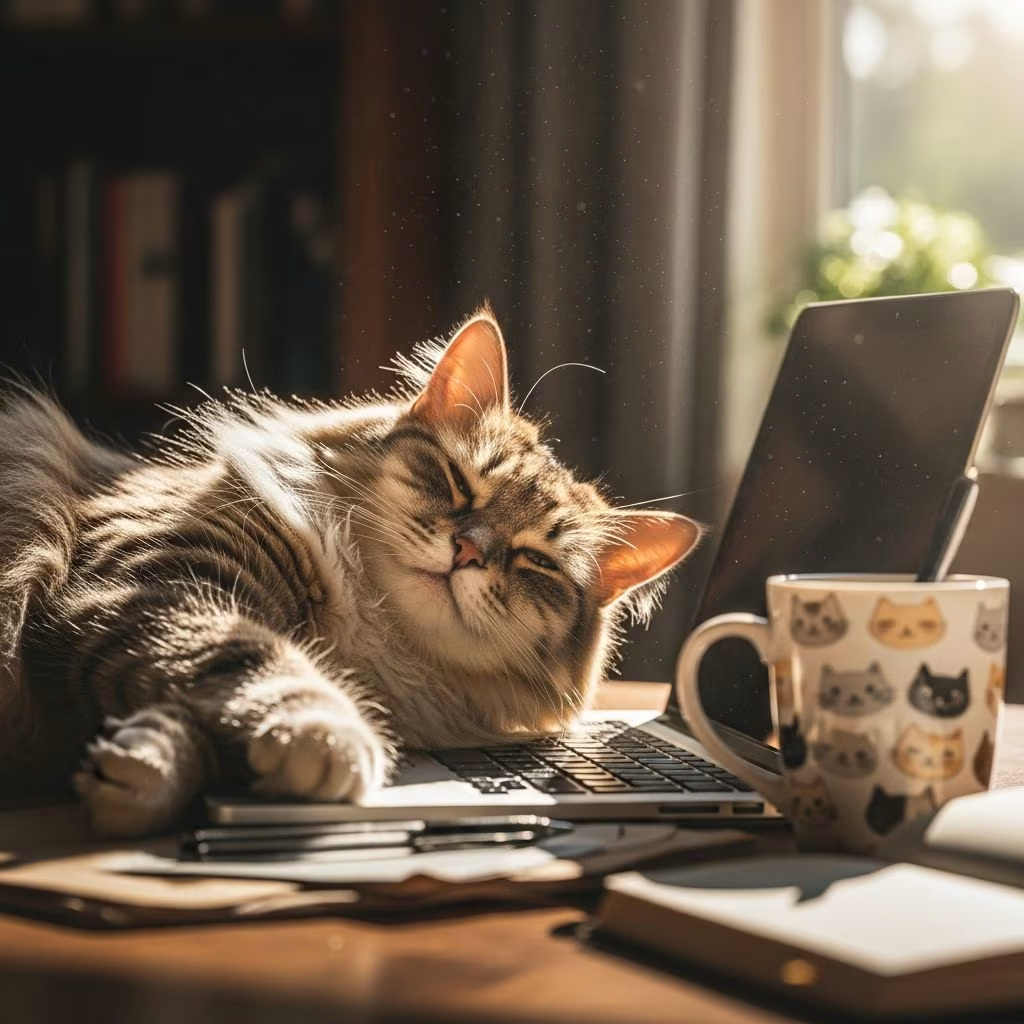
The shift to remote work has reshaped daily life for millions, bringing humans and pets into closer quarters than ever before. Cats, often seen as independent loners, now share office spaces with their owners. But do they welcome this constant companionship or resent the intrusion? This article delves into feline perspectives on work-from-home life, drawing from behaviorist insights and studies to reveal how cats truly feel—and how to foster a peaceful coexistence.
Do Cats Like Their Parents Working From Home?
Cats are complex creatures, capable of deep emotional bonds despite their aloof reputation. Research confirms that cats form secure attachments with humans, sometimes preferring interaction over food or toys. Many thrive on your presence, curling up nearby for comfort during your workday. Yet, this isn’t universal—some cats view your sudden ubiquity as a disruption to their serene solitude.
Cats cherish **routines** and **territorial familiarity**. When you leave for the office, they enjoy uninterrupted naps (12–16 hours daily) in quiet homes. Your return introduces noise, movement, and schedule shifts, potentially fragmenting their rest. Behaviorist Rachel Geller notes cats are “highly reactive to change,” stressing over altered meal times, light patterns, or deliveries.
- Positive reactions: Purring, kneading, or supervised loafing near your desk signal contentment.
- Negative cues: Hiding, excessive meowing, or litter box issues indicate adjustment struggles.
Ultimately, most cats adapt positively if you respect their space, turning work-from-home into a bonding opportunity rather than a battleground.
How to Work From Home With Your Cat
Creating a cat-friendly remote workspace requires intentional tweaks. Here’s how to minimize stress and maximize mutual enjoyment:
Set Up a Quiet Workstation
Position your desk in a low-traffic area to preserve your cat’s peace. Use headphones for calls—strange voices can startle shy cats. This setup reduced my own cat’s anxiety, allowing her to nap undisturbed while I focused.
Provide Retreat Spaces
Offer multiple cozy beds: one near you for company, another secluded for solitude. Cats need private zones to decompress amid your activity. Elevated perches or window seats double as safe observatories.
| Workspace Element | Cat-Friendly Tip | Benefit |
|---|---|---|
| Desk Location | Secluded corner | Reduces noise disruption |
| Call Equipment | Noise-cancelling headphones | Blocks unfamiliar voices |
| Cat Beds | One nearby, one private | Balances interaction and independence |
| Play Schedule | Fixed daily sessions | Maintains routine security |
Maintain Routines and Breaks
Stick to pre-pandemic feeding and play times as closely as possible. Cats feel secure with predictability. Leverage their reminders for breaks—short play sessions boost your productivity and their happiness. Studies show 30 minutes of daily exercise curbs boredom-related depression in 40% of house cats.
- Feed at consistent times.
- Schedule 10–15 minute play breaks (e.g., wand toys).
- Avoid locking them out—open doors foster trust.
Monitor for Stress Signals
Watch for changes: obsessive grooming, destructive scratching, or inappropriate elimination. Increased commotion from kids or Zoom stress amplifies this, as cats sense your tension via voice tones. If issues persist, consult a vet to rule out health problems.
Signs Your Cat Is Stressed by Your Work-From-Home Routine
Not all cats greet your presence with joy. Common stress indicators include:
- Vocal demands: Excessive meowing or yowling for attention.
- Behavioral shifts: Chewing, over-grooming, or furniture destruction.
- Litter issues: Urinating outside the box signals high anxiety.
- Withdrawal: Hiding more than usual or avoiding interaction.
- Appetite changes: Eating less or begging excessively.
These stem from disrupted habits. Unlike dogs, who often revel in extra company, cats prioritize predictability over proximity. A NIH study found home interactions can even arouse owners’ physiological stress responses, hinting at bidirectional tension.
The Benefits of Working From Home With Cats
Beyond adaptation, remote work strengthens human-feline bonds. Cats remind you to unplug, promoting work-life balance. Play breaks reduce sedentary strain, while their purring lowers your blood pressure.
- Mental health boost: Pet interactions combat isolation.
- Productivity aid: Gentle interruptions encourage healthy pauses.
- Bonding depth: Shared routines build secure attachments.
Many report deeper connections post-transition, with cats evolving from solo sleepers to loyal office mates.
Preparing Cats for Your Return to the Office
As hybrid models emerge, prepare for office returns to avoid reverse stress. Gradually reintroduce old routines:
- Simulate commutes: Leave for 1–2 hours daily at work departure times.
- Reset mornings: Wake, shower, and feed on office schedule.
- Monitor reactions: Positive adaptation means no harm perceived.
Cats habituate over time, learning new normals pose no threat. Patience ensures smooth shifts both ways.
Frequently Asked Questions (FAQs)
Do cats get lonely when owners work from home?
No—many enjoy the company, but some prefer alone time for undisturbed sleep. Provide options for both.
Why is my cat more destructive since I started working from home?
Likely stress from routine changes. Restore consistency and add enrichment like puzzle feeders.
Can my stress affect my cat during Zoom calls?
Yes, cats detect voice tones and emotions, mirroring your tension.
How long does it take a cat to adjust to work-from-home?
Weeks to months, depending on consistency. Most settle if needs are met.
Should I let my cat into my home office?
Yes, but provide escape routes. Exclusion heightens anxiety.
Working from home with a cat can transform your routine into a joyful partnership. By honoring their need for routine, space, and play, you’ll both thrive in this new normal.
References
- Your Cat Kind of Hates That You’re Working From Home Now — Mental Floss / Rachel Geller, Ed.D. 2021-03-01. https://www.mentalfloss.com/article/650772/cats-hate-humans-working-from-home
- How Do Cats Really Feel When You Work From Home? — Catster. 2023-01-15. https://www.catster.com/cat-behavior/how-do-cats-really-feel-when-you-work-from-home/
- Effects of Interactions with Cats in Domestic Environment on Physiological State of Owners — National Library of Medicine (PMC). 2023-07-01. https://pmc.ncbi.nlm.nih.gov/articles/PMC10340037/
- Working From Home With Cats Survival Guide — Modkat. 2022-05-10. https://modkat.com/blogs/modkat-purrr/working-from-home-with-cats-survival-guide



