

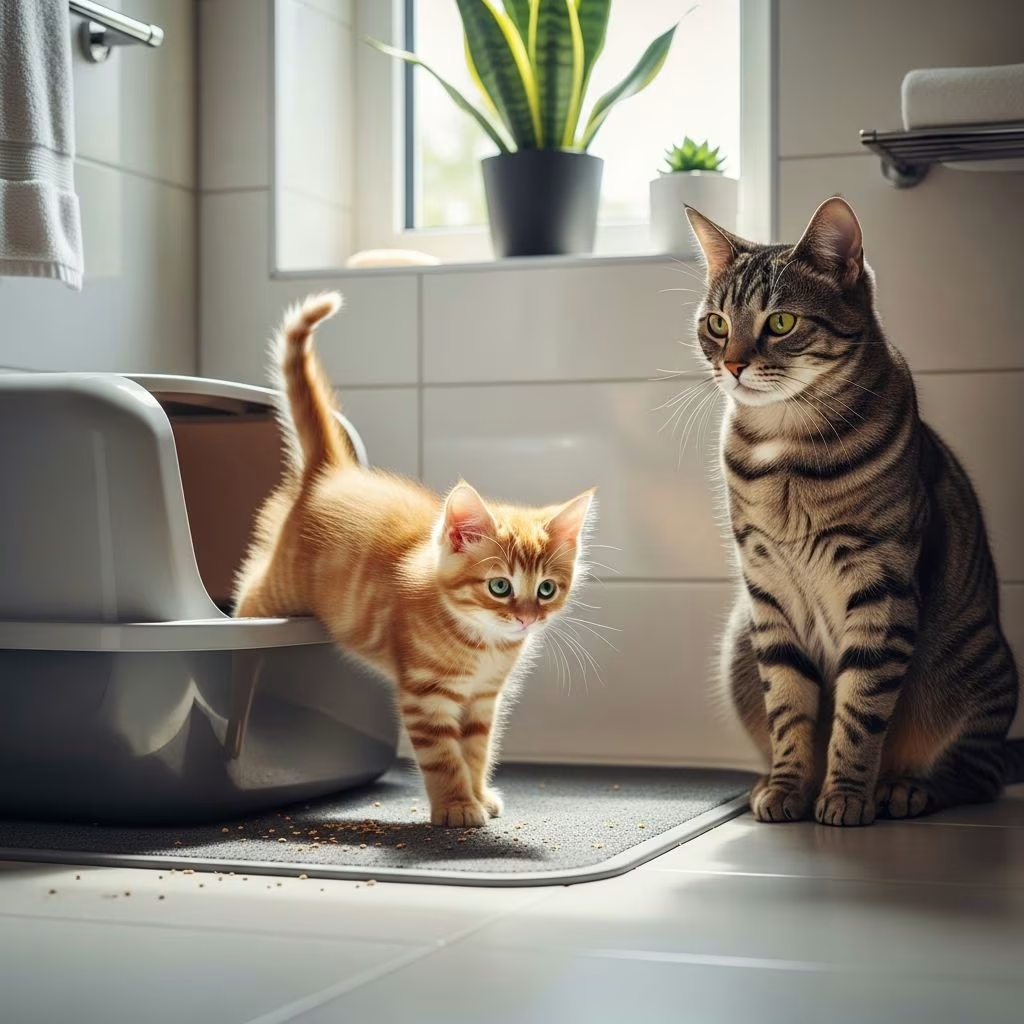
Cats possess an innate ability to seek out suitable substrates for elimination, making litter box use largely instinctual rather than learned. This natural behavior stems from their wild ancestors who buried waste to avoid predators and maintain hygiene, a trait passed down through domestication.
Why Do Cats Use a Litter Box?
Cats are wired to dig, bury, and cover their waste, mimicking the actions of their feral counterparts. In the wild, this behavior conceals scents from predators and prey, promoting survival. Domestic cats recognize litter—typically fine-grained, loose material—as an ideal substitute for soil or sand.
- Instinctive Digging: Before and after elimination, cats scratch to prepare a spot and bury waste.
- Scent Concealment: Burying hides odors, a key survival mechanism.
- Hygiene Preference: Cats are fastidious and avoid soiled areas, seeking clean substrates.
Research confirms most cats prefer fine clay clumping litter, deep enough for digging (at least 3 inches), in spacious, uncovered boxes located in quiet, accessible spots.
Do All Cats Automatically Know How to Use the Litter Box?
Yes, the vast majority of kittens and adult cats intuitively use litter boxes from the start, thanks to hardwired instincts. Kittens often begin as early as 3-4 weeks old by observing their mother.
- Healthy kittens separated from mothers before 8 weeks may need brief guidance.
- Adult strays or ferals adapt quickly if provided appropriate litter and box setup.
- Rare exceptions occur with severe health issues or extreme stress.
Owners report near-100% success rates when boxes meet feline preferences, underscoring the reliability of this instinct.
Instincts That Drive Litter Box Use
Several innate drives compel cats to the litter box:
- Elimination Posture: Cats squat low for urination (horizontal surfaces, larger volumes) and stand for spraying (vertical marking, small amounts).
- Pre-Elimination Scratching: Pawing signals readiness; intervening with litter demonstration aids training.
- Substrate Preference: Loose, diggable materials trigger burying reflex; soft textures soothe paws.
These behaviors persist across breeds and ages, with minimal training required.
Litter Box Preferences: What Cats Really Want
| Preference | Ideal Setup | Why It Matters |
|---|---|---|
| Litter Type | Fine, unscented clumping clay | Mimics soil; gentle on paws |
| Depth | 2-3 inches | Allows digging without spilling |
| Box Size | 1.5x cat’s length; low sides for seniors/kittens | Room to turn, enter/exit easily |
| Cover | Open preferred | Avoids odor trap; less claustrophobic |
| Location | Quiet, accessible, low-traffic | Privacy without feeling trapped |
Experimentation is key; one cat’s paradise may be another’s aversion.
Choosing the Right Litter Box Setup
Optimal setup prevents issues:
- Number of Boxes: Follow the ‘n+1 rule’—one per cat plus one extra. Multi-level homes need boxes on each floor.
- High-Sided vs. Low: High for vigorous diggers; low for mobility-challenged cats.
- Placement: Avoid noisy areas, laundry rooms, or near food/water.
Multiple boxes reduce spraying and conflicts in multi-cat homes.
How Often Should You Clean the Litter Box?
Cats demand impeccable hygiene due to sensitive noses:
- Daily: Scoop all clumps and solids; some cats prefer twice daily.
- Weekly: Dump litter, scrub with hot water and mild unscented soap; rinse thoroughly.
- Monthly: Deep clean or full replacement for heavy users.
- Annually: Replace box if cracked or scarred.
Neglect leads to avoidance; cats opt for ‘cleaner’ spots like rugs.
Signs Your Cat Dislikes the Litter Box
Behavioral cues reveal dissatisfaction:
- Gargoyling: Perching on edges—box too small, dirty, or wrong litter depth.
- Waffling: Hesitating to enter—unappealing litter or location.
- Box Banging: Scratching outside litter—issue with hood, size, or cleanliness.
- Litter Kicking: Excessive scattering—use less litter or high sides.
- Port-a-Potty: Quick in/out without burying—dirty box or stress.
Address promptly to prevent house-soiling.
Troubleshooting Common Litter Box Problems
Issues often stem from unmet preferences or health:
- Urinating Outside: Distinguish from spraying—puddles on floors vs. mists on walls.
- Not Covering Waste: Stress, pain, or disliking litter; check vet first.
- Avoidance: Clean accidents with enzymatic cleaners; never punish.
Consult vets for persistent problems—UTIs mimic behavioral issues.
Litter Box Training Kittens
Kittens train effortlessly:
- Place in box after meals/naps; gently scratch litter to demonstrate.
- Use shallow box with low sides.
- Praise successes; ignore accidents.
- Supervise closely; confine when unsupervised.
By 8 weeks, most master it instinctively.
Adult Cats and Litter Box Retraining
For strays or problem cases:
- Rule out medical issues via vet exam.
- Introduce new litter adjacent to old.
- Increase boxes; optimize setup.
- Use positive reinforcement only.
Success rates soar with patience and proper environment.
Frequently Asked Questions (FAQs)
What age do kittens start using the litter box?
Kittens typically begin around 3-4 weeks, guided by mother or instinct.
Why is my cat peeing outside the box but pooping in it?
Often litter or cleanliness aversion for urine; try finer litter or more frequent scooping.
How many litter boxes for 2 cats?
Three boxes total (n+1 rule) to prevent territory issues.
Can I use scented litter?
Most cats dislike scents; opt for unscented to avoid avoidance.
What if my cat suddenly stops using the box?
Check for UTI, stress, or box issues; vet visit essential.
This comprehensive guide empowers cat owners to leverage feline instincts for hassle-free litter habits. Proper setup and maintenance ensure a clean, happy home.
References
- What Do Your Cat’s Litter Box Behaviors Mean? — Purina US. Accessed 2026. https://www.purina.com/tidy-cats/cat-litter-box-behavior
- House Training for Kittens and Cats — VCA Animal Hospitals. Accessed 2026. https://vcahospitals.com/know-your-pet/kitten-behavior-and-training—litter-box-training
- Cat Behavior and Litter Box Management Tips — Cat Care Society. Accessed 2026. https://www.catcaresociety.org/cat-behavior-and-litter-box-management-tips/
- Litter Boxes — The Ohio State University Indoor Pet Initiative. Accessed 2026. https://indoorpet.osu.edu/cats/basic-indoor-cat-needs/litter-boxes
- Preventing Litter Box Problems — PAWS. Accessed 2026. https://www.paws.org/resources/preventing-litter-box-problems/
- New to Cats? Litter Box Basics for Beginners — Fear Free Happy Homes. Accessed 2026. https://www.fearfreehappyhomes.com/new-to-cats-litter-box-basics-for-beginners/
- General Litter Box Considerations — AAHA. 2021. https://www.aaha.org/resources/2021-aaha-aafp-feline-life-stage-guidelines/general-litter-box-considerations/



