

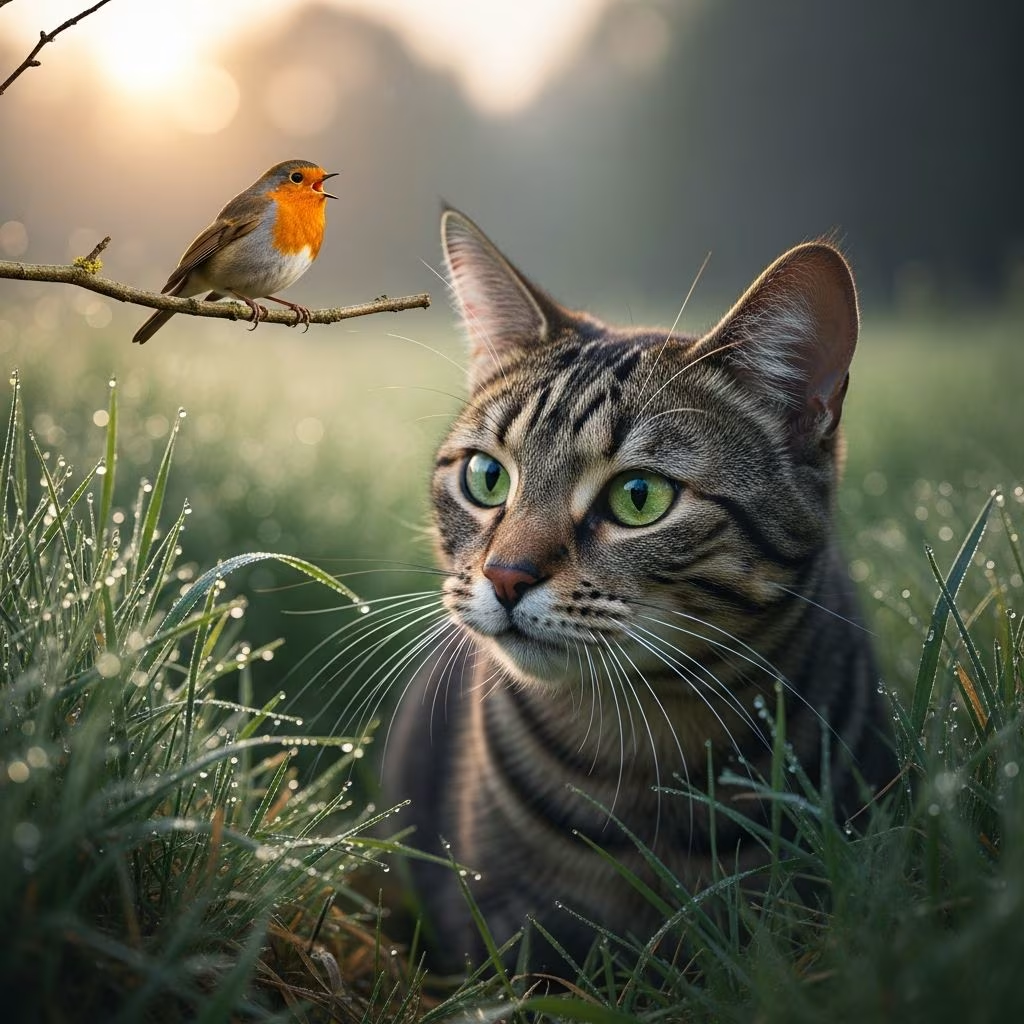
Cats are born hunters, with instincts honed over thousands of years as obligate carnivores. Their pursuit of birds combines acute senses, stealthy approaches, and explosive action, making them formidable predators even for well-fed pets. This article breaks down the step-by-step process of how cats hunt birds, from detection to dispatch, while addressing why domestic cats continue this behavior and practical strategies to mitigate it.
Why Do Cats Hunt Birds?
Cats hunt birds not out of hunger but as an innate drive triggered by movement and sound. As solitary hunters, they evolved to catch small prey multiple times daily to meet nutritional needs, often making 10-20 kills in the wild. Domestic cats retain this ‘obligate carnivore’ trait, viewing bird flutters as irresistible stimuli, much like how they pounce on toys or ankles during play.
Even well-fed pets hunt opportunistically, shifting activity to match prey availability. Studies show hunger intensifies play with prey-like toys, confirming cats perceive birds (and similar objects) as legitimate quarry. This hardwired behavior persists because it’s self-rewarding, releasing endorphins regardless of nutritional need.
How Cats’ Senses Help Them Hunt Birds
Feline hunting relies on superior sight and hearing. Cats detect bird movements from afar with eyes optimized for low light and motion, boasting a 200-degree field of view compared to humans’ 180 degrees. Their hearing pinpoints high-frequency bird calls and wing flutters up to 100 yards away.
- Vision: Vertical pupils allow precise distance judgment for pouncing; binocular vision aids depth perception on targets like low-flying birds.
- Hearing: Ears swivel independently to triangulate sounds, essential for locating rustling fledglings or singing perches.
- Whiskers: Vibrissae provide tactile feedback in low visibility, helping navigate dense brush toward grounded birds.
- Smell: Less critical for birds but aids tracking wounded prey.
These senses make birds prime targets: ground-foraging species like sparrows or robins are vulnerable, while healthy fliers often evade capture.
The Hunting Sequence: How Cats Catch Birds
Cats follow a structured sequence: search, locate, approach, capture, kill, manipulate, and consume. This mirrors wild survival tactics adapted to birds.
Searching and Locating Prey
Cats scan environments patiently, perching on fences or prowling gardens. Movement—a bird hopping or fledgling tumbling—triggers the stalk. They return to successful spots, memorizing bird hotspots.
Stalking and Approaching
The approach is a crouched belly-drag, head low, freezing mid-step to mimic stillness. Cats creep paw-by-paw, sometimes holding a foot aloft for minutes, adjusting to the bird’s path. Birds’ sight makes multicolored collars effective warnings here.
Capture: The Pounce
Final preparation coils hind legs like springs. A burst propels the cat forward in leaps, front paws swatting to pin wings. Success demands split-second timing; misses lead to chases.
Killing the Bird
Cats deliver a fatal neck bite where skull meets spine, using canine teeth to sever vertebrae. A ‘chattering’ jaw positions the strike accurately—often seen in window-gazing frustration. Birds die swiftly if hit right, minimizing suffering.
Playing with and Consuming Prey
Post-capture, cats bat, toss, and release birds repeatedly. This ‘toying’ resolves kill-injury conflict, tests prey vitality, and hones skills. Not all birds are eaten; non-hungry cats may abandon them as ‘gifts’.
Cat Hunting Strategies for Birds
Birds demand specialized tactics beyond rodent ambushes.
| Strategy | Description | Effectiveness Against Birds |
|---|---|---|
| Ambush | Crouch and wait near nests or feeders. | High for fledglings; low for alert adults. |
| Stalk-and-Pounce | Slow creep to explosive leap. | Ideal for ground birds; 1-2% success overall. |
| Chase | Pursue fleeing fliers short distances. | Rarely successful vs. healthy birds. |
Outdoor cats succeed more with mice than birds, as avians escape vertically. Indoor cats mimic this via play.
How Successful Are Cats at Hunting Birds?
Feral cats boast low rates: 1-2% per stalk for birds, better for ground prey. Pet cats bring home fewer successes but impact wildlife significantly—UK studies estimate millions of birds killed yearly. Factors like age, health, and experience boost odds; kittens learn via mother’s example and litter play.
Why Do Cats Bring Dead Birds Home?
‘Gifts’ stem from teaching instincts: mothers provision kittens, so adults mimic this for human ‘kittens’. Unused kills reflect non-hunger hunts or nutrient quests unmet by kibble.
How to Stop Your Cat Hunting Birds
Reduce predation humanely with these evidence-based methods.
- Collars: Bells cut kills by 25%; BirdsBeSafe multicolors by 50% via visual alerts.
- Diet: Meat-protein food reduces hunting 36% by fulfilling carnivore needs.
- Play: 5-10 min daily with feather toys tires cats, slashing hunts 25%.
- Indoor at Peak Times: Dawn/dusk confinement protects feeding birds; harness walks for kittens.
- Neuter: Shrinks territory, curbing roaming/hunting.
- Bird Protections: Elevate feeders 5+ feet; rimmed tables, slippery tree bases.
Catios or fenced gardens limit range without full indoor life.
Frequently Asked Questions (FAQs)
Do cats hunt birds because they’re hungry?
No, well-fed cats hunt from instinct, triggered by motion.
Can indoor cats still hunt birds?
They redirect to toys, lacking real opportunities.
Is cat ‘playing’ with birds cruel?
It’s skill practice and conflict resolution, not malice.
What if my cat chatters at birds?
That’s the killing bite rehearsal—frustration response.
Will bells hurt my cat’s hunting success?
Bells reduce prey by 25% safely; quick-release prevents snags.
References
- How Cats Hunt: Feline Hunting Behavior Explained — Amy Shojai. Accessed 2026. https://amyshojai.com/how-cats-hunt/
- Understanding the Hunting Behaviour of Cats — International Cat Care. Accessed 2026. https://icatcare.org/articles/understanding-the-hunting-behaviour-of-cats
- 6 Ways to Stop Your Cat Hunting Birds — SongBird Survival. 2021-approx. https://www.songbird-survival.org.uk/post/blog-6-ways-to-stop-your-cat-hunting-birds-1
- How to Prevent Your Cat from Hunting — Dog Zen. Accessed 2026. https://www.dogzen.com/blog/how-to-prevent-your-cat-from-hunting-13e0c



