

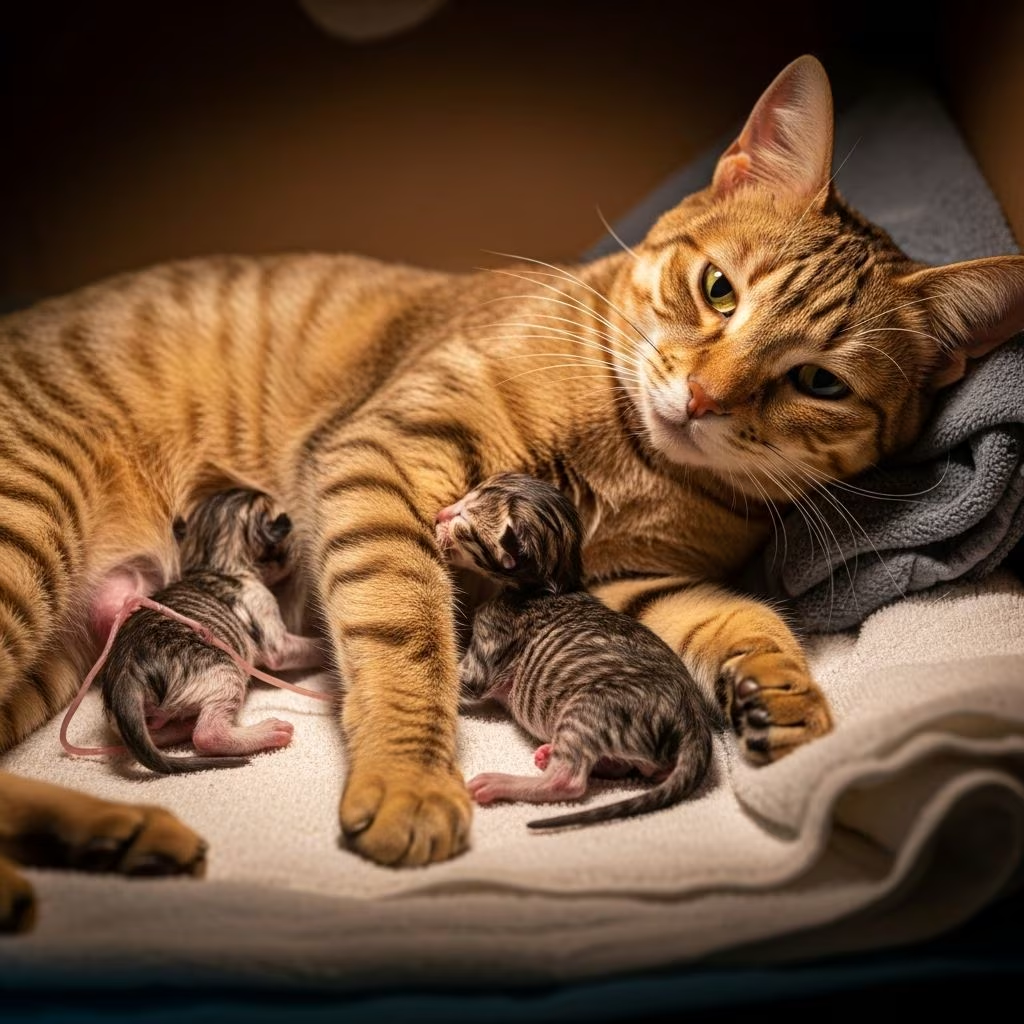
Cat birth, also known as kittening or parturition, is a natural process that typically unfolds in three distinct stages. Understanding these stages helps cat owners prepare and monitor for any complications. Most queens deliver litters of 1 to 12 kittens, averaging around four, with the entire process lasting 2 to 24 hours once active labor begins.
Cat Pregnancy Timeline: Before the Birth
Before diving into birth, it’s essential to grasp the pregnancy timeline. Cats have a gestation period of about 63-65 days, divided into three trimesters of roughly 20 days each. Sexual maturity occurs around 4 months, allowing pregnancy as early as then, though first litters often come later.
First Trimester (Days 1-21)
In the initial phase, changes are subtle. Appetite may slightly increase, and nipples (mammary glands) begin “pinking up”—becoming enlarged, pinker, and more prominent. Fertilization happens within 24 hours of mating, with embryos implanting into the uterine wall by day 7-14.
Second Trimester (Days 21-42)
Here, visible signs emerge. The belly enlarges noticeably, and the queen becomes calmer and more affectionate. Embryos develop into fetuses with distinguishable heads, tails, limbs, eyes, and ears. Organ systems like circulatory and gastrointestinal form during embryogenesis (days 14-28). Appetite increases, and some queens experience “morning sickness” with vomiting.
Third Trimester (Days 42-63)
The queen’s abdomen swells significantly, mammary glands enlarge further, and milk production begins. Behavioral shifts include excessive grooming of the belly and vulva, nesting (seeking a quiet, warm spot), reduced appetite, and restlessness. Clear or bloody vulvar discharge may appear 12-24 hours pre-labor. Fetuses grow rapidly, developing fur, claws, and the ability to kick visibly on ultrasounds.
Signs Your Cat Is Going into Labor
As labor approaches, the queen displays clear indicators. Body temperature drops from 101.5°F to 99°F, signaling imminent birth. Common signs include:
- Restlessness and vocalizing (loud meowing)
- Panting and purring excessively
- Grooming vulva and mammary glands intensely
- Nesting behavior: digging, pacing, or hiding in her prepared box
- Loss of appetite
- Passing mucus or bloody discharge from vulva
Prepare a kittening box: a large, shallow cardboard box with clean towels, placed in a warm (75-80°F), quiet, dimly lit area. Have essentials ready: clean towels, kitten milk replacer, feeding syringe, bulb syringe for mucus, and vet contact info.
The Three Stages of Cat Birth
Cat labor comprises three stages, with stages 2 and 3 repeating per kitten.
Stage 1: Early Labor (Dilation and Initial Contractions)
Lasting 6-36 hours (shorter in experienced queens), this preparatory phase involves cervical dilation and mild uterine contractions. You won’t see visible straining, but kittens shift position in the abdomen. The queen is restless, seeks isolation, and may refuse food. Panting, vocalizing, and nesting peak here. End is marked by a water bag at the vulva or stronger straining.
Stage 2: Active Labor and Kitten Delivery
The most visible stage begins with strong contractions and visible straining. Each kitten takes 5-30 minutes to deliver once straining starts intensely. The first kitten usually arrives within 30 minutes of active pushing; subsequent ones every 10-60 minutes (up to 1-2 hours normal).
Kittens emerge head-first in an amniotic sac (“water bag”), which bursts, releasing fluid the queen licks up. She tears the inner membrane, clears the kitten’s mouth/nose, bites the umbilical cord (2-3 inches from body), and eats the placenta. Greenish-black discharge is normal. Count placentas—one per kitten—to prevent infection.
Litter size varies: 1-12 kittens, larger in breeds like Siamese.
Stage 3: Placental Expulsion
Briefly following each kitten, the placenta and membranes pass. If kittens arrive quickly, multiple may expel together. The queen consumes them for nutrients and hygiene. Delivery completes within 6-12 hours of stage 2 onset, rarely up to 24.
How to Tell If Your Cat Is Having a Difficult Birth (Dystocia)
While 90-95% of cat births are uneventful, dystocia (difficult birth) affects 2-5% of cases. Monitor closely.
| Normal Birth | Warning Signs (Call Vet Immediately) |
|---|---|
| First kitten within 30 min of strong straining | Strong straining >30-60 min without kitten |
| 10-60 min between kittens | >2 hours between kittens with contractions |
| One placenta per kitten | Missing placentas or foul discharge |
| Kitten vigorous, sac torn by queen | Limp kitten, sac intact >5 min, or breech birth |
| Queen active, nursing | Weakness, bleeding, fever, or distress |
Other red flags: foul-smelling discharge, excessive bleeding, ruptured sac with no kitten in 1 hour, >24 hours total labor, or queen ignoring kittens. Risk factors: small/large litters, obesity, prior C-sections. Vet intervention may involve oxytocin, C-section (common in cats).
What Should You Do During the Birth?
Minimize interference—most queens prefer privacy. Stay calm nearby:
- Observe discreetly: Check progress every 15-30 min without disturbing.
- Only intervene if: sac doesn’t break (tear gently with clean towel), kitten not breathing (rub vigorously, swing gently nose-down to clear fluids), or cord trapped (milk it towards kitten).
- Keep warm: Maintain 85°F first week, use heat pad under half the box.
- Hygiene: Wash hands; don’t touch unless necessary.
Post-birth: Ensure queen nurses kittens within 2 hours (stimulates milk let-down). Weigh kittens daily.
Post-Birth Care for Mom and Kittens
After delivery, the queen cleans and nurses. Lochia (bloody discharge) is normal for 3 weeks, turning brownish. Feed high-calorie kitten food 4x daily; provide water.
Newborn Kitten Care:
- Should nurse within 2 hours; colostrum provides immunity.
- Normal weight gain: 10-15g/day.
- Umbilical cord dries/falls off day 3.
- Eyes open day 7-14; ears day 10-14.
Monitor for fading kitten syndrome: hypothermia, crying, weakness—warm and supplement feed.
Frequently Asked Questions (FAQs)
What if my cat hasn’t given birth after 70 days pregnant?
Contact vet—overdue by >3 days risks stillborns. Ultrasound/X-ray confirms.
Should I pull the kitten out?
No—only steady gentle traction parallel to spine if head visible and vet advises. Otherwise, risk injury.
How many kittens in a litter?
Average 4; range 1-12, larger in pedigrees.
Can I move the kittening box mid-labor?
Avoid if possible; stress can halt labor. Prepare in advance.
When can kittens leave mom?
Minimum 8-12 weeks for health/socialization.
References
- Cat birth — International Cat Care. 2023. https://icatcare.org/articles/cat-birth
- Cat Pregnancy Timeline: Signs & Stages — Dutch. 2024-05-15. https://www.dutch.com/blogs/cats/cat-pregnancy-timeline
- Cat Pregnancy: Signs, Stages and Care — PetMD. 2025-01-10. https://www.petmd.com/cat/conditions/reproductive/cat-pregnancy-and-kittens-complete-guide
- Birth and kittening — Cats Protection. 2024. https://www.cats.org.uk/help-and-advice/pregnancy-and-kitten-care/birth-and-kittening
- The Birthing Process in Queens — National Kitten Coalition Library. 2023-08-01. https://library.kittencoalition.org/article/the-queen-birth-process/
- Cat labour – a guide to your cat giving birth — PDSA. 2024-11-20. https://www.pdsa.org.uk/pet-help-and-advice/pet-health-hub/other-veterinary-advice/cat-labour-a-guide-to-your-cat-giving-birth



