

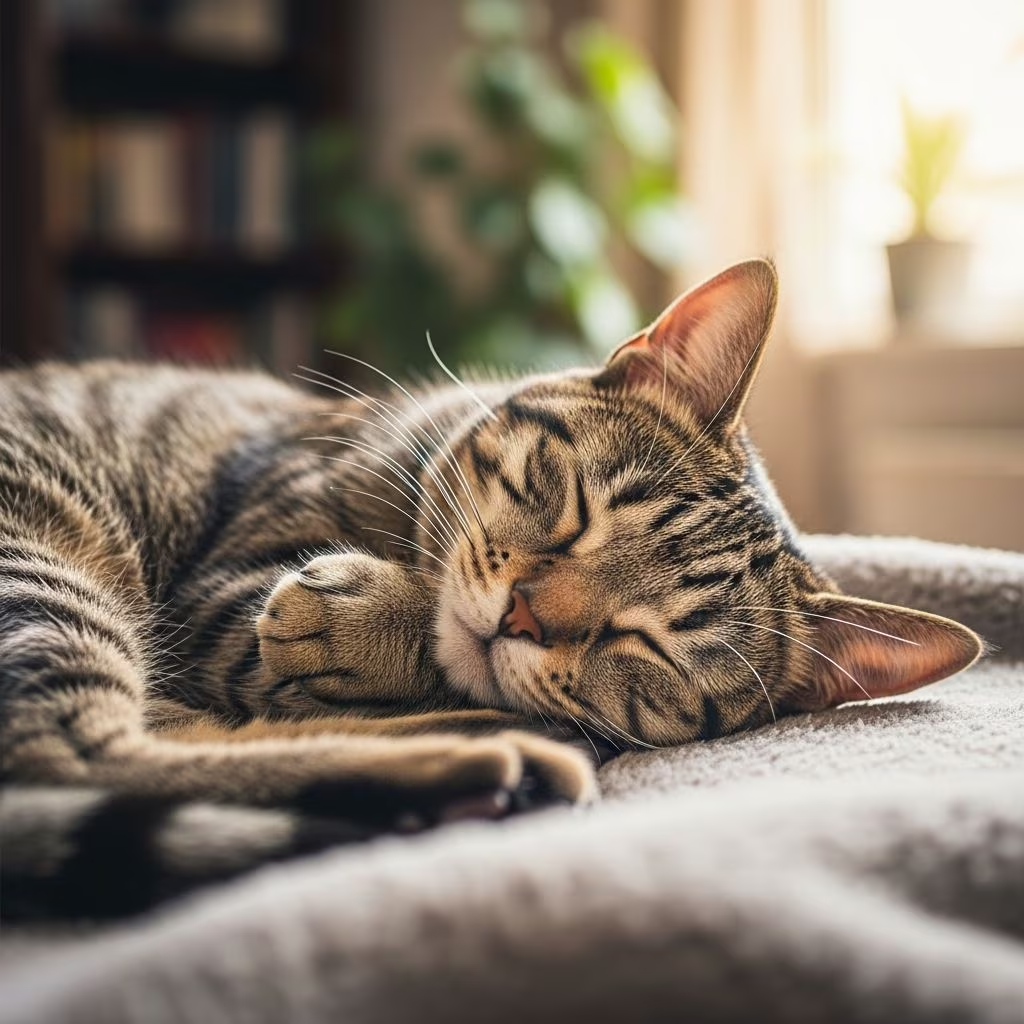
Cats possess an remarkable ability to transition from wakefulness to sleep in mere moments, often dozing off in seconds while curled up on a couch or windowsill. This rapid sleep onset stems from their evolutionary biology as crepuscular hunters, energy conservation needs, and unique sleep architecture that prioritizes light, responsive naps over deep slumber.
Why Do Cats Sleep So Much?
Cats sleep 12 to 16 hours daily, far exceeding human averages, due to their crepuscular rhythm—most active at dawn and dusk when prey like birds and rodents stir. This pattern, rooted in predatory evolution, allows energy stockpiling during inactive daylight and nighttime hours. Unlike humans’ consolidated nighttime sleep, cats take frequent 15-30 minute catnaps, enabling quick arousal to threats while recharging. Sleep bolsters their immune system, consolidates memories, and restores bodies strained by bursts of hunting or play. Kittens and seniors may exceed 20 hours, reflecting growth or aging demands.
How Much Do Cats Sleep?
Adult cats average 10-13 hours of sleep per day, sometimes up to 17, spread across multiple naps totaling about two-thirds of their lives. EEG studies reveal cycles: 35% wakefulness, 50% light sleep, 15% deep REM in 24 hours. Naps last 50-110 minutes, with light phases dominating for vigilance. Factors like age, health, and environment modulate this; stressed cats sleep more to cope.
The Feline Sleep Cycle Explained
Cats cycle through non-REM (NREM) and REM sleep, mirroring humans but with shorter, more frequent bouts. They start alert, grow drowsy, enter light NREM (slow brain waves, upright posture possible), then deeper NREM, before REM—marked by twitching, rapid eye movements under lids, and dreaming. Light sleep (75% of naps) keeps ears perked and senses sharp; deep REM (25%) involves limp muscles and potential dream-acting. This architecture suits ambush predators: restful yet ready.
- Light NREM: 25-minute phases; cat appears meditative, muscles toned for instant flight.
- Deep NREM: Energy recharge, memory processing.
- REM: Emotional regulation, vivid dreams; whiskers/eyes twitch.
Why Can Cats Fall Asleep So Quickly?
Rapid sleep stems from efficient brain transitions: from irregular awake EEG peaks to slow waves in seconds, honed by survival needs. As crepuscular animals, cats conserve energy post-hunt, slipping into catnaps without prolonged wind-down. Their nervous system favors quick drowsiness, unlike humans requiring routines. Elevated, safe spots trigger relaxation via instinctual security. Recent research links left-side preference to hemispheric specialization: right brain processes threats via left visual field upon waking, aiding escape/hunt.
Cats’ Favorite Sleeping Positions and What They Mean
Sleep positions reveal comfort, vigilance, and health. Cats choose based on temperature, safety, and mood.
| Position | Meaning | Depth of Sleep |
|---|---|---|
| Loaf | Paws/tail tucked, eyes half-closed; alert rest | Light doze, quick wake |
| Belly-Up | Vulnerable belly exposed; total trust, cooling | Deep, relaxed |
| Side Sleeping | Prefer left side for survival (threat detection); twitching signals REM | Deep, dreaming |
| Tucked/Hidden | Under beds/boxes; security or illness sign | Variable, cautious |
| Curled Ball | Conserves heat, protects vitals; cold weather fave | Moderate-deep |
Left-side bias, observed in YouTube analyses, funnels visuals to right hemisphere for rapid predator response. Belly-up indicates safe homes; shifts to hiding may signal stress.
Where Do Cats Like to Sleep?
Cats seek warm (86-97°F ideal), elevated, secure spots: windowsills for sun, boxes for enclosure, your bed for warmth/bonding. Light/temperature cues align with circadian needs; vents/windows draw them. Multi-level cat trees mimic wild perches, reducing ground threats.
- Warm surfaces (laps, radiators)
- High vantage points
- Enclosed hideaways
- Near family for security
Do Cats Dream?
Yes, during REM: twitching paws, whiskers, chattering mimic hunts, suggesting dreams of chasing prey. Michel Jouvet’s 1960s cat studies pioneered REM discovery, showing acted-out behaviors. Shorter cycles mean frequent dreaming, aiding emotional processing.
Is My Cat Sleeping Too Much? When to Worry
Normal: 12-16 hours. Excess (>18-20 sudden) flags issues: depression, pain, thyroid disease, anemia. Lethargy sans appetite loss, hiding, or changes warrant vet checks. Kittens/pregnant queens naturally sleep more. Monitor patterns; consult if deviant.
How to Help Your Cat Sleep Better
Enhance rest with:
- Consistent Schedule: Feed/play at dawn/dusk to sync rhythm.
- Cozy Beds: Heated, elevated options.
- Quiet Zones: Minimize disruptions.
- Exercise: Evening play drains energy.
- Health Checks: Annual vets catch issues.
These mimic natural habitats, promoting deeper, faster sleep.
Frequently Asked Questions (FAQs)
Why do cats sleep on their left side more?
Cats prefer left-side sleeping for survival: it directs visuals to the right brain hemisphere, expert in threat detection and escape, per 2025 research.
How fast do cats fall asleep?
Often in seconds to minutes via catnaps; light NREM hits quickly for energy conservation.
Do cats sleep with one eye open?
Not truly, but light sleep keeps them semi-aware—ears twitch, senses alert.
Is 20 hours of sleep normal for cats?
For kittens/seniors yes; adults average 12-16. Sudden increases need vet evaluation.
Why does my cat sleep on me?
You provide warmth, safety, bonding; it’s trust and comfort.
References
- Why cats prefer to sleep on their left side may be part of a survival strategy — Phys.org. 2025-06-23. https://phys.org/news/2025-06-cats-left-side-survival-strategy.html
- Why do cats sleep so much? — Union Lake Veterinary Hospital. N/D. https://unionlakeveterinaryhospital.com/blog/why-do-cats-sleep-so-much
- How Many Hours Do Cats Sleep? — Sleep Foundation. N/D. https://www.sleepfoundation.org/animals-and-sleep/how-much-do-cats-sleep
- Why do cats sleep so much? The hidden science of feline shuteye — BBC Science Focus. N/D. https://www.sciencefocus.com/nature/why-do-cats-sleep-so-much
- Why Do Cats Sleep So Much? — PetMD. N/D. https://www.petmd.com/cat/behavior/why-do-cats-sleep-so-much
- Catnap Connoisseurs: How Cats Sleep — Fear Free Happy Homes. N/D. https://www.fearfreehappyhomes.com/catnap-connoisseurs-how-cats-sleep/
- The Science Behind Cat Naps — Dr. Elsey’s. N/D. https://drelseys.com/the-science-behind-cat-naps/



