

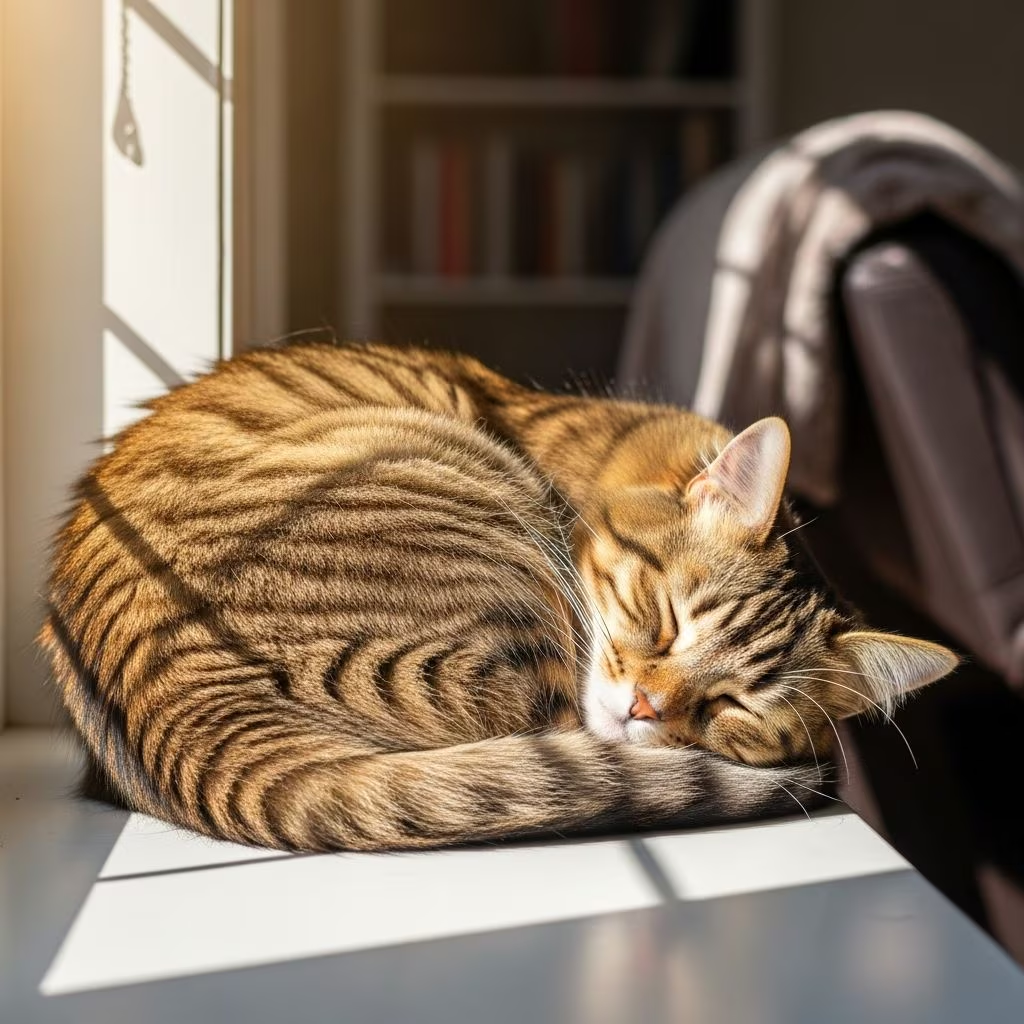
Cats possess an remarkable ability to transition from wakefulness to sleep in mere seconds, often curling up in cozy spots and drifting off almost instantly. This rapid onset of sleep stems from their evolutionary adaptations as crepuscular hunters, efficient sleep cycles dominated by light sleep stages, and instincts for energy conservation.
Why Do Cats Sleep So Much?
Cats sleep 12 to 16 hours per day on average, with some reaching up to 17 hours, far exceeding human sleep needs. This extensive sleep is not laziness but a survival mechanism rooted in their crepuscular nature—most active at dawn and dusk—allowing energy storage for brief, intense hunting bursts. Wild ancestors conserved energy during daylight when prey was less active, a trait retained in domestic cats despite reliable food sources. Sleep also supports memory formation, immune function, and emotional regulation, much like in humans.
Domestic cats average 10-13 hours of sleep daily, equating to about two-thirds of their lives, with naps lasting 50-110 minutes. Kittens and seniors sleep more—up to 20 hours—due to growth or aging needs.
The Feline Sleep Cycle Explained
Cats’ sleep cycles are shorter and more fragmented than humans’, enabling quick dozes and rapid wake-ups. They cycle through wakefulness, drowsiness, non-rapid eye movement (NREM) sleep (light and deep), and rapid eye movement (REM) sleep. A full cycle lasts about 25-30 minutes, with 50% in light sleep, 35% wakeful, and 15% REM.
- Light NREM Sleep: The bulk of cat sleep; cats appear relaxed but ears twitch and muscles stay toned for instant reaction to threats.
- Deep NREM Sleep: Brief restoration phase before REM.
- REM Sleep: Dreaming stage with twitching paws, whiskers, and eye movements under closed lids; vital for brain recovery.
EEG studies confirm cats enter slow-wave light sleep quickly, with brain waves shifting from sharp awake peaks to irregular, elongated patterns. This structure allows cats to “sleep with one eye open,” staying semi-alert during 75% of naps.
How Cats Fall Asleep So Quickly
The speed of feline sleep onset ties to their polyphasic pattern—multiple short naps conserving energy for crepuscular activity. Light sleep dominance means they slip into rest without deep wind-down, ready to pounce. Recent 2025 research reveals cats prefer left-side sleeping, channeling visual threats to the right brain hemisphere for swift escape or hunt responses upon waking. Elevated spots enhance this vigilance, mimicking wild safety.
Hormonal and neurological factors, like low adrenaline during safe daytime, facilitate instant relaxation. Warmth from sunlit windows or laps triggers faster sleep via thermoregulation.
Common Cat Sleeping Positions and What They Mean
Cats’ positions reflect comfort, security, and sleep depth, often enabling quick sleep entry.
| Position | Description | Meaning |
|---|---|---|
| Loaf | Paws and tail tucked under, eyes half-closed | Light doze; alert but relaxed for fast wake-up |
| Belly-Up | Supine, belly exposed | Total trust and deep comfort; also cooling |
| Side Sleeping | On side, limbs extended; preferred left side | Deep sleep, often with REM twitching; survival bias |
| Curled Ball | Tightly curled nose-to-tail | Conservation of body heat; self-protection |
| Tucked/Hidden | In boxes or under beds | Security-seeking; caution or illness if sudden |
These positions allow rapid sleep while maintaining awareness.
Why Your Cat Might Be Sleeping More (or Less)
- Increased Sleep: Boredom, stress, illness, aging, or weather (colder prompts more rest).
- Decreased Sleep: Hunger, pain, hyperthyroidism, or environmental changes.
- Age Factors: Kittens sleep 18-20 hours for growth; adults 12-16; seniors more due to metabolism slowdown.
Sudden shifts warrant vet checks, as excessive sleep can signal anxiety or health issues.
Creating the Perfect Sleep Environment for Your Cat
Mimic natural preferences: provide elevated, warm, quiet spots like cat trees, window perches, or heated beds. Multiple locations prevent territorial stress. Maintain 12-16 hour sleep opportunities via routine play at dawn/dusk. Avoid disturbances during naps to respect their cycles.
- Cozy bedding in safe, enclosed areas.
- Sunlit windows for warmth and watching.
- Consistent feeding/play schedules aligning with crepuscular peaks.
Frequently Asked Questions (FAQs)
Why do cats sleep so much during the day?
Cats are crepuscular, sleeping daytime to save energy for dawn/dusk hunting, an instinct from wild ancestors.
Do cats dream when they sleep?
Yes, during REM sleep, shown by twitching and eye movements; likely hunting dreams.
Is it normal for my cat to sleep 16+ hours?
Yes for kittens/seniors; monitor adults for health changes.
Why does my cat sleep in weird positions?
Positions indicate comfort levels and alertness; side sleeping aids quick threat response.
Can I change my cat’s sleep schedule?
Partially, via evening play and dawn feeding, but respect natural crepuscular rhythm.
When to Worry About Your Cat’s Sleep Habits
Normal variation is fine, but consult a vet if sleep exceeds 20 hours suddenly, includes lethargy, hiding, appetite loss, or restlessness—potential signs of illness, pain, or stress.
References
- Why cats prefer to sleep on their left side may be part of a survival strategy — phys.org. 2025-06-23. https://phys.org/news/2025-06-cats-left-side-survival-strategy.html
- Why do cats sleep so much? | Helpful Insights | Cat Behaviorist — thecatbehaviorclinic.com. Accessed 2026. https://www.thecatbehaviorclinic.com/my-cats-are-up-all-night/
- Why do cats sleep so much? The hidden science of feline shuteye — sciencefocus.com. Accessed 2026. https://www.sciencefocus.com/nature/why-do-cats-sleep-so-much
- Why Do Cats Sleep So Much? — petmd.com. Accessed 2026. https://www.petmd.com/cat/behavior/why-do-cats-sleep-so-much
- How Many Hours Do Cats Sleep? — sleepfoundation.org. Accessed 2026. https://www.sleepfoundation.org/animals-and-sleep/how-much-do-cats-sleep
- Catnap Connoisseurs: How Cats Sleep — fearfreehappyhomes.com. Accessed 2026. https://www.fearfreehappyhomes.com/catnap-connoisseurs-how-cats-sleep/
- The Science Behind Cat Naps — drelseys.com. Accessed 2026. https://drelseys.com/the-science-behind-cat-naps/
- Sleeping Cat Behavior: What’s Normal and What’s Not — lagniappeanimalhealth.com. Accessed 2026. https://lagniappeanimalhealth.com/blog/sleeping-cat/



