

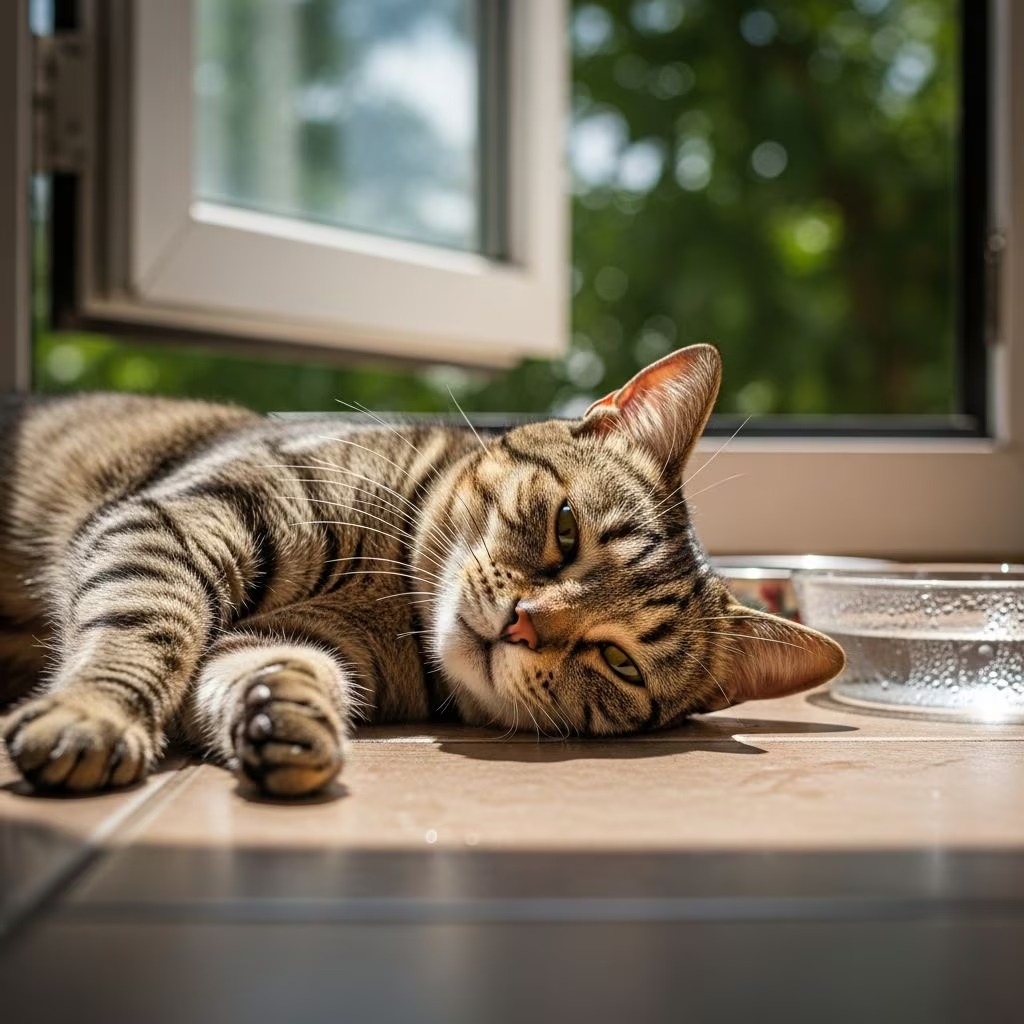
Cats do not sweat like humans; instead, they rely on a combination of behavioral adaptations, limited sweating from paw pads, saliva evaporation through grooming, panting, seeking cool surfaces, and physiological processes like vasodilation to regulate their body temperature and cool down effectively.
Understanding Feline Thermoregulation
Cats maintain a core body temperature of around 100.5–102.5°F (38–39.1°C) through sophisticated mechanisms controlled primarily by the hypothalamus in the brain, which acts as the body’s thermostat. Unlike humans, who rely heavily on widespread sweating, cats have evolved unique strategies suited to their fur-covered bodies and predatory lifestyles. These include evaporative cooling via saliva, respiratory panting, behavioral adjustments, and vascular changes. The anterior hypothalamus plays a key role in sensing temperature shifts and triggering responses to prevent hyperthermia more effectively than hypothermia.
When ambient temperatures rise, cats activate multiple heat dissipation methods simultaneously: conduction (contact with cool surfaces), convection (air movement), evaporation (saliva and panting), and radiation (emitting heat from the body). Fur acts as insulation in cold weather but can trap heat in summer; cats shed seasonally to aid cooling. Metabolic adjustments also help, slowing down in heat to reduce internal heat production.
Do Cats Sweat?
Yes, cats sweat, but minimally and only from specific hairless areas: paw pads, lips, chin, and skin around the anus. Sweat glands in these regions release moisture when the hypothalamus detects overheating or stress, evaporating to provide mild cooling. You’ll notice damp paw prints on hot days or during vet visits—this is sweat, not just moisture. However, these small areas make sweating insufficient for whole-body cooling, contributing less than 5% to thermoregulation.
- Paw pads: Primary sweat site; wet prints indicate heat or anxiety.
- Lips and chin: Minor evaporation during grooming.
- Anal area: Helps in extreme heat but rarely noticeable.
Sweating’s purpose is supplementary thermoregulation, triggered by the hypothalamus for localized heat loss.
How Do Cats Cool Themselves Down?
Cats employ a multi-faceted system for cooling, prioritizing evaporative, conductive, and behavioral methods over sweating.
Grooming and Saliva Evaporation
The primary cooling method is licking fur, spreading saliva that evaporates like sweat, removing heat via evaporation—similar to human perspiration but adapted for fur. Cats groom more in heat, increasing saliva production for enhanced cooling. This process dissipates significant body heat without wetting large areas.
Panting
Panting is a respiratory cooling mechanism where cats rapidly breathe with mouth open, evaporating moisture from lungs and airways. It’s activated in severe heat (above 99°F/37.2°C) as evaporation from tongue and respiratory tract releases heat. Unlike dogs, cats pant less efficiently and only as a last resort, signaling potential overheating if prolonged.
Seeking Shade and Cool Surfaces (Conduction)
Cats instinctively avoid sun, stretching out on tile floors, sinks, or concrete for conduction—direct heat transfer to cooler surfaces. Belly-up positions maximize contact; shaded spots prevent radiation absorption.
Convection and Airflow
Lying in breezes from fans or vents uses convection: air currents carry heat away from fur and skin. Cats position near airflow sources instinctively.
Vasodilation
Blood vessels expand (vasodilation) near skin surface, increasing blood flow to radiate heat. Ears and extremities flush pink; this pairs with grooming for efficiency.
Behavioral Adjustments
Cats become lethargic in heat, conserving energy and minimizing movement-generated warmth. They curl minimally to expose more surface area.
| Cooling Method | Mechanism | Examples |
|---|---|---|
| Evaporation | Saliva/panting moisture turns to vapor | Grooming fur, open-mouth breathing |
| Conduction | Body heat transfers to cooler object | Lying on tile, sink |
| Convection | Air movement removes heat | Near fans, breezes |
| Radiation | Body emits infrared heat | Stretching in shade |
| Vasodilation | Blood flow to skin increases | Ears/skin warming then cooling |
Signs Your Cat Is Overheating
Monitor for heat stress: excessive panting (>10-15 min), drooling, lethargy, rapid heartbeat, red gums, vomiting, or collapse. Body temp over 104°F (40°C) indicates heat exhaustion; above 106°F (41°C) is heatstroke emergency. Strains like brachycephalic breeds (Persians) overheat faster due to poor airways.
- Mild: Panting, seeking cool spots.
- Severe: Weakness, disorientation, seizures—vet immediately.
How to Help Your Cat Cool Down
Assist with environment and aids:
- Water: Multiple fresh bowls; fountains encourage drinking.
- Shade/AC: Keep indoors 68-77°F (20-25°C); fans for airflow.
- Cooling mats: Gel-filled for conduction.
- Damp towels: Wipe paws/fur for evaporation (avoid full baths).
- Frozen treats: Ice cubes in water, tuna broth pops.
- Grooming: Brush out undercoat.
- Elevated beds: Breezy perches.
- Monitor brachycephalics: Extra vigilance.
Preventing Heatstroke in Cats
Never leave cats in cars/hot enclosures; provide constant cool access. Annual vet checks for obese/senior cats prone to issues. Early detection via temp monitoring saves lives.
Frequently Asked Questions (FAQs)
Do cats sweat to cool down?
Cats sweat minimally from paw pads, lips, and anus, but it’s not their main cooling method—saliva evaporation and panting dominate.
Why do cats pant in hot weather?
Panting evaporates moisture from lungs/airways for respiratory cooling, used when other methods fail.
Can indoor cats overheat?
Yes, attics or sunny rooms can exceed safe temps; use AC/fans.
How can I tell if my cat has heatstroke?
Look for prolonged panting, collapse, vomiting; temp >106°F requires emergency vet care.
Are some cats more prone to overheating?
Obese, elderly, brachycephalic (flat-faced), or dark-furred cats struggle more.
References
- Do Cats Sweat? Simple Facts About Feline Cooling — MichuPet. 2023. https://michupet.com/blogs/guide/how-do-cats-sweat
- Feline Temperatures: Do Cats Experience the Chill? — Cat Tree UK. 2024. https://cattree.uk/feline-temperatures-do-cats-experience-the-chill/
- Body-temperature regulation in the normal and cold-acclimatized cat — Journal of Applied Physiology. 1963-07-01. https://journals.physiology.org/doi/abs/10.1152/jappl.1963.18.4.772
- Beat the Heat: 8 Strategies to Keep Your Cat Cool — VAMVH. 2024. https://vamvh.com/beat-the-heat-8-strategies-to-keep-your-cat-cool/
- How do stray animals maintain their body temperature outdoors? — Clawsable. 2023. https://clawsable.com/blogs/about-pets/how-do-stray-animals-maintain-their-body-temperature-outdoors
- How to Reduce Your Cat’s Body Heat: 8 Proven Methods — The Refined Feline. 2024. https://www.therefinedfeline.com/how-can-i-reduce-my-cats-body-heat/
- Is It Too Hot for My Cat? Recognizing Heat-Related Illness in Cats — Catonsville Cat Clinic. 2024. https://catonsvillecatclinic.com/holmes-corner/is-it-too-hot-for-my-cat-recognizing-heat-related-illness-in-cats/



