

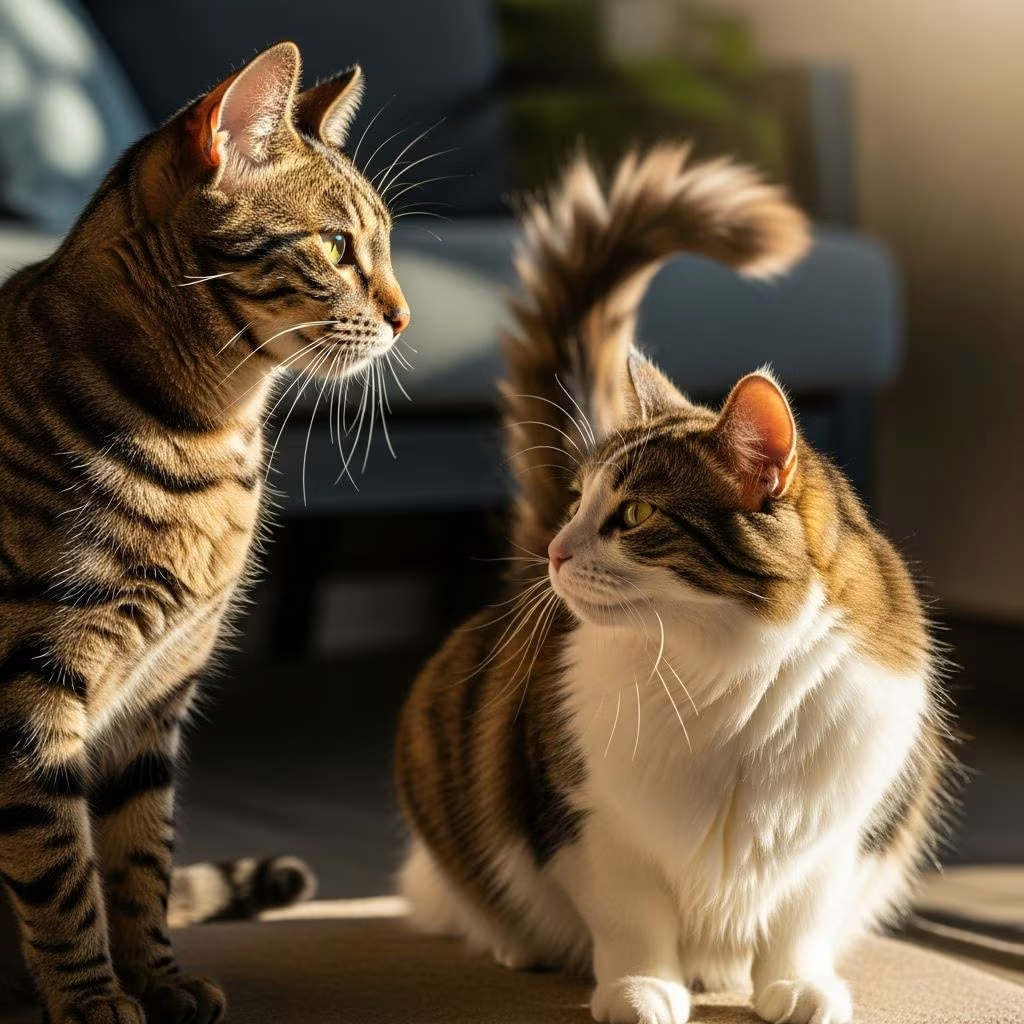
Cats are masters of subtle communication, relying on a sophisticated mix of body language, vocalizations, physical touch, and chemical signals to interact with fellow felines. Unlike their vocal exchanges with humans, cats primarily use non-verbal cues to convey emotions, intentions, and social status among themselves. This intricate system allows them to maintain harmony in multi-cat households or colonies while avoiding direct confrontations.
Understanding these methods helps cat owners interpret behaviors, reduce stress, and foster stronger bonds. From twitching tails to scent rubbing, every gesture carries meaning rooted in their wild ancestry.
Key Takeaways
- Cats employ **body language**, **vocalizations**, **physical contact**, and **chemical signals** as primary communication tools.
- Meowing is mostly reserved for humans; cats prefer silent cues like tail positions and pheromones with each other.
- Scent marking via glands is crucial for territory and social bonding, often more important than sounds.
- Friendly interactions include slow blinks, headbutting, and allorubbing to signal trust and affiliation.
- Aggressive signals like flattened ears or hissing warn others to back off, preventing fights.
Cat Body Language
Body language forms the cornerstone of feline communication, allowing cats to express relaxation, aggression, curiosity, or fear without a sound. Observant cats read these visual cues from afar, deciding whether to approach or flee. Key areas include the tail, ears, eyes, whiskers, and overall posture.
Tail Positions
A cat’s tail is like a mood flag, visible from a distance. An upright tail with a slight curve signals confidence and friendliness during greetings. A low-swishing tail indicates irritation, while thrashing warns of impending attack. In social settings, tails may intertwine as bonded cats cozy up, creating a unified scent profile for group identification.
- Upright tail: Greeting, happiness, or territory claim.
- Swishing tail: Focus on prey or growing agitation.
- Tucked tail: Fear or submission.
- Quivering tail: Excitement, often with urine spraying in intact males.
Ear Positions
Ears are highly mobile radars that broadcast a cat’s emotional state. Erect ears forward mean alertness and interest. Flattened against the head signal aggression or fear, urging others to retreat. Swiveling ears show curiosity or tracking sounds, while sideways twists indicate anger.
| Ear Position | Meaning |
|---|---|
| Erect and forward | Alert, interested |
| Flattened back | Aggression or fear |
| Swiveling/rotating | Curiosity, discomfort |
| Twisted to side | Anger, annoyance |
Eyes and Facial Expressions
Direct staring can challenge rivals territorially, but a slow blink—narrowing eyes then closing them briefly—means “I trust you,” akin to a cat kiss. Dilated pupils signal arousal or fear, while relaxed half-closed eyes denote contentment. Whiskers forward show curiosity; pulled back indicates stress.
Other Body Signals
Arched back with fur puffed up (piloerection) intimidates threats by appearing larger. Crouching or hunching shows fear, while rolling over exposes the belly as a trust sign among familiar cats. These postures help navigate social dynamics in feral colonies.
Vocalizations
Though less common than body language, vocalizations add nuance to cat conversations. Wild cats minimize noise to avoid predators, but domestics have adapted meows for humans. Between cats, sounds like purring or hissing convey intent clearly.
- Purring: Peaceful approach, contentment, or self-soothing during stress. It signals non-threat.
- Trilling: Friendly chirp for greetings, affection, or kitten calls.
- Chirping/chattering: Excitement at prey, sharing hunting interest.
- Yowling: Mating calls or territorial disputes, audible over distances.
- Growling/hissing: Warnings for threats; demands space.
- Meowing: Rare between adults; used for attention in friendly or mother-kitten contexts.
Cats produce up to 21 vocalizations, tailored to context.
Physical Contact
Tactile interactions build and reinforce bonds, especially among littermates or colony mates. These behaviors exchange scents and affirm hierarchies.
Grooming and Snuggling
Allogrooming (mutual licking) strengthens alliances, reduces tension, and shows affection. Snuggling provides warmth and security, common in cold weather or post-conflict.
Headbutting and Rubbing
Bunting—headbutting or cheek-rubbing—deposits facial pheromones, marking “friends.” This allorubbing says “You’re family”. Tail wrapping or hooking further cements bonds.
Nose Touching
A gentle nose bump allows scent verification, like a feline handshake. Followed by rubbing or sniffing, it confirms identity and fosters unity.
Chemical Signals
Olfactory communication is stealthy and long-lasting, ideal for solitary hunters. Cats have scent glands on cheeks, chin, forehead, paws, tail, and flanks, releasing pheromones that linger.
Scent Glands and Pheromones
Nine major glands produce messages of comfort, stress, or affiliation. Facial pheromones signal safety; others mark territory.
Rubbing and Scratching
Rubbing deposits “friendly” scents on cats or objects. Scratching combines visual claw marks with paw pheromones, claiming space.
Urine Spraying
Intact males spray vertical surfaces with felinine-rich urine, advertising status and boundaries. Neutering reduces this.
Frequently Asked Questions (FAQs)
Do cats meow at other cats?
Yes, but rarely; it’s not primary. They favor body language, scents, and other vocalizations like trills or hisses.
Do cats talk to each other silently?
Primarily yes, via body language, pheromones, and visuals over sounds.
What does a slow blink mean in cats?
Trust and affection, a “cat kiss” signaling safety.
Why do cats rub against each other?
To exchange pheromones, mark as friends, and bond via allorubbing.
How do cats show aggression without fighting?
Through flattened ears, growling, hissing, tail thrashing, and piloerection.
References
- How Do Cats Communicate With Each Other? — PetMD. 2023. https://www.petmd.com/cat/behavior/how-do-cats-talk-to-each-other
- Cat communication — Wikipedia. 2024-01-10. https://en.wikipedia.org/wiki/Cat_communication
- The Secret Language of Cats: How Cats Use Scent to Communicate and Connect — Insightful Animals (Substack). 2023. https://insightfulanimals.substack.com/p/the-secret-language-of-cats
- 3 Ways Cats Communicate With Cats — YouTube (Cat Education). 2022. https://www.youtube.com/watch?v=jPx2oYYTtAM
- Cat Communication — SPCA of Northern Nevada. 2024. https://spcanevada.org/services/pet-education/animal-ally/cat-communication/



