

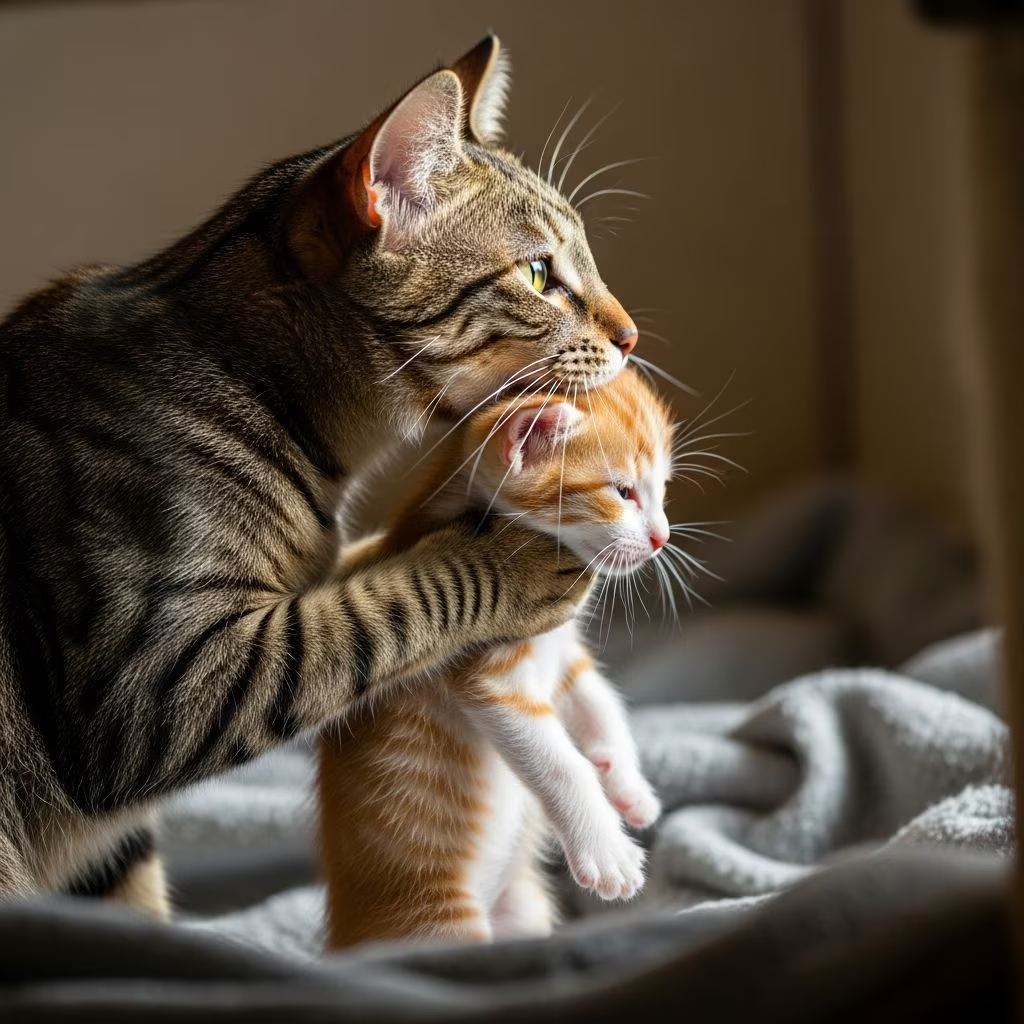
Mother cats transport their helpless newborns by gently grasping the loose skin at the back of their necks, known as the scruff. This natural method relies on a kitten’s instinctive scruff reflex, causing them to go limp for safe carrying without injury.
How Do Cats Carry Their Kittens?
In the first few weeks of life, kittens lack the strength to walk or navigate on their own. Without arms or hands like humans, mother cats use their mouths to pick up kittens by the scruff—the excess, elastic skin between the shoulders. This skin is designed for stretching without tearing, allowing secure transport to a new location.
The process is instinctive. The mother cat approaches calmly, pinches the scruff with precise pressure using her front teeth, and lifts. Kittens under 4-5 weeks respond with the scruff reflex: their bodies relax, legs tuck in, and heads curl, preventing wiggling that could cause falls or injury. This reflex fades as kittens mature and gain mobility.
- Scruff anatomy: Loose, tough skin with good elasticity protects blood vessels and nerves.
- Maternal precision: Cats control bite force meticulously, far gentler than on prey.
- Age limit: Effective only for young kittens; older ones may resist or vocalize.
Even in wild felines like lions or tigers, mothers use this technique across litters, demonstrating its evolutionary reliability.
Does This Hurt the Kitten?
No, carrying by the scruff does not hurt kittens when performed by the mother. Their jaws possess immense strength—enough to kill prey—but mothers instinctively modulate pressure to avoid harm. The scruff’s design absorbs the grip without pain, and the reflex ensures comfort.
Scientific observation confirms this: kittens remain calm, often purring or sleeping during transport. Pain would trigger distress cries, which are absent in normal maternal carrying. Post-carry, kittens show no signs of injury, bruising, or aversion.
| Myth | Fact |
|---|---|
| Scruffing hurts or punishes kittens | It’s a painless transport method; mothers never intend harm |
| Applies to all cats/adults | Only suitable for young kittens by experienced mothers |
| Causes long-term damage | No evidence; scruff heals quickly if minor stress occurs |
Humans must avoid scruffing kittens roughly, as it can cause stress or injury without the reflex fully engaging in stressed states.
Why Does a Mother Cat Move Her Kittens?
Mothers relocate litters multiple times in the first weeks for safety and comfort. This behavior, called nest-switching, stems from deep instincts honed by wild ancestors to evade predators.
She Feels Unsafe
If the mother perceives threats—loud noises, unfamiliar humans, other pets, or disturbances—she’ll swiftly move kittens to a quieter, secluded spot. Domestic environments mimic wild risks: vacuums, doors slamming, or visiting dogs can trigger this.
To minimize moves:
- Provide a quiet, dark nesting box in a low-traffic room.
- Keep food, water, and litter nearby to reduce her absences.
- Avoid strong scents (perfumes, cleaners) or sudden changes.
It’s Maternal Instinct
As kittens grow (around 2-3 weeks), mothers often seek larger or cleaner dens. Initial birth sites accumulate waste, raising infection risks. Relocating prepares for weaning, dispersing kittens slightly to encourage independence.
This mirrors feral cat behavior: queens move litters to fresh grass or hidden spots, minimizing parasites and disease.
The Kittens Have Been Displaced
Newborns instinctively stay curled in the nest but may roll away while nursing or sleeping. Displaced kittens emit a high-pitched ‘stress call,’ prompting the mother to retrieve them by scruff. This reinforces bonding and prevents hypothermia.
Observation tip: If one kitten cries persistently, check for separation; mom will respond promptly unless stressed.
Other Cats Carrying Kittens
While primary to mothers, other cats—including fathers or adults—may carry kittens gently. Adult males can exhibit nurturing behaviors if socialized with the litter, showing protective instincts rather than aggression.
- Fathers: Intact toms rarely parent, but neutered males in multi-cat homes often groom or carry kittens.
- Aunts/Uncles: Familiar adults allogroom (lick) or transport, aiding socialization.
- Warning signs: Supervise; intervene if rough handling occurs.
If gentle and kittens remain calm, it’s positive. Monitor for distress.
Why Do Cats Bring Kittens to Humans?
Mother cats carrying kittens to owners signals profound trust. Viewing humans as family, she includes you in protection duties.
Reasons include:
- Trust & Safety: Your presence is the securest spot amid household chaos.
- Seeking Help: Overwhelmed first-time moms delegate warmth/food.
- Socialization: Exposes kittens early to humans for better pet adjustment.
- Health Alert: May isolate sick kittens for aid.
Respond calmly: Provide a nearby safe nest without forcing separation.
When to Intervene or Call a Vet
Normal moving is fine, but watch for:
- Mother abandoning litter (stress, mastitis, illness).
- Single kitten targeted repeatedly.
- Kittens cold, crying excessively, or unclean.
- Mother aggressive toward kittens post-move.
Supply a kittening box: high-sided, lined with towels, in a warm (75-80°F), draft-free area. If neglect persists, consult a vet for fostering advice.
Frequently Asked Questions (FAQs)
Is it normal for male cats to carry kittens?
Yes, neutered males often nurture familiar kittens gently, displaying protective instincts. Supervise to ensure safety.
Does scruffing hurt older kittens?
The reflex weakens after 5 weeks; avoid scruffing adolescents—use supportive holds to prevent stress.
Why won’t my cat stop moving her kittens?
She seeks ideal safety. Optimize her space; if excessive, check for environmental stressors or health issues.
What if she brings kittens to my bed?
Honor her trust: Gently relocate to a prepared box nearby, maintaining calm.
How often do mothers move litters?
2-4 times in first 2 weeks, lessening as kittens mobilize.
Supporting Mother Cats and Kittens
Enhance success by mimicking natural needs. Use fleece blankets for traction, ensure 24/7 quiet, and supplement with kitten milk replacer if nursing falters. Early handling (after day 3) boosts tame pets, but prioritize bonding.
Facts on kitten development:
| Age | Milestones | Carrying Notes |
|---|---|---|
| 0-2 weeks | Eyes closed, nursing | Frequent scruff transports |
| 2-4 weeks | Eyes open, wobbling | Decreasing moves |
| 4+ weeks | Walking, weaning | Rare; self-mobile |
Understanding these behaviors demystifies feline parenting, fostering harmony in multi-species homes.
References
- Is it normal for my adult male cat to carry around our week-old male… — Dial A Vet. 2024. https://www.dialavet.com/vet-answers/adult-male-cat-carrying-kitten-152578
- How Do Cats Carry Their Kittens? & Why It Doesn’t Hurt Them (Vet … — Catster. 2024. https://www.catster.com/cat-behavior/how-do-cats-carry-their-kittens/
- Why Your Cat Brings Her Kittens to You – Feline Behavior Explained — BuddySys. 2024. https://www.buddysys.com/blogs/blog/cat-brings-kittens-to-owner
- why do cats bring their babies to their human — Cute Cat Clinic. 2024. https://www.cutecatvet.com/blog/why-do-cats-bring-their-babies-to-their-human
- Hold & Handle Kittens without Scruffing — Alana Stevenson, MS. 2024. https://www.alanastevenson.com/handle-kittens-without-scruffing/



