

How Do Birds Lay Eggs: Understanding the Complete Process
Birds are among nature’s most fascinating creatures, and their reproductive process is equally remarkable. The journey from mating to a fully developed chick involves intricate biological processes that showcase the complexity of avian reproduction. Whether you’re a bird enthusiast, wildlife educator, or simply curious about nature, understanding how birds lay eggs provides insight into one of nature’s most incredible processes. This comprehensive guide explores every stage of the egg-laying journey, from the initial fertilization through the hatching of a new chick.
The Basics of Bird Reproduction
Bird reproduction begins with fertilization, a process that differs significantly from mammals. Unlike many animals, birds practice internal fertilization, where the male transfers sperm to the female during mating. The female bird’s reproductive system is uniquely designed to facilitate this process and to produce eggs efficiently.
Most bird species lay an egg one or two days after fertilization, though this timeline varies considerably among different species. For instance, Bald Eagles may take between 5 to 10 days after copulation to lay their eggs, while Lovebirds typically lay eggs between 5 to 12 days after mating. Some species can take weeks or even months to lay eggs following copulation. This variation reflects the diverse reproductive strategies that different bird species have evolved to ensure successful breeding.
The Egg Formation Process
The formation of a bird egg is a sequential process that involves multiple stages and takes approximately 24 hours from start to finish for most species. Understanding each stage reveals the remarkable complexity of avian reproduction.
Stage One: Yolk Formation and Development
The entire egg-laying process begins within the female bird’s ovary. An egg starts as a single cell, and development is initiated by hormonal changes within the female’s body. First, this cell increases in size, and over a period of a few days, a recognizable yolk is laid down. The yolk contains essential nutrients that will sustain the developing embryo if the egg becomes fertilized.
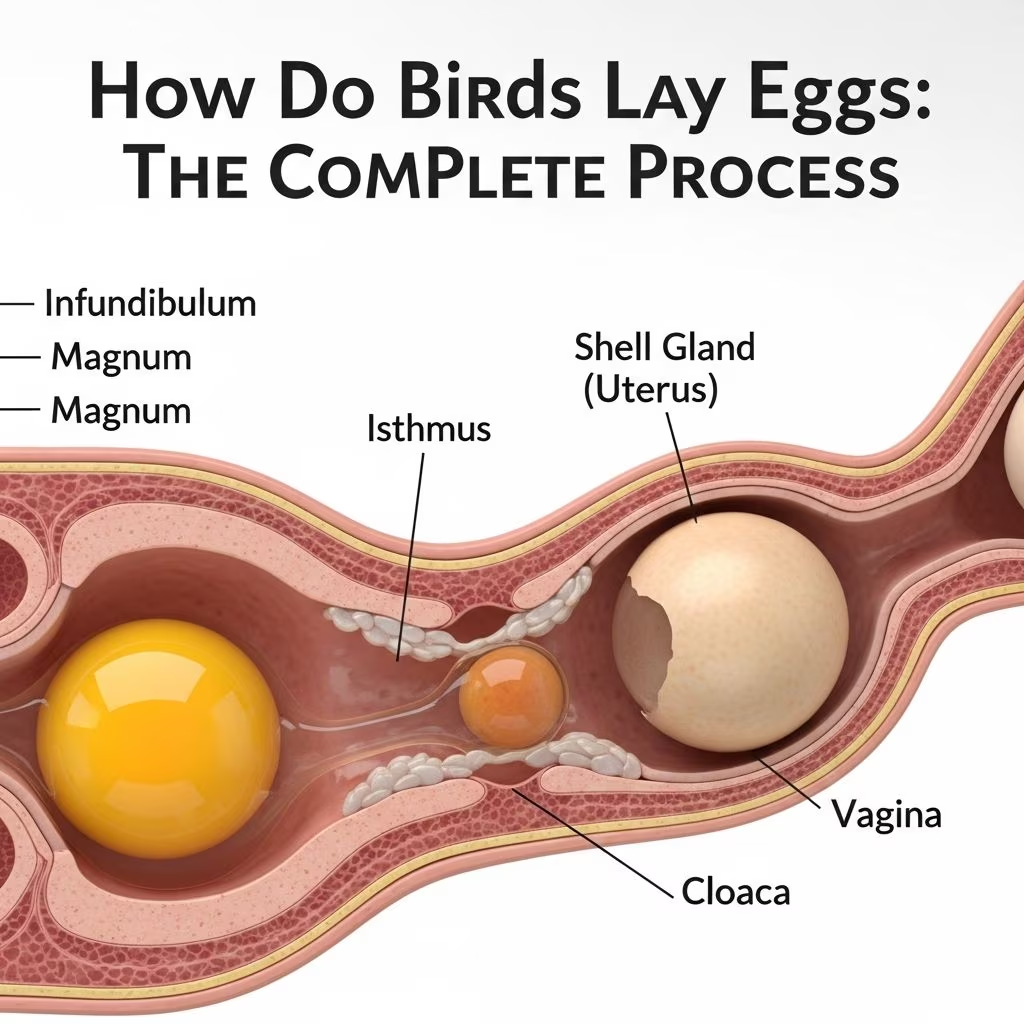
When the yolk reaches the appropriate size, the ovary releases it into the oviduct, which is the tube leading from the ovary where the rest of the egg develops. At this point, if viable sperm are present, fertilization occurs. The sperm travel to the oviduct where they can be stored for extended periods. When the yolk passes through the infundibulum, a sperm cell must penetrate the thin vitelline membrane and reach the female cell to complete fertilization.
Stage Two: Albumen (Egg White) Addition
As the developing yolk travels through the oviduct, the next crucial layer forms around it: the egg white, or albumen. This stage takes approximately three hours. The albumen serves multiple important functions: it acts as a shock-absorbing substance, cushions the developing embryo, and provides nutrition if the egg is fertilized. The albumen is composed of dense and less dense portions that form as the yolk passes through the magnum section of the oviduct.
The shape of the egg is largely determined during this stage in the magnum section, where the egg gradually transforms into the oval shape we recognize. The albumen serves as both protection and nourishment for the developing chick.
Stage Three: Shell Membrane Formation
After passing through the magnum, the developing egg enters the isthmus, a narrower section of the oviduct where the two shell membranes form. These membranes loosely contain the yolk and albumen until the remaining albumen is added in the uterus. The shell membranes are essential protective layers that surround the egg’s interior components.
Stage Four: Shell Formation
The egg then enters the uterus, also known as the shell gland, where the hard shell forms over approximately 19 to 20 hours. The shell is composed mainly of calcium carbonate, which provides structure and protection for the developing embryo. During shell formation, pigments are added to create the distinctive colors we see in bird eggs.
Interestingly, all eggshells are initially white. Depending on the breed and species of bird, the shell can turn blue, brown, or remain white. If a hen lays brown eggs, the brown pigments are added to the shell in the last hours of shell formation. Within the uterus, the chalazae—two cord-like structures that keep the yolk centered in the egg—first appear. These structures function as an axis around which the yolk can rotate and keep the germinal disc uppermost at all times.
Stage Five: Bloom Application and Laying
The final step in egg formation is the addition of the bloom, or cuticle, a protective coating applied after the egg leaves the uterus, just before it exits the hen’s vent. This thin coating keeps harmful bacteria and dust from entering the egg shell pores. The bloom acts as a barrier against bacteria and helps maintain the egg’s moisture, ensuring the egg remains fresh for a longer period.
During the laying process, the egg passes through the oviduct small end first but is laid large end first. In the vagina, the egg is turned horizontally just before laying. If the hen is disturbed on the nest, the egg may be prematurely laid small end first. Oviposition, the act of pushing the egg from the oviduct, is facilitated by the hen’s muscles. The female bird feels little or no pain during this process as her muscles help move the egg.
Key Features of a Laid Egg
When an egg is freshly laid, it fills the shell completely. As it cools, the inner portion of the egg contracts and forms an air cell between the two shell membranes. A high-quality egg has a tiny air cell, indicating the egg was collected soon after being laid and was stored properly. The air cell is usually located in the large end of the egg, where the shell is most porous and air can enter easily. This air cell becomes crucial during hatching, as the chick punctures and breathes through this air cell just before breaking free from the shell.
Clutch Size and Laying Patterns
Female birds typically produce at most one egg per day, as ovulation and laying take about 24 hours. The number of eggs laid in a clutch varies significantly among species. Eastern Bluebirds, for example, typically lay a clutch of between three and six beautifully colored bright blue eggs in the springtime each year. Other species may lay different numbers depending on their breeding strategy and environmental conditions.
Different bird species also exhibit different laying patterns. Some birds, such as songbirds, lay all their eggs before incubation begins, while others, like herons, cranes, cormorants, and raptors, begin incubation as soon as the first egg is laid. This difference affects the timing of when chicks hatch within a clutch.
The Incubation Stage
After eggs are laid, the incubation process begins, which is critical for the development of the embryo. Birds must keep their eggs warm at a regulated temperature, typically between 85 and 104 degrees Fahrenheit, to aid in the healthy development of the baby bird. They accomplish this by sitting on their eggs, using their body heat to maintain the proper temperature.
The incubation period varies significantly depending on the species, though typically the larger the bird, the longer the incubation period. Different bird species start incubating at different times: some begin after the first egg, others after the second or third egg, while songbirds wait until they’ve laid all their eggs before beginning incubation. One or both bird parents will play a role in the incubation process, and when both parents are involved, it’s not uncommon for them to take shifts, allowing each parent to rest and feed.
Early Embryonic Development
Cell division begins soon after fertilization, even while the rest of the egg is being formed. Cell division will continue if the egg is kept warmer than 80 degrees Fahrenheit. The first cell division is completed about the time the egg enters the isthmus. Additional cell divisions take place approximately every 20 minutes, so by the time of laying, several thousand cells form two layers of cells called a gastrula. This rapid cellular development is fundamental to the embryo’s subsequent growth and development.
The Hatching Process
When an egg is ready to hatch, a tiny hole appears on its surface, created by the hatchling’s beak. This initial breakthrough is the beginning of a process called “pipping.” The hatchling, sometimes with the help of its parents, will continue to chip away at this hole until it emerges—a process that may take hours.
During hatching, the chick rotates its position, changes stance, and keeps cutting until its head falls free of the opened shell. It then kicks free of the bottom portion of the shell. The chick is exhausted after this effort and rests while the navel openings heal and its down dries. The newly hatched baby bird is usually bald or has only a few soft feathers. Gradually, it regains strength and walks. The incubation and hatching are complete. The horny cap will fall off the beak within days after the chick hatches.
Post-Hatching Care
Once the egg home has been abandoned, the mother bird will often clear it out of the nest to make more room for their new offspring. Parent birds must keep close guard over their eggs and newly hatched chicks, as many predators, such as squirrels and snakes, would readily take advantage of any opportunity for an easy meal. In many species, the male bird plays a crucial role in protecting the nest while the female sits on the eggs or tends to the chicks.
Fascinating Facts About Bird Eggs
- Egg formation from start to finish takes approximately 24 hours for most bird species
- The shell accounts for about 11% of the total egg weight
- Birds lay eggs at different times: some species take days or weeks after mating, while others lay within 24-48 hours
- Egg color varies dramatically among species, from pure white to blue, brown, speckled, or mottled patterns
- The air cell inside an egg is essential for the chick’s breathing just before hatching
- Incubation temperatures must be carefully maintained between 85-104 degrees Fahrenheit
- Both male and female birds may participate in incubation, often taking shifts
Frequently Asked Questions
Q: How long does it take for a bird to lay an egg after mating?
A: Most bird species lay an egg one to two days after fertilization, though this varies greatly. Bald Eagles may take 5-10 days, Lovebirds take 5-12 days, and some species may take weeks or months.
Q: What is the role of the albumen in an egg?
A: The albumen, or egg white, serves as a shock-absorbing substance, cushions the developing embryo, and provides essential nutrition if the egg is fertilized.
Q: Why do birds sit on their eggs?
A: Birds sit on their eggs to maintain the proper temperature, typically between 85-104 degrees Fahrenheit, which is essential for normal embryo development.
Q: What is pipping?
A: Pipping is the process where a hatchling uses its beak to create a small hole in the egg shell. The chick then continues breaking the shell until it can fully emerge.
Q: How does egg color get determined?
A: All eggshells start as white. Pigments are added during the final hours of shell formation in the uterus, and the specific pigments and patterns depend on the bird species and breed.
Q: What is bloom on an egg?
A: Bloom, or cuticle, is a thin protective coating applied to the egg just before it’s laid. It prevents bacteria and dust from entering the shell’s pores and helps maintain the egg’s moisture.
Q: Do all birds share the same incubation period?
A: No, incubation periods vary significantly by species. Generally, larger birds have longer incubation periods than smaller birds.
Conclusion
The process of how birds lay eggs is a testament to the remarkable complexity of nature’s design. From the initial fertilization and yolk formation through the sequential addition of albumen, shell membranes, and shell, to the final protective bloom, each stage serves a critical purpose in creating a safe environment for embryonic development. The subsequent incubation period, during which parent birds maintain precise temperatures, and finally the hatching process, demonstrate the dedication and precision required for successful bird reproduction. Understanding this extraordinary process deepens our appreciation for the avian species that share our world and highlights the incredible biological mechanisms that have evolved to ensure the continuation of these magnificent creatures.
References
- The Bird Egg Cycle — Chirp Nature Center. https://chirpforbirds.com/wild-bird-resources/the-bird-egg-cycle/
- The Avian Embryo — Mississippi State University Extension Service. https://extension.msstate.edu/publications/the-avian-embryo
- How do birds’ eggs form? — Discover Wildlife. https://www.discoverwildlife.com/animal-facts/birds/how-do-birds-eggs-form
- Understand How Eggs Are Formed Layer by Layer — Star Milling Co. https://starmilling.com/how-eggs-are-formed/
- Nesting Cycle — NestWatch, Cornell Lab of Ornithology. https://nestwatch.org/learn/general-bird-nest-info/nesting-cycle/
- The Entire Process of a Bluebird Laying an Egg — YouTube. https://www.youtube.com/watch?v=FP-tXgabkb0



