

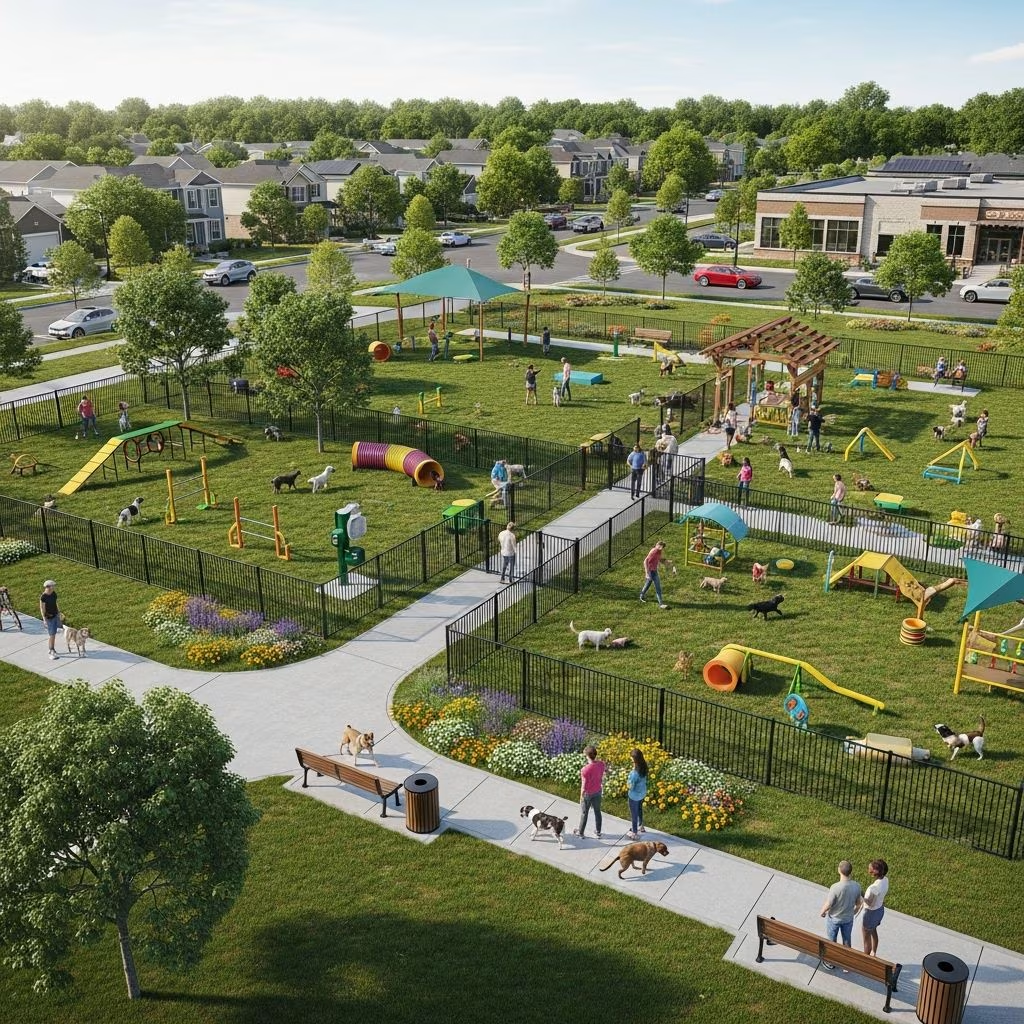
Creating a dedicated off-leash area for dogs enhances community bonds, provides essential exercise for pets, and addresses growing demand from pet owners. With over 65 million U.S. households owning dogs, neighborhood dog parks fill a critical recreational gap, promoting physical health for animals and socialization for owners. This guide outlines every step, from initial outreach to long-term operations, drawing on proven strategies from successful community projects.
Determine What Public Agencies Are Concerned with Parks and Dogs
The first step involves identifying key public agencies overseeing parks, recreation, animal services, public safety, and health departments. Schedule meetings with department managers to gauge their stance on a dog park proposal. Position yourself as a partner by offering maintenance support, such as organizing regular poop clean-up campaigns, to demonstrate commitment beyond mere requests.
Not all parks departments operate with peak efficiency, but their involvement can unlock resources and approvals. Prepare data on local dog ownership statistics to highlight community need— for instance, surveys showing high pet populations in your area strengthen your case. Emphasize benefits like reduced stray dogs and improved public health through exercised pets.
Consult with Neighborhood Groups
Engage homeowners associations, neighborhood councils, and businesses adjacent to potential sites early. Address concerns proactively, such as noise or traffic, which often arise during public hearings. Volunteer for civic committees or task forces to influence decisions from within the system.
Transparent communication builds allies. Host informal meetups at existing parks to gather input, ensuring diverse voices shape the project. This approach mitigates opposition and fosters broad support, as seen in communities where resident involvement led to swift approvals.
Build a Dog Park Task Force
Form a representative task force to streamline the process, including dog owners, neighbors, and local leaders. Hold open public meetings with proper notice and accessible venues, prioritizing input from actual park users over bureaucrats.
Recruit via handbills at vet offices, pet stores, and informal dog spots. Avoid membership dues to maximize participation; donations will follow enthusiasm. Model after successes like Santa Barbara’s Dog PAC, a 501(c)4 nonprofit with 1,000 members advocating effectively for off-leash areas. Task forces centralize efforts, draft proposals, and ensure equitable representation.
- Appoint diverse members: dog owners, seniors, families, and non-dog households.
- Schedule regular, publicized meetings for transparency.
- Focus on user-driven needs like accessibility and safety.
Dog Park Zoning
Site selection demands careful zoning analysis, prioritizing neighborhood-accessible locations over remote regional parks. Ideal sites balance user convenience with minimal neighbor impact, adhering to city planning principles for equitable distribution.
Key Zoning Guidelines
- Proximity: Within walking distance for most residents; aim for central, equitable geographic spread.
- Size: Minimum 0.5-1 acre for basic functionality, larger for amenities.
- Environmental Fit: Avoid flood zones, wetlands, or high-traffic areas; ensure good drainage to prevent mud.
Test sites using scoring criteria: noise buffers, parking access, and community support. Cities like Ann Arbor refined guidelines through public input and site testing, rejecting incompatible spots like busy wards.
Other Design Considerations
Beyond zoning, incorporate features for usability and neighbor harmony.
| Feature | Purpose | Best Practices |
|---|---|---|
| Parking | Avoid neighbor disruption | Designated lots, not on-street; ADA compliant |
| ADA Compliance | Inclusivity | Ramps, wide gates for wheelchairs and service dogs |
| Buffer Zones | Reduce barking complaints | Hedges, berms, trees separating from homes/roads |
| Trash & Poop Stations | Hygiene | Covered, conveniently placed with dispensers |
| Shade & Drainage | Comfort | Trees, gazebos; sloped turf for water runoff |
| Water Fountains | Hydration | Dual-level spigots for humans/dogs |
| Signage | Rules enforcement | Clear, visible rules on entry |
| Amenities | Engagement | Benches, agility equipment, ponds |
Write a Clear Mission Statement
Draft a concise mission detailing the park’s purpose: safe exercise, socialization, and community benefits. Stress data-backed needs, like local dog counts, and outline goals for funding, maintenance, and rules. This document anchors proposals to committees.
Choose a Site
Select safe, accessible spots considering neighbors and ecology. Use public processes: surveys, meetings, and 1/4-mile radius notifications. High-scoring sites feature natural buffers and walkability.
Create a Proposal
Compile mission, site plans, budgets, and enforcement rules. Demonstrate demand via pet stats and benefits like healthier communities. Include maintenance plans, often volunteer-led.
Design and Amenities
Opt for 4-6 ft chain-link fencing (vinyl-coated preferred). Separate large/small dog areas if space allows; add trails, restrooms, and kiosks. Lighting ensures evening safety without isolation.
Funding and Maintenance
Secure grants, donations, and sponsorships. Volunteers handle daily upkeep; partner with cities for sustainability.
Rules and Enforcement
- Vaccination proof required.
- Leash outside, supervise inside.
- No aggressive dogs; clean up waste.
- Children under 12 supervised.
Frequently Asked Questions (FAQs)
Q: How long does it take to build a dog park?
A: 6-18 months, depending on approvals, funding, and site prep. Proactive task forces accelerate timelines.
Q: What if neighbors oppose the park?
A: Address concerns with buffers and meetings; data shows well-designed parks reduce issues.
Q: Can small neighborhoods build one?
A: Yes, start with 0.25 acres; focus on high-demand areas.
Q: Who maintains the park?
A: Volunteer groups initially, transitioning to city support.
Q: Are separate areas for small dogs needed?
A: Recommended if space allows, preventing injuries.
Launching a dog park transforms neighborhoods, fostering joy for pets and people alike. Follow these steps for success.
References
- Recommendations and Guidelines for Dog Park Site Selection, Design, Operations and Maintenance — City of Ann Arbor. 2015-04-10. https://www.a2gov.org/media/hvqhrksg/recommendations-and-guidelines-for-dog-park-site-selection-updated-4-10-15.pdf
- Dog Park Details and Design — AARP Livable Communities. 2023. https://www.aarp.org/livable-communities/livable-in-action/info-2023/designing-and-using-dog-parks.html
- Don’t Have Dog Park Yet? Start Your Own! — American Kennel Club. n.d. https://www.akc.org/expert-advice/news/start-your-own-dog-park/
- How to Create a Dog Park in Your Neighborhood — Kinship. n.d. https://www.kinship.com/dog-lifestyle/how-create-dog-park-your-neighborhood



