

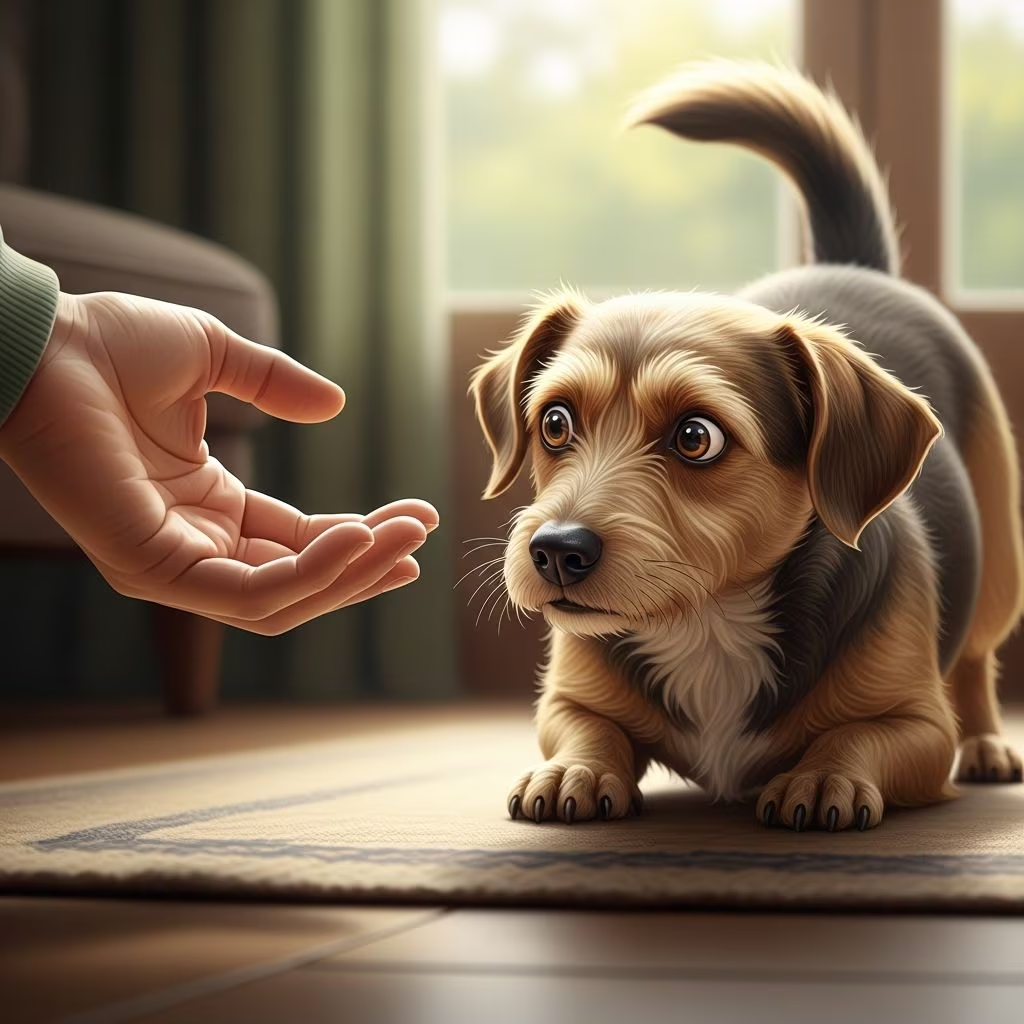
Skittish dogs often stem from past traumas, lack of socialization, or genetic predispositions, making trust-building a gradual process rooted in patience and empathy. These fearful pups exhibit subtle **body language cues** like lip licking, yawning, panting, tail tucking, or gaze aversion, signaling a need for space. Approaching too quickly can heighten anxiety, so prioritize observing and respecting their pace to foster a secure bond.
Recognizing Signs of Fear in Your Dog
Understanding your dog’s fear signals is the foundation of effective connection. Early detection prevents escalation from displacement behaviors like excessive sniffing or ground focus to more overt responses such as growling, lunging, or shutdown.
- Yawning: Often misinterpreted as tiredness, this indicates emotional discomfort rather than boredom.
- Panting: Beyond heat regulation, rapid panting signals stress buildup.
- Disinterest: Ignoring favorite treats or toys shows anxiety overriding normal motivations.
- Body tension: Stiff posture, tucked tail, or averted gaze pleads for distance.
- Offensive displays: Growling or lunging aims to create space from perceived threats, rooted in fear rather than aggression.
By tuning into these **early warning signs**, you intervene before overwhelm, creating opportunities for positive associations. Journal your dog’s triggers—novel sounds, strangers, or leashes—to tailor your approach systematically.
Get to Know Your Dog on Their Terms
The cornerstone of bonding with a skittish dog is patience: let them dictate the interaction speed. Rushing erodes trust; instead, observe from afar, noting preferences without demands.
Start in a quiet environment. Sit at a distance, avoiding direct eye contact, which can feel predatory. Speak in soft, soothing tones to signal safety. If they approach, offer slow blinks—a canine reassurance gesture—and pet only preferred areas like the chest or back, steering clear of sensitive spots such as head, paws, ears, or tail. Uninvited touches from strangers should be prohibited until the dog initiates.
This patient observation phase allows the dog to decompress, revealing their true personality while building a foundation of respect and security.
Progress markers include voluntary proximity or relaxed body language. Celebrate these subtly with treats, reinforcing that your presence equates to positivity.
Create a Safe and Comfortable Space
A dedicated **safe space**—a crate, bed, or corner with familiar bedding—serves as a sanctuary where your skittish dog retreats without interference. Enhance it with pheromone diffusers, calming music, or covered sides for den-like security.
- Ensure 24/7 access, never using it for punishment.
- Pair entry with high-value treats to build positive links.
- Maintain quietude during high-stress periods like thunderstorms.
Implement **structured routines** for meals, play, and potty breaks. Consistency reduces anxiety by making the world predictable. Cornell’s Riney Canine Health Center advocates ‘Learn to Earn’ protocols: require a simple sit before rewards like food or walks, establishing gentle leadership without force.
Master Classical Conditioning and Desensitization
**Classical conditioning** transforms fear triggers into predictors of good things. For movement sensitivity, carry high-value treats (chicken, cheese) and approach slowly, dropping them nearby without lingering. Use calm vocalizations to soothe.
Once comfortable, advance to **desensitization and counterconditioning (DS/CC)**: expose below threshold—where fear is absent—and pair with rewards.
- Identify triggers (e.g., doorbell).
- Start at sub-threshold distance/intensity.
- Offer treats/toys immediately upon exposure.
- Gradually intensify as relaxation persists.
This neuroplasticity-driven method rewires emotional responses, demanding time but yielding profound results. Avoid threshold exceedance, as it reinforces fears.
Leash Training and Purposeful Walks
Leashes often evoke panic in skittish dogs. Counter by associating positively: clip on, then relax with treats while lounging—no immediate outing.
Begin walks in serene residential areas, avoiding urban chaos. Carry treats for startling events, dispensing calmly to reframe noises as treat cues. Short sessions build endurance.
| Walk Stage | Environment | Tips |
|---|---|---|
| Beginner | Quiet backyard/neighborhood | 5-10 min, treats for calm focus |
| Intermediate | Low-traffic streets | 15 min, introduce mild stimuli |
| Advanced | Busier areas | 20+ min, reward confidence |
Structured leash work instills directionality, boosting security through leadership.
Socialization: Controlled and Positive
Skittish dogs benefit from dog-dog interactions, emulating confident peers. Skip chaotic dog parks; opt for one-on-one playdates with mellow, vaccinated dogs.
Supervise closely, intervening at stress signs. Reward parallel play, gradually allowing sniffs. This models normalcy, alleviating isolation-induced fears. Human socialization follows: invite calm guests who ignore the dog until solicited.
Reward Progress and Provide Leadership
Your dog’s ‘illogical’ fears are survival adaptations; respond with unwavering calm. Keep treats handy for micro-wins like eye contact or relaxed sits. Low, steady tones convey safety; excitement can trigger.
Leadership via **clear boundaries**—no jumping, structured routines—provides the stability fearful dogs crave. Rocket recalls or alternative coping skills distract from triggers while reinforcing you as a safe haven.
Common Pitfalls to Avoid
- Forcing interaction: Breeds resentment; wait for opt-in.
- Punishment: Amplifies fear; use positives exclusively.
- Inconsistency: Undermines trust; align household rules.
- Overlooking health: Rule out pain/thyroid issues with vets.
Frequently Asked Questions (FAQs)
Q: How long does it take to bond with a skittish dog?
A: Timelines vary from weeks to months, depending on history severity. Consistency accelerates progress; celebrate incremental victories.
Q: What if my dog growls or snaps when approached?
A: Back off immediately—it’s distance-seeking. Use DS/CC from afar; consult professionals for severe cases.
Q: Can medication help skittish dogs?
A: Yes, vet-prescribed anti-anxiety meds complement behavior mod for profound fears. Pair with training.
Q: Is professional training necessary?
A: DIY works for mild cases; force-free pros aid complex anxieties via tailored plans.
Q: How do I socialize a fearful adult dog?
A: Controlled, gradual exposures with calm role models; avoid overload.
Final Thoughts on Patience and Persistence
Connecting with a skittish dog demands commitment, but the reciprocal trust and joy are transformative. Your calm leadership turns fear into confidence, enriching both lives profoundly.
References
- Training Your Dog – Bonding With a Skittish Dog — Speak Dog!. Accessed 2026. https://speakdog.com/bonding-with-a-skittish-dog/
- How We Build Trust With Fearful or Anxious Dogs — KORU K9. Accessed 2026. https://www.koruk9.com/how-we-build-trust-with-fearful-or-anxious-dogs/
- Training a Dog With Anxiety: How to Train a Fearful Dog — American Kennel Club (AKC). Accessed 2026. https://www.akc.org/expert-advice/training/how-to-train-fearful-dog/
- Fearful Dogs | Riney Canine Health Center — Cornell University College of Veterinary Medicine. Accessed 2026. https://www.vet.cornell.edu/departments-centers-and-institutes/riney-canine-health-center/canine-health-information/fearful-dogs
- Help your anxious or fearful dog gain confidence — Animal Humane Society. Accessed 2026. https://www.animalhumanesociety.org/resource/help-your-anxious-or-fearful-dog-gain-confidence



