

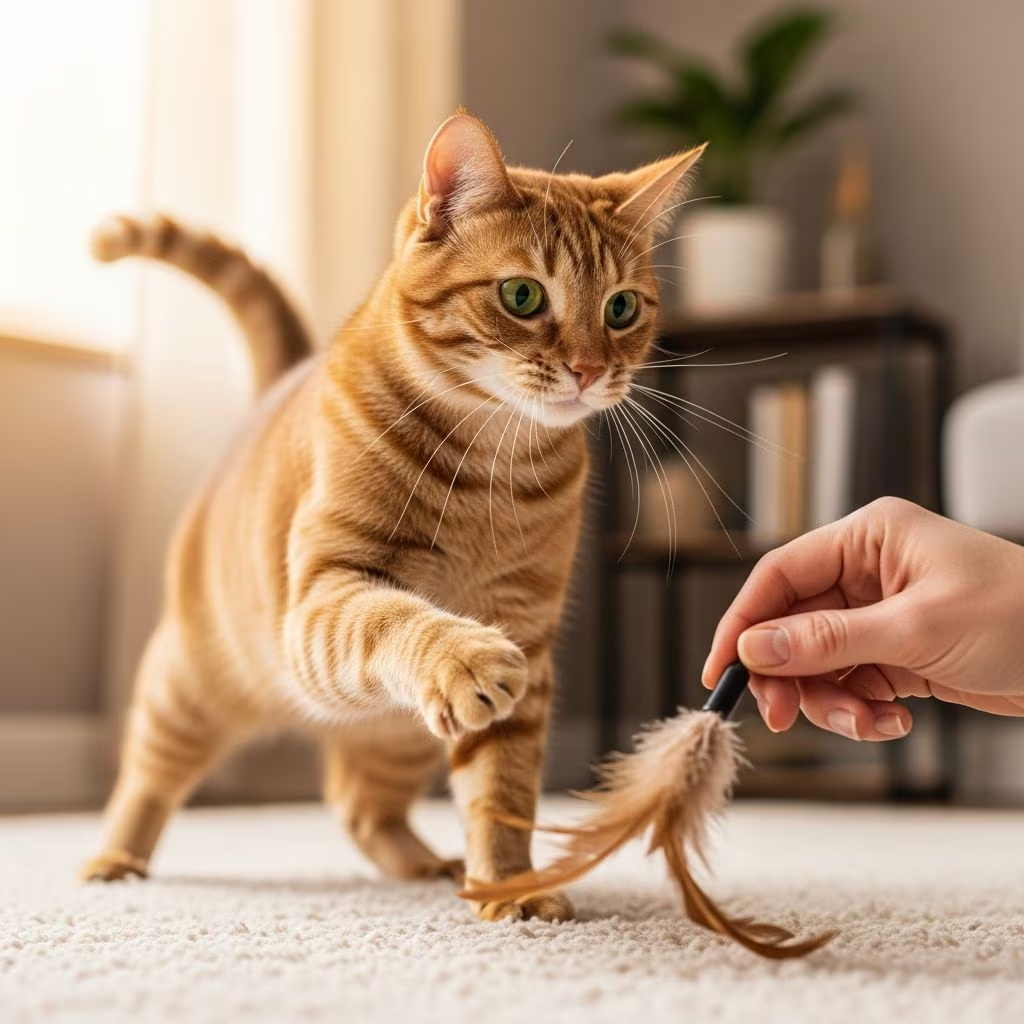
How Do Cats Play with Humans? Understanding Feline Play Behavior
Cats are fascinating creatures with unique ways of expressing themselves and interacting with their environment. One of the most intriguing aspects of cat behavior is how they play—especially when it comes to playing with their human companions. While watching two cats engage in spirited play can be entertaining, their playtime with humans often looks quite different. Understanding how cats play with humans is essential for building a strong bond with your feline friend while ensuring safe and enjoyable interactions for both parties.
Many cat owners find themselves puzzled by their cat’s playful antics, wondering whether their pet is genuinely having fun or if there’s something more to their behavior. Research has shown that cats can form close bonds with humans, often viewing them as a source of comfort and stress relief. This connection makes playtime an excellent opportunity to deepen your relationship with your cat while providing them with much-needed physical and mental stimulation.
The Natural Instincts Behind Cat Play
To understand how cats play with humans, it’s important to recognize that all feline play consists of mock aggression. Cats are inherently predatory animals, and their play behaviors are rooted in hunting instincts that have been passed down through generations. When a cat engages in play, they’re actually practicing essential survival skills, even though they’re living comfortably in your home.
During play, cats naturally stalk, chase, sneak, pounce, swat, kick, scratch, ambush, attack, and bite—all of which mirror the behaviors they would use to hunt prey in the wild. These instinctive behaviors profoundly influence how cats interact with their owners. For example, cats enjoy chasing toys and slapping moving objects, which satisfies their hunting instincts. When these instinctive needs are met through appropriate human interactions, the bond between cats and their owners is strengthened.
Understanding this fundamental aspect of cat behavior helps explain why your cat might pounce on your feet as you walk up the stairs or ambush your hand from under the bedcovers. These behaviors aren’t signs of aggression—they’re simply manifestations of your cat’s natural predatory instincts expressing themselves through play.
Recognizing Play Aggression in Cats
Play aggression is a common behavior concern that cats direct toward their owners, involving typical predatory and play behaviors, including leaping, pouncing, and biting. However, it’s crucial to distinguish between genuine play and actual aggression, as the two can sometimes look similar to the untrained eye.
Play-motivated aggressive behaviors are commonly observed in young, active cats less than two years of age. These behaviors are completely normal and natural for kittens and young cats. The key differences between playful and aggressive behavior include:
- Playful aggression usually results in scratches and inhibited bites that do not break the skin, whereas true aggression causes injury
- During play, cats typically have forward-facing ears and lean their bodies forward, not backward
- Playful cats frequently change roles with their play partner, taking turns being the pursuer and the pursued
- Play is reciprocal and enjoyable for both parties involved
During play aggression episodes, cats often appear very excited and active, with dilated eyes, perked ears, and quickly wiggling tails. These physical indicators show that your cat is enjoying the interaction and releasing excess energy. However, it’s important to remember that cats’ acceptance of play fighting varies—some cats may love it, while others may resist.
Why Cats Play Differently with Humans
It’s extremely uncommon for a cat to attempt to play with a human as if they’re another cat. This difference in play style stems from the fact that cats recognize humans are fundamentally different from other felines. Cats have learned through socialization and experience that humans are less resilient than other cats and require different approaches.
When cats interact with humans during play, they often modulate their behavior based on what they’ve learned about human fragility. It’s believed that through play with each other, young cats learn to inhibit their bites and sheath their claws when swatting. However, cats who were orphaned or weaned early might never have learned to temper their play behavior appropriately. Additionally, if pet parents encourage their cats to chase and attack people’s hands and feet in play, cats may continue this behavior into adulthood.
Common Play Behaviors and What They Mean
Understanding specific play behaviors can help you better interpret what your cat is communicating during playtime. Here are some common behaviors you might observe:
- Pouncing: One of the most characteristic play behaviors, pouncing allows cats to practice the explosive movements they would use to catch prey
- Stalking: Your cat may freeze in a low crouch before pouncing, twitch its tail, and flick its ears back and forth—all hunting preparation behaviors
- Batting and Swiping: Cats use their paws to bat at and swipe moving objects, honing their targeting accuracy
- Wrapping Around Limbs: When your cat wraps their front feet around a person’s hands or feet while biting, they’re mimicking the grappling techniques used when hunting larger prey
- Kicking Motions: Rapid kicking movements, often directed at toys or hands, simulate the strikes a cat would use against prey
The Role of Toys in Cat Play
One of the most important mistakes pet owners make is using their hand or forearm as a cat’s target during play. When cats engage in what we call play, they’re in fact honing their hunting skills. If you encourage a kitten to chase or bite your hands and feet, they may grow up to view your hands as prey and take pleasure in “hunting” them during playtime. Since a cat’s claws and teeth are capable of drawing blood, it’s essential to use appropriate toys instead.
Instead of using your hand, you should hold something that your cat can play with, like a feather toy. Recommended toys include:
- Wand toys with feathers or strings attached
- Telescoping handle cat teasers
- Interactive laser pointers (used carefully)
- Crinkle toys and balls
- Motorized toys that simulate prey movement
Using proper toys allows cats to satisfy their hunting instincts in a controlled, safe manner. Socialized cats will pay attention to toys and play with them, showing they can relax and have fun in the presence of a person.
How to Properly Play with Your Cat
Successfully playing with your cat requires understanding their preferences and needs while maintaining appropriate boundaries. Here are evidence-based suggestions for safe and enriching play:
Use Interactive Toys
Avoid using your hands as toys. Instead, invest in interactive toys that keep your hands at a safe distance while still providing engaging play. Wand toys are particularly effective because they mimic the movements of prey animals, triggering your cat’s natural hunting response.
Control Intensity and Duration
Pay attention to controlling the strength and duration of play, avoiding excessively stimulating the cat and triggering aggressive behaviors. Start with shorter play sessions and watch for signs of overstimulation. If your cat begins to seem anxious, irritable, or if their play becomes too rough, it’s time to pause and give them a break.
Observe and Respond to Reactions
Monitor your cat’s responses continuously, and if the cat appears uneasy or resistant, immediately stop playing. Every cat has different tolerance levels and preferences for play. Some cats enjoy vigorous play sessions, while others prefer gentle, brief interactions. Learning your individual cat’s preferences is key to successful playtime.
Watch for signs that your cat wants to stop playing, including:
- Ears flattening against their head
- Twitching or lashing tail
- Skin rippling on their back
- Attempts to move away from the toy
- Growling or hissing
Anticipate and Redirect Attack Behaviors
If you can anticipate the attack by observing dilated pupils, a swishing tail, or other pre-pounce behaviors like hiding or crouching, you can throw a toy to redirect the behavior. This technique allows your cat to engage their hunting instincts while keeping your hands safe.
Maintain Regular Interaction
Maintain regular interaction and play, helping cats establish routine life habits and reduce anxiety and destructive behaviors due to boredom. Consistent playtime helps cats feel secure and stimulated, reducing the likelihood of problem behaviors developing.
What NOT to Do During Cat Play
Understanding what not to do is just as important as knowing what to do. Here are common mistakes to avoid:
- Don’t react with quick jerks away from the cat because this mimics how prey responds to an attack, which can trigger continued aggression
- Never physically punish your cat because this teaches the cat that you’ll play back roughly, potentially intensifying their aggressive response or causing them to become fearful of you
- Avoid encouraging your kitten to chase or bite your hands and feet, as this establishes bad habits that are difficult to break
- Don’t play with your cat using your bare hands or forearms as targets
- Avoid overstimulating your cat, as this can lead to petting-induced aggression and negative associations with human contact
The Positive Impact of Play on Your Relationship
Play can positively impact the cat-human relationship and lead the cat to associate a regular positive experience with the person, increasing trust. This is especially helpful in relationships where a cat is unsure about a particular person. When you engage in appropriate play with your cat, you’re not just providing physical exercise—you’re actively building trust and deepening your emotional connection.
Through proper play interactions, your cat learns that you’re a source of fun, excitement, and positive experiences. This strengthens their bond with you and increases their overall confidence and well-being.
Age Considerations in Cat Play
A cat’s age significantly influences their play style and energy levels. Kittens and young cats under two years old are typically the most energetic and playful. Rough play is common and natural among this age group as they’re developing their hunting skills and learning bite inhibition.
As cats mature, their play may become less frequent or intense, though many adult cats remain playful throughout their lives. Senior cats may prefer gentler play sessions and shorter durations. Adjust your play style to match your cat’s age, health status, and individual preferences.
Frequently Asked Questions
Q: Is it normal for my cat to bite and scratch during play?
A: Yes, biting and scratching are normal play behaviors in cats, as they’re practicing their hunting skills. However, these bites should be inhibited (not breaking the skin) and occur during appropriate play sessions. If your cat is causing injury or playing at inappropriate times, redirect them to toys and establish boundaries.
Q: How can I tell if my cat is playing or actually aggressive?
A: During play, cats have forward-facing ears, lean their bodies forward, change roles frequently with their play partner, and their claws may be out but don’t cause damage. Actual aggression involves ears back, body leaning away, consistent one-way attacks, and intentional injury.
Q: Why does my cat pounce on my feet when I walk?
A: This behavior is a classic hunting simulation. Your moving feet trigger your cat’s predatory instincts. You can redirect this behavior by engaging in structured play sessions with appropriate toys, providing outlets for their hunting drive.
Q: How often should I play with my cat?
A: Most cats benefit from multiple short play sessions throughout the day, totaling 15-30 minutes of interactive play. Kittens and young cats may need more frequent sessions to burn energy and prevent problem behaviors.
Q: Can play aggression in cats be treated?
A: Yes, although play aggression is common in indoor cats, it can often be easily treated through proper redirection to toys, controlled play sessions, and environmental enrichment. If problems persist, consult with a veterinary behaviorist.
Q: Should I use laser pointers for cat play?
A: Laser pointers can be fun for cats, but use them carefully. Always end laser play sessions by letting your cat “catch” a physical toy, as the inability to physically catch the laser can be frustrating. Avoid shining lasers in your cat’s eyes.
Q: What should I do if my cat plays too roughly?
A: Stop the play session immediately, redirect to appropriate toys, and ensure you’re using toys rather than your hands. Provide more frequent play opportunities to help your cat burn energy appropriately, and monitor for signs of overstimulation.
References
- The Cat Socialization Continuum: A Guide to Interactions Between Cats and People — Alley Cat Allies. https://www.alleycat.org/resources/cat-socialization-continuum-guide/
- Feline Aggression Toward People — Tacoma Humane Society. https://www.thehumanesociety.org/feline-aggression-toward-people/
- Do Cats Like Play Fighting With Humans? — ArkPet. https://thearkpet.com/blogs/all-you-want-to-know-of-cat/do-cats-like-play-fighting-with-humans
- Play Aggression in Cats — Pasadena Humane. https://pasadenahumane.org/play-aggression-in-cats/
- Play Aggression (Cats) — San Francisco SPCA. https://www.sfspca.org/resource/play-aggression/
- How Do Cats Play with Humans? Vet-Reviewed Feline Behavior — Catster. https://www.catster.com/cat-behavior/how-do-cats-play-with-humans/
- Aggression Between Cats in Your Household — ASPCA. https://www.aspca.org/pet-care/cat-care/common-cat-behavior-issues/aggression-between-cats-your-household
- Petting-Induced or Overstimulation Aggression in Cats — Humane Society of the United States. https://www.hshv.org/petting-induced-or-overstimulation-aggression-in-cats/



