

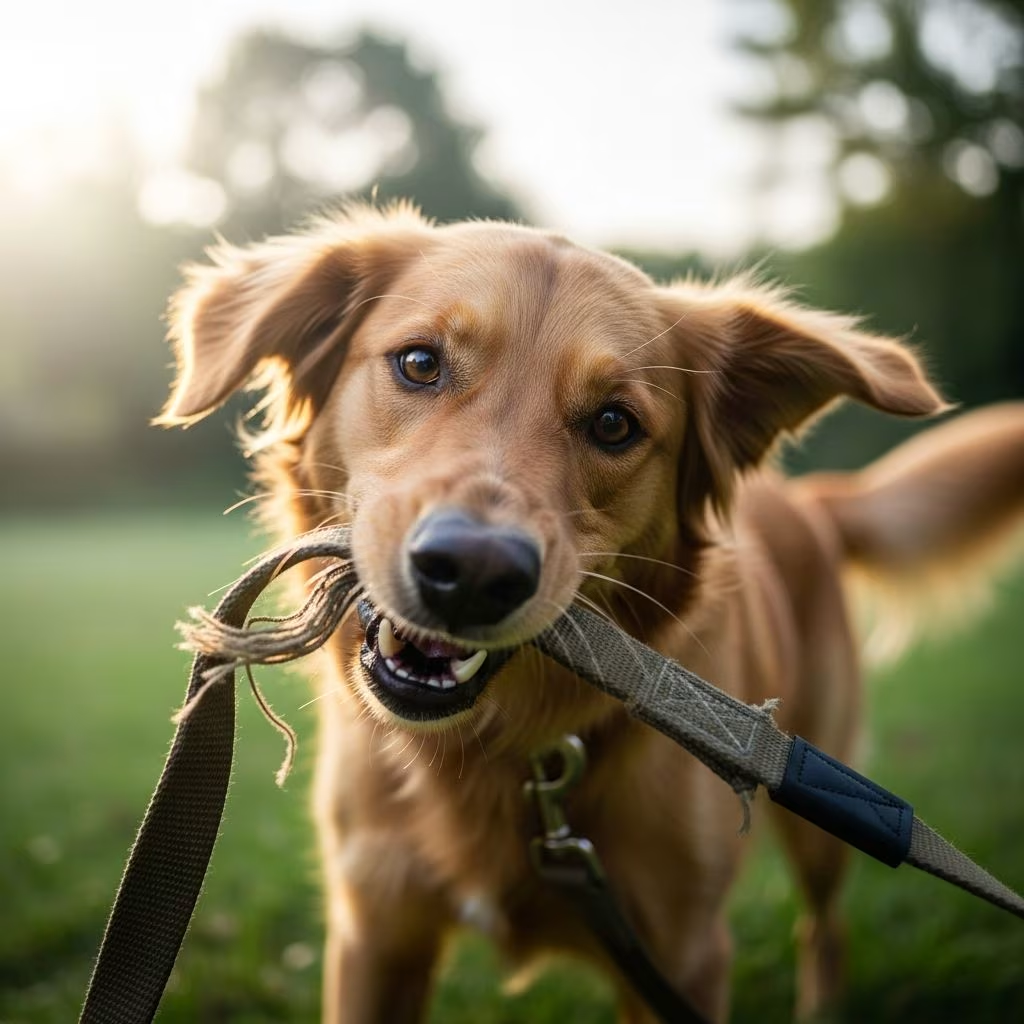
Does your dog turn every walk into a tug-of-war by biting and chewing their lead? This common behaviour frustrates many dog owners, but understanding **why dogs bite leads** and applying targeted strategies can transform your outings. Lead biting often stems from excitement, boredom, teething, or **leash frustration**, where dogs react to the restraint of being on-lead while spotting something intriguing off-lead. Puppies especially mouth everything during exploration phases, while adult dogs might do it out of habit or attention-seeking. The good news: with consistency and positive reinforcement, you can curb this habit effectively.
Preventing lead biting starts with prevention and management. Never let biting become reinforced—stop walks immediately if it happens, turning away silently to show that chewing ends the fun. Equip your dog with proper gear: a **front-clip harness** reduces pulling tension that tempts mouthing, unlike collars that can cause discomfort. Sturdy, thick leads made of biothane or coated rope resist chewing better than thin nylon. For severe cases, consider a **basket muzzle** for safety during training, ensuring it’s fitted comfortably for panting and drinking.
Why Do Dogs Bite Their Leads?
Dogs bite leads for varied reasons, each requiring a tailored response. Here’s a breakdown:
- Teething in Puppies: Just like human babies, puppies (3-6 months) chew to relieve gum discomfort. Their baby teeth give way to 28 adult ones, making soft objects like leads prime targets.
- Excitement or Play: High energy on walks leads to grabbing the lead as a game, mimicking play-fighting where dogs mouth necks or limbs. Research on canine social play shows mouthing is normal but must be redirected in human contexts.
- Boredom or Lack of Stimulation: Understimulated dogs invent fun, turning the lead into a chew toy. Mental games or sniff walks provide outlets.
- Leash Frustration or Reactivity: Seeing dogs, squirrels, or people while leashed creates barrier frustration—biting releases tension. This links to poor bite inhibition if not addressed early.
- Attention-Seeking: If biting prompts reactions (yelling, pulling), it reinforces the behaviour. Dogs thrive on interaction, positive or negative.
- Discomfort: Ill-fitting collars or harnesses cause pawing and mouthing to alleviate pressure.
Observe patterns: Does it happen at walk start (excitement), near triggers (reactivity), or randomly (boredom)? Tracking via a journal helps pinpoint causes.
How to Stop Your Dog Biting the Lead
Stopping lead biting demands patience, consistency, and positivity. Punishment like jerks or shouts worsens frustration; focus on rewards for calm behaviour. Core techniques include:
1. Redirection with Toys
One of the best ways to keep the lead out of your dog’s mouth is to give them something else to carry. Offer a **toy they love**—a tug rope, ball, or puzzle feeder—at bite onset. Praise lavishly when they engage: “Yes! Good chew!” Gradually fade the toy, rewarding lead-ignoring with treats. This satisfies mouthing urges appropriately.
2. The ‘Stop and Go’ Method
When biting starts, freeze immediately. Stand still, silent, avoiding eye contact. Resume walking only when the lead is calm for 5-10 seconds, praising softly. Repeat religiously—dogs learn biting halts fun, calm walking restarts it. Sessions last 5-10 minutes initially to build success.
3. Teach ‘Leave It’ and ‘Gentle’ Commands
Build impulse control off-lead first. Hold a treat, say “leave it,” close fist when sniffed. Reward from other hand on compliance. Progress to dropping toys/lead pieces, rewarding ignores. Pair with **bite inhibition training**: Yelp sharply like a puppy on hard mouths, then redirect. For adults, use high-value rewards (chicken, cheese) for compliance.
4. Exercise and Mental Enrichment Before Walks
Tire dogs mentally/physically: 10-minute fetch, puzzle toys, or scent games pre-walk reduce excess energy fuelling biting. Incorporate walk variety—sniffing trails, training stops—to prevent boredom.
5. Desensitisation for Leash Reactivity
If frustration-based, counter-condition. Start distant from triggers (e.g., other dogs), reward calm lead focus with treats. Gradually close distance as relaxation builds. Tools like Freedom Harnesses aid loose-leash walking.
Combine methods: Redirection for puppies, stop-go for adults, desensitisation for reactivity. Track progress weekly.
Best Tools and Equipment to Prevent Lead Biting
Right gear halves the battle. Compare options:
| Item | Pros | Cons | Best For |
|---|---|---|---|
| Front-Clip Harness (e.g., Easy Walk) | Discourages pulling, comfy, no neck pressure | May need sizing tweaks | Reactors, pullers |
| Biothane/Chain Lead | Chew-proof, easy clean, durable | Heavier, pricier | Chronic chewers |
| Toy Holder/Lead Clip | Allows carrying toys, redirects naturally | Not for strong pullers | Playful biters |
| Basket Muzzle | Prevents chewing/biting, allows panting | Training required for acceptance | Severe cases |
| Head Halter (e.g., Gentle Leader) | Controls head, reduces mouthing | Escape risk if loose | Strong adults |
Start with harness + chew-resistant lead. Acclimate gradually with treats.
Training Exercises for Lead Biting
Structured sessions build skills. Do indoors first, 5 minutes daily.
- Loose Leash Walking: Reward slack lead every few steps. Add distractions slowly.
- Focus Game: “Watch me” cue with treats at nose level, hold 3 seconds, reward.
- Tug Redirect: Initiate tug on toy, drop on cue, reward settling.
- Impulse Control: Place treats on floor, cover on “leave it,” uncover on cue.
- Mock Walks: Practice hallway pacing, freezing on bites.
Use clicker for precision: Click calm moments, treat follows. Consistency across family prevents confusion.
Common Mistakes to Avoid
- Yanking/Punishing: Increases frustration, teaches lead = bad.
- Inconsistent Response: Some ignores, some reacts reinforces randomly.
- Skipping Exercise: Energetic dogs can’t focus.
- Poor Gear: Flimsy leads invite chewing.
- Ignoring Underlying Issues: Pain or anxiety needs vet check.
When to Seek Professional Help
If biting persists after 4-6 weeks, escalates to growling/lunging, or accompanies aggression, consult a **force-free trainer** or veterinary behaviourist. Rule out medical issues (teeth pain, GI upset). Red flags: Blood on lead, refusal to walk, sudden onset in adults.
Frequently Asked Questions (FAQs)
Why does my puppy bite the lead so much?
Puppies teethe and explore via mouthing. Redirect to toys and use stop-go consistently.
Is lead biting a sign of aggression?
Rarely; usually frustration or play. True aggression shows stiff posture, hard stares. Assess with pro if unsure.
How long does training take?
1-4 weeks with daily practice. Puppies faster; adults with habits need longer.
What if my dog chews through leads?
Switch to biothane/metal. Manage with short sessions till trained.
Can I use a muzzle?
Yes, basket-style for training. Pair with positives to build acceptance.
Does spaying/neutering help?
May reduce some behaviours but not mouthing. Focus on training.
With these strategies, lead biting becomes history. Patient, reward-based training fosters calm walks for you and your dog. Start today for happier adventures!
References
- Is Your Dog’s Rough Play Appropriate? — Kinship. 2023. https://www.kinship.com/dog-behavior/your-dogs-rough-play-appropriate
- Dog Bite Inhibition: Why it Matters and How to Teach it — Kinship. 2023. https://www.kinship.com/dog-behavior/dog-bite-inhibition
- Here’s Why You Shouldn’t Label Your Dog’s Behavior — Kinship. 2023. https://www.kinship.com/dog-behavior/dog-behavior-beware-simple-names-complex-problems
- How Can I Stop My Dog From Biting on the Leash? — Kinship. 2023. https://www.kinship.com/dog-behavior/how-can-i-stop-my-dog-biting-leash
- American Veterinary Society of Animal Behavior Position Statement on Puppy Socialization — AVSAB (avsab.org). 2024-10-01. https://avsab.org/wp-content/uploads/2018/03/Puppy_Socialization_Position_Statement_Download_-_10-3-14.pdf



