

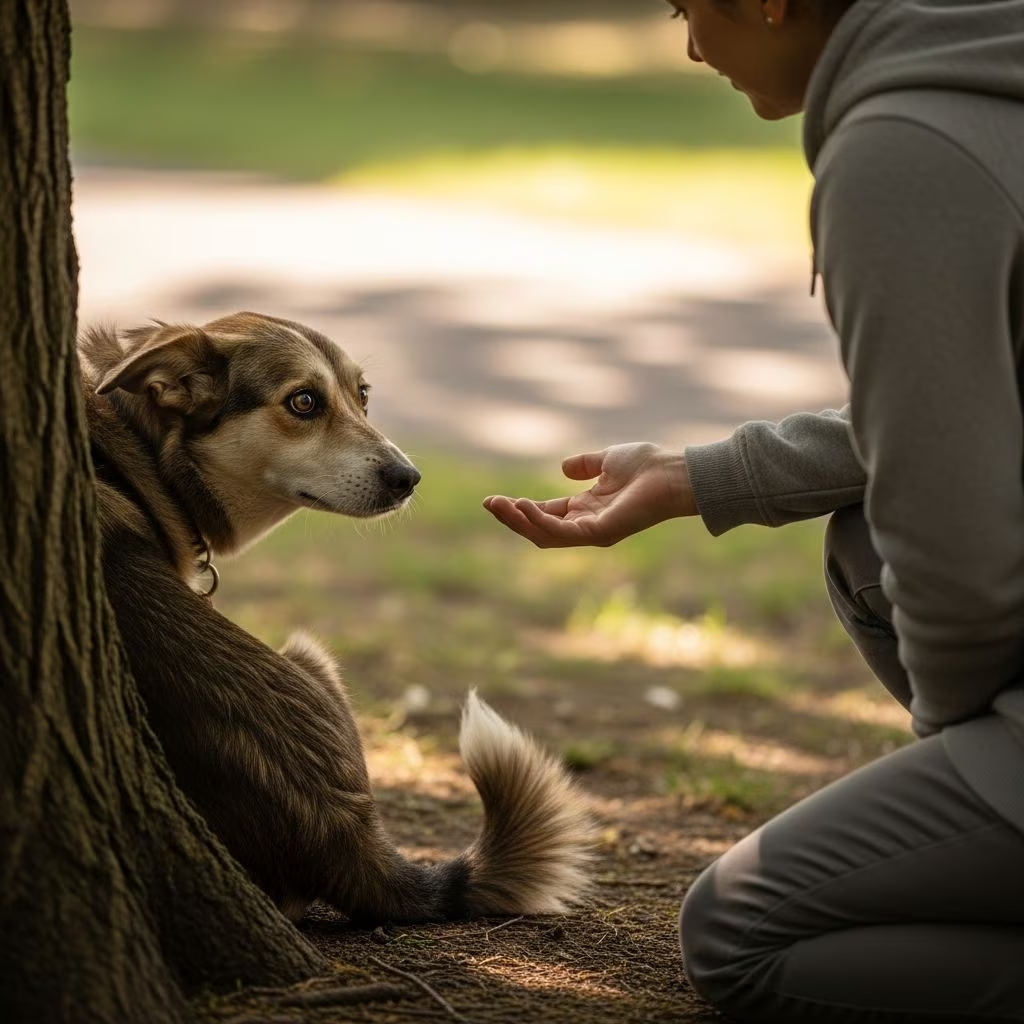
Understanding Why Dogs Become Shy or Fearful
Dogs can develop shy or fearful behaviors for various reasons that owners and handlers should understand before attempting to interact with them. A dog’s temperament is shaped by multiple factors that influence how they respond to new people, environments, and situations.
The primary causes of shyness or fear in dogs include lack of early socialization, which means the dog did not have adequate exposure to different people, animals, and environments during critical developmental periods. Prior negative experiences can also create lasting fear responses, whether from traumatic events, abuse, or simply a startling incident that left an impression. Additionally, genetic factors play a significant role, as some dogs are naturally more cautious or sensitive than others due to their breeding and inherent temperament.
Understanding these root causes helps handlers approach shy dogs with empathy and appropriate expectations. Each dog’s journey toward confidence will vary based on their individual history and personality.
Reading Your Dog’s Body Language
Before attempting to approach any dog, especially one that appears nervous or shy, it is essential to understand what their body language is communicating. Dogs express their emotional state through clear physical signals that careful observers can learn to recognize.
When meeting any new dog, think in terms of the dog’s language. Always use respect, caution, and awareness as your foundation. Pay attention to these important signals:
Signs of Fear and Nervousness
- Tucked tail held low or between the hind legs
- Ears pinned back against the head
- Crouched or lowered body posture
- Averted gaze or avoiding eye contact
- Trembling or stiffness in movement
- Lip licking or yawning when not tired
- Whale eye (showing the whites of the eyes)
- Growling, snarling, or snapping
Recognizing these signals allows you to adjust your approach and prevent escalating the dog’s anxiety.
How to Approach a Scared Dog: Step-by-Step Technique
Approaching a shy, nervous, or scared dog requires a deliberate, methodical approach that minimizes perceived threats. The following technique has been proven effective for safely meeting fearful dogs.
Step One: Slow Your Pace and Adjust Your Tone
Begin by slowing your movements significantly. Rapid or jerky motions can startle a nervous dog and increase their anxiety. Similarly, use a gentle, quiet tone of voice rather than enthusiastic greetings that might feel overwhelming. Your calm demeanor communicates safety to the dog.
Step Two: Approach from the Side, Not Head-On
If you know the dog is shy or fearful, change your body language immediately. Approach toward the side of the dog, never directly head-on. This angled approach feels less confrontational and threatening than a direct approach. Additionally, avoid direct eye contact, as staring can be interpreted as aggressive or dominant behavior by nervous dogs.
Step Three: Make Your Body Smaller
As you get close to the dog, begin to make your body “smaller” to appear less intimidating. Lower the shoulder that is closest to the dog. Start turning so that by the time you are beside the dog, you are almost facing away—but don’t have your back turned completely to the dog, as this can make the dog feel uncertain about your intentions.
Step Four: Bend Down Carefully
Once positioned beside the dog, you may bend down next to them. Do not bend down if the dog is snapping or lunging. In those cases, back away to let the dog calm down before attempting further interaction. When bending, do so slowly to avoid startling the dog or appearing threatening.
Step Five: Allow the Dog to Approach You
Keep your hands to yourself during initial contact. Give the dog a few seconds to sniff you, which is their primary way of gathering information about you. You can glance toward the dog to watch for any change in body language, but continue to avoid direct eye contact. Do not force your hand toward them; let them approach to sniff on their own if they choose to.
Step Six: Be Patient and Relaxed
If the dog has not moved away, stay where you are and try to think about the message you are giving to the dog. Be relaxed and patient as the dog becomes comfortable with your presence. Talk to them in quiet, gentle tones to provide reassurance without pressure. Your relaxed energy is contagious and helps the dog feel safer in your presence.
Walking with a Fearful Dog
Once you’ve successfully made initial contact with a scared dog, the next challenge may be getting them to walk with you, particularly if you’re trying to help a stray or fearful rescue dog. This requires a specialized approach that respects the dog’s emotional state.
Leashing Technique
If your goal is to get a leash on the scared dog—for example, if it’s a stray dog whom you’re trying to help—slowly loop the lead over their head. Don’t attempt to grab a defensive dog’s collar to clip on a leash, as this can trigger a defensive response and damage the fragile trust you’ve built.
Encouraging Movement
Once the loop is around the dog’s neck, move away and wait to see whether the dog will move to join you on a walk. If they don’t walk, wait. Don’t force or pull. If they do walk, just move along with them. The simple act of moving can help a dog to feel less cornered and thus help them relax. This gradual approach reduces the dog’s sense of being trapped or threatened.
Managing the Walk
Watch the dog’s body language carefully, and allow them to stop to sniff, eliminate, roll, or do whatever they want. If the dog starts to panic—flailing around on the lead—release the leash pressure and wait for them to calm down. A walk can take 10 minutes or an hour. The goal is for the dog to begin to feel better about being with you, not to achieve a specific distance or duration.
Creating a Safe Environment at Home
When bringing a shy or timid dog into your home, environmental safety and setup are crucial for their adjustment and your peace of mind.
Securing Your Home and Yard
Shy dogs often become skilled escape artists when frightened, so take these precautions:
- Check for any windows they might escape from
- Identify any lever doors they could open
- Ensure all doors and gates are secure and cannot be pushed open
- Consider that most dogs over 25 pounds can jump fences less than 6 feet tall
- If your yard is not fenced or has a low fence, fit your dog with a sturdy collar and attach a leash or rope when going outside
- Always supervise your dog the first time in the yard
Documentation and Identification
Take a picture of your dog as soon as you can. If your dog does escape, you’ll have something current to put on a lost dog poster. Proper identification and recent photos are essential safety measures.
Establishing Home as Safe Territory
Avoid taking shy dogs out of the house and yard before they establish your home as their new residence and you as their family. At minimum, give them 2 or 3 days before taking them on a walk and much longer before going on a hike or somewhere unfamiliar and far from home. This allows them to build confidence in a familiar, controlled environment first.
Building Trust and Bonding with Your Shy Dog
Creating a strong bond with a shy dog requires patience, consistency, and understanding. Several evidence-based techniques can accelerate trust-building and help your dog emerge from their shell.
Hand Feeding and Positive Associations
Hand feed daily to create positive associations with you. Try mixing their dry food with canned food, baby food, or chicken and feeding them at least one meal a day by hand. This will help your dog establish a bond with you. If your dog won’t take food from your hand initially, toss some extra tasty treats on the ground between you and them and let them eat while you are present. Do not approach the dog; rather, let them approach you at their own pace.
Appropriate Petting Techniques
Pet them only when it is safe to do so and the dog is not growling, freezing, showing teeth, or displaying eye-whites. Pushing too far too fast can result in the dog retreating even further. When you pet your shy dog, avoid startling or reaching over them, especially over their head. Pet under the chin, neck, or shoulder areas first. Don’t grab or make sudden movements toward the dog.
Using a Canine Buddy
Many shy dogs tend to do best with other dogs they can attach to as buddies. If you don’t have another dog, consider setting up play-dates with friends or neighbor dogs. A confident, well-adjusted dog can serve as a role model and help your shy dog feel more comfortable around people.
Consistency and Patience
Have patience. Shy dogs take time to come out of their shells; some take a few weeks and others several months depending on age, prior experience with humans, genetics, and other factors. If you are patient and let them progress at their own pace, they can turn out to be very loving and loyal dogs. However, keep expectations realistic—your dog may never be a social butterfly, and that’s perfectly acceptable.
Advanced Trust-Building Strategies
Beyond basic interaction techniques, several advanced strategies can accelerate trust development and confidence building in shy dogs.
The “Play It Cool” Approach
Often the best way to get a dog to come around is to play it cool. Hang out with the dog, but don’t pay much attention to them. Perhaps read a book and talk softly once in a while. Try to sit in a chair or on the ground with your body sideways from them to look less threatening. If the dog does approach, refrain from reaching or grabbing; instead, talk softly and if you have them, offer treats. If the dog won’t even approach, work on rewarding the dog for looking at you or showing more confident or curious body postures.
Training and Building Confidence
Training is another great way to build and enhance the bond with your shy dog. Even if you only teach them basic commands or a trick or two, training enhances communication and builds confidence. Many trainers offer shy dog or “wallflower” classes specifically designed for anxious or fearful dogs. These classes provide structured environments for gradual socialization and confidence building.
Avoiding Counterproductive Behaviors
Avoid strong punishment. Your dog is prone to choosing fearful escape behavior in a threatening situation, and punishment will only reinforce their fear response. Additionally, don’t smother the dog with affection, as this can feel overwhelming rather than comforting.
What Not to Do When Approaching Fearful Dogs
Understanding what behaviors to avoid is just as important as knowing what to do. These common mistakes can damage your relationship with a shy dog or exacerbate their anxiety:
- Do not make sudden movements or approach quickly
- Do not loom over the dog or approach from directly above
- Do not reach your hand down from above the dog’s head
- Do not make prolonged direct eye contact
- Do not force the dog to interact if they’re showing signs of stress
- Do not use loud voices or enthusiastic greetings
- Do not corner the dog or block their escape routes
- Do not grab at the dog’s collar or body
- Do not punish fearful behavior
Special Considerations for Feral Dogs
Feral dogs—those with very limited or no contact with people—require additional time and patience. There is no specific timeline for helping feral or extremely shy dogs overcome their fear of people, as each dog will progress differently. The most important way to build this trust and create a relationship is to give the dog space. Interact in your home as you normally would, engaging with your dog(s) as usual while your shy dog is able to move about freely. You do not want to put unwanted pressure on such dogs through forced interaction.
Frequently Asked Questions
Q: How long does it take for a shy dog to adjust?
A: There’s no set timeline. Some dogs adjust within weeks, while others may take several months or longer depending on their age, prior experiences, genetics, and the consistency of your patience and care approach.
Q: Can I force a shy dog to socialize?
A: No. Forcing socialization often backfires and increases anxiety. Instead, allow the dog to progress at their own pace, creating opportunities without pressure for positive social experiences.
Q: Should I use treats when approaching a fearful dog?
A: Treats can be helpful, but only if the dog is willing to take them. Never force or reach toward the dog with a treat. Instead, toss treats on the ground and allow the dog to approach and take them willingly.
Q: What if my shy dog never becomes social?
A: That’s perfectly acceptable. Every dog has their own comfort level. A shy dog can still form a loving bond with their family and be happy, even if they never become highly social.
Q: Is it safe to leave a leash on a shy dog indoors?
A: A long drag leash can be helpful for managing a shy dog indoors, allowing you to guide them from room to room or outside without cornering them or grabbing their collar.
References
- How to Approach a Shy, Nervous, or Scared Dog — Best Friends Animal Society. 2024. https://bestfriends.org/pet-care-resources/how-approach-shy-nervous-or-scared-dog
- Tips for Bringing Home a Shy or Timid Dog — Santa Fe Animal Shelter. 2024. https://sfhumanesociety.org/adopt/
- How to Help Feral Dogs Trust People — Best Friends Animal Society. 2024. https://bestfriends.org/pet-care-resources/how-help-feral-dogs-trust-people
- 6 Tips for Winning Over Shy Dogs — ASPCApro. 2024. https://www.aspcapro.org/resource/6-tips-winning-over-shy-dogs



