

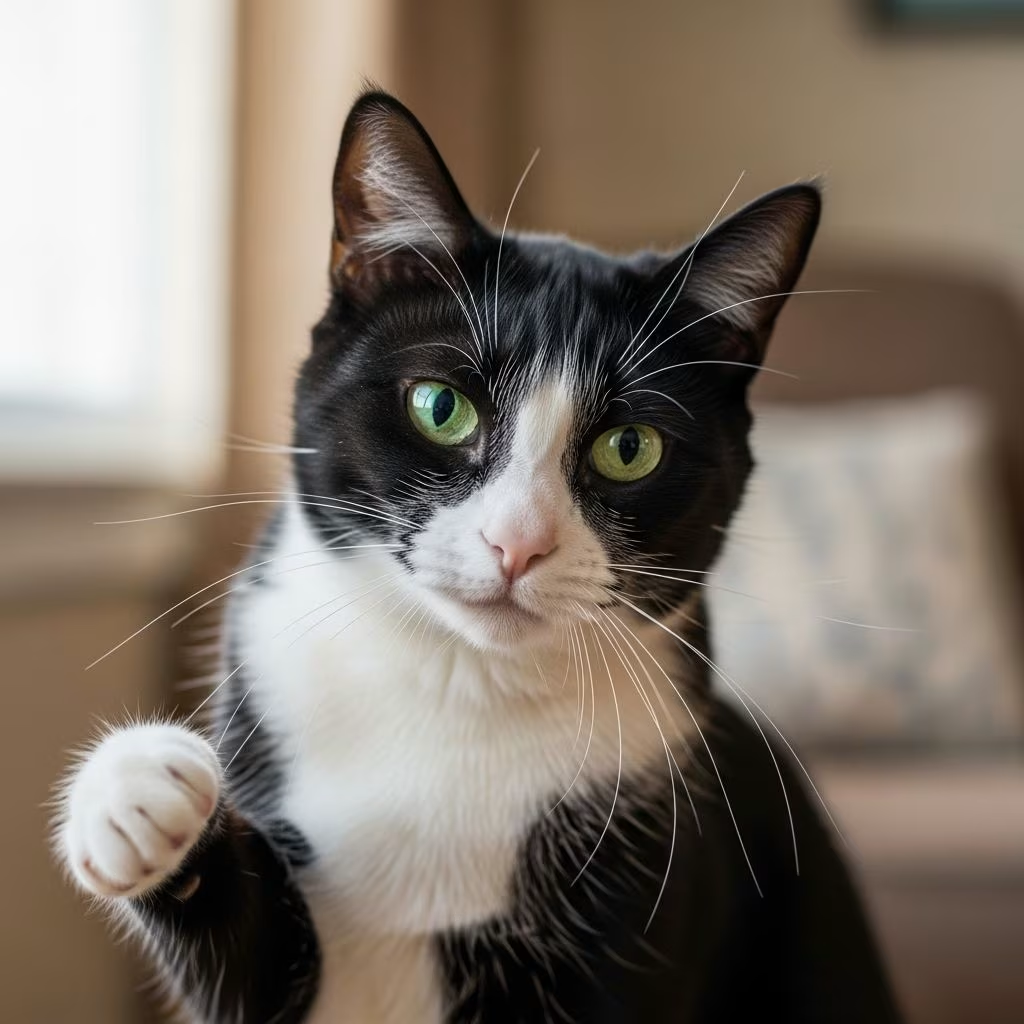
Tuxedo cats, with their striking black-and-white coats resembling formal evening wear, captivate many pet owners. However, they carry a reputation for **aggression** and **cattitude**—a sassy demeanor often dubbed “tuxietude” by devoted fans. While anecdotal evidence abounds, a key study questions if coat color influences temperament. This article dissects the science, myths, and realities of tuxedo cat behavior to help owners navigate their feline’s personality.
What Is a Tuxedo Cat?
A **tuxedo cat** is defined by its bicolor coat pattern: predominantly black fur with white markings on the chest, belly, paws, and often the muzzle, mimicking a tuxedo suit. This pattern occurs across various breeds and mixed breeds, not as a standalone breed. The white patches typically form a “shirt front” extending from the chest to the groin, with paws appearing as “spats.”
Genetically, tuxedo patterns stem from the piebald spotting gene, which suppresses pigmentation in specific areas. Both male and female tuxedo cats exist, unlike calicos, which are almost always female due to X-chromosome linkage. Tuxedos can have green, gold, or blue eyes, adding to their charm. Despite their elegant look, owners frequently report a bold, independent streak that fuels the aggression debate.
Are Tuxedo Cats Aggressive?
**Tuxedo cats rank highest for aggressive tendencies** among coat colors, according to owner surveys. A pivotal 2015 UK study published in the *Journal of Applied Animal Welfare Science* surveyed over 1,200 cat owners on behaviors during petting, play, cuddling, and vet visits. Researchers created an **aggression scale** to quantify reactions.
Black-and-white tuxedos topped the list, labeled “most likely to display aggression.” They showed intolerance for handling on human terms, preferring interactions on their schedule. This aligns with reports of sudden swats, hisses, or bites during unwanted petting. Gray-and-white tuxedos followed closely, especially aggressive at vets.
- Black-and-white cats: Highest overall aggression.
- Calico/tortoiseshell: Second, less affectionate and antisocial.
- Gray-and-white: Prone to vet-visit outbursts.
- Tabby, solid black/gray: Most docile and easygoing.
Yet, aggression varies individually. Not every tuxedo is feisty; many are loving lap cats. Factors like breed, early socialization, and environment play larger roles than color alone, as cats are bred more for looks than temperament.
Can Coat Color Affect Behavior?
The hypothesis that **coat color links to temperament** challenged conventional wisdom, which attributes behavior to breed. The UK study provided evidence: multicolored cats (tuxedos, calicos) exhibited more aggression than solids.
Possible explanations include genetics—color genes may correlate with neurological traits affecting mood. Tortoiseshells, often female, show higher moodiness, potentially tied to X-chromosome hormones. Owner bias is another factor: striking tuxedos might prompt closer scrutiny of behaviors, inflating perceptions.
Critics note the study’s reliance on self-reported data, lacking breed controls or objective measures. A 2019 study affirmed some heritable breed traits but emphasized individual variation. Still, patterns persist across sources.
| Coat Color | Aggression Rank | Key Behaviors |
|---|---|---|
| Black-and-White (Tuxedo) | 1 | Resists handling; high cattitude |
| Calico/Tortoiseshell | 2 | Less affectionate; moody |
| Gray-and-White | 3 | Vet aggression |
| Solid Black/Gray/Tabby | Lowest | Docile, easygoing |
The Study on Cat Aggression and Coat Color
The landmark study queried owners on scenarios: everyday interactions, handling, play, and vet trips. Responses scored on an aggression scale from mild (hiss) to severe (bite/scratch). Tuxedos scored highest across contexts, disliking imposed affection.
Calicos ranked low on affection neediness, preferring independence. Gray tuxedos reacted strongly to vets, possibly from stress amplification. Solid colors were mellow, supporting the color-temperament link hypothesis.
Limitations: Survey bias (internet-savvy owners), no controls for age/sterilization/trauma. Replications are scarce, but consistent anecdotes reinforce findings.
Does This Mean All Tuxedo Cats Are Aggressive?
**No—individual personality trumps color statistics.** While studies flag trends, many tuxedos are sweet, social cats thriving in multi-pet homes. Aggression often stems from:
- Early experiences: Poor socialization leads to fear-based reactions.
- Health issues: Pain from arthritis or dental problems manifests as grumpiness.
- Environment: Boredom or territorial stress sparks outbursts.
- Breed influence: A tuxedo Bengal may be wilder than a tuxedo Persian.
Owners of mellow tuxies often credit routine, play, and respect for boundaries. Monitor changes; sudden aggression warrants vet checks for thyroid or kidney issues.
Tuxedo Cat Personality Traits
Beyond aggression, tuxedos boast **spunky, affectionate** sides—on their terms. Known for intelligence, playfulness, and vocalization, they bond deeply but demand respect. “Tuxietude” captures their confident strut and selective cuddles.
Pros: Loyal, entertaining hunters, adaptable. Cons: Stubborn, potential nippers. They excel as solo pets or with patient owners, less ideal for toddler homes without supervision.
How to Manage Tuxedo Cat Aggression
Channel that energy positively:
- Socialize early: Expose kittens to handling, noises, people.
- Enrich environment: Puzzle toys, scratching posts, vertical space reduce frustration.
- Respect signals: Watch for ear flicks, tail lashes; stop petting.
- Play daily: Wand toys mimic hunting, tiring them out.
- Vet routine: Desensitize with carrier time; use calming aids for trips.
- Spay/neuter: Reduces hormone-driven behaviors.
If aggression persists, consult a behaviorist. Positive reinforcement trumps punishment.
Are Tuxedo Cats Affectionate?
Yes, but choosily. Studies note lower affection-seeking, yet owners rave about headbutts and purr sessions when initiated by the cat. Build trust through play; they reward patience with devotion.
Tuxedo Cats vs. Other Cats
Compared to solids (calm) or tabbies (mellow), tuxedos are bolder. Vs. torties (moodiest), they’re structured sass. All-black cats rank sweetest.
Frequently Asked Questions (FAQs)
Are tuxedo cats more aggressive than other cats?
Studies indicate black-and-white tuxedos show higher aggression in surveys, but individuals vary widely.
Why do tuxedo cats have ‘cattitude’?
Coat color may correlate genetically with bolder temperaments; owners perceive and reinforce it.
Can you train a tuxedo cat to be less aggressive?
Yes, via socialization, enrichment, and boundary respect—most respond well.
Are tuxedo cats good family pets?
Often yes, if socialized; supervise with young kids due to play style.
Do all tuxedo cats bite or scratch?
No—many are gentle; aggression often ties to unmet needs or stress.
Final Thoughts on Tuxedo Cats
Tuxedo cats blend stunning looks with vibrant personalities. While data hints at elevated aggression, their charm—affection, smarts, tuxietude—outweighs quirks for prepared owners. Embrace their terms for a rewarding bond.
References
- Owner Personality and the Vetting of Cats — Mendl, M. et al. Journal of Applied Animal Welfare Science. 2015. https://www.tandfonline.com/doi/abs/10.1080/10888705.2015.1094391
- Breed differences in canine aggression — Ennik, I.J. et al. Applied Animal Behaviour Science. 2019. https://www.sciencedirect.com/science/article/abs/pii/S016815911930057X
- Cat Coat Color and Behavior Study Summary — University of Sussex Animal Behaviour Research. 2015. https://www.sussex.ac.uk/life/sciences/internal/research/avsg/publications
- ASPCA Position on Genetic Influences in Cats — ASPCA Behavioral Services. 2023. https://www.aspca.org/pet-care/cat-care/cat-behavior
- AVMA Guidelines on Feline Aggression — American Veterinary Medical Association. 2024. https://www.avma.org/resources-tools/pet-owners/petcare/feline-aggression



