

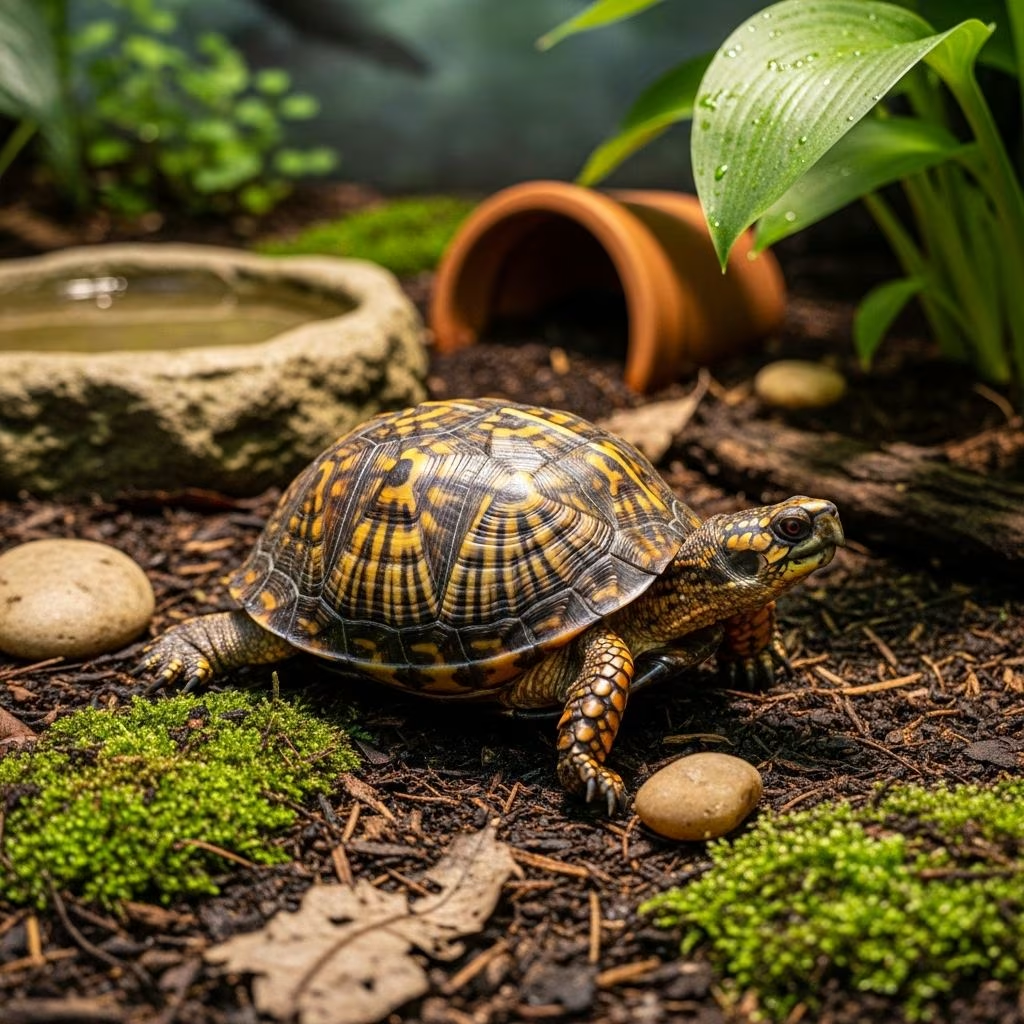
Housing Box Turtles: A Complete Guide to Creating the Perfect Habitat
Box turtles are fascinating reptiles that require specific environmental conditions to thrive in captivity. Whether you’re considering indoor or outdoor housing, understanding the proper setup is essential for your turtle’s health, longevity, and overall well-being. This comprehensive guide will walk you through all aspects of box turtle housing, from enclosure selection to substrate choices and essential equipment.
Indoor Housing for Box Turtles
Getting Started with Appropriate Enclosure Size
If you choose to house your box turtle indoors, which is safer for many reasons, a 20-gallon aquarium is usually adequate to begin with, depending on the size of your turtle. However, as your turtle grows, you may need to provide it with a special room, part of a room, or a 60-gallon to 100-gallon aquarium to give the turtle ample floor space to walk around and explore. The general rule is that bigger is better, though larger enclosures do require more maintenance and management.
For more precise sizing, many experts recommend using a formula based on your turtle’s expected adult length. The enclosure should provide adequate floor space for your turtle to engage in natural behaviors such as foraging, thermoregulating, and exploring. Remember that box turtles are terrestrial creatures, meaning they are ground-dwelling species, so floor space is more important than vertical space.
Enclosure Construction and Ventilation
The cage should be well ventilated and does not necessarily need a protective top unless it is required to keep other animals out. Proper ventilation is crucial for maintaining appropriate humidity levels and preventing respiratory issues. When selecting materials, ensure that the enclosure can maintain the necessary environmental conditions without excessive heat buildup.
Substrate and Bedding Options
Indoor Bedding Choices
Substrate, or bedding material, should be easy to clean and disinfect and must be non-toxic in case the box turtle eats it. Several excellent options are available for indoor housing:
- Newspaper
- Butcher paper
- Paper towels
- Paper-based pelleted bedding
- Artificial grass made for reptiles (commonly called “reptile carpet”)
- Indoor/outdoor carpeting
Some people suggest using straw, hay, or alfalfa pellets, as box turtles like to burrow. However, these materials require more frequent cleaning to maintain hygiene and prevent mold growth.
Outdoor Substrate Considerations
For outdoor enclosures, plain topsoil without chemicals, fertilizers, manures, or herbicides is the preferred choice. Eco Earth or a mixture of soil and Eco Earth are also acceptable options. The substrate should be deep enough to allow for natural burrowing behavior, which is important for your turtle’s psychological well-being.
Environmental Requirements and Heating
Temperature Control
Proper temperature management is critical for your box turtle’s health. Indoor enclosures should maintain appropriate temperature zones with both warm and cool areas. A basking temperature of around 90°F is typical, with a cooler area maintained at lower temperatures to allow your turtle to thermoregulate naturally.
It’s absolutely crucial to avoid using under-tank heat sources such as heating pads or rocks. These can cause serious burns and potentially life-threatening injuries to your turtle. Instead, use proper heat lamps positioned safely above the enclosure.
UVB Lighting Requirements
Box turtles must have adequate UVB lighting to properly metabolize vitamin D3, which is essential for calcium uptake and bone health. UVB bulbs should be changed every 12 months, as their effectiveness diminishes over time even though they continue to produce visible light. Desert-strength UVB fluorescent tubes at 10-12% UVB output are typically recommended for indoor enclosures.
Humidity and Water Requirements
Maintaining Proper Humidity Levels
Box turtles require adequate humidity to prevent respiratory issues and maintain healthy skin. Humidity can be easily accomplished by spraying the enclosure daily with water. Regular misting helps create a microclimate that mimics the turtle’s natural environment and supports their overall health.
Soaking and Water Facilities
You must provide a soaking water dish that the turtle can easily get in and out of without fear of turning over. This water must be cleaned and refreshed daily to prevent bacterial growth and maintain water quality. For outdoor enclosures, a permanent swimming area that is at least 6-8 inches deep with sloped sides for easy entry and exit is necessary.
Essential Enclosure Features
Hiding Areas and Shelter
Box turtles require a hide box or shelter where they can feel secure and rest comfortably. These can be created using plant pots, half logs, or commercially available reptile hides. Providing both shaded and secure areas is essential for reducing stress and promoting natural behaviors.
Escape Prevention and Security
Your box turtle enclosure must be 100% escape-proof, especially if you have adopted a non-releasable turtle. Escaping could mean the slow death of the turtle, transmission of disease to wild turtles, or the introduction of non-native species. All walls must be made of material that can’t be seen through, meaning no chain link or wire fencing.
Outdoor Housing for Box Turtles
Enclosure Design and Construction
If you house your turtle outdoors, it should be contained within an escape-proof enclosure. The walls should be at least 20 inches tall and be made of solid materials that the turtle cannot climb or see through. For outdoor pens, it’s essential to extend protection underground to prevent burrowing escapes.
Turtles can dig out of enclosures, so it is highly recommended to bury fencing 6-12 inches (15-30 cm) deep around the perimeter or put bricks or rocks along the perimeter to prevent digging. This underground barrier should extend at least 10 inches deep to combat burrowing effectively.
Shade and Sunlight Management
Make sure a shaded area is provided to enable your turtle to cool off from the sun, as well as a hiding area to provide seclusion and escape from rain. The east side of a building is an ideal location, with the south side as a second choice. Access to sunlight is critical as turtles need it to metabolize D3, an important vitamin used for calcium uptake.
Be cautious with plastic enclosures, as the sides can store and reflect heat, causing the inside temperature to become dangerously hot. Ensure your outdoor pen is well shaded and has adequate ventilation to prevent heat buildup.
Predator Protection
The enclosure must be secure from predators and other animals that might harm your turtle. If fire ants are a major concern in your area, the enclosure should be built above ground. Additionally, multi-level housing can be used; however, any ramps to higher levels must be completely enclosed so that there is no chance that the turtle could fall over the side.
Drainage and Water Management
The enclosure must be allowed to drain so that it doesn’t flood in rain. Proper drainage prevents water accumulation that could lead to respiratory infections or other health problems. The enclosure should have drainage holes and be placed so it has partial shade at all times.
Enclosure Size Recommendations by Setup Type
| Housing Type | Minimum Size | Turtle Count | Special Notes |
|---|---|---|---|
| Indoor (beginning) | 20-gallon aquarium | 1 | Start size; expand as turtle grows |
| Indoor (adult) | 60-100 gallon aquarium or room | 1 | Larger is better for natural behavior |
| Outdoor (small) | 5 x 5 feet | 3-4 | Minimum solid wall height 20 inches |
| Outdoor (large) | 5 x 8 feet | 5-8 | Better than one large pen for many turtles |
Materials to Avoid
Prohibited Enclosure Materials
Several materials should never be used for box turtle housing:
- Glass tanks or see-through enclosures (except for viewing purposes, with solid walls for containment)
- Chain link or wire fencing as primary walls
- Heat rocks or under-tank heating pads
- Substrates containing chemicals, fertilizers, manures, or herbicides
- Non-durable or toxic bedding materials
These materials can cause stress, injury, escape, or health problems for your turtle.
Multi-Turtle Housing Considerations
If you’re housing multiple box turtles, don’t keep too many together in one enclosure. Instead of one large pen for 10 turtles, make several smaller pens for groups of 4 or 5 turtles. A suitable sized enclosure for three or four turtles is 5 feet by 5 feet. This approach reduces stress, prevents overcrowding, and minimizes territorial conflicts.
Safety and Accessibility Considerations
Protecting Your Turtle from Other Pets and People
The turtle should either be housed in a room to itself with no access by children or other pets, or the enclosure should have a secure, locking mechanism. This prevents accidental injuries and ensures your turtle’s safety at all times.
Proper Enclosure Placement
The location of your enclosure, whether indoor or outdoor, plays a crucial role in your turtle’s well-being. Choose a spot that provides adequate light exposure, maintains appropriate temperatures, and is away from household traffic and potential stressors.
Frequently Asked Questions
Q: Is a 20-gallon aquarium permanently suitable for an adult box turtle?
A: No. While a 20-gallon aquarium is adequate to begin with for a young turtle, as your box turtle grows, you’ll need to upgrade to a 60-100 gallon aquarium or provide a special room to ensure adequate floor space for natural movement and exploration.
Q: What is the best substrate for indoor box turtle housing?
A: Paper-based materials like newspaper, butcher paper, or paper-based pelleted bedding are excellent choices because they’re easy to clean and disinfect. Reptile carpet and indoor/outdoor carpeting are also good options, while straw and hay can work but require more frequent cleaning.
Q: Can I use a heat rock for my box turtle?
A: Absolutely not. Heat rocks should never be used as they can cause serious burns and potentially life-threatening injuries. Always use proper heat lamps positioned safely above the enclosure instead.
Q: How often should I change the UVB bulb?
A: UVB bulbs should be changed every 12 months, even though they continue to produce visible light. Their UVB output diminishes significantly over time, so regular replacement is essential for your turtle’s vitamin D3 metabolism.
Q: How deep should the underground barrier be for an outdoor enclosure?
A: The underground barrier should be buried 6-12 inches deep around the perimeter, with some sources recommending at least 10 inches to effectively prevent burrowing escapes.
Q: Can I keep multiple box turtles in one large enclosure?
A: It’s not recommended. Multiple turtles can cause stress and conflict. Instead, create several smaller pens for groups of 4-5 turtles. A 5×5 foot enclosure is suitable for 3-4 turtles.
Q: Is outdoor housing better than indoor housing for box turtles?
A: Both can work, but each has advantages. Outdoor housing allows natural sunlight and space but requires more security against predators and escape. Indoor housing is safer and more controlled but requires proper lighting and heating equipment.
Q: How often should I refresh the water in my turtle’s soaking dish?
A: The water must be cleaned and refreshed daily to maintain water quality and prevent bacterial growth that could lead to health issues.
References
- Box Turtle Habitat Guidelines — Central Mississippi Turtle Rescue. Accessed 2025. https://www.centralmsturtlerescue.com/box-turtle-habitat-guidelines.html
- Three-Toed Box Turtle Care Sheet — Dubia.com. Accessed 2025. https://dubiaroaches.com/blogs/turtle-care/three-toed-box-turtle-care-sheet
- Housing For Your Box Turtles — Anapsid.org. Accessed 2025. https://www.anapsid.org/boxhouse.html
- Common Box Turtle Care Sheet — Northampton Reptile Centre. Accessed 2025. https://www.reptilecentre.com/pages/info-box-turtle-care-sheet
- Box Turtle Guide — Arbor View Animal Hospital. 2023-03. https://arborviewah.com/wp-content/uploads/2023/03/Box-Turtle-Guide.pdf
- Housing Box Turtles — VCA Animal Hospitals. Accessed 2025. https://vcahospitals.com/know-your-pet/turtles-box-housing
- Eastern Box Turtle Care Sheet — ReptiFiles. Accessed 2025. https://reptifiles.com/eastern-box-turtle-care-sheet/



