

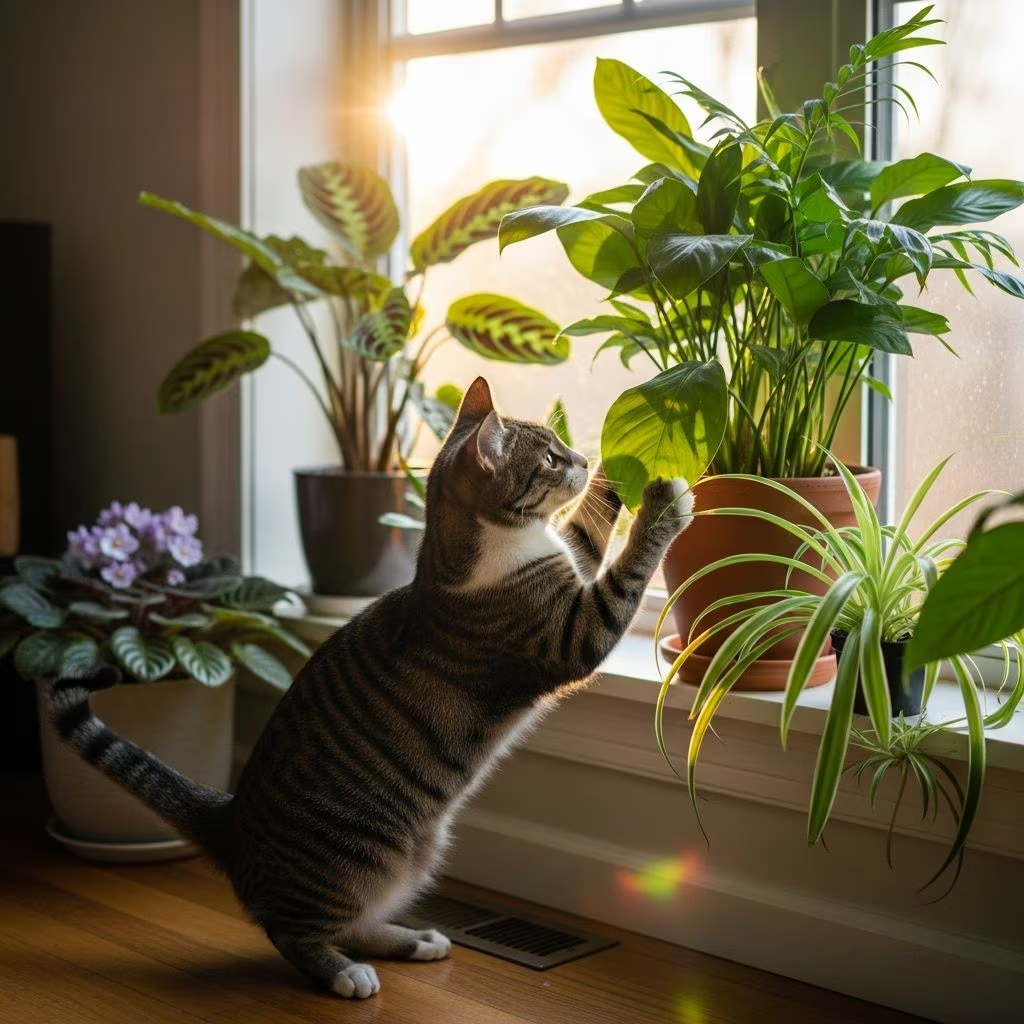
Bringing lush greenery into your home enhances ambiance and air quality, but many popular houseplants pose serious risks to cats. Common varieties like lilies, philodendrons, and sago palms contain toxins that can cause vomiting, diarrhea, organ failure, or even death if ingested by curious felines. According to the ASPCA, cats are particularly vulnerable due to their grooming habits and tendency to chew on leaves. However, numerous **vet-approved houseplants** are completely non-toxic, allowing pet owners to enjoy indoor gardens worry-free. This guide covers why some plants are dangerous, highlights safe alternatives with care instructions, and provides tips for a cat-proof green space.
Why Houseplants Can Be Dangerous for Cats
Cats explore their environment with curiosity, often nibbling on plants for fiber, entertainment, or out of boredom. Unfortunately, many houseplants contain insoluble calcium oxalates, insoluble oxalates, or other compounds irritating to a cat’s mouth, throat, and digestive system. The ASPCA lists over 100 toxic plants for cats, including everyday favorites like pothos, peace lilies, and aloe vera. Symptoms range from mild drooling and pawing at the mouth to severe cases like seizures or kidney failure. In 2023, the ASPCA Animal Poison Control Center received thousands of calls related to plant ingestions in cats, underscoring the prevalence of this issue. Prevention starts with choosing non-toxic options verified by veterinary sources like the ASPCA and pet-safe plant databases.
Vet-Approved Safe Houseplants for Cats
Veterinarians and organizations like the ASPCA endorse these **non-toxic houseplants** as safe for cats. Each is resilient, air-purifying, and low-maintenance, thriving in typical indoor conditions. We’ve included care details for easy success.
1. Spider Plant (Chlorophytum comosum)
The **spider plant** tops lists for cat-safe greenery due to its arching leaves and dangling plantlets resembling spiders. Non-toxic to cats and dogs, it purifies air by removing formaldehyde and xylene. Fast-growing and adaptable, it tolerates low light and irregular watering.
- Light: Partial shade to bright indirect light
- Water: Low; drought-tolerant, water when soil dries
- Size: Up to 2 ft. long
- Care Tip: Propagate ‘spiderettes’ in water for free plants
Cats may play with the plantlets, but ingestion causes no harm.
2. Parlor Palm (Chamaedorea elegans)
Elegant and Victorian-era favorite, the **parlor palm** features feathery fronds safe for cats. It thrives in low light, ideal for dim corners.
- Light: Partial shade
- Water: Low; allow soil to dry between waterings
- Size: 6 ft. tall indoors
- Care Tip: Mist for humidity; avoid direct sun
3. Boston Fern (Nephrolepis exaltata)
Lush and cascading, the **Boston fern** adds tropical flair without toxicity risks. Its spores are harmless to cats.
- Light: Indirect light
- Water: Moderate; keep soil moist
- Size: 3 ft. tall, 1 ft. wide
- Care Tip: High humidity; great for bathrooms
4. Cast Iron Plant (Aspidistra elatior)
Indestructible **cast iron plant** lives up to its name, surviving neglect, low light, and dry soil. Big, glossy leaves are pet-safe.
- Light: Partial shade
- Water: Low; drought-resistant
- Size: 2 ft. tall
- Care Tip: Wipe leaves for dust
5. Areca Palm (Dypsis lutescens)
Bamboo-like **Areca palm** (also golden cane) brings beachy vibes indoors safely.
- Light: Bright indirect
- Water: Moderate
- Size: 6-10 ft. indoors
- Care Tip: Well-draining soil prevents root rot
6. Maidenhair Fern (Adiantum spp.)
Delicate **maidenhair fern** with natural insecticides purifies air and is cat-safe.
- Light: Indirect
- Water: Keep evenly moist
- Size: 18 in. tall
- Care Tip: Pebble tray for humidity
7. Prayer Plant (Maranta leuconeura)
Fascinating **prayer plant** folds leaves at night. Striped varieties dazzle safely.
- Light: Low to medium indirect
- Water: Moderate; avoid soggy soil
- Size: 1 ft. tall
- Care Tip: Fertilize spring-fall
8. Calathea (Goeppertia spp.)
Colorful **calathea** patterns mimic artwork, fully non-toxic.
- Light: Low indirect
- Water: Moderate
- Size: 2 ft. tall
- Care Tip: Distilled water prevents brown tips
9. Peperomia (Peperomia spp.)
Compact **peperomia** varieties like watermelon offer thick, juicy leaves safe for nibbling.
- Light: Low to bright indirect
- Water: Low
- Size: 6-12 in. tall
- Care Tip: Epiphytic soil mix
10. Air Plants (Tillandsia spp.)
Soil-free **air plants** absorb nutrients from air, impossible for cats to uproot.
- Light: Bright indirect
- Water: Soak weekly
- Size: Varies, 2-12 in.
- Care Tip: Shake dry after soaking
11. Orchid (Phalaenopsis spp.)
Blooms last months on elegant **orchids**, non-toxic and cat-repellent due to texture.
- Light: Bright indirect
- Water: Weekly, dry roots before
- Size: 1-3 ft.
- Care Tip: Bark mix
12. Catnip (Nepeta cataria)
**Catnip** delights cats safely, stimulating play without harm.
- Light: Full sun
- Water: Moderate
- Size: 2-3 ft.
- Care Tip: Harvest leaves for toys
Additional Safe Picks
- Mosaic Plant (Fittonia albivenis): Veined leaves love humidity.
- Bromeliads: Exotic cups are harmless.
- African Violets: Fuzzy blooms deter chewing.
How to Cat-Proof Your Indoor Jungle
Even safe plants benefit from protection. Hang plants high, use sticky tape on pots, or provide cat grass alternatives. Monitor for over-nibbling, which signals boredom. Rotate plants to prevent obsession.
| Plant | Light Needs | Water Needs | Cat Appeal |
|---|---|---|---|
| Spider Plant | Partial shade | Low | High (dangles) |
| Parlor Palm | Low | Low | Low |
| Boston Fern | Indirect | Moderate | Medium |
| Cast Iron | Shade | Low | Low |
Frequently Asked Questions (FAQs)
What houseplants are safe for cats?
Spider plants, parlor palms, Boston ferns, cast iron plants, and orchids are ASPCA-listed non-toxic.
Are succulents safe for cats?
Many like Echeveria are safe, but avoid jade and aloe.
Can cats eat catnip plants?
Yes, catnip is safe and euphoric for most cats.
How do I stop my cat from eating plants?
Offer cat grass, deter with citrus sprays, or elevate pots.
Are palm plants toxic to cats?
Areca, parlor, and ponytail palms are safe; sago palms are deadly.
References
- Cat-Friendly Plants: Top 34 Nontoxic & Easy-Care Varieties — Planet Desert. 2024. https://planetdesert.com/blogs/news/cat-friendly-plants-top-34-easy-to-care-for-nontoxic-varieties
- Strader’s Favorite Indoor Plants Safe for Cats — Straders. 2023. https://straders.net/blog/straders-favorite-indoor-plants-safe-for-cats/
- Toxic and Non-Toxic Plant List — Cats — ASPCA. 2025-01-10. https://www.aspca.org/pet-care/animal-poison-control/cats-plant-list
- Pet-Safe Houseplants for Cats: 30 Non-Toxic Picks — Gardenia.net. 2024. https://www.gardenia.net/guide/pet-safe-houseplants-perfect-picks-for-cat-owners
- 20 House Plants Safe for Cats — Catastrophic Creations. 2023. https://www.catastrophicreations.com/blogs/articles/house-plants-safe-for-cats
- Pet-Friendly Houseplants For Cats & Dogs — Petitti Garden Centers. 2024. https://www.petittigardencenter.com/pet-friendly-houseplants-for-cats-dogs/
- Plants Poisonous to Cats — Cats Protection. 2024. https://www.cats.org.uk/help-and-advice/home-and-environment/dangerous-plants



