

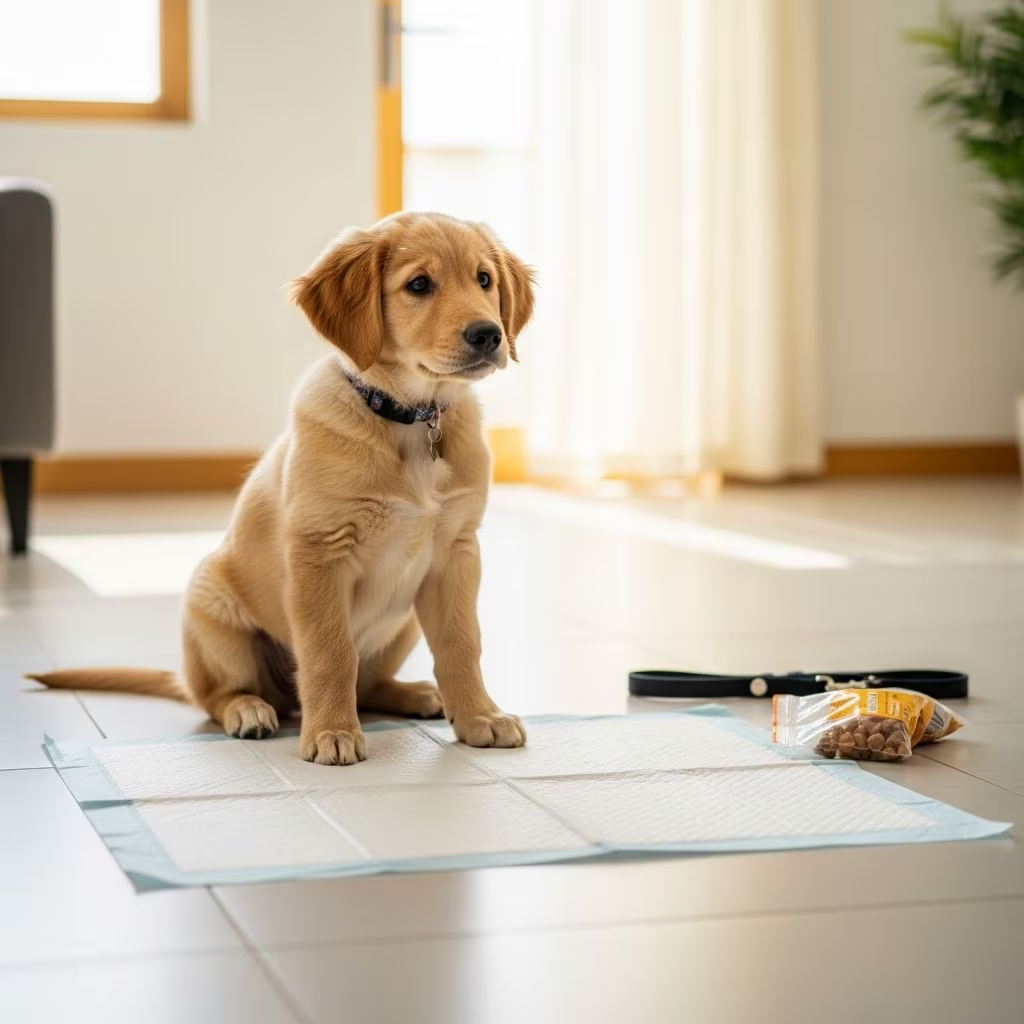
House training your dog or puppy is one of the first and most important steps in creating a harmonious home environment. Whether you have a young puppy or an adult dog, consistent training ensures they learn to eliminate in appropriate outdoor areas, preventing accidents and building good habits. Success relies on patience, supervision, and positive reinforcement rather than punishment.
General Tips
Begin house training immediately upon bringing your pet home. Puppies have small bladders and need frequent potty breaks—typically every 1-2 hours, after meals, play, naps, and before bedtime. Adult dogs may take longer if they have prior habits but can learn quickly with diligence. Key principles include preventing accidents through close supervision, establishing predictable routines, and rewarding outdoor elimination lavishly with treats, praise, and play.
- Supervise constantly: Keep your dog in sight at all times indoors to catch pre-elimination signals like sniffing, circling, pacing, whining, or restlessness.
- Prevent access: Use baby gates, leashes, or confinement to limit freedom until reliable.
- Reward success: Immediately praise and treat when they go outside to reinforce the behavior.
- Clean thoroughly: Use enzymatic cleaners to remove odors that attract repeat accidents.
House training typically takes 4-6 months for puppies, but many show progress in weeks with consistency. Track elimination patterns in a log for 10 days to predict needs.
Crate Training
Crate training leverages a dog’s natural instinct not to soil their sleeping area, making it an effective tool for house training. Choose a crate just large enough for your dog to stand, turn around, and lie down comfortably—too much space encourages soiling.
Introduce the crate positively: Toss treats inside, feed meals in it, and practice short stays with doors closed, gradually increasing time. Use stuffed Kongs or chews to build comfort. For house training, crate when unsupervised, and take directly outside upon release. Puppies can hold their bladder roughly one hour per month of age (e.g., 2-month-old for 2 hours max).
- Start slow: Praise entry and use for short periods.
- Never use as punishment: Keep associations positive.
- Overnight: Puppies under 12 weeks may need midnight breaks.
- Gradual freedom: Only expand access after reliability in crate.
Adult dogs adapt faster but monitor for anxiety; consult a professional if needed.
10 Steps to House Training Success
Follow these proven steps adapted from expert SPCA guidance to systematically train any dog.
- Supervise inside: Watch constantly or use an “umbilical cord” leash tied to your waist for alerts.
- Confine unsupervised: Use crate, x-pen, or small room; dogs avoid soiling sleep/eat areas.
- Frequent outings: Every 1-2 hours, plus after eating, drinking, playing, waking, and before bed.
- Positive reinforcement: Jackpot rewards (high-value treats) for outdoor elimination; say cue like “go potty”.
- Establish routine: Fixed feeding (remove uneaten food), sleep, and potty times; log patterns.
- Recognize signals: Sniffing, circling, whining, pacing, or leaving room—rush outside immediately.
- Clean accidents properly: Enzymatic cleaners only; avoid ammonia/vinegar that mimic urine smell.
- Gradual expansion: Start in one room, expand as reliable; backtrack on accidents.
- No punishment: Scolding causes fear/hiding; focus on prevention.
- Consistency and patience: Results in weeks; factors include age, history, and your commitment.
Schedule for Success
A consistent schedule prevents most accidents. Here’s a sample for an 8-week-old puppy (adjust for age/size):
| Time | Activity |
|---|---|
| 7:00 AM | Wake, immediate potty break |
| 7:15 AM | Breakfast, potty 15-30 min after |
| 9:00 AM | Potty break after play/nap |
| 11:00 AM | Mid-morning potty |
| 12:00 PM | Lunch, potty after |
| Every 1-2 hrs | Potty breaks until evening |
| 8:00 PM | Last meal, potty before bed |
| 10:00 PM | Final potty, crate overnight |
For adults, reduce frequency but maintain routine. Feed 2-3 times daily, no free-feeding.
Cleaning Up Accidents
Accidents happen—interrupt gently if seen (“ah-ah”), take outside to finish, then clean. Blot urine, avoid rubbing. Enzymatic cleaners break down proteins in waste; test on inconspicuous areas. Lingering odors signal “approved” spots to dogs. Steam cleaners help for carpets. If frequent, rule out medical issues like UTIs via vet.
Puppy vs. Adult Dog Training
| Aspect | Puppy | Adult |
|---|---|---|
| Bladder Control | 1 hr/month of age | 6-8 hrs if healthy |
| Training Time | Weeks to months | Weeks with supervision |
| Challenges | Frequent needs, exploration | Past habits, medical issues |
| Approach | Crate heavily, short sessions | Re-train via confinement |
Puppies learn faster but need more outings; adults require odor removal and patience.
Troubleshooting Common Issues
- Accidents after progress: Medical check; increase supervision.
- Marking indoors: Neuter/spay; clean thoroughly.
- Fear of crate: Go slower with rewards.
- Submissive/excitement peeing: Ignore, calm greetings.
If issues persist, seek Certified Professional Dog Trainer (CPDT) via CCPDT—look for ethology/learning theory expertise.
Frequently Asked Questions
What if my dog has accidents when home alone?
Confine in crate or small area; build up slowly. Day training may help busy owners.
How long until fully house trained?
Puppies: 4-6 months; adults: 2-4 weeks with diligence.
Can I use potty pads?
Short-term for apartments, but transition outdoors to avoid confusion.
What if I catch an accident in progress?
Interrupt quietly, take outside to finish, reward—never punish.
Is crate training cruel?
No, when done positively; mimics den instinct.
References
- House training your adult dog — Ontario SPCA and Humane Society. 2023-11-14. https://ontariospca.ca/blog/housetraining-your-adult-dog/
- Behavioral Help for Your Pet — ASPCA. https://www.aspca.org/pet-care/general-pet-care/behavioral-help-your-pet
- How to Train Your Puppy — San Francisco SPCA. https://www.sfspca.org/blog/how-to-train-your-puppy/
- House Training Your Dog or Puppy — ASPCA. https://www.aspca.org/news/house-training-your-dog-or-puppy
- Basic Potty-Training Guide — East Bay SPCA. 2024-05. https://eastbayspca.org/wp-content/uploads/2024/05/Canine-Potty-Training-Guide.pdf
- Housetraining survival guide — Animal Humane Society. https://www.animalhumanesociety.org/resource/housetraining-survival-guide



