

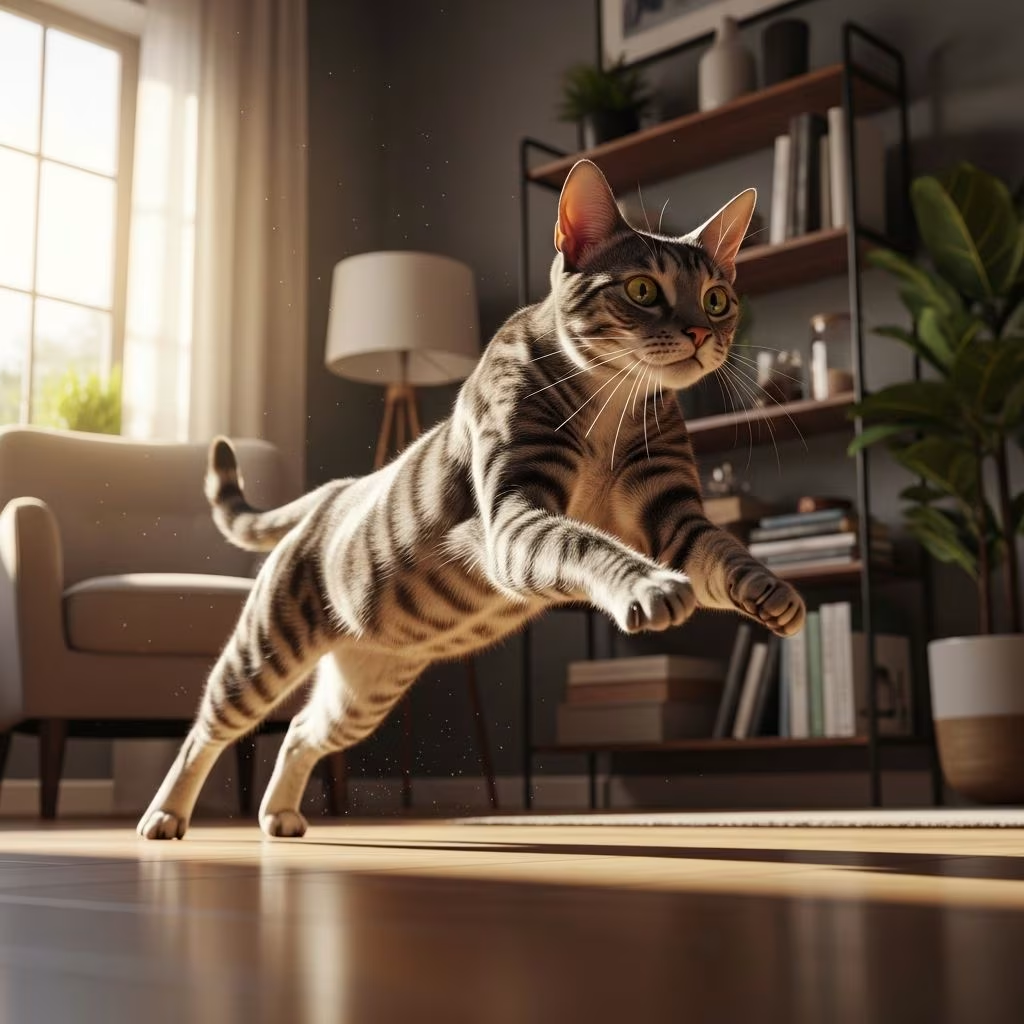
Domestic cats possess remarkable sprinting capabilities, typically achieving speeds between 20 and 30 miles per hour in short bursts, outpacing even elite human sprinters like Usain Bolt who peaked at 27.5 mph. This agility stems from their evolutionary design as predators, optimized for quick chases rather than endurance runs.
The Sprinting Prowess of Everyday House Cats
Most pet cats clock an average top speed of 20-25 mph (32-40 km/h), with exceptional individuals pushing to 30 mph (48 km/h) over distances of 50-100 meters. Unlike marathoners, cats excel in explosive accelerations, darting across rooms or yards in a flash before needing a rest. This burst-style running suits their hunting instincts, allowing them to pounce on prey swiftly.
Factors like age, health, and motivation play key roles. Younger, fit cats in playful ‘zoomies’ mode hit higher velocities, while older or less active ones may top out lower. Even lazier breeds can muster 20 mph when startled.
Record-Breaking Feline Speeds in the Domestic World
No official Guinness record exists for house cat sprints, but observations confirm peaks near 30 mph, rivaling Bolt’s record. The Egyptian Mau stands out as the quickest breed, often exceeding 30 mph thanks to its slender build and athletic heritage. Videos of these cats in action reveal blurred-motion dashes, showcasing spine flexibility and leg power that inspire robotic designs.
Anatomical Secrets Behind Cat Velocity
Cats’ speed arises from specialized physiology. Their hind legs, functioning like coiled springs, deliver simultaneous powerful thrusts for maximum stride length. A supple spine acts as a shock absorber and propeller, enabling mid-air twists and rapid directional changes.
Other traits include:
- Lightweight frame: Low body mass reduces drag, aiding acceleration.
- Sharp claws: Provide traction for explosive starts on various surfaces.
- Reflexive muscles: Fast-twitch fibers trigger instant bursts without warmup.
These features make cats nine times better jumpers relative to height, complementing their running prowess.
Cats vs. Humans: Who Wins the Short Race?
In a 100-meter dash, a house cat at 30 mph finishes in about 11-12 seconds, edging out Bolt’s 9.58-second world record due to superior top-end speed despite humans’ longer strides. Cats lack training but accelerate instinctively, often outrunning average joggers (15-22 mph) effortlessly.
| Aspect | Human (Usain Bolt) | House Cat |
|---|---|---|
| Top Speed | 27 mph (43.5 km/h) | 30 mph (48 km/h) |
| Training Needed | Years of conditioning | None required |
| Sustainable Distance | 100m+ | 50-100m bursts |
| 100m Time (est.) | 9.58s | ~11-12s |
This table highlights cats’ raw power advantage in sprints.
Feline Speed Compared to Canine Counterparts
Average dogs run 15-25 mph, but sprinters like Greyhounds hit 40-45 mph, surpassing most cats. However, typical house cats outperform family pets like Labs. Cats’ edge lies in agility over straight-line speed, dodging obstacles dogs can’t match.
Breed Breakdown: Speed Variations Among Cats
Not all cats sprint equally. Here’s a comparison:
| Breed | Est. Top Speed | Key Traits |
|---|---|---|
| Egyptian Mau | 30+ mph | Lean, spotted coat, ancient speed lineage |
| Abyssinian | 25-28 mph | Energetic, muscular build |
| Persian | ~20 mph | Less active, brachycephalic limits stamina |
| Bengal | 25-30 mph | Wild ancestry boosts athleticism |
| Domestic Shorthair | 20-30 mph | Variable, often highly capable |
Active breeds shine, but mixed domestics often surprise with hidden speed.
Age and Development: From Kitten Dashes to Senior Sprints
Kittens top out at 20-25 mph as coordination develops, maturing to full speed by 1-2 years. Seniors slow due to joint issues, but gentle exercise maintains mobility. Peak performance hits in prime adulthood.
Boosting Your Cat’s Speed and Fitness at Home
Encourage natural athleticism with:
- Interactive toys: Laser pointers or feather wands for chase games.
- Vertical spaces: Cat trees for jumping practice.
- Diet and health checks: Lean protein supports muscle; vet visits prevent obesity.
- Play sessions: 15-20 minutes daily mimics hunting sprints.
Avoid overexertion; watch for limping or fatigue.
Wild Cousins: How House Cats Stack Up
Domestic speeds pale against cheetahs (75 mph), but house cats share the sprint blueprint, sustaining bursts over 200-300m in wild kin. Lions and tigers hit 50 mph, underscoring felines’ predatory legacy.
Frequently Asked Questions
How fast can a kitten sprint compared to an adult?
Kittens reach 20-25 mph as muscles develop, lagging adults’ 30 mph but still swift.
Can my indoor cat hit top speeds?
Yes, even apartment dwellers dash 20-30 mph in short halls if motivated.
Are cats faster than all dogs?
No, Greyhounds exceed them at 45 mph, but cats beat most average dogs.
How far can a cat maintain 30 mph?
Typically 50-100 meters before tiring; they’re sprinters, not distance runners.
Does breed dictate speed more than training?
Genetics set potential, but fitness and play enhance it—no formal training needed.
Health Implications of Feline Speed
High-velocity runs risk injuries like sprains, especially overweight cats. Maintain ideal weight (via measured kibble) and provide scratching posts for claw health. Annual vet exams catch arthritis early, preserving speed into later years.
Understanding these dynamics helps owners appreciate their pet’s capabilities, fostering enriching environments that honor their athletic roots.
References
- How Fast Can A Cat Run? — TrustedHousesitters.com. 2023. https://www.trustedhousesitters.com/blog/pets/how-fast-can-a-cat-run/
- How Fast Can Cats Run? Speed, Breeds & Surprising Comparisons — Basepaws.com. 2023. https://basepaws.com/blog/how-fast-can-cats-run
- How Fast Can a House Cat Run? Record & Average Speeds — Catster.com. 2023. https://www.catster.com/lifestyle/how-fast-can-a-house-cat-run/
- How Fast Can a Cat Run? — Cats.com. 2023. https://cats.com/how-fast-can-a-cat-run
- Which is Faster—A Cat or a Dog? — East Valley Animal Hospital. 2023. https://www.eastvalleyanimal.com/faster-cat-dog/



