
Horse Trauma Care Essentials: First-Aid Checklist For Owners
Master vital first aid techniques for equine injuries, from wounds to fractures, to safeguard your horse's health in critical moments.
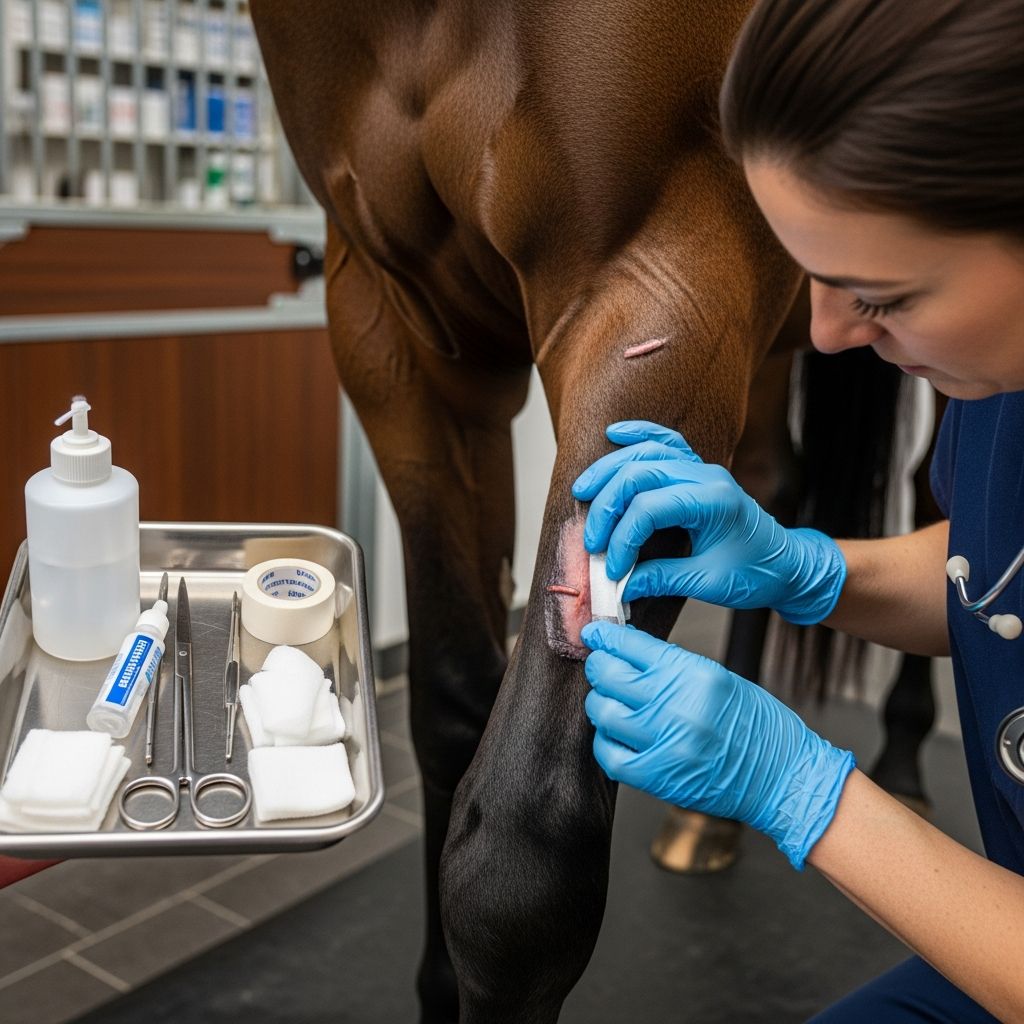
Horses face numerous risks of injury due to their active lifestyles, whether in pastures, trails, or competitions. Prompt and correct first aid can significantly improve recovery chances and prevent complications. This guide details essential steps for handling common equine traumas, emphasizing safety, assessment, and professional follow-up.
Building Your Equine First Aid Kit
A well-stocked kit is the foundation of effective trauma response. Prioritize items that address bleeding, cleaning, and immobilization.
- Bandaging supplies: Sterile gauze pads, absorbent wound dressings, vet wrap, and athletic tape for secure application.
- Cleaning agents: Antiseptic solutions like povidone-iodine, saline for flushing, and triple antibiotic ointment.
- Tools for assessment: Digital thermometer, stethoscope, hoof picks, and shoeing basics like rasp, hammer, nails, and spare shoes.
- Specialized items: Eye irrigation solution, non-stick pads, and padding for joints/tendons.
- Emergency contacts: Printed list of local equine veterinarians with addresses and phone numbers.
Regularly check and restock your kit, tailoring it to your horse’s environment, such as adding fly repellent for trail rides.
Initial Assessment of Injuries
Stay calm to avoid startling the horse, which could worsen the injury. Approach from the side, speak softly, and enlist help if possible.
- Ensure scene safety: Remove hazards like wire or debris.
- Check vital signs: Normal resting values are heart rate 28-44 bpm, respiration 8-16 breaths/min, temperature 99-101°F. Deviations signal urgency.
- Observe overall demeanor: Note lameness, swelling, bleeding, or neurological signs like ataxia.
- Examine the injury: Determine depth, contamination, and involvement of joints, tendons, or bones.
For severe cases like fractures or heavy bleeding, prioritize stabilization over detailed inspection[10].
Managing Bleeding and Wounds
Bleeding control is critical, as horses have 8-10% blood volume relative to body weight, and rapid loss leads to shock.
| Injury Type | Immediate Action | Follow-up |
|---|---|---|
| Surface laceration | Direct pressure with clean gauze for 5-10 minutes | Clean with saline, apply antibiotic ointment, bandage |
| Deep puncture | Leave embedded object if stable; wrap around it | Vet removal to assess penetration depth |
| Arterial bleed (spurting) | Pressure above wound; elevate if possible | Urgent vet transport with pressure dressing |
After stopping bleeding, clip hair around the site, flush with saline to remove debris, and avoid hydrogen peroxide on deep wounds as it damages tissue. Bandage promptly to protect from contamination.
Bandaging Techniques for Limbs
Proper bandaging supports healing while preventing swelling or restricted circulation. Incorrect wraps can cause tendon damage or pressure sores.
- Preparation: Clean and dry the leg; pad joints, tendons, and bony areas generously.
- Application layers: Start with non-stick pad over wound, add absorbent padding, secure with sheet cotton or roll gauze, cover with vet wrap, and finish with tape.
- Forelimb specifics: For distal injuries, align cannon bone with phalanges using PVC pipe splint if available; hold leg extended during wrapping.
- Check fit: Two fingers should slip under bandage; recheck every 2-4 hours for slippage or swelling.
For hooves with punctures, if the object impedes walking, remove it, flush, and apply thick bandage or duck tape sole. Change bandages daily or if soiled, monitoring for infection signs like heat or pus.
Fractures and Skeletal Injuries
Suspect fracture if there’s sudden non-weight-bearing lameness, crepitus, or deformity. Horses over 300kg rarely heal simple fractures without surgery.
- Stabilization: Use splints to immobilize; for forelimbs, full-length splint from hoof to elbow; hindlimbs require hock-to-ground support.
- Transport: Trailer immediately to surgical center; pad well and use sedation if vet-approved.
- Open fractures: Clean with water, bandage loosely; administer tetanus prophylaxis[10].
Avoid forcing weight-bearing; even walking can compound damage. Referral is essential for imaging and fixation.
Head Trauma and Neurological Emergencies
Head injuries from falls or kicks cause concussion, fractures, or hemorrhage. Signs include stupor, seizures, blindness, or circling.
Provide supportive care: Dim lights, quiet stall, IV fluids if possible. Use NSAIDs for inflammation; benzodiazepines like diazepam (0.02-0.4 mg/kg IV) for seizures. Broad-spectrum antibiotics if skull breach suspected. Transport under anesthesia if recumbent to minimize secondary brain injury.
Tetanus Prevention and Antimicrobials
Horses are highly prone to tetanus from Clostridium tetani in wounds. Boost vaccination if over 6 months since last dose. All contaminated wounds warrant tetanus antitoxin.
Start broad-spectrum antibiotics for penetrating injuries; vet will prescribe based on culture if needed. Pain relief with phenylbutazone aids mobility.
Other Common Emergencies
Colic Signs and Response
Abdominal pain shows as pawing, rolling, sweating. Withhold feed, walk gently 15 minutes, check vitals. Call vet if persistent; administer flunixin meglumine if directed.
Eye Injuries
Flush with saline, apply ophthalmic antibiotic; no steroids. Protect with fly mask.
Muscle Tie-Up (Rhabdomyolysis)
Encourage hydration, keep standing; avoid NSAIDs due to kidney risk.
When to Call the Vet Immediately
- Uncontrolled bleeding after 10 minutes pressure.
- Suspected fracture, joint involvement, or neurological deficits.
- Deep punctures, degloving, or thoracic/abdominal penetration.
- Signs of shock: Pale gums, rapid pulse, cold extremities.
- Any wound >1 inch deep or with exposed bone/tendon.
FAQs
What should I do first for a bleeding horse wound?
Apply firm direct pressure with clean gauze until bleeding slows; do not remove soaked pads, add more on top.
How do I know if a wound needs stitches?
Clean wounds <12 hours old, <1cm deep, with clean edges may close; others require vet evaluation for debridement.
Can I treat a fracture at home?
No, stabilize and transport; home care risks fatal complications[10].
What’s the tetanus protocol for injuries?
Booster if >6 months since last vaccine; antitoxin for dirty wounds.
How often to change a horse bandage?
Daily or if wet/soiled; monitor for swelling.
Prevention Strategies
Reduce risks by fencing pastures securely, regular farrier checks, trail ride prep with boots, and annual vet exams including tetanus boosters. Train horses for handling with positive reinforcement to ease first aid.
References
- Trail Ride First Aid for Horses — Utah State University Extension. 2023. https://extension.usu.edu/equine/research/trail-ride-first-aid-for-horses
- Trauma and First Aid in Horses — Merck Veterinary Manual. 2024. https://www.merckvetmanual.com/emergency-medicine-and-critical-care/emergency-medicine-in-horses/trauma-and-first-aid-in-horses
- First Aid for Lacerations and Puncture Wounds — Brandon Equine Clinic. 2020-05. https://brandonequine.com/wp-content/uploads/2020/05/first-aid-for-lacerations-and-puncture-wounds.pdf
- Ultimate Horse First Aid Guide — Equine Institute. 2024. https://equineinstitute.org/blogs/horse-care-tips/ultimate-horse-first-aid-guide-treating-cuts-colic-lameness-more
- Wound Care Fact Sheet — Blackdown Equine Clinic. 2017-12. https://blackdownequineclinic.com/wp-content/uploads/2017/12/Wounds_Fact_Sheet.pdf
- Backcountry First Aid: Prevention, Triage and Treatment — MT Equine. 2014-09. https://mtequine.com/wp-content/uploads/2014/09/pres_firstaid2.pdf
- Equine First Aid for Owners — Purdue University College of Veterinary Medicine. 2024. https://vet.purdue.edu/hospital/equine/tips/equine-first-aid-for-owners.php
- Basic First Aid for Your Horse and Preparing for Emergencies — University of Minnesota Extension. 2024. https://extension.umn.edu/horse-health/basic-horse-first-aid-and-preparing-emergencies
- Fractures in Horses – Emergency First Aid and Stabilization — American College of Veterinary Surgeons. 2024. https://www.acvs.org/large-animal/fractures-in-horses-emergency-first-aid-and-stabilization/
Similar Articles








Read full bio of medha deb


