

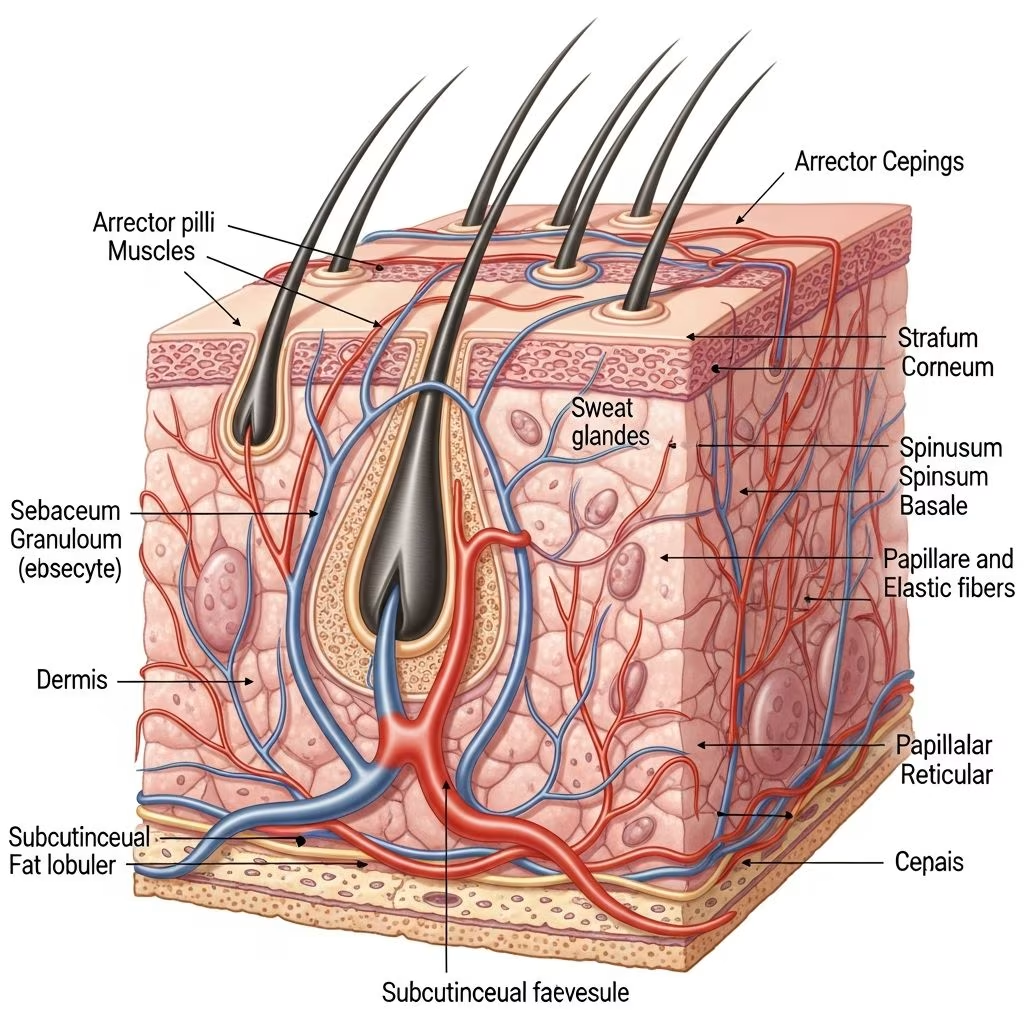
The skin represents the largest organ in a horse’s body, serving as a vital shield against environmental threats while regulating temperature and supporting overall vitality. Comprising distinct layers—epidermis, dermis, and subcutis—it features specialized components unique to equines, such as a multi-layered dermis and robust glandular systems.
Overview of Equine Skin Layers
Horse skin integrates protective, sensory, and metabolic functions through its stratified architecture. The outermost **epidermis** acts as a barrier, while the thicker **dermis** houses blood vessels, nerves, and appendages. Beneath lies the **subcutis**, providing insulation and mobility. This organization enables horses to thrive in diverse climates, from arid pastures to humid stables.
The Protective Epidermis: First Line of Defense
The epidermis forms a thin, keratinized shield that renews itself every 17 days, influenced by diet, season, and weather. Composed of stratified squamous cells, it transitions from living basal layers to dead, fibrous stratum corneum rich in keratin, rendering it water-repellent.
- Keratin production: Provides toughness against abrasion from saddles, brushes, or rough terrain.
- Melanin distribution: Imparts color to skin and hair, protecting against UV radiation.
- Vitamin D synthesis: Converts sunlight into essential nutrients for bone health.
- Acidic pH: Deters bacterial and parasitic invasion.
Continual shedding prevents buildup, but disruptions can lead to flakiness resembling dandruff. Openings for hair, sweat, and oil glands pierce this layer, linking it to deeper structures.
Complex Dermis: Structural and Functional Core
The dermis, far thicker than the epidermis, consists of connective tissue with collagen and elastin fibers, supporting strength and elasticity. Equine dermis uniquely divides into three fibrous zones: papillary, reticular, and cordovan-leather tissue.
| Dermal Layer | Characteristics | Location/Notes |
|---|---|---|
| Papillary | Loose collagen; interfaces with epidermis | Superficial; nutrient exchange |
| Reticular | Dense, net-like collagen bundles | Mid-dermis; tensile strength |
| Cordovan-Leather (Main) | Thick, dense fibers; uniform across body | Deep; present everywhere |
| Cordovan-Leather (Accessory) | Denser extension | Neck, trunk dorsum, limbs |
The papillary layer facilitates nutrient diffusion via its loose matrix. Reticular fibers provide the bulk of mechanical resilience, preventing tears during movement. The cordovan-leather layer, evoking fine leather texture, dominates depth-wise; its superficial main portion spans all regions, while the accessory appears selectively in high-stress areas like the dorsal neck and legs. Notably, hair roots and sweat glands halt at this layer’s boundary, avoiding subcutis penetration.
Subcutis: Cushioning and Energy Reserve
Below the dermis, the subcutis—or hypodermis—comprises fat lobules and loose connective tissue. It anchors skin to muscle, stores energy, insulates against cold, and cushions impacts. Variations in thickness correlate with body condition; lean horses show thinner padding, increasing injury risk.
Glands and Their Critical Roles
Equine skin brims with glands integral to homeostasis. Horses excel in thermoregulation via copious sweating.
Sweat Glands: Cooling Champions
Two types dominate: apocrine glands blanket the body, producing protein-rich sweat during exertion or heat, evaporating efficiently for cooling. Eccrine glands confine to hoof frogs, aiding minor moisture balance. This system prevents overheating during intense activity.
Sebaceous Glands: Moisturizers
Associated with hair follicles, these secrete sebum—an oily emulsion keeping skin supple, hair glossy, and moisture locked in. Excess yields greasy coats; deficiency causes dryness and cracking.
Hair Follicles: Sensory and Aesthetic Elements
Hair emerges from dermal follicles, categorized as:
- Primary coat: Seasonal growth/shedding responsive to light cycles.
- Mane/tail: Continuous growth for protection.
- Tactile whiskers: Heightened sensory input.
Melanocytes in follicles dictate pigments—eumelanin (black), phaeomelanin (red)—yielding diverse coat patterns. Follicles integrate with glands, enhancing lubrication.
Immune Surveillance in the Skin
As the frontline barrier, skin hosts mast cells, lymphocytes, and macrophages. These combat pathogens, trigger inflammation against insects (e.g., hives from bites), and mediate allergies like Culicoides sensitivity. Healthy immunity maintains pH and microbial balance.
Regional Specializations: Hoof and Beyond
Skin adapts regionally. Hooves feature stratified corneum: periople (outer glossy), tubular horn (middle thick), and laminar internum fused to corium. Primary/secondary laminae interlock dermis-epidermis, bolstering weight-bearing integrity. Thinner skin on muzzle/udder heightens sensitivity; thicker gluteal hides resist flies.
Maintaining Optimal Skin Health
Support skin via nutrition (omega-3s, zinc), grooming to stimulate turnover, and parasite control. Monitor for dryness, lumps, or shedding anomalies signaling issues like allergies or deficiencies.
Frequently Asked Questions (FAQs)
What causes flaky skin in horses?
Slow epidermal renewal from poor diet, parasites, or seasonal changes; supplement biotin and oils.
Why do horses sweat so much?
Apocrine glands enable superior evaporative cooling, vital for endurance.
How does horse skin differ from human skin?
Thicker dermis, unique cordovan layer, more sweat glands, faster hair cycles.
Can skin issues indicate internal problems?
Yes, allergies, infections, or nutritional gaps often manifest dermatologically.
How to check skin health daily?
Part hair for pinkness, elasticity; note odors, lesions, or coat luster.
References
- Microscopic anatomy of the equine skin with special reference to the dermis — Japanese Journal of Veterinary Research. 1995-08-01. https://pubmed.ncbi.nlm.nih.gov/8559559/
- Microscopic anatomy of the equine skin with special reference to the dermis — Mad Barn (summarizing PubMed study). 1995. https://madbarn.com/research/microscopic-anatomy-of-the-equine-skin-with-special-reference-to-the-dermis/
- Anatomy of Your Horse’s Skin — Horse Health Products. N/A. https://www.horsehealthproducts.com/horsemans-report/equine-health/anatomy-of-your-horses-skin
- Specialized Anatomic Sites – Veterinary Histology — Ohio State University Pressbooks. N/A. https://ohiostate.pressbooks.pub/vethisto/chapter/7-specialized-anatomic-sites/
- Equine Skin: Structure, Immunologic Function, and Methods of Diagnosing Disease — VetFolio. N/A. https://www.vetfolio.com/learn/article/equine-skin-structure-immunologic-function-and-methods-of-diagnosing-disease



