

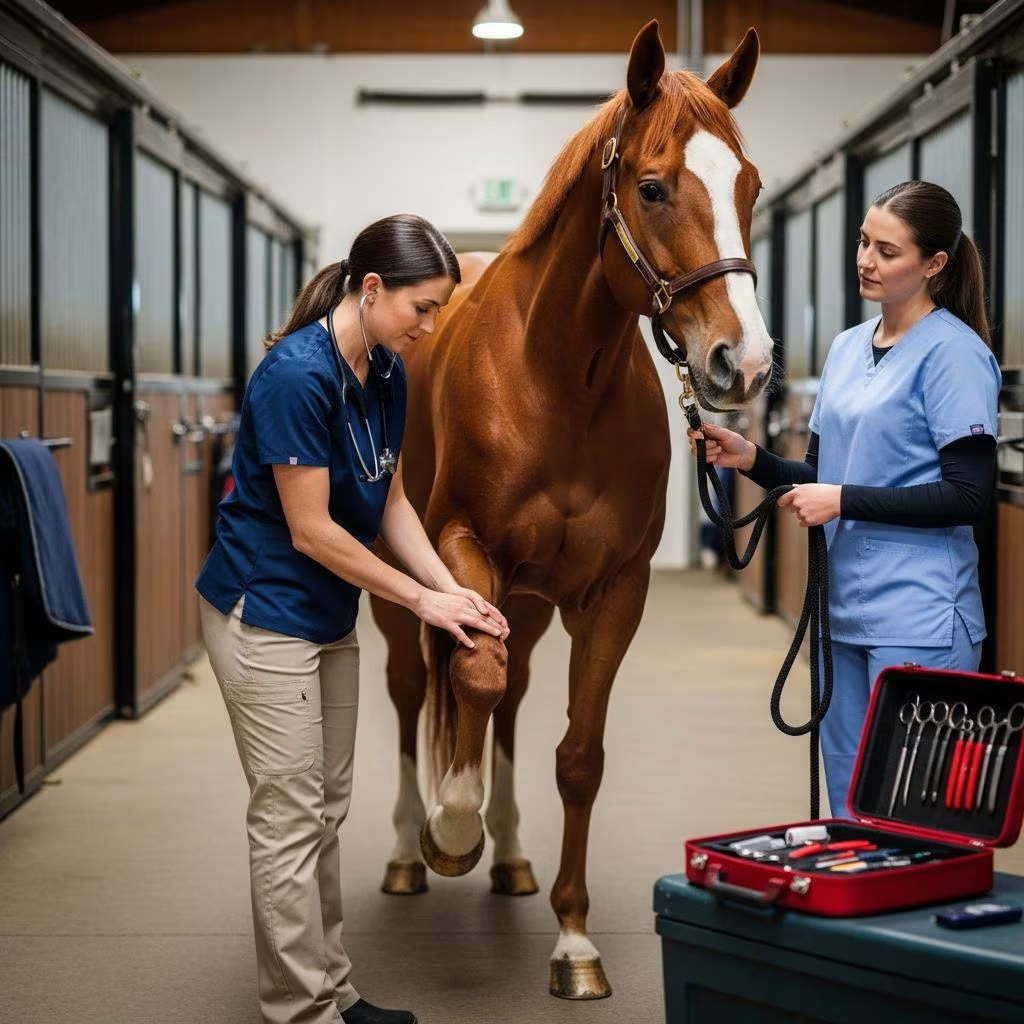
Acquiring a horse represents a significant investment in time, resources, and emotion. A thorough pre-purchase examination, conducted by a qualified equine veterinarian, serves as a critical safeguard to evaluate the animal’s current health, physical soundness, and suitability for your intended activities, whether recreational riding, competitive sports, or breeding.
Why Pre-Purchase Exams Matter for Horse Buyers
These evaluations provide a detailed snapshot of the horse’s condition at the moment of inspection, highlighting potential risks without offering future guarantees. They empower buyers to make informed choices by identifying issues like subtle lameness, conformational flaws, or underlying diseases that could impact performance or longevity.Key benefits include risk assessment tailored to use, baseline data for future reference, and negotiation leverage based on findings.
Veterinarians emphasize that no two exams are identical; scope depends on the horse’s price, discipline, and buyer’s goals. For instance, a performance horse may require advanced imaging, while a trail horse might need only basic checks.
Preparing for Your Horse’s Pre-Purchase Evaluation
Success begins with clear communication. Buyers should outline expectations, such as desired tests or specialist involvement, well in advance. Sellers must disclose known history, including medications, injuries, and work levels—requirements vary by state.
- Schedule on neutral ground to avoid home biases.
- Request the horse’s full records, passport, and microchip details.
- Decide on sedation use early, as it affects certain tests like endoscopy.
- Consider multiple vets for high-value horses, e.g., one for lameness, another for reproduction.
Step-by-Step Breakdown of the Examination Process
The process unfolds systematically, starting with non-invasive observations and progressing to dynamic assessments and diagnostics.
1. Identity and History Verification
Confirm the horse matches descriptions via microchip, brands, tattoos, or markings. Review medical, vaccination, and performance history to spot inconsistencies or red flags like recurrent colic or unexplained downtime.
2. Stationary Physical Assessment
A full clinical exam checks vital signs—heart rate, respiration, temperature—and inspects eyes for cataracts or uveitis, teeth for wear, and overall conformation for issues like club feet or uneven legs. Palpation reveals muscle atrophy, joint effusions, or laryngeal asymmetry, signaling past injuries or neurological concerns.
| System Checked | Common Findings | Implications |
|---|---|---|
| Cardiovascular | Heart murmurs, irregular rhythms | May require echo or ECG |
| Ophthalmic | Cataracts, uveitis scars | Vision impairment risks |
| Dental | Parrot mouth, excessive hooks | Feeding/performance issues |
| Conformation | Crooked limbs, upright hocks | Injury predisposition |
3. Lameness and Dynamic Gait Analysis
Observe at walk and trot on hard and soft surfaces, straight lines, and circles. Flexion tests—bending limbs for 30-60 seconds then trotting off—reveal subtle issues. Canter evaluation and post-exercise auscultation detect cardiac or respiratory strains. Hoof testers pinpoint foot sensitivity.
Neurological screening integrates here: watch for ataxia, limb interference, or asymmetry. Windpuffs or unilateral swelling warrant caution.
4. Advanced Diagnostics and Imaging
Tailored to discipline: Radiographs of feet, fetlocks, hocks, and stifles provide baselines; ultrasonography scans tendons and suspensory ligaments for racing or sport horses. Endoscopy checks airways for roarers or collapse.
- X-rays: 20-40 views standard for baselines.
- Ultrasound: Essential for soft tissue integrity.
- Endoscopy: Pre-sedation for accuracy.
5. Laboratory and Specialized Tests
Bloodwork assesses CBC, chemistry, Coggins (EIA), and drug screens. Urine tests for kidney function or doping. Genetic panels for breeding stock.
Customizing Exams for Specific Horse Disciplines
Match intensity to purpose:
- Racehorses: Airway endoscopy, full limb rads, EPM titers.
- Dressage/Jumpers: Suspensory ultrasound, back evaluation.
- Breeding: Reproductive ultrasound, semen analysis.
- Trail/Pleasure: Basic lameness, neuro exam.
High-end prospects may involve video endoscopy or stress tests.
Interpreting Results: From Findings to Decisions
Vets report objectively, noting serviceability for intended use. Minor issues like bilateral windpuffs may be acceptable; unilateral problems or grade 2+ lameness often aren’t. Buyers weigh risks against price and history—proven performers sometimes override findings.
Use baselines for future claims: unchanged X-rays prove stability.
Frequently Asked Questions (FAQs)
What if the horse fails the exam?
No pass/fail; it’s risk-based. Renegotiate, request fixes, or walk away.
How much does a pre-purchase exam cost?
$300-$2000+, depending on scope and location. Advanced imaging adds $500+.
Can sellers attend the exam?
Yes, but buyers may prefer privacy. Discuss upfront.
Is sedation always used?
Optional, for safe handling; complete sensitive tests first.
What about guarantees?
None—exams assess current status only.
Choosing the Right Veterinarian for Your Exam
Select an experienced equine practitioner, ideally board-certified in sports medicine. Check references, specialization, and PPE volume. For complex cases, consult discipline-specific experts.
Common Pitfalls and How to Avoid Them
- Skipping history: Demand full disclosure.
- Inadequate scope: Specify tests in writing.
- Rushed exams: Allow 2-4 hours minimum.
- Ignoring temperament: Assess under saddle if possible.
Post-exam, review reports meticulously. Consult your regular vet for second opinions.
References
- Pre-Purchase Exams for Horses — AQHA. Accessed 2026. https://www.aqha.com/-/pre-purchase-exams-for-horses
- The Buyer’s Guide to Prepurchase Exams — The Horse. 2015-02-01. https://thehorse.com/148643/the-buyers-guide-to-prepurchase-exams/
- Prepurchase Examination of Horses — MSD Veterinary Manual. Accessed 2026. https://www.msdvetmanual.com/clinical-pathology-and-procedures/prepurchase-examination-of-horses/prepurchase-examination-of-horses
- Equine pre-purchase exams: What to expect — Cornell University College of Veterinary Medicine. 2023-06-07. https://www.vet.cornell.edu/about-us/news/20230607/equine-pre-purchase-exams-what-expect
- Prepurchase Exams — Rhinebeck Equine. Accessed 2026. https://www.rhinebeckequine.com/prepurchase-exams
- Pre-Purchase Evaluations — FVMA. Accessed 2026. https://fvma.org/pre-purchase-evaluations/
- Pre-Purchase Exams — Penn State Extension. Accessed 2026. https://extension.psu.edu/pre-purchase-exams/



