

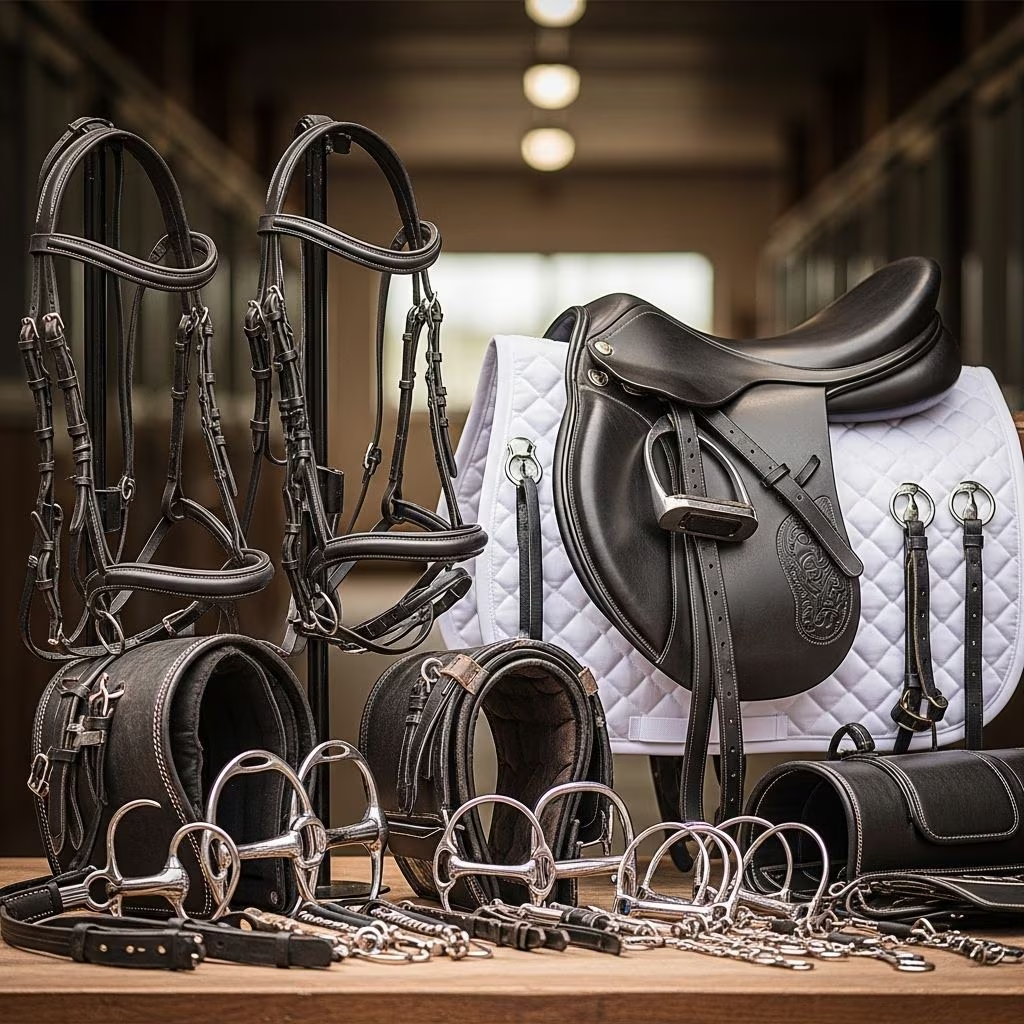
A Horse Owner’s Guide to Choosing the Right Horse Tack
Selecting the right horse tack is one of the most important decisions you’ll make as an equestrian. Whether you’re a beginner just starting your riding journey or an experienced rider looking to upgrade your equipment, understanding the different types of tack and their purposes is essential for both your safety and your horse’s comfort. Horse tack encompasses all the equipment and gear required to handle, ride, or harness a horse, and it goes far beyond simply throwing a saddle on your horse’s back.
The right tack can significantly enhance your riding experience, improve communication with your horse, and ensure that both you and your equine partner remain safe and comfortable during your time together. Conversely, poorly fitting or inappropriate tack can lead to discomfort, injury, and behavioral problems. This comprehensive guide will help you navigate the world of horse tack and make informed decisions about what equipment is best suited for your specific riding needs.
Understanding the Basics of Horse Tack
Horse tack is not a one-size-fits-all situation. Different riding disciplines, horse types, and individual needs require different equipment. The primary purposes of horse tack include facilitating communication between horse and rider, ensuring safety for both parties, and distributing weight and pressure evenly across the horse’s body to prevent injury and discomfort.
Before diving into specific equipment recommendations, it’s important to understand that your choice of tack will be influenced by several factors including your riding discipline, your horse’s training level, your experience as a rider, and your horse’s individual needs and preferences. Taking time to properly assess these factors will help you invest in tack that will serve you well for years to come.
Saddles: The Foundation of Your Tack
The saddle is arguably the most important piece of equipment in your tack collection. A well-fitted saddle distributes your weight evenly across your horse’s back, preventing pressure points and potential injury. Conversely, an ill-fitting saddle can cause saddle slippage, which can result in injury or a fall for the rider and rubbing or discomfort for the horse.
English Saddles
English saddles are generally smaller and lighter than their Western counterparts, designed to keep the equipment closer to the horse’s back. They emphasize precision and subtlety in communication with the horse. Several types of English saddles are available, each designed for specific disciplines:
All-Purpose Saddles: These versatile saddles are suitable for various types of English riding, making them an excellent choice for riders who participate in multiple disciplines or are still exploring their equestrian interests.
Jumping or Forward-Seat Saddles: These saddles feature a forward-cut saddle flap, which allows for a shorter stirrup length and places the rider directly over the horse’s center of balance. This positioning is ideal for jumping sports and provides the security and support needed for this demanding discipline.
Dressage Saddles: Designed for the precision and elegance of dressage, these saddles have a deep seat and a nearly straight front flap. They allow for the subtle, refined movements necessary for this classical discipline.
Western Saddles
Western saddles are larger and heavier than English saddles, featuring a horn at the front that was traditionally used for dallying rope during cattle work. These saddles are designed for comfort during long hours in the saddle and provide a stable platform for working with cattle or long-distance riding.
Bridles: Communication and Control
The bridle is your primary method of communicating with your horse. It’s the headgear that holds the bit in place and allows you to direct your horse’s movement through rein pressure. Different bridle types serve different purposes and disciplines.
Single Bridles: These are the most common bridle type in English riding and feature a single bit. They’re suitable for most riding disciplines and are an excellent choice for beginning riders.
Double Bridles: Used in English riding disciplines that require additional control, double bridles feature two bits—a snaffle and a curb bit. They provide more nuanced communication but require greater rider skill to use correctly.
Bitless Bridles: These bridles work without a bit, instead applying pressure to the horse’s nose and face. They’re an alternative for riders looking to eliminate bit pressure or for horses that respond well to this method of communication.
The halter is another essential component of your bridle system. Usually made of leather, it wraps around the horse’s head and provides attachment points for a bit, reins, or lead rope. Properly fitted halters are crucial for safe handling and control.
Bits: Precision Tools for Communication
With thousands of bit options available, selection depends on your horse’s training level, rider experience, and competition requirements. Understanding the different categories of bits is essential for making the right choice for your horse.
Snaffle Bits: These bits feature jointed mouthpieces with rings and function on direct rein pressure. They’re gentle on the horse’s mouth and are often recommended for young or beginning horses. Several types of snaffle bits are available, including D-ring, eggbutt, loose ring, full cheek, and half-cheek varieties.
Curb Bits: These bits use leverage through shanks to amplify indirect cues across multiple contact points. They’re generally used on more advanced horses with experienced riders and should never be the first bit choice for a beginning horse.
Combination Bits: Also known as pelham bits or kimberwicks, these bits merge snaffle and curb functions, distributing pressure across the horse’s head. They offer a middle ground between snaffle and curb bits.
Reins: Your Direct Connection
Reins are leather or rope straps attached to the bit and held by the rider to control movement and direction. The type of reins you choose affects both communication and comfort during riding.
English riders typically use single reins held in one hand for everyday riding, though double bridles may require four reins for more advanced work. Western riders hold their reins in one hand, allowing for neck reining where directional cues are given through rein pressure on the horse’s neck.
When selecting reins, consider the material (leather versus synthetic), the width, and the texture. Reins with textured surfaces or grip patterns can provide better control in wet conditions or when wearing gloves.
Girths and Cinches: Securing Your Saddle
The girth (in English riding) or cinch (in Western riding) is a strap that holds the saddle firmly but comfortably against the horse’s body. Proper girth fit is crucial—a girth that’s too tight can restrict breathing and cause discomfort, while one that’s too loose can allow saddle slippage.
Girths come in various materials and styles. Western riders typically choose between neoprene, felt, and fleece-lined options, selecting based on their horse’s sensitivity and the climate conditions they ride in. English riders have similar choices and often prefer leather girths for their durability and softness, though leather requires regular conditioning with appropriate leather care products.
Proper girth fit means you should be able to fit two fingers between the girth and your horse’s barrel when mounted. Check your girth regularly during rides, as saddles can shift and girths can loosen.
Saddle Pads and Blankets: Protection and Comfort
Saddle pads serve multiple purposes in your tack collection. They protect your horse’s back from sweat and friction, help distribute pressure more evenly under the saddle, and can absorb moisture during exercise. Additionally, saddle pads can add visual interest to your riding outfit and allow you to express your personal style.
Choose saddle pads made from breathable materials that wick moisture away from your horse’s skin. Gel or memory foam pads can provide additional cushioning for horses with sensitive backs or those carrying heavy riders. Ensure your saddle pad is the appropriate size and shape for your saddle style and doesn’t bunch up or shift during riding.
Blankets and sheets serve a different purpose than saddle pads, primarily providing warmth and weather protection when your horse is not being ridden. During colder months, you may need to invest in blankets with varying weights to accommodate changing temperatures.
Stirrups and Additional Equipment
Stirrups are foot holders attached to the saddle that make the rider more comfortable and secure. They’re essential in English riding but are optional in some Western disciplines. Stirrups come in various styles and materials, with English riders typically using polished stainless steel stirrup irons for a traditional appearance.
Beyond the basics, additional equipment may be necessary depending on your discipline. Martingales—devices that prevent the horse from raising their head excessively—come in standing and running varieties. Leg protection, including fetlock boots and bell boots, protects sensitive areas during performance. Breastplates distribute saddle pressure and prevent saddle slippage, particularly when jumping or riding in rough terrain.
Choosing Tack for Your Riding Discipline
Your riding discipline significantly influences your tack choices. English and Western riders have distinctly different tack requirements, and even within these broad categories, specific disciplines have particular standards and recommendations.
English Riding Tack
English tack emphasizes precision and subtlety, with lightweight saddles and close contact between rider and horse. English riders use smaller, lighter bridles and typically ride with their hands held in a specific position. The discipline values tradition and often has specific tack requirements for competitions.
Western Riding Tack
Western tack is designed for comfort and functionality. The larger saddle provides a secure, comfortable base for long hours in the saddle. Western bridles are often simpler than English bridles, and many Western disciplines allow for more flexibility in tack choices. The western collar and harness system is designed to distribute weight effectively for working with cattle.
Hunter and Jumper Tack
Hunter and jumper competitions require conservative and tasteful tack, with hunters generally being slightly more formal. Close contact saddles are standard, and traditional stainless steel stirrup irons are preferred. Saddle pads should be white and either square or shaped, depending on your discipline. Leg protection may be used in the jumper ring but is typically not worn in the hunter ring.
The Importance of Proper Fit
Perhaps the most critical aspect of choosing horse tack is ensuring a proper fit. Clean and well-fitting tack is essential for the well-being and comfort of both your horse and, when applicable, the rider. Poorly fitting tack can result in several problems:
Saddle Slippage: An improperly fitting saddle can slip during riding, resulting in injury or a fall for the rider and causing rubbing and discomfort for the horse. Regular saddle checks and adjustments are necessary to prevent this dangerous situation.
Sore Mouth: If a bit is too large or too tight, it will put excess pressure on the horse’s mouth, resulting in damage to the soft mouth tissue. Horses suffering from sore mouths may experience pain, infection, and an inability to respond correctly to commands, making riding dangerous and unpleasant for both horse and rider.
Girth Galls: A girth that fits poorly or isn’t kept clean can cause painful sores on your horse’s barrel. These injuries can make riding uncomfortable and take weeks to heal.
Before purchasing any tack, have your horse professionally fitted by an experienced saddle fitter. Many saddle shops and equestrian professionals offer fitting services, and the investment in proper fitting will pay dividends in comfort and safety. Remember that horses’ bodies change throughout the year and as they age, so regular fitting checks are necessary.
Maintaining Your Tack
Investing in quality tack is only part of the equation—proper maintenance is equally important. Clean tack regularly to prevent dirt and sweat buildup, which can damage materials and create an uncomfortable environment for your horse. Leather tack requires special attention, including regular conditioning with appropriate leather care products to maintain suppleness and prevent cracking.
Inspect your tack regularly for signs of wear or damage, such as cracked leather, broken stitching, or bent metal hardware. Address problems promptly, as damaged tack can become unsafe. Store your tack in a clean, dry location away from direct sunlight and extreme temperature fluctuations, as these conditions can damage leather and synthetic materials.
Budget Considerations
Quality horse tack represents a significant investment, but it’s one that will last for many years with proper care. While it may be tempting to purchase inexpensive tack when you’re just starting out, budget-friendly options may not provide the fit, durability, or safety you need. Consider investing in a quality saddle and bridle as your core pieces of tack, and add other items as your needs and budget allow.
Frequently Asked Questions
Q: How do I know if my saddle fits properly?
A: A properly fitting saddle should have at least two fingers’ width of space between the saddle and your horse’s withers, and the saddle should sit level on your horse’s back. You should not be able to see any daylight between the saddle and your horse’s back, as this indicates improper contact. A professional saddle fitter can help you ensure a proper fit.
Q: What’s the difference between a snaffle bit and a curb bit?
A: Snaffle bits operate on direct rein pressure and are generally considered gentler, making them suitable for younger or beginning horses. Curb bits use leverage through shanks to amplify pressure and are designed for more experienced horses and riders who have refined their communication skills.
Q: How often should I clean my tack?
A: Clean your tack after every ride to remove sweat, dirt, and moisture. A quick wipe-down with a damp cloth immediately after riding can extend the life of your tack significantly. Deeper cleaning should be done weekly or as needed, depending on usage and conditions.
Q: Can I use the same saddle for different riding disciplines?
A: All-purpose English saddles are versatile enough for several disciplines, but specialized saddles for jumping, dressage, or other disciplines will provide better performance and comfort for both horse and rider in those specific activities.
Q: What should I do if my horse develops sores from tack?
A: Stop using the offending tack immediately and address the fit issue. Allow the sores to heal completely before resuming riding, and have the tack adjusted or replaced. Prevent future issues through regular fitting checks and proper cleaning and maintenance.
References
- All About Tack: Why Horses Wear What They Do — Tally Ho Tours. Accessed 2025-11-28. https://www.tallyhotours.com/all-about-tack/
- English Horse Tack: Guide to Saddles, Bridles, Leg Protection & More — Mad Barn. Accessed 2025-11-28. https://madbarn.com/english-horse-tack/
- What Is Horse Tack? (Full Guide) — CC Stables. Accessed 2025-11-28. https://ccstables.ca/what-is-horse-tack/
- Essential Guide to Horse Tack — Farm House Tack. Accessed 2025-11-28. https://www.farmhousetack.com/blogs/barn-blog/essential-guide-to-horse-tack
- From Beginner to Pro: A Guide to Understanding Equestrian Tack — AJ Tack. Accessed 2025-11-28. https://ajtack.com/blogs/blog/from-beginner-to-pro-a-guide-to-understanding-equestrian-tack



