Horse Hooves: Complete Anatomy and Care Guide
Understanding Horse Hooves: Anatomy and Care Guide
A horse’s hoof is far more complex than it appears at first glance. This remarkable structure must support the entire weight of the horse, absorb concussive forces, provide traction on various terrains, and adapt to changing environmental conditions. Understanding hoof anatomy and implementing proper care practices is essential for maintaining your horse’s health, soundness, and longevity. Whether you’re a new horse owner or an experienced equestrian, this comprehensive guide will help you better understand your horse’s hooves and provide the care they need to thrive.
What Is a Horse Hoof?
The horse hoof is the lower extremity of each leg, representing the part that makes direct contact with the ground and bears the animal’s weight. Despite its seemingly simple appearance, the hoof is an intricately designed structure composed of multiple layers and components working in harmony. The hoof is not a rigid structure but rather a fairly elastic and flexible mechanism that adapts and changes shape as your horse moves and bears weight.
External Hoof Structure: The Outer Framework
The Hoof Wall
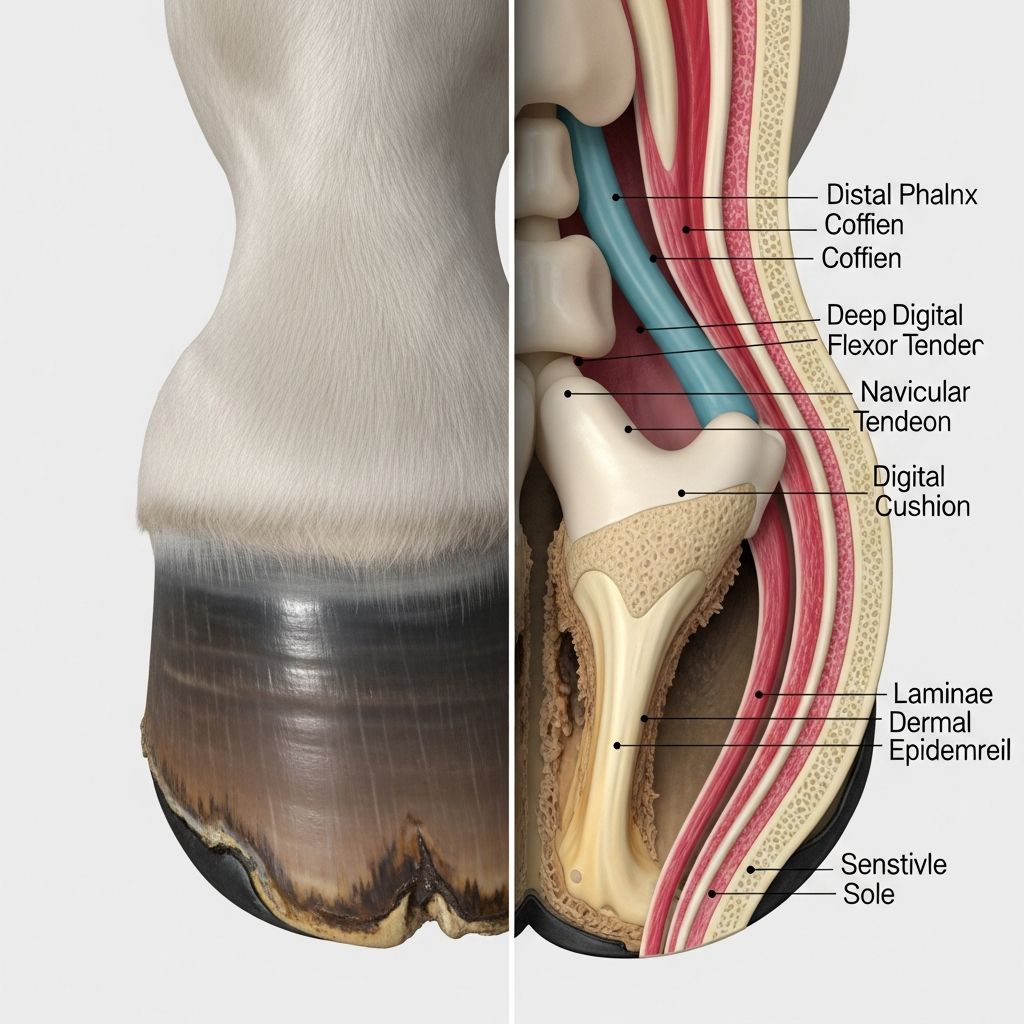
The hoof wall is the visible exterior portion of the hoof that encases the internal structures, providing essential protection. Made primarily of keratin—a durable protein also found in human hair and fingernails—the hoof wall is composed of three distinct layers. The outer layer is the hardest part and responsible for protecting vulnerable inner structures, containing no nerves or blood vessels. The middle layer is the thickest portion, providing rigidity and structural support to the entire hoof. The inner layer comprises laminae, which are finger-like projections that interlock with corresponding structures inside the hoof.
The hoof wall varies in thickness from 6 to 12 millimeters or more and serves multiple critical functions. It protects sensitive internal tissues, dissipates concussive energy from movement, and provides traction on different terrains. Importantly, the hoof wall is continuously growing and requires regular trimming or natural wear to maintain proper length and angle. Under normal conditions, the horn grows from the coronary band to the toe in approximately 9-12 months.
The Sole
Located underneath the horse’s foot, the sole is another keratin-based structure that provides critical protection to sensitive internal hoof components. The sole is typically slightly curved and, in a properly maintained hoof, should not come into contact with the ground during normal movement. This curved shape is essential because it allows the hoof to expand and contract naturally as weight is applied and released during the gait cycle. The sole absorbs concussive forces through this expansion and contraction mechanism, protecting delicate structures within the hoof from excessive impact stress.
The Frog
The frog is a triangular structure located in the center of the hoof’s lower surface. This wedge-shaped tissue serves important functions in traction, shock absorption, and circulation. The frog comes into contact with the ground and provides grip on various terrains. Additionally, it plays a role in pumping blood from the hoof back up the leg through muscular contraction, contributing to overall hoof health and circulation.
The Collateral Cartilages
These cartilaginous structures provide protection to the coffin joint on both the inside and outside of the hoof wall. The collateral cartilages are designed to enhance flexibility in the back of the hoof, allowing it to absorb concussive forces more effectively and adapt when traversing different terrains. This flexibility is crucial for shock absorption and overall hoof function during varied activities and environmental conditions.
Internal Hoof Structure: The Inner Framework
The Coffin Bone (Pedal Bone)
The coffin bone, also known as the pedal bone or P3 (third phalanx), is completely or almost completely encapsulated within the hoof capsule. Despite its relatively small size, it is the largest bone within the hoof and bears tremendous responsibility for the horse’s structural integrity. This wedge-shaped bone has a crescent shape with a lower cup-like concavity, and its external surface mirrors the shape of the hoof wall.
The coffin bone provides essential support for the horse’s body weight and plays a vital role in distributing weight evenly throughout the hoof structure. It also helps absorb and disperse shock during movement, contributing to the horse’s comfort and soundness. The bones within the hoof include the pedal bone, navicular bone, distal sesamoid bone, and short pastern bone—all critical for maintaining hoof integrity and support.
The Navicular Bone
The navicular bone, also called the distal sesamoid bone, is a small boat-shaped bone located behind the coffin bone in the heel region of the foot. This bone serves critical functions in weight transfer and movement. The navicular bone helps stabilize the coffin bone and plays an important role in transferring weight and pressure from the horse’s leg to the hoof. Additionally, it functions as a pulley for the deep digital flexor tendon, which controls the movement of the horse’s leg and foot. The normal transformation of the digital cushion into fibrocartilaginous tissue in the adult horse is now considered a key goal for both prevention and rehabilitation of navicular syndrome cases.
The Laminae
The laminae represent one of the most critical internal structures of the hoof. These are complex structures comprising sensitive and non-sensitive laminae that interlock and connect the outer hoof wall to the pedal bone and cartilages. The sensitive laminae act like Velcro to form a strong, secure bond supporting the pedal bone within the hoof. Between the outer hoof wall and the coffin bone lies the corium, a highly vascularized and innervated dermoepidermal layer. The corium has a parallel, laminar shape and supplies blood flow and nutrients essential for hoof health.
The division between sensitive and non-sensitive laminae can be identified by the white line visible on the sole of the foot. The white line represents the outer limit of the coffin bone and serves as an important reference point for proper hoof trimming and shoeing.
The Digital Cushion
The digital cushion is a specialized structure located in the back of the hoof that serves critical shock-absorption functions. This fibrocartilaginous tissue helps absorb shock within the hoof and prevents injuries from repetitive impact. The proper development and maintenance of the digital cushion is essential for long-term hoof health and the prevention of degenerative conditions.
How Horse Hooves Function
The horse hoof operates as an elegant mechanical system rather than a rigid structure. When unloaded and touching firm ground, there is typically only contact at the toe and heels—called the “active contact” configuration. This design minimizes ground contact area while distributing forces across specific points.
When loaded with the horse’s weight, the hoof undergoes complex physiological changes in shape. The palmar/plantar arch flattens, the solar concavity (the natural curve of the sole) decreases in depth, and the heels spread outward. The overall hoof diameter increases to a dilated configuration, and P3 (the coffin bone) drops marginally into the hoof capsule. There is evidence that blood pooling occurs during this phase, with increased circulation to the wall corium, which aids in shock absorption and circulation.
These dynamic changes are essential for the hoof’s ability to dissipate concussive forces and adapt to varied terrain. A healthy, well-maintained hoof maintains optimal elasticity and flexibility to perform these functions effectively.
Hoof Balance and Its Importance
Balanced horse hooves are crucial for better movement and reducing unnecessary stress on the horse’s legs and entire musculoskeletal system. The ideal hoof structure includes a straight alignment between the pastern and hoof axis, which allows forces to travel efficiently through the leg during movement. Imbalanced hooves can lead to altered movement patterns, increased stress on joints and soft tissues, and eventual lameness or injury.
Proper hoof balance should be maintained through regular farrier care and appropriate trimming schedules. The angle of the hoof should be compatible with the pastern angle, creating a straight line from the fetlock joint through the foot. Maintaining this balance is essential for optimal biomechanics and long-term soundness.
Essential Hoof Care Practices
Regular Trimming and Maintenance
Regular farrier care is fundamental to hoof health. Most horses require hoof trims every 6-8 weeks to maintain proper balance, length, and function. The growing horn from the coronary band must be regularly removed to prevent excessive length and imbalance. Consistent trimming schedules help maintain proper hoof angle and weight distribution.
Shoeing Considerations
Appropriate shoeing, when needed, protects hooves from excessive wear and provides additional support or therapeutic benefits depending on the horse’s work and individual needs. Different shoe types and modifications can be applied based on specific performance demands or therapeutic requirements. Working with an experienced farrier ensures proper shoe selection and fitting.
Hygiene and Environmental Management
Keeping hooves clean and dry is essential for preventing infections and maintaining structural integrity. Regular cleaning removes debris and allows for early detection of cracks, bruises, or other problems. Excessive moisture promotes thrush and other fungal infections, while extremely dry conditions can cause brittleness and cracking. Maintaining balanced environmental conditions supports hoof health.
Nutrition and Supplementation
Proper nutrition supports hoof growth and quality. Adequate protein, biotin, zinc, and other essential nutrients contribute to keratin production and overall hoof integrity. Consultation with an equine nutritionist can help ensure your horse’s diet supports healthy hoof growth.
Recognizing Common Hoof Problems
Signs of Healthy Hooves
Healthy hooves should have a consistent color throughout, a smooth horn surface without cracks or splits, a responsive frog that shows no signs of deterioration, and a clear white line that is not excessively separated from the sole. The hoof should feel solid and well-developed, with appropriate elasticity and no signs of disease or imbalance.
Warning Signs of Hoof Issues
Watch for signs of hoof problems including excessive cracking, separation of the white line, discoloration or scaling, heat in the hoof, lameness or gait abnormalities, signs of thrush including black discharge or odor from the frog, and changes in the hoof’s shape or balance. Any of these signs warrant immediate examination by a farrier or equine veterinarian to prevent further deterioration and address underlying issues.
Frequently Asked Questions
Q: How often should horses have their hooves trimmed?
A: Most horses require hoof trims every 6-8 weeks to maintain proper balance, length, and health. However, individual needs may vary based on growth rate, activity level, and hoof quality.
Q: What is the white line in a horse’s hoof?
A: The white line is the visible junction between the outer hoof wall and the sole, representing the outer limit of the coffin bone. It serves as an important reference point for proper trimming and shoeing.
Q: Why is hoof balance important?
A: Balanced hooves ensure proper weight distribution, reduce stress on the legs and joints, improve movement efficiency, and help prevent lameness and injury. Imbalanced hooves can lead to serious musculoskeletal problems.
Q: Can a horse’s hoof wall feel pain?
A: No, the hoof wall itself contains no nerves or blood vessels and cannot directly feel pain. However, the internal structures beneath the wall are highly sensitive and can experience significant pain if damaged or diseased.
Q: What causes thrush in horse hooves?
A: Thrush is a fungal infection typically caused by excessive moisture combined with poor hygiene. It develops in the frog and creates a black, foul-smelling discharge. Regular cleaning and maintaining appropriate moisture levels help prevent thrush.
Q: How long does it take for a horse’s hoof to grow?
A: Horn grows from the coronary band to the toe in approximately 9-12 months, with growth rates varying based on individual factors, nutrition, and seasonal conditions.
References
- Understanding the Horse’s Foot: Anatomy and Care Guide — KaWell USA. 2024. https://kawellusa.com/blogs/blog/understanding-the-horses-foot-anatomy-and-care-guide
- Horse Hoof — Wikimedia Foundation. 2024. https://en.wikipedia.org/wiki/Horse_hoof
- Horse Hoof Anatomy: Your Complete Guide — Equestrian Surfaces Ltd. 2024. https://www.equestriansurfaces.co.uk/news/horse-hoof-anatomy-your-complete-guide/
- Hoof Anatomy — The British Horse Society. 2024. https://www.bhs.org.uk/horse-care-and-welfare/health-care-management/hoof-care/hoof-anatomy/
- What Is a Horse Hoof Made Of? — PetMD. 2024. https://www.petmd.com/horse/what-horse-hoof-made
- Functional Anatomy of the Horse Foot — University of Missouri Extension. 2024. https://extension.missouri.edu/publications/g2740
Similar Articles






Read full bio of Sneha Tete