

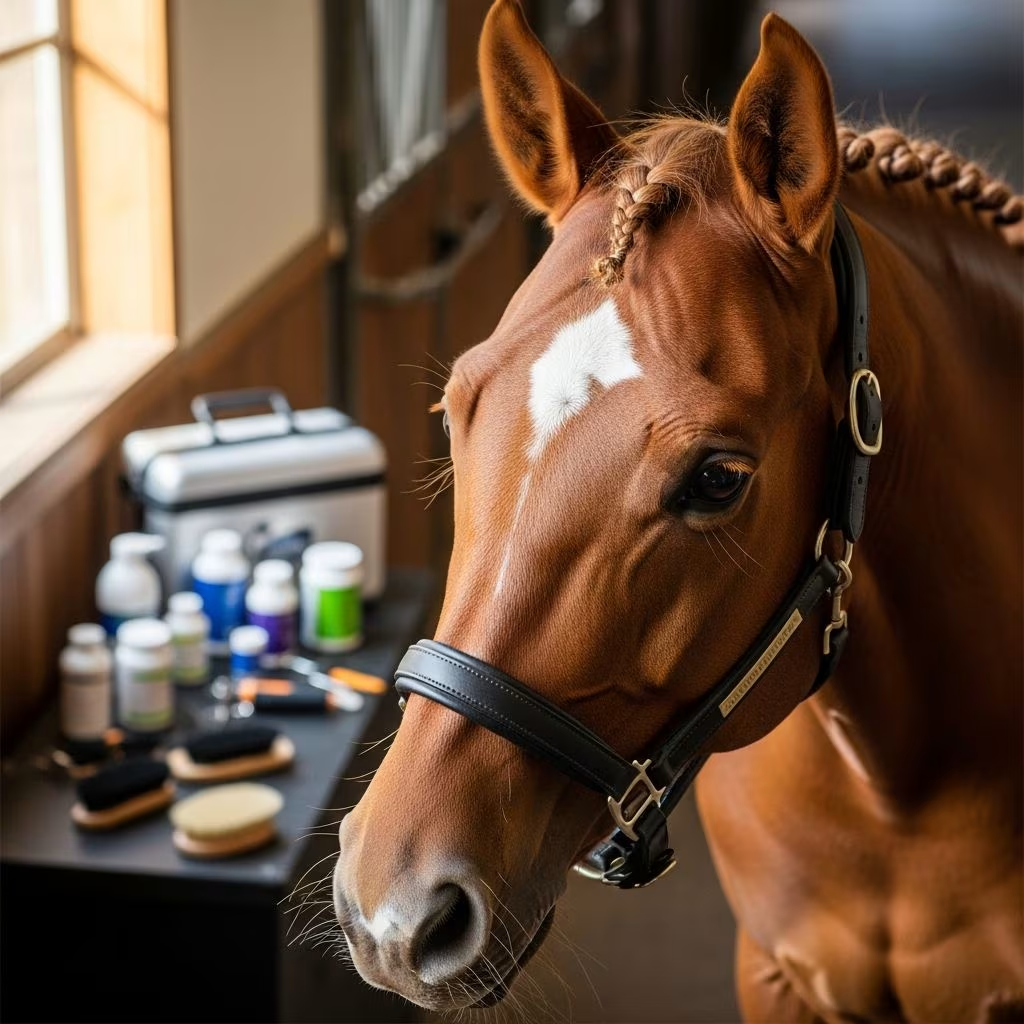
Ensuring the vitality of horses demands a holistic approach that integrates daily management with forward-thinking preventive measures. Owners and caretakers play a pivotal role in fostering environments that support physical robustness and behavioral harmony, ultimately extending the productive lifespan of these animals.
Creating Optimal Living Environments
Horses flourish in settings that mimic their natural habitats as closely as possible. Pasture living stands out as the preferred option, where animals can graze, move freely, and engage in social interactions, which correlate with reduced incidence of respiratory issues and stereotypic behaviors like cribbing or weaving. A recommended density of one horse per two acres helps preserve forage quality and minimizes overgrazing risks.
For stabled horses, design matters immensely. Sturdy walls without hoof-trapping gaps, ample ventilation to curb ammonia buildup, and daily access to exercise areas are non-negotiable. Turnout in paddocks or fields, even for a few hours, supports muscle tone, joint health, and mental stimulation. In colder climates, shelters must shield from wind and precipitation without confining movement.
- Maintain clean, dry bedding to prevent bacterial infections in hooves and limbs.
- Inspect fencing regularly for sharpness or instability that could cause injuries.
- Provide shade trees or constructed covers in sunny regions to avoid heat stress.
Nutrition Strategies for Peak Performance
A balanced diet forms the cornerstone of equine health, supplying energy, proteins, minerals, and vitamins in precise proportions. Forage should constitute the bulk—up to 2% of body weight daily in hay or pasture—to promote digestive efficiency and reduce colic risks. Concentrates serve working horses but require careful introduction to avoid metabolic disruptions.
Water access must be uninterrupted and clean; horses consume 5-15 gallons daily, scaling with temperature and activity. Mineral imbalances, such as excess phosphorus or deficient selenium, can precipitate lameness or immune compromise, underscoring the need for soil and forage testing.
| Nutrient | Role | Sources |
|---|---|---|
| Protein | Muscle repair, growth | Alfalfa hay, legumes |
| Calcium/Phosphorus | Bone health | Grass hay, supplements |
| Vitamin E | Antioxidant, muscle function | Fresh pasture, oils |
Body condition scoring guides adjustments: ideal scores (4-6 on a 9-point scale) allow rib palpation without visibility, signaling nutritional adequacy.
Hoof Maintenance Fundamentals
The adage “no foot, no horse” encapsulates the critical link between hoof integrity and overall mobility. Routine cleaning removes packed debris that harbors bacteria, while balanced nutrition bolsters keratin growth for resilient walls. Farriers should visit every 6-8 weeks, trimming to natural angles and shoeing only when terrain or workload necessitates.
Facilities free of nails, rocks, or abrasive surfaces prevent punctures and abscesses. Early detection of cracks, thrush, or heat/swelling via daily checks averts lameness escalation. For therapeutic needs, orthopedic shoes address conformational flaws.
Biosecurity Protocols for Disease Prevention
Quarantine new arrivals for at least 30 days in isolated facilities, using dedicated tools and personnel to monitor for fever, cough, nasal discharge, or lethargy. Ill horses demand similar separation until 10 days post-recovery, with stalls disinfected via bleach solutions and rested.
Fecal egg counts guide deworming, targeting strongyles and ascarids without over-reliance that fosters resistance. Manure management—composting piles 300 yards from pastures—curbs parasite reinfestation. Rodent-proof feed storage thwarts contamination.
Vaccination and Parasite Control Schedules
Veterinarian-tailored vaccines protect against tetanus, Eastern/Western equine encephalomyelitis, rabies, and influenza based on age, travel, and locale. Core protocols administer boosters annually or semi-annually, with risk-based additions like Potomac horse fever in endemic areas.
Deworming intervals (every 2-3 months) follow fecal testing; no universal paste suffices amid growing resistance. Strategic rotation of classes (e.g., ivermectin, fenbendazole) preserves efficacy.
Dental and Routine Health Monitoring
Annual floating corrects sharp edges from uneven wear, easing chewing and weight maintenance. Geriatric horses (15+ years) need biannual exams for wave mouths or hooks.
Daily checks track vital signs: temperature 99-101°F, heart rate 28-44 bpm, respiration 8-16 bpm. Early intervention for colic signs—pawing, rolling, sweat—via walking and vet summons saves lives.
Exercise and Behavioral Enrichment
Regular movement combats obesity, laminitis, and vice development. Varied routines—trail rides, lunging, liberty work—enhance fitness and prevent boredom. Social compatibility in group housing reduces stress ulcers.
Senior and foal accommodations include softer footing, joint supplements, and colostrum assurance, respectively.
Record-Keeping and Emergency Preparedness
Individual files log vaccinations, dewormings, farrier dates, and vitals, facilitating trend spotting. Emergency kits stock bandages, phenylbutazone, and banamine, with vet contacts posted prominently.
Caretaker training covers medication administration, gastric tubing, and CPR basics for crises.
Frequently Asked Questions
How often should I deworm my horse?
Fecal tests dictate; typically quarterly, adjusted for pasture sharing and age.
What are signs of colic?
Restlessness, flank watching, ground rolling, elevated pulse.
Is pasture boarding better than stalls?
Yes, for most, promoting natural behaviors and health.
When do foals need vaccines?
Starting at 3-6 months, per vet protocol.
How to spot dehydration?
Skin tenting >2 seconds, dry gums, sunken eyes.
References
- Health Care for Horses — horses.extension.org. 2023. https://horses.extension.org/health-care-for-horses/
- Techniques And Practices Necessary For Responsible Horse Care — opensanctuary.org. 2024. https://opensanctuary.org/techniques-and-practices-necessary-for-responsible-horse-care/
- Horse management essentials — World Horse Welfare. 2023. https://www.worldhorsewelfare.org/advice/horse-management-essentials
- Routine Health Care of Horses — Merck Veterinary Manual. 2024. https://www.merckvetmanual.com/horse-owners/routine-care-of-horses/routine-health-care-of-horses
- Best Management Practices to Prevent Diseases in Horses — Texas A&M University. 2012. http://iiad.tamu.edu/wp-content/uploads/2012/06/Prevent-Disease-in-Horses-English.pdf
- Horse Husbandry–Nutrition, Management and Welfare — PMC – NIH. 2023-01-10. https://pmc.ncbi.nlm.nih.gov/articles/PMC9817810/
- Introduction to Horse Health — Purdue Extension. 2023. https://extension.purdue.edu/extmedia/AS/AS-555-W.pdf



