

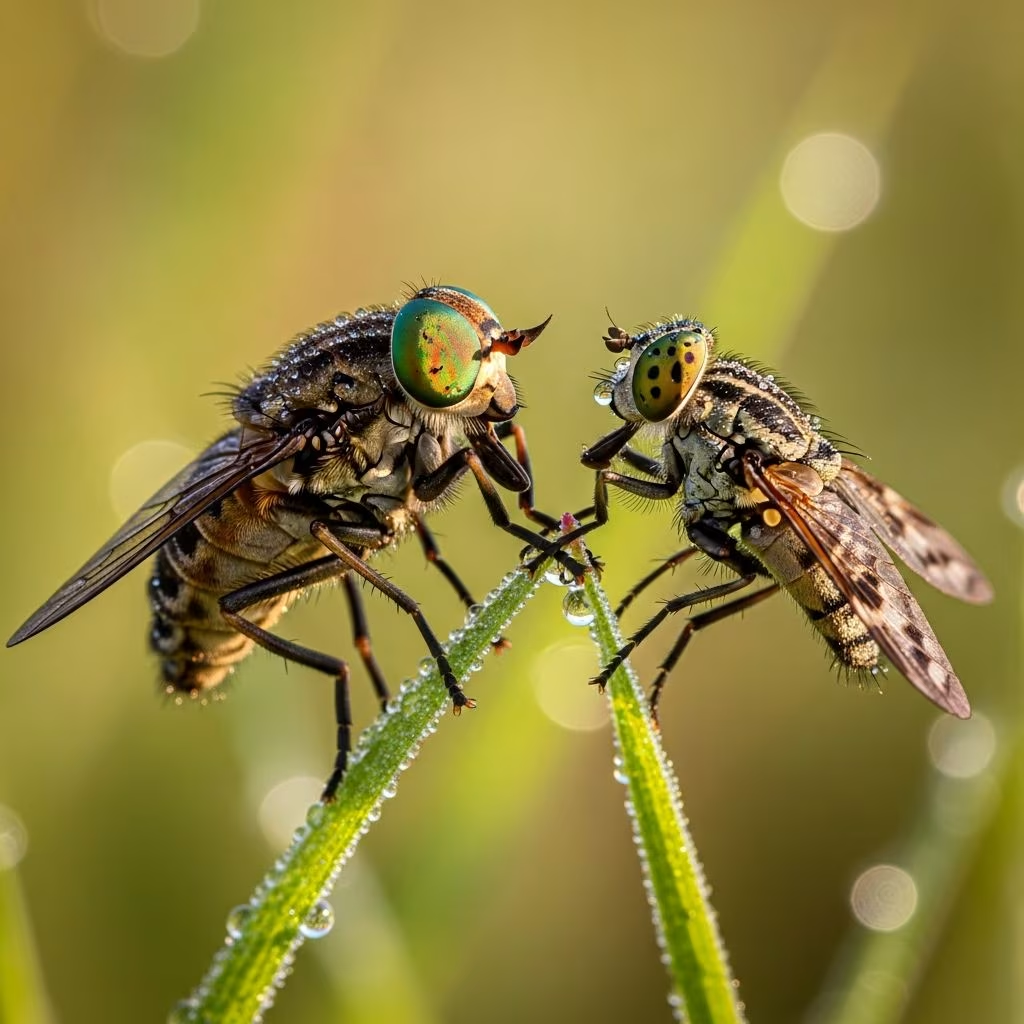
Large, robust insects known as horse flies (Tabanus spp.) and deer flies (Chrysops spp.) pose significant challenges to livestock, wildlife, and occasionally humans due to their aggressive blood-feeding habits. These diurnal pests inflict painful bites that disrupt grazing, reduce productivity, and transmit diseases, making effective management crucial for agricultural and recreational settings.
Distinct Physical Characteristics and Identification
Horse flies typically measure 0.75 to 1.25 inches in length, featuring clear or uniformly colored wings and strikingly vivid compound eyes often displaying iridescent hues like green or purple. In contrast, deer flies are smaller, around 0.5 to 0.75 inches, with characteristic dark bands traversing their wings and similarly colorful eyes set on slender antennae longer than their heads.
Their robust bodies, powerful wings enabling swift flight, and prominent downward-projecting mouthparts distinguish them from other flies. Females exhibit a gap between their large eyes when viewed from above, while males’ eyes nearly touch—a key sexual dimorphism. Bodies may show yellow-brown abdomens with black patches in deer flies or darker, solid coloring in horse flies.
| Feature | Horse Flies | Deer Flies |
|---|---|---|
| Size | 0.75-1.25 inches | 0.5-0.75 inches |
| Wings | Clear or solid color | Dark bands/patches |
| Eyes | Large, colorful, banded | Large, colorful, often spotted |
| Preferred Hosts | Large mammals (livestock) | Humans, moving hosts |
This table summarizes key differences aiding quick field identification.
Biology and Life Cycle Dynamics
These flies undergo complete metamorphosis: eggs, predatory aquatic larvae, non-feeding pupae, and adults. Females deposit clusters of 25 to 1,000 eggs near streams, ponds, or damp soils. Larvae, lasting 1-3 years, burrow in mud, preying on small invertebrates, fish, or even nipping waders’ toes with sharp mandibles.
Development spans 4-5 months or longer in cooler climates, with overwintering larvae. Pupation occurs in drier soil before adults emerge, active daylight hours. Only females bite for blood protein to develop eggs; males sip nectar.
- Eggs: Laid in moist, vegetated edges of water bodies.
- Larvae: Predatory, semi-aquatic, hibernate in mud.
- Pupae: In soil, 1-2 weeks.
- Adults: 2-4 weeks lifespan, peak activity June-July.
Aggressive Biting Mechanisms and Host Preferences
Females use blade-like mouthparts to slash skin, creating a blood pool lapped via spongy labella—causing intense pain, swelling (weals), and potential allergic reactions from anticoagulant saliva. Bites bleed profusely due to vascular damage.
Horse flies target large, stationary animals like cattle and horses, preferring abdomen undersides, legs, neck, and withers. Animals bunch, stop grazing, or stampede, risking injury. Deer flies harass moving hosts, including humans, aiming for head and shoulders with persistent circling.
Attractants include motion, dark colors, shine, warmth, and CO2. A few flies torment; swarms devastate. USDA estimates 20-30 horse flies feeding 6 hours extract ~20 teaspoons blood, equaling a quart over 10 days per animal.
Economic and Productivity Losses in Livestock
Impacts on dairy/beef cattle and horses are profound: reduced milk yield, weight gain interference, harnessed animals become unmanageable. Blood loss, stress, and wound infections compound issues. Swarms halt grazing, forcing bunching that exacerbates heat stress.
In severe infestations, productivity drops significantly; horses may self-injure fleeing. Humans face disrupted outdoor activities, with bites causing fevers or sores in sensitive individuals.
Health Risks: Diseases and Secondary Issues
Besides pain, these flies mechanically transmit pathogens via contaminated mouthparts: anthrax, tularemia, equine infectious anemia, and more in livestock. Saliva may induce hypersensitivity. Larvae rarely harm waders.
Human risks include bacterial infections from unclean bites; rare systemic reactions. Preventive vigilance essential near breeding sites.
Effective Prevention and Management Strategies
Control challenges stem from wide dispersal and repellent resistance (even DEET offers limited protection). Integrated approaches best.
Environmental and Cultural Controls
- Drain standing water, improve stream flow to disrupt breeding.
- Vegetation management: mow pastures, clear wooded edges.
- Provide shade, fans, or oil sprays on livestock for relief.
Chemical Repellents and Insecticides
Permethrin-based sprays on animals/clothing; pour-ons for cattle. Avoid human head applications. Traps using CO2, UV, or visual lures (blue-black spheres) capture thousands.
Biological and Trapping Innovations
Encourage natural predators like birds, dragonflies. Decoy traps mimic hosts effectively in pastures.
| Method | Target | Effectiveness |
|---|---|---|
| Mowing/Clearing | Breeding sites | High, reduces larvae |
| Pour-on Insecticides | Adults on livestock | Moderate, 1-2 weeks |
| CO2 Traps | Females | High in low populations |
| Fans/Shade | Repelling | Good physical barrier |
Seasonal Patterns and Regional Variations
Peak activity daytime, spring through fall, intensifying near water. Populations fluctuate yearly based on weather; wet springs boost numbers. North America hosts ~350 species, common in moist, rural areas.
FAQs on Horse and Deer Flies
What do horse fly bites look like?
Painful, red welts with prolonged bleeding; allergic responses cause larger swelling.
Do deer flies bite humans?
Yes, frequently targeting heads of moving people.
How to stop horse flies around livestock?
Combine traps, insecticides, and habitat modification for best results.
Are horse fly larvae dangerous?
They prey on small organisms but may nip human feet in shallows.
Can these flies transmit diseases to animals?
Yes, including anthrax and viral agents mechanically.
References
- Horse Flies and Deer Flies — University of Kentucky Entomology. 2023. https://entomology.mgcafe.uky.edu/ef511
- Horse Flies and Deer Flies – Integumentary System — Merck Veterinary Manual. 2023-10-17. https://www.merckvetmanual.com/integumentary-system/flies/horse-flies-and-deer-flies
- Deer Flies and Horse Flies — University of Wisconsin Extension Horticulture. 2024. https://hort.extension.wisc.edu/articles/deer-flies-and-horse-flies/
- Horse and Deer Flies — Purdue University Extension Entomology. 2023. https://extension.entm.purdue.edu/publichealth/insects/tabanid.html
- Horse and Deer Flies (Tabanids) — Missouri Department of Conservation. 2024. https://mdc.mo.gov/discover-nature/field-guide/horse-deer-flies-tabanids



