

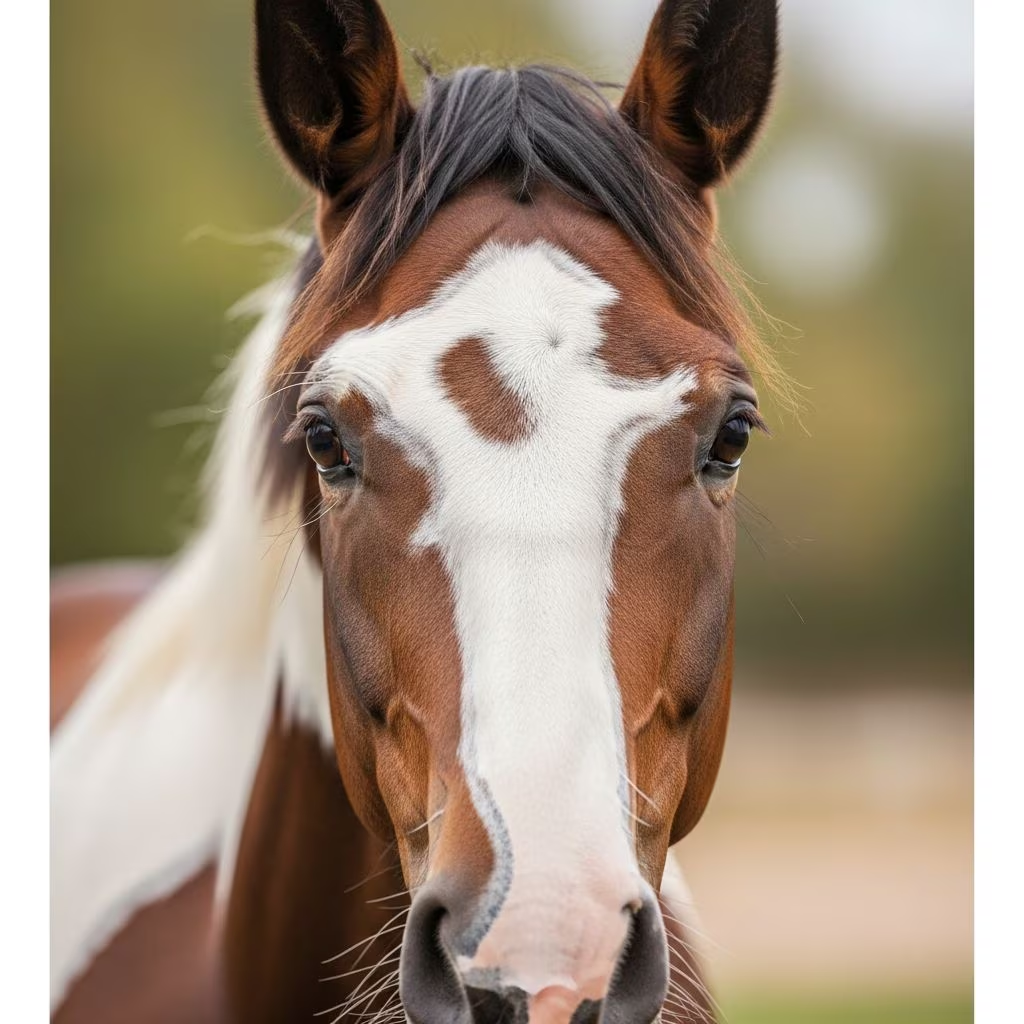
Understanding Horse Face Markings
Horse face markings are one of the most distinctive features that help identify individual horses and contribute to their unique appearance. These white markings on the face serve as natural identification markers, much like fingerprints in humans. Each horse develops its own combination of facial markings, making them easily recognizable to handlers, owners, and breed registries. Understanding the different types of face markings is essential for anyone involved in horse ownership, breeding, or equestrian sports.
Face markings are classified based on their shape, size, and location on the horse’s face. Some horses display a single marking, while others showcase multiple markings in various combinations. These markings are typically white or cream-colored against the horse’s base coat color, though the patterns and configurations can vary dramatically from one individual to another.
Common Types of Horse Face Markings
Blaze
A blaze is one of the most recognizable horse face markings. Imagine dipping a paintbrush in white paint and dragging it in a single stroke from a horse’s forehead to just above their upper lip—that creates a perfect blaze. This marking runs vertically down the center of the horse’s face and typically appears wider than a stripe but narrower than a bald face marking.
Blazes can appear in horses of nearly any breed, though some breed registries have specific restrictions. For example, Friesian horses with blazes cannot enter the breed’s main studbook, as the breed standard discourages such markings. The blaze is valued for its symmetry and clear definition, making it one of the most distinctive facial identifiers in equine populations.
Stripe
A stripe is a narrow, vertical white marking that extends down the midline of a horse’s face. Unlike a blaze, which starts between the eyes and extends to the upper lip area, a stripe typically appears only on the bridge of the nose. Stripes are narrower and more delicate in appearance compared to blazes.
Stripes are frequently seen alongside other markings. Many horses display combinations such as a star and stripe, or a star, stripe, and snip together. This combination of markings creates a distinctive facial pattern that aids in individual horse identification and adds visual interest to the horse’s appearance.
Irregular Blaze
An irregular blaze is exactly what the name suggests—a face marking similar to a standard blaze but with asymmetrical or jagged borders instead of smooth, uniform edges. These markings may be shaped like question marks or appear as though someone has erased chunks from the sides of the marking, creating an uneven appearance.
Irregular blazes appear in almost any horse breed but are more commonly seen in breeds that come in pinto colors, which naturally feature irregular white patterns. These unique markings give horses distinctive and memorable facial characteristics that stand out among their peers.
Interrupted Stripe
An interrupted stripe is a vertical marking on a horse’s face that is not continuous along the entire length. Instead of running unbroken from the forehead to the upper lip area, this marking appears broken or divided somewhere in the middle. This creates a distinctive pattern that makes the marking easily identifiable and memorable.
Interrupted stripes are less common than continuous stripes but still represent an important facial marking variation. They demonstrate the natural diversity in equine facial patterns and contribute to each horse’s unique appearance.
Bald Face
The bald face is the most dramatic of all horse face markings, covering most or all of the horse’s face with white. This extensive marking can extend above and around the eyes, creating a striking appearance. In some cases, the bald face marking may even cover the eyes themselves, giving the horse an unusually bold facial pattern.
Bald face markings are particularly common in Paint horses and pinto-colored breeds. However, some breed registries, including the Rocky Mountain Horse Association, will not register horses with bald face markings according to their current breed standards. This restriction reflects breeding preferences that favor more subtle facial markings in certain breeds.
Star
A star is any white spot appearing on a horse’s forehead between the eyes. Stars are typically either roughly circular or diamond-shaped, though they can occasionally appear in other shapes, such as hearts or irregular splotches. The size of a star can vary greatly, from tiny specks to large, prominent markings.
Stars are among the most common facial markings and are typically allowed by most breed registries and studbooks. While many breed associations discourage extensive white face markings, small stars are generally acceptable and do not prevent horses from being registered or shown in breed competitions.
Faint Star
A faint star is an indistinct grouping of white hairs in the center of a horse’s forehead. These minimal face markings consist of just a few white hairs without the bold, clearly defined appearance of a traditional star. Faint stars are particularly common in horse breeds where white markings are discouraged by breed standards.
Breeds such as Andalusians often display faint stars as an acceptable alternative to more prominent facial markings. These subtle markings allow for individual identification while maintaining the aesthetic preferences of breeds that traditionally feature solid facial coloring with minimal white.
Irregular Star
An irregular star is any white marking on a horse’s forehead that doesn’t form a distinct or recognizable shape. These markings are often crescent-shaped but may also appear as jagged splotches, short squiggly lines, or random configurations between the eyes. Irregular stars provide unique identifying characteristics for individual horses.
The irregular star demonstrates the natural variation in equine facial markings and reflects the genetic diversity within horse populations. No two irregular stars are exactly alike, making them valuable for individual horse identification and record-keeping.
Snip
A snip is a white mark located between a horse’s nostrils on the muzzle area. This marking frequently appears alongside stars and stripes, though many horses display no other white facial markings except a small snip. Snips can vary in size and may cover just the area between the nostrils or extend across a larger portion of the muzzle.
A snip positioned low on the muzzle may appear pink rather than white because the underlying pink skin shows through the horse’s soft peach fuzz hair. Horse owners should consider applying sunscreen to any white markings on their horse’s face where pink skin is visible, especially during outdoor turnout, to protect against sun damage and reduce the risk of skin cancer on these sensitive areas.
Lip Marking
A lip marking, also called a lip spot, is any splotch of white covering all or part of a horse’s lips. These markings range from small spots to extensive white coverage across the entire lip area. Lip markings are frequently associated with specific coat patterns, particularly sabino and tobiano patterns.
Lip markings are considered distinct facial identifiers and are often recorded in breed registration documents. They contribute to the overall facial pattern and help distinguish individual horses within a breed or herd.
Combinations of Face Markings
Many horses display combinations of face markings rather than a single, isolated marking. Common combinations include:
– Star and snip: A white marking on the forehead combined with a separate white marking between the nostrils- Star and stripe: A white marking on the forehead that continues downward in a narrow band- Blaze and snip: A wide vertical marking that transitions into a white marking on the muzzle- Star, stripe, and snip: A combination of all three major facial markings
These combinations create unique facial patterns that serve as individual identifiers. Each combination is recorded in breed registries and equine identification documents, helping owners and handlers distinguish between horses and maintain accurate breeding records.
Breed Standards and Face Markings
Different horse breeds have varying standards regarding acceptable face markings. Some breeds prefer minimal white markings and discourage extensive facial patterns, while others embrace and celebrate prominent markings. These breed standards reflect historical breeding preferences and the aesthetic ideals of each breed.
Friesian horses, known for their solid black coloring, typically do not permit blazes in their breed studbook. Similarly, Rocky Mountain Horses traditionally favor horses with minimal facial markings. Conversely, Paint horses and Appaloosa breeds often showcase extensive white facial markings as part of their breed characteristics and are prized for these distinctive patterns.
Caring for Horses with White Facial Markings
Horses with extensive white facial markings require special care considerations. The white areas, which may expose pink skin, are more susceptible to sun damage and skin conditions. Applying equine sunscreen to white facial markings during outdoor activities helps protect sensitive skin and reduces the risk of sun-related damage.
Regular grooming and monitoring of white facial areas can help prevent skin issues and maintain the health of the marked areas. Owners should inspect these markings regularly for any signs of irritation, infection, or unusual changes in appearance.
Face Markings and Horse Identification
Face markings serve as crucial identification tools in the equine world. Breed registries, competition organizations, and individual owners rely on detailed descriptions of facial markings to maintain accurate records and identify individual horses. Veterinary identification documents often include detailed notes about a horse’s face markings, along with photographs, to create a comprehensive identification profile.
This system of using face markings for identification is so reliable that it forms part of the official identification process for registered horses. When combined with other identifying features such as leg markings, coat color, and body characteristics, facial markings create a unique identifier that distinguishes one horse from all others.
Frequently Asked Questions About Horse Face Markings
Q: What is the difference between a stripe and a blaze?
A: A stripe is a narrow vertical white marking that typically appears only on the bridge of the nose, while a blaze is wider and extends from between the eyes down to the upper lip area.
Q: Can a horse have a bald face and still be registered?
A: This depends on the breed registry. Some registries, like the Rocky Mountain Horse Association, do not permit bald face markings. However, Paint horses and other breeds often accept or favor bald face markings.
Q: Are face markings permanent?
A: Yes, face markings are permanent and remain consistent throughout a horse’s life. This makes them valuable for identification purposes in breed registries and equine identification documents.
Q: Do all horse breeds have face markings?
A: Not all horses have face markings. Some horses are born with solid facial coloring and no white markings at all. Face markings depend on genetics and the individual horse’s inherited coat pattern.
Q: How should I protect white facial markings from sun damage?
A: Apply equine sunscreen specifically designed for horses to white facial areas, especially before outdoor turnout. Reapply according to product instructions and after any bathing or sweating.
Q: Can face markings change color over time?
A: While the basic marking pattern remains the same, the appearance of white markings can be affected by sun exposure and age. Protecting markings from UV damage helps maintain their clarity and color.
References
- Horse Markings: A Guide to Equine Identification and Beauty — Just Horse Riders. https://www.justhorseriders.co.uk/blogs/news/horse-markings-a-guide-to-equine-identification-and-beauty
- Horse Face Markings | Chewy — Chewy.com. https://www.chewy.com/education/horse/general/horse-face-markings
- Horse Face and Leg Markings — Horse Illustrated. https://www.horseillustrated.com/horse-resources-chart-equine-face-and-leg-markings/
- Horse Face Markings | GUIDE — Maya Delorez. https://www.mayadelorez.com/insights/guide-horse-face-markings
- Horse Markings: Your Cheat Sheet on What You Need to Know! — EquiGroomer. https://equigroomer.com/horse-markings-your-cheat-sheet-on-what-you-need-to-know/
- Hippology and Horse: Horse Colors & Markings — University of Tennessee. https://putnam.tennessee.edu/wp-content/uploads/sites/67/2020/02/Hippology-and-Horse-HorseColorsMarkings.pdf
- Intro to Face Markings — Breyer Horses. https://www.breyerhorses.com/blogs/horse-colors/intro-to-face-markings



