

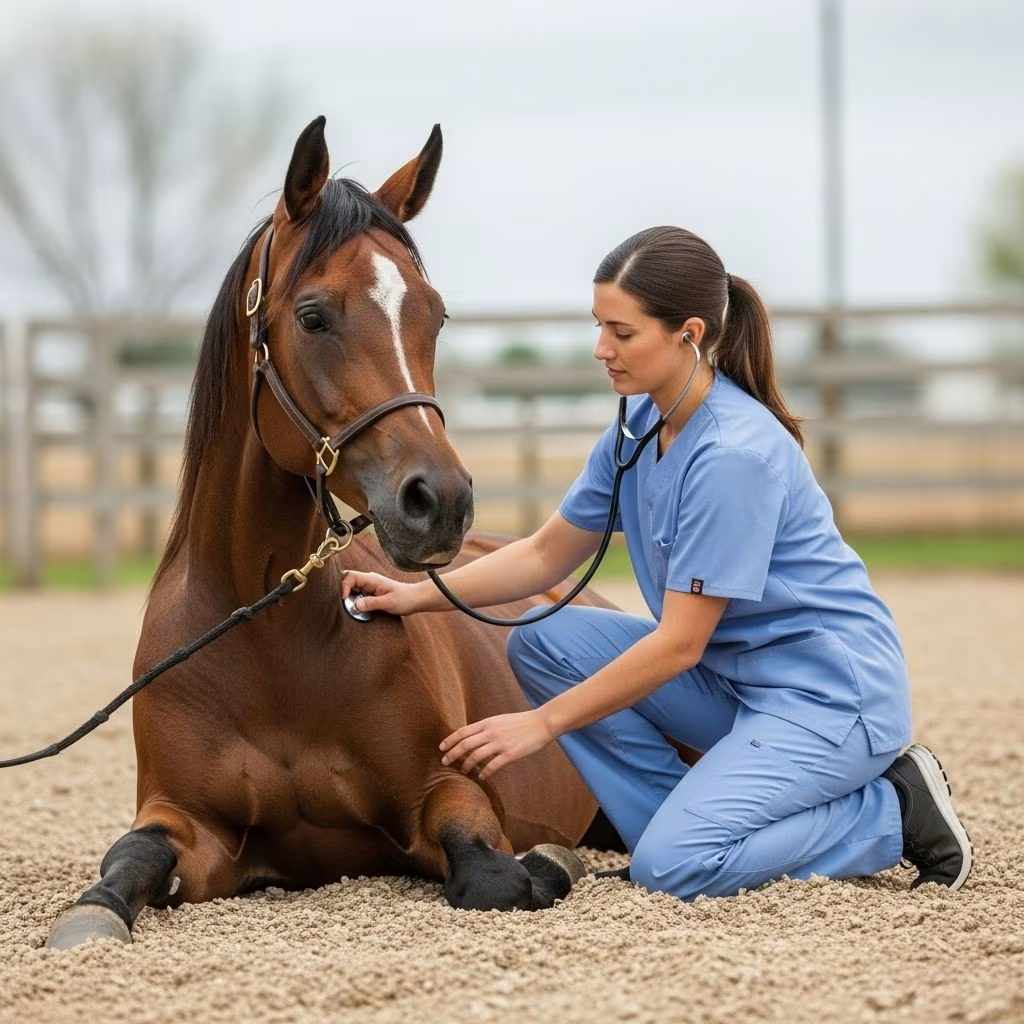
Horses face a range of sudden health crises that demand quick recognition and action from owners and caregivers. These incidents, from digestive blockages to traumatic injuries, can escalate rapidly if not addressed promptly. This guide details prevalent emergencies, their causes, symptoms, initial responses, and professional interventions to equip you with knowledge for effective management.
Understanding Esophageal Blockages in Horses
One frequent digestive emergency involves material lodging in the esophagus, often termed “choke.” This condition arises when feed or foreign objects fail to pass into the stomach, leading to immediate discomfort.
Common triggers encompass rapid eating habits, dental problems impairing chewing, recent medication effects, dry or poor-quality forage, sudden diet shifts, and fluid deficits. Larger breeds or those with anatomical predispositions may be more susceptible.
- Visible indicators: Excessive drooling, food-laced nasal discharge, repeated swallowing efforts, gagging sounds, and behaviors resembling colic such as pawing or rolling.
- Progression risks: Prolonged cases lead to fluid loss, esophageal damage, and secondary lung infections like pneumonia.
Upon suspicion, withhold food and water to avoid worsening. Gently restrain the horse and contact a veterinarian. Professionals use endoscopy for visualization and may employ lavage with warm fluids via nasogastric tubing to dislodge the blockage. Sedation aids handling, and follow-up care prevents recurrence through dietary adjustments and dental checks.
Rectal Injuries: A Severe Internal Threat
Rectal tears represent grave damage to the hindgut lining, frequently occurring during veterinary rectal exams, especially in fractious or large horses. Degrees of severity range from superficial tears (Grade I) with minimal contamination to full-thickness perforations (Grade IV) spilling abdominal contents into the peritoneal cavity.
Symptoms manifest as sudden tail straining, blood or feces from the rectum, colic-like pain, and shock signs including rapid pulse and pale gums. Immediate veterinary assessment via ultrasound or endoscopy determines tear grade.
| Tear Grade | Description | Treatment Approach |
|---|---|---|
| Grade I | Mucosal only | Conservative: stall rest, laxatives, antibiotics |
| Grade II | Submucosal | Medical management with monitoring |
| Grade III | All layers, no perforation | Surgical repair or diversion |
| Grade IV | Peritoneal contamination | Exploratory laparotomy, colostomy |
Prevention emphasizes gentle handling during exams and sedation. Outcomes improve with swift referral to equipped facilities, where survival rates vary by grade and response time.
Complications Following Castration Procedures
Castration, a routine surgery, carries risks of evisceration where intestines protrude through the inguinal canal. This peril heightens in mature stallions, draft breeds, and those with wide inguinal openings.
Event typically unfolds within hours post-procedure, presenting as swelling at the site, visible gut loops, and acute distress. Emergency surgery repositions organs, cleans the area, and closes the canal, often under general anesthesia.
- Preventive measures: Closed techniques reduce risk; monitor closely for 24-48 hours post-op.
- Immediate actions: Cover exposed tissues with sterile saline-soaked bandages; restrict movement; summon surgical expertise urgently.
Success hinges on rapid intervention, with complications like peritonitis possible if delayed.
Abdominal Pain: The Colic Crisis
Colic tops equine emergencies, encompassing diverse gut disorders from gas buildup to twists. Causes span impactions, parasites, dietary indiscretions, and stress.
Horses exhibit restlessness, flank-watching, lying down frequently, reduced feces, and sweating. Severity gauges urgency: mild pawing may resolve, but violent rolling signals surgery needs.
First aid includes walker exercise, withholding feed, and vet notification. Diagnostics involve auscultation, rectal exams, and ultrasounds. Treatments range from fluids and pain relief to exploratory surgery.
Traumatic Injuries: Wounds and Lacerations
External trauma like cuts, punctures, and fractures plagues active horses, often from fences, stalls, or terrain.
Punctures risk deep infections; lacerations bleed profusely. Clean wounds promptly with antiseptics, apply pressure for hemorrhage, and bandage limbs. Vet evaluation checks for tendon or joint involvement, necessitating imaging or flushing.
- Severe lameness: Sudden grade 3+ lameness demands radiographs to rule fractures or abscesses.
Respiratory and Allergic Distress
Breathing difficulties stem from choke complications, allergies, or infections like pleuropneumonia. Hives or anaphylaxis follows insect bites or vaccines, with swelling, urticaria, and potential airway compromise.
Administer epinephrine for anaphylaxis if trained; oxygen supports severe cases. Vets provide steroids and antihistamines.
Foaling and Neonatal Challenges
Dystocia, or difficult births, endangers mare and foal due to malposition or uterine issues. Watch for prolonged stage II labor (>30 min). Interventions include manipulation, C-sections.
Foals face meconium blocks, infections, or weakness; colostrum intake is vital.
Other Acute Conditions
- Laminitis: Hoof inflammation post-grain overload; ice boots, NSAIDs.
- Tying-up (Rhabdomyolysis): Muscle breakdown; rest, fluids.
- Eye Trauma: Ulcers, lacerations; protect, seek ophthalmology.
- Diarrhea/Shock: Profuse cases signal toxins; IV fluids essential.
First Aid Essentials for Horse Owners
Maintain a kit with bandages, antiseptics, thermometers. Know vital signs: heart 28-44 bpm, resp 8-16/min. Call vets for colic >30 min, bleeding wounds, recumbency, or dyspnea.
Prevention Strategies
Regular deworming, dental care, quality feed, secure fencing, and foaling cameras mitigate risks. Training reduces handling injuries.
Frequently Asked Questions (FAQs)
What are the first signs of choke in horses?
Drooling, nasal feed discharge, and swallowing attempts.
How soon after castration can evisceration occur?
Usually within 4 hours, up to 6 days.
Is mild colic always an emergency?
No, but monitor; escalate if worsening.
What to do for a deep puncture wound?
Clean, bandage, prevent tetanus; vet ASAP.
When is foaling an emergency?
Stage II over 20-30 minutes.
References
- Other Common Emergencies in Horses — Merck Veterinary Manual. 2023. https://www.merckvetmanual.com/emergency-medicine-and-critical-care/emergency-medicine-in-horses/other-common-emergencies-in-horses
- When to Call the Equine Vet — Penn State Extension. 2022-10-11. https://extension.psu.edu/when-to-call-the-equine-vet
- Common Equine Medical Emergencies and What to Do — Southwest Veterinary Clinic. 2023. https://swvetclinic.com/blog/common-equine-medical-emergencies-and-what-to-do
- Emergency — Purdue University Veterinary Hospital. 2024. https://vet.purdue.edu/hospital/equine/services/emergency.php
- Emergencies — Oakhurst Equine. 2023. https://oakhurstequine.com/emergencies
- Top 10 Equine Emergencies — Chicago Equine. 2013-11. https://chicagoequine.com/2013/11/top-10-equine-emergencies



