

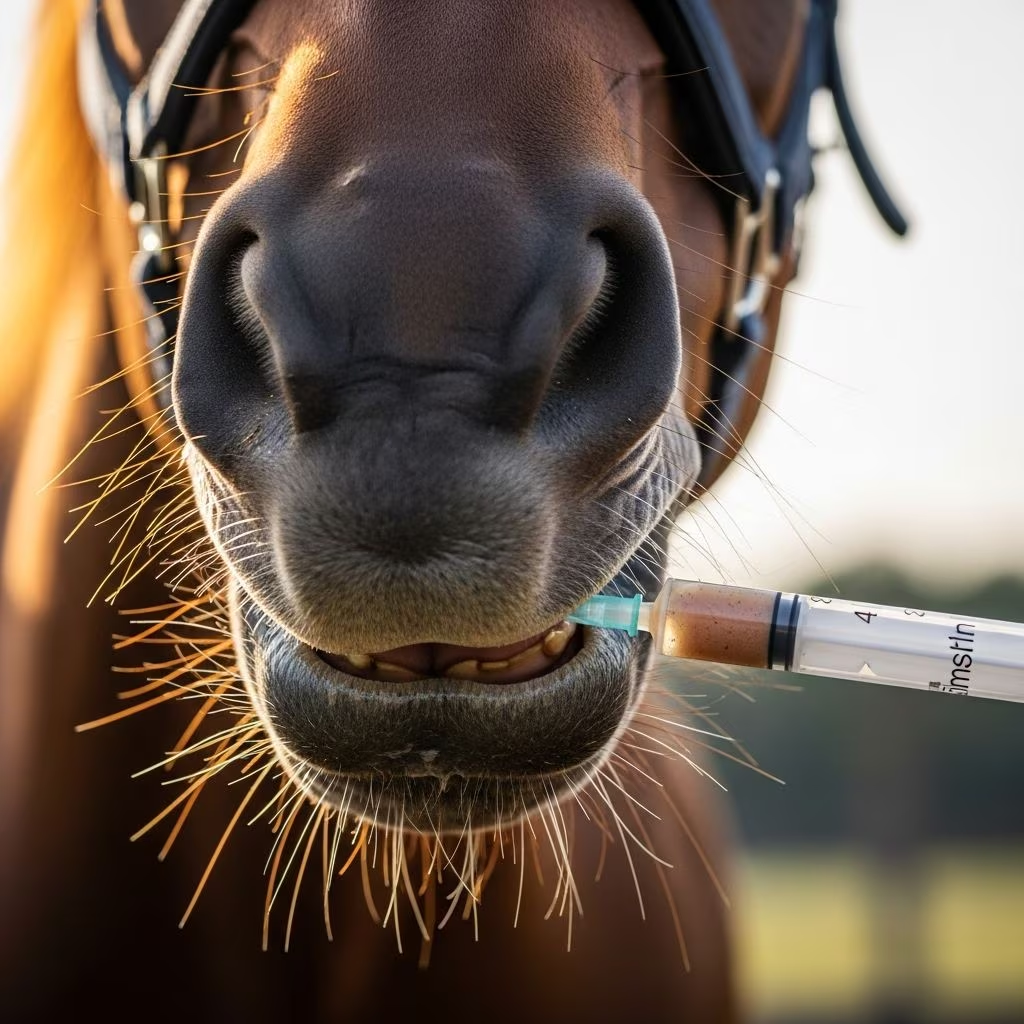
What Are Horse Dewormers and Why Do Horses Need Them?
Horse dewormers are essential medications designed to eliminate internal parasites that can significantly impact your horse’s health and performance. These parasites are a common threat to equine wellness, as horses naturally encounter parasitic worms through grazing and contact with contaminated environments. Without proper deworming protocols, parasitic infections can lead to weight loss, poor coat condition, digestive issues, anemia, and in severe cases, potentially life-threatening complications.
Parasitic infestations are virtually unavoidable for horses that spend time in pastures or have contact with other equines. Internal parasites consume nutrients meant for your horse, create inflammation in the digestive tract, and can cause colic or other serious health issues. Regular deworming is therefore not just a recommended practice but a fundamental component of responsible horse ownership and preventative health care.
How Do Horse Dewormers Work?
Horse dewormers contain specific active ingredients designed to break the parasite lifecycle inside the horse’s digestive system. These medications work by targeting parasites at various developmental stages and either killing or paralyzing them, allowing the horse to pass the parasites out through their manure. The mechanism is highly targeted, meaning each dewormer class affects parasites differently based on their chemical composition.
The active ingredients in horse dewormers function by disrupting the parasite’s nervous system, causing paralysis or death, or by interfering with their ability to absorb nutrients. This selective toxicity means that while the ingredients are lethal to parasites, they have been proven to be generally safe for horses when used as instructed. The key to effective deworming is understanding which parasites affect your horse and choosing a dewormer with the appropriate active ingredients to address them.
Types of Horse Dewormers
There are several main drug classes used in equine parasite control, each with distinct characteristics and target parasites. Understanding the differences between these classes helps you make informed decisions about your horse’s deworming protocol.
Benzimidazole Dewormers
Benzimidazoles, including fenbendazole and oxibendazole, are commonly used dewormers effective against large strongyles, small strongyles (though largely ineffective), ascarids, and pinworms. Common trade names include Panacur and Safe-Guard. These products have been used for decades and remain popular due to their effectiveness and affordability. Fenbendazole-based products like Panacur are frequently recommended for controlling bloodworm infestations and are available in various formulations including pastes and powders.
Pyrimidine Dewormers
Pyrimidines, primarily pyrantel pamoate, target large strongyles, ascarids, and pinworms. These dewormers can be given as a double dose to treat tapeworms, making them more versatile than their basic formulation suggests. Common brands include Strongid and Exodus. Pyrantel is available in both paste formulations for periodic use and as a daily feed additive, providing flexibility in deworming strategies.
Macrocyclic Lactone Dewormers
Macrocyclic lactones, including ivermectin and moxidectin, represent the broadest spectrum of deworming activity. Ivermectin-based products like Zimecterin control large strongyles, small strongyles, pinworms, ascarids (largely ineffective), bots, hairworms, and stomach worms. Moxidectin products such as Quest offer similar coverage with the added benefit of effectively targeting encysted small strongyle larvae. Ivermectin is considered the most broad-spectrum dewormer available and can even help control skin parasites such as lice in some cases.
Combination Dewormers
Modern deworming products often combine multiple active ingredients to provide comprehensive parasite control in a single dose. Products that combine ivermectin or moxidectin with praziquantel—a medication specifically targeting tapeworms—offer “all-in-one” solutions. Brand names include Zimecterin Gold, Equimax, and Quest Plus. These combination products are particularly valuable during fall deworming when tapeworm treatment is especially important.
Common Horse Dewormer Products
| Product Name | Active Ingredient | Primary Parasites Targeted | Typical Use Frequency |
|---|---|---|---|
| Panacur | Fenbendazole | Large strongyles, pinworms, roundworms, small strongyles | Seasonal or as recommended |
| Zimecterin | Ivermectin | Large/small strongyles, pinworms, bots, hairworms, stomach worms | At least once yearly |
| Quest | Moxidectin | Encysted small strongyles, bots, large strongyles, roundworms, pinworms | Every 3 months |
| Zimecterin Gold | Ivermectin + Praziquantel | 47 species of equine parasites including tapeworms | At least once yearly, especially fall |
| Equimax | Ivermectin + Praziquantel | Broad spectrum including tapeworms | Seasonal or as recommended |
What’s the Best Horse Dewormer?
The best horse dewormer depends on your horse’s unique needs, health history, and parasite burden. Rather than selecting a dewormer based solely on popularity or price, work closely with your veterinarian and utilize fecal testing to determine which type is most appropriate. A fecal egg count (FEC) test reveals the specific parasites present and their population levels, enabling targeted treatment strategies.
Factors to consider when choosing a dewormer include:
- Your horse’s previous deworming history and products used
- Fecal egg count results and parasite types identified
- Geographic location and seasonal parasite prevalence
- Your horse’s age and health status
- Known parasite resistance patterns in your region
- Your deworming philosophy (continuous vs. periodic)
Deworming Schedules and Strategies
Establishing an effective deworming schedule is crucial for maintaining your horse’s health while minimizing the development of drug-resistant parasites. Traditional deworming programs recommend treatment at regular intervals, though modern approaches increasingly emphasize strategic, evidence-based protocols tailored to individual horses.
Seasonal Deworming Recommendations
In the northern United States, specific seasons are optimal for targeting certain parasites. Spring and fall deworming with benzimidazoles or pyrimidines targets large strongyles and pinworms when they’re most active. Fall or early winter deworming with macrocyclic lactones and praziquantel combinations addresses bots and tapeworms before winter sets in. Late fall or early winter treatments with moxidectin-based products effectively eliminate encysted small strongyles that have developed during grazing season.
Continuous vs. Periodic Deworming
Horse owners can choose between continuous and periodic deworming strategies. Continuous deworming involves daily administration of lower doses, typically using pelletized products like Strongid C added to feed. This approach theoretically prevents parasite populations from establishing themselves. Periodic deworming uses higher doses administered at set intervals, typically every 60 to 90 days depending on the product and individual horse needs.
Understanding Parasite Resistance
Parasite resistance to dewormers is an emerging concern in equine health management. Some parasite populations have developed resistance to certain drug classes, reducing medication effectiveness over time. This resistance typically develops from overuse of the same dewormer class repeatedly. Strategic rotation among different drug classes, combined with regular fecal testing to monitor efficacy, helps slow resistance development and maintain effective parasite control.
Modern deworming protocols emphasize using fecal egg counts to determine treatment necessity rather than deworming on a fixed schedule. This targeted approach reduces unnecessary medication use and helps preserve drug efficacy for future generations of horses.
Important Considerations for Horse Owners
When implementing a deworming program, several factors ensure optimal results and safety:
- Always follow label instructions precisely regarding dosage and administration
- Consult your veterinarian before starting a new deworming protocol
- Keep accurate records of deworming dates and products used
- Conduct fecal egg count tests to monitor parasite populations and treatment effectiveness
- Practice pasture management by removing manure regularly to reduce parasite contamination
- Ensure all horses in a facility are dewormed together to prevent re-infection
- Check label warnings regarding use in certain horse classes (foals, pregnant mares, etc.)
Fecal Egg Count Testing
Fecal egg count testing is a diagnostic tool that measures the number of parasite eggs present in a horse’s manure. This test provides objective data about parasite burden and can assess treatment effectiveness by comparing egg counts before and after deworming. For example, a horse with a pre-deworming count of 435 eggs per gram might show only 25 eggs per gram post-treatment, representing a 94% reduction in parasites. Using fecal testing helps determine whether your current deworming strategy is working and whether adjustments are needed.
Environmental Management and Parasite Control
Deworming medications work best when combined with environmental management strategies. Removing manure from pastures and feeding areas dramatically reduces the number of parasite larvae available for ingestion by horses. Rotating pastures, maintaining adequate drainage, and minimizing pasture overcrowding all contribute to breaking the parasite lifecycle naturally. These complementary approaches enhance the effectiveness of deworming programs and reduce the frequency needed for chemical treatments.
Frequently Asked Questions About Horse Dewormers
Q: How often should I deworm my horse?
A: Deworming frequency depends on your horse’s age, health status, fecal egg count results, and your veterinarian’s recommendations. Modern protocols often recommend 2-4 times yearly for adult horses, with more frequent treatments for young horses and foals. Some operations use strategic deworming based on fecal testing rather than fixed schedules.
Q: Can I deworm my horse myself or do I need a veterinarian?
A: Most dewormers are available over-the-counter and can be administered by horse owners following label instructions. However, consulting with a veterinarian about your specific horse’s needs, fecal testing results, and appropriate deworming protocols is highly recommended for optimal parasite management.
Q: What side effects might my horse experience from deworming?
A: Dewormers are generally safe when used as directed. Some horses may experience mild gastrointestinal upset, but serious side effects are uncommon. Occasionally, horses with very high parasite burdens might show signs of colic as dead parasites are expelled, but this typically resolves quickly.
Q: Is ivermectin really the best dewormer available?
A: Ivermectin offers broad-spectrum coverage against many parasites and is highly effective. However, the “best” dewormer depends on your specific horse’s needs, local parasite populations, and resistance patterns. Your veterinarian can recommend the most appropriate option for your situation.
Q: Should I rotate between different dewormer types?
A: Many veterinarians recommend rotating among different drug classes to help prevent resistance development. Strategic rotation combined with fecal testing provides effective parasite control while preserving the long-term efficacy of available medications.
Q: When is the best time to deworm for tapeworms?
A: Fall deworming with products containing praziquantel is recommended to target tapeworms before winter. Products like Zimecterin Gold, Quest Plus, and Equimax are specifically formulated for this purpose and provide comprehensive parasite coverage during this critical treatment window.
Q: Can I use the same dewormer year-round?
A: Using the same dewormer continuously may contribute to parasite resistance. Most modern protocols recommend varying dewormer types throughout the year and basing treatment decisions on fecal testing results and seasonal parasite prevalence rather than maintaining a single product.
References
- Decoding Dewormers: Types, Resistance Concerns, and Use for Horses — Penn State University Extension. 2024. https://extension.psu.edu/decoding-dewormers-types-resistance-concerns-and-use-for-horses/
- What Are Horse Dewormers? And Why Do Horses Need Them? — Chewy Education. https://www.chewy.com/education/horse/health-and-wellness/what-are-horse-dewormers-and-why-do-horses-need-them
- Parasites and Strategic Deworming — Michigan State University College of Veterinary Medicine. https://cvm.msu.edu/hospital/services/equine-services/for-owners/general-conditions-and-seeing-your-vet/parasites-and-strategic-deworming
- Sorting Out Deworming Products — Kentucky Equine Research. https://ker.com/equinews/sorting-deworming-products/
- Horse Dewormers: Uses, Types, and Schedule — PetMD. https://www.petmd.com/horse/horse-dewormers



