

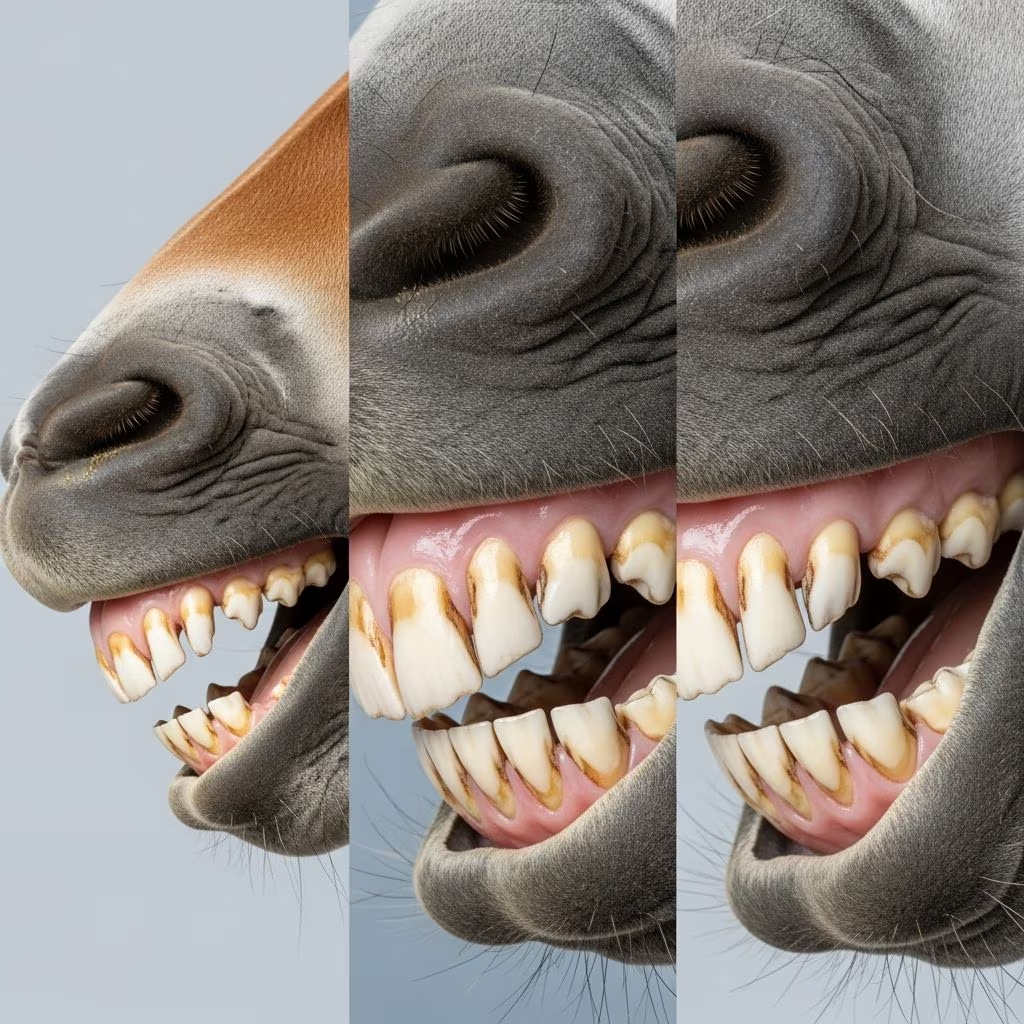
Horses undergo a remarkable dental transformation from birth to adulthood, replacing temporary teeth with a robust set of permanent ones adapted for grinding fibrous forage. Understanding this process helps owners monitor health, prevent issues, and ensure proper nutrition.
Overview of Equine Dentition
Adult horses typically possess 36 to 44 teeth, depending on sex and presence of certain vestigial types. Stallions and geldings often have up to 44, including canines, while mares usually have 36 to 40 without them. These include 12 incisors for cropping grass, 24 cheek teeth (premolars and molars) for grinding, and optional canines and wolf teeth.
Deciduous teeth number 24 at peak, erupting shortly after birth to support early grazing. Permanent teeth gradually replace them, with molars emerging without predecessors. This hypsodont structure—teeth that continuously grow—evolves to counter lifelong wear from abrasive diets.
Deciduous Teeth: The Starting Foundation
Foals are born with or quickly develop their first teeth, enabling nursing and early solid feed intake. Central incisors appear at birth or within the first week, intermediates follow at 4-6 weeks, and corner incisors by 6-9 months. The first three premolars in each jaw erupt around birth or within two weeks.
- Central incisors (I1): Birth to 1 week – Frontmost teeth for initial bite.
- Intermediate incisors (I2): 4-6 weeks – Fill gaps for broader cropping.
- Corner incisors (I3): 6-9 months – Complete the incisor arcade.
- Deciduous premolars (PM2-PM4): Birth to 2 weeks – Support early mastication.
These milk teeth are smaller, whiter, and have distinct necks compared to permanents, facilitating rapid growth alongside the jaw.
Transition to Permanent Teeth
The shift begins around 5-6 months with wolf teeth (first premolars), often in the upper jaw only. These non-grinding teeth may shed naturally or require removal if problematic. Permanent molars then erupt: first at 9-12 months, second at 2 years, and third at 2-4 years, expanding chewing capacity as the skull enlarges.
Incisor replacement starts at 2.5 years: centrals first, then intermediates at 3 years, corners at 4 years. Premolars follow suit, pushing out caps (shed deciduous crowns). Canines, prominent in males, emerge at 4-5 years.
| Tooth Type | Eruption Age (Months/Years) |
|---|---|
| 1st Molar | 9-12 months |
| Wolf Tooth (PM1) | 5-6 months |
| 2nd Molar | 24 months (2 years) |
| 1st Incisor Permanent | 2.5 years |
| 3rd Molar | 2-4 years |
| Canines | 4-5 years |
By age 5, the mouth is fully mature, though caps may linger in drafts or donkeys.
Key Milestones by Age
Foal and Weanling (0-1 Year)
Focus on deciduous setup. Monitor for timely eruptions to avoid malocclusions. First permanent molar arrival signals weaning readiness.
Yearling to Two-Year-Old (1-2 Years)
Wolf teeth and first molar dominate. Premolar caps begin shedding around 2.5 years; uneven loss risks hooks or ramps.
Juvenile Phase (2.5-5 Years)
Rapid changes: all incisors, premolars, and molars transition. Regular checks prevent imbalances from retained caps.
Maturity Onset (5+ Years)
Full dentition established. Continuous eruption begins, demanding annual floating to balance wear.
Special Tooth Types and Variations
Wolf Teeth: Vestigial PM1, upper jaw predominant. Erupt early, may interfere with bits; extraction common if retained.
Canines: Males feature these 5-7 cm tusks between incisors and premolars, fully lengthening post-eruption. Absent or small in mares.
Bars: Gaps behind canines for bit placement, tooth-free zones.
Gender differences: Males average more teeth due to canines; individual variation exists.
Health Implications and Monitoring
Improper shedding causes waves, steps, or hooks, impairing chew and leading to colic or weight loss. Young horses (2.5-5 years) are vulnerable during cap loss.
Owners should schedule dental exams biannually for juveniles, annually for adults. Vets use mirrors, radiographs for subsurface development.
- Watch for quidding (dropped wads), halitosis, or resistance to bridle.
- Palpate for sharp points or loose caps.
- Note asymmetry in bite.
Age Estimation via Teeth
Incisors reveal age: Permanent centrals at 2.5 years (larger, darker); cups (wear marks) deepen over time. By 7 years, hooks form on uppers; Galvayne’s groove appears on corners at 10-15+.
Accuracy wanes post-8 years due to wear variability, but useful for sales or records.
Care Tips for Optimal Dental Health
– Feed long-stem hay to promote even wear.
– Avoid hard feeds excessively.
– Select vets skilled in power tools for precise floating.
– Track eruption with photos or charts.
Frequently Asked Questions (FAQs)
How many teeth does an adult horse have?
Typically 36-40 for mares, 40-44 for stallions/geldings, including optional canines and wolves.
When do baby teeth fall out?
Starting at 2.5 years for incisors/premolars, completing by 5 years.
Do all horses get wolf teeth?
No, often upper only; some none. They may need removal.
Can dental issues affect performance?
Yes, pain from sharp edges causes head tossing, poor bit acceptance.
How often should young horses see a dentist?
Every 6 months during transition (2-5 years).
Conclusion
Mastering horse dental growth empowers proactive care, ensuring longevity and vitality. Regular vigilance turns potential problems into preventable maintenance.
References
- Dental Development in Young Horses — Virbac Australia. 2023. https://au.virbac.com/health-care/horse-dental/dental-development-young-horses
- Equine Dental Development — Colorado Horse Vet. 2024. https://www.coloradohorsevet.com/equineservices/equine-dentistry/equine-dental-development/
- Equine Dentistry Through the Ages — Horse and Rider. 2022-10-15. https://horseandrider.com/horse-health/equine-dentistry-through-the-ages/
- Horse Teeth: What You Need to Know — PetMD. 2023. https://www.petmd.com/horse/horse-teeth-what-you-need-know
- Dental Development of Horses — Merck Veterinary Manual. 2024. https://www.merckvetmanual.com/horse-owners/digestive-disorders-of-horses/dental-development-of-horses
- Minding the Great Tooth Transition in Horses — The Horse. 2021-05-20. https://thehorse.com/19806/minding-the-great-tooth-transition-in-horses/



