

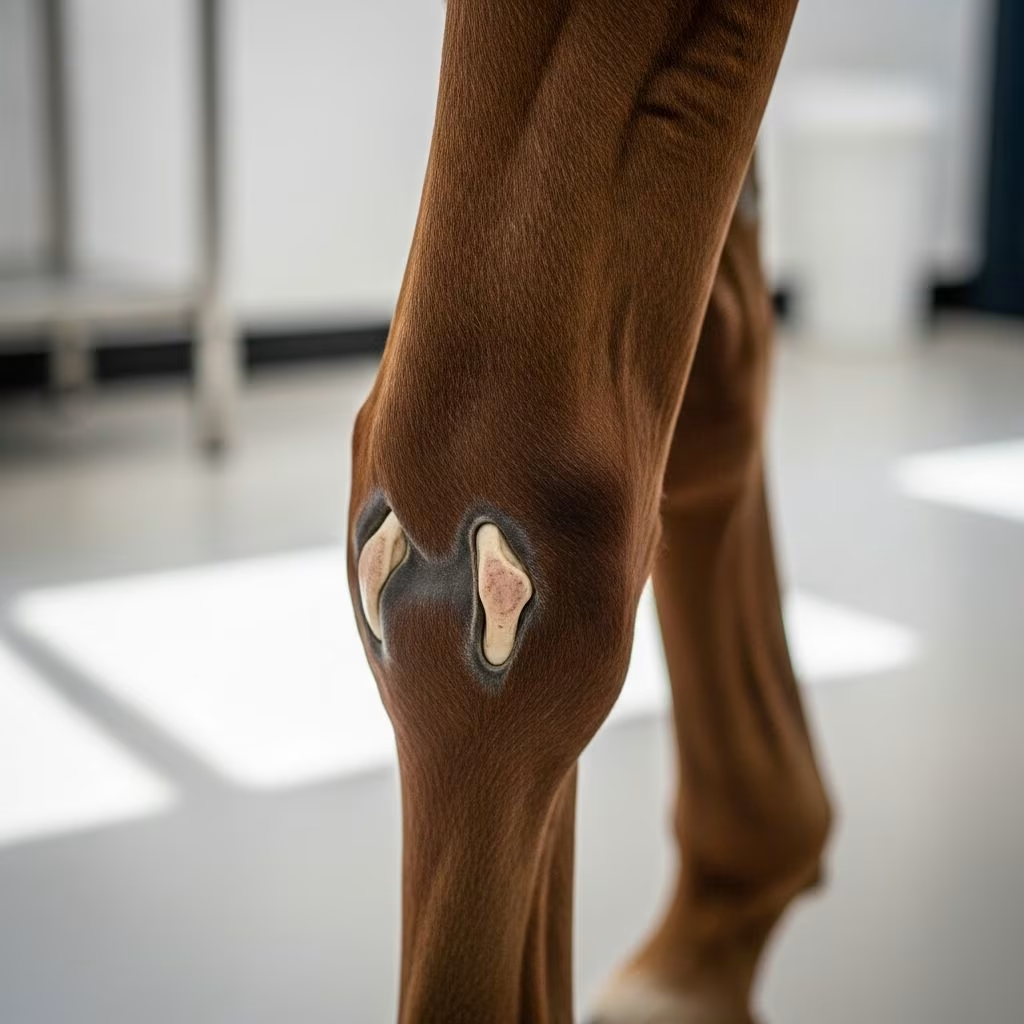
The carpus, often called the knee in horses, plays a pivotal role in forelimb mobility and weight-bearing. Comprising multiple bones and joints, it withstands immense forces during galloping and jumping, making it susceptible to injuries that cause lameness. Understanding its anatomy and disorders is crucial for veterinarians and horse owners to ensure timely intervention and recovery.
Understanding the Equine Carpus Anatomy
The equine carpus consists of three primary joints: the antebrachiocarpal (radiocarpal), middle carpal (intercarpal), and carpometacarpal joints. These facilitate flexion and extension, essential for the horse’s gait. The antebrachiocarpal joint links the radius to the proximal row of carpal bones, while the middle carpal joint connects the proximal and distal rows, and the carpometacarpal joint joins the distal carpal bones to the metacarpals.
There are eight carpal bones arranged in two rows: proximal (radial, intermediate, ulnar, and accessory) and distal (second, third, fourth, and sometimes first and fifth). Ligaments like interosseous and dorsal transverse ligaments stabilize these bones. The accessory carpal bone on the palmar side articulates with the radius and ulnar carpal bone. The middle carpal and carpometacarpal joints always communicate, allowing fluid and medication diffusion between them.
- Proximal row bones: Radial, intermediate, ulnar, accessory – handle primary motion.
- Distal row bones: Second, third, fourth – provide stability.
- Variable bones: First and fifth carpal bones appear in about 30% of horses, varying in size and position.
During flexion, the radial carpal bone shifts distally relative to others, supported by tendon sheaths and the palmar annular ligament enclosing the carpal canal. This complex setup demands precise radiographic interpretation, as training-induced modeling (e.g., dorsal bone enlargement in racehorses) can mimic pathology but is often benign.
Common Signs and Symptoms of Carpal Issues
Carpal disorders manifest as lameness localized by swelling, synovial effusion (joint distension), and pain on flexion. Horses may show reduced stride length or stumbling, especially at speed. Diagnostic analgesia via intra-articular injection confirms the site: antebrachiocarpal and middle carpal joints are easily accessed, with middle carpal blocking also affecting the communicating carpometacarpal joint.
Note the distal palmar outpouching of the carpometacarpal joint, which can lead to analgesia diffusing to the proximal suspensory ligament, causing diagnostic overlap. Soft tissue swelling often accompanies physeal widening or flaring in young horses due to metaphyseal remodeling.
| Symptom | Description | Associated Joint |
|---|---|---|
| Lameness | Grade 2-4/5, worsens with circles | All three |
| Effusion | Visible joint distension | Middle carpal common |
| Pain on flexion | Positive response to carpal flexion test | Antebrachiocarpal |
| Swelling | Palmar or dorsal soft tissue increase | Carpometacarpal |
Prevalent Disorders Affecting the Carpus
Fractures and Bone Injuries
Sagittal fractures of the third carpal bone are frequent in racehorses, often confused with normal intercarpal articulations on radiographs. Chip fractures from the radial carpal or third carpal bones arise from hyperextension during high-speed work. Incomplete fractures may remodel with rest, but complete ones require arthroscopic removal.
Degenerative Changes and Osteoarthritis
High-motion antebrachiocarpal and middle carpal joints develop osteoarthritis from repetitive stress, showing cartilage erosion and subchondral bone sclerosis. Low-motion carpometacarpal joints suffer less but can develop synovitis. Training history influences bone modeling; entheseophytes on dorsal surfaces are often insignificant.
Soft Tissue and Ligament Problems
Desmitis of intercarpal ligaments or flexor tendon sheath inflammation within the carpal canal leads to effusion and pain. Accessory carpal bone fractures are rare but debilitating.
Developmental Abnormalities
In foals, physeal dysplasias present as widened, irregular physes with metaphyseal flaring and soft tissue swelling. First and fifth carpal bone ossification centers may fuse late, appearing as separations on early radiographs.
Diagnostic Approaches for Carpal Conditions
Localization starts with clinical exam: observe gait, palpate for heat/effusion, and perform flexion tests. Radiography in multiple views (lateral, dorsopalmar, obliques) is essential, comparing to contralateral limb or bone specimens. Ultrasonography assesses soft tissues and tendon sheaths; MRI or CT for complex fractures.
Intra-articular analgesia is gold standard: 8-10 mL into middle carpal blocks two joints; antebrachiocarpal separately. Synovial fluid analysis rules out sepsis.
- Gait analysis and lameness grading.
- Flexion and extension tests.
- Diagnostic nerve blocks or joint injections.
- Imaging: radiographs first-line, advanced if needed.
Treatment Strategies for Carpal Disorders
Conservative management includes box rest (4-6 weeks), NSAIDs (phenylbutazone), and intra-articular corticosteroids or hyaluronan for synovitis. Supportive bandaging reduces effusion.
Surgical options: arthroscopy for fragment removal, lag screw fixation for complete fractures, or pancarpal arthrodesis for severe OA. Post-op rehab involves controlled exercise and monitoring.
Prevention emphasizes balanced training, footing management, and regular farriery to avoid uneven loading.
Prognosis and Long-Term Management
Prognosis varies: simple chips have 70-90% return to work; slab fractures poorer (50%). Early detection improves outcomes. Racehorses with third carpal slab fractures often retire if untreated surgically.
Owners should monitor for recurrence, using periodic lameness exams and radiographs. Nutritional support with omega-3s and glucosamine aids joint health.
Frequently Asked Questions (FAQs)
What causes most carpal injuries in horses?
Hyperextension during galloping or jumping, common in racehorses and jumpers.
How do I differentiate carpal lameness from fetlock issues?
Carpal pain worsens with flexion; use intra-articular blocks for confirmation.
Can carpal fractures heal without surgery?
Small chips may, with rest; larger ones need removal.
Is the horse carpus the same as a human knee?
No, it’s analogous but structurally different, with multiple bones vs. one joint.
How long is recovery from carpal surgery?
3-6 months, with gradual return to exercise.
References
- Equine Carpus Anatomy — Slideshare. 2014. https://www.slideshare.net/slideshow/carpal-anatomy/42896775
- The Equine Carpus — Veterian Key. N/A. https://veteriankey.com/the-equine-carpus/
- Overview of Disorders of the Carpus in Horses — MSD Veterinary Manual. 2023. https://www.msdvetmanual.com/musculoskeletal-system/disorders-of-the-carpus-in-horses/overview-of-disorders-of-the-carpus-in-horses
- Carpal Joint Problems — University of Minnesota Open Library (.edu). N/A. https://open.lib.umn.edu/largeanimalsurgery/chapter/carpal-joint-problems/
- Equine Joint Anatomy & Common Conditions — Mad Barn. 2023. https://madbarn.com/horse-joint-anatomy/
- Anatomy of the Carpus — YouTube (Tweedie & Associates Equine Veterinary Services). 2010. https://www.youtube.com/watch?v=RtLj135xRg0
- Equine Forelimb Carpus Example 1 — University of Illinois College of Veterinary Medicine (.edu). N/A. https://vetmed.illinois.edu/imaging_anatomy/equine/forelimb/carpus/ex01/carpus01-eq.html



