

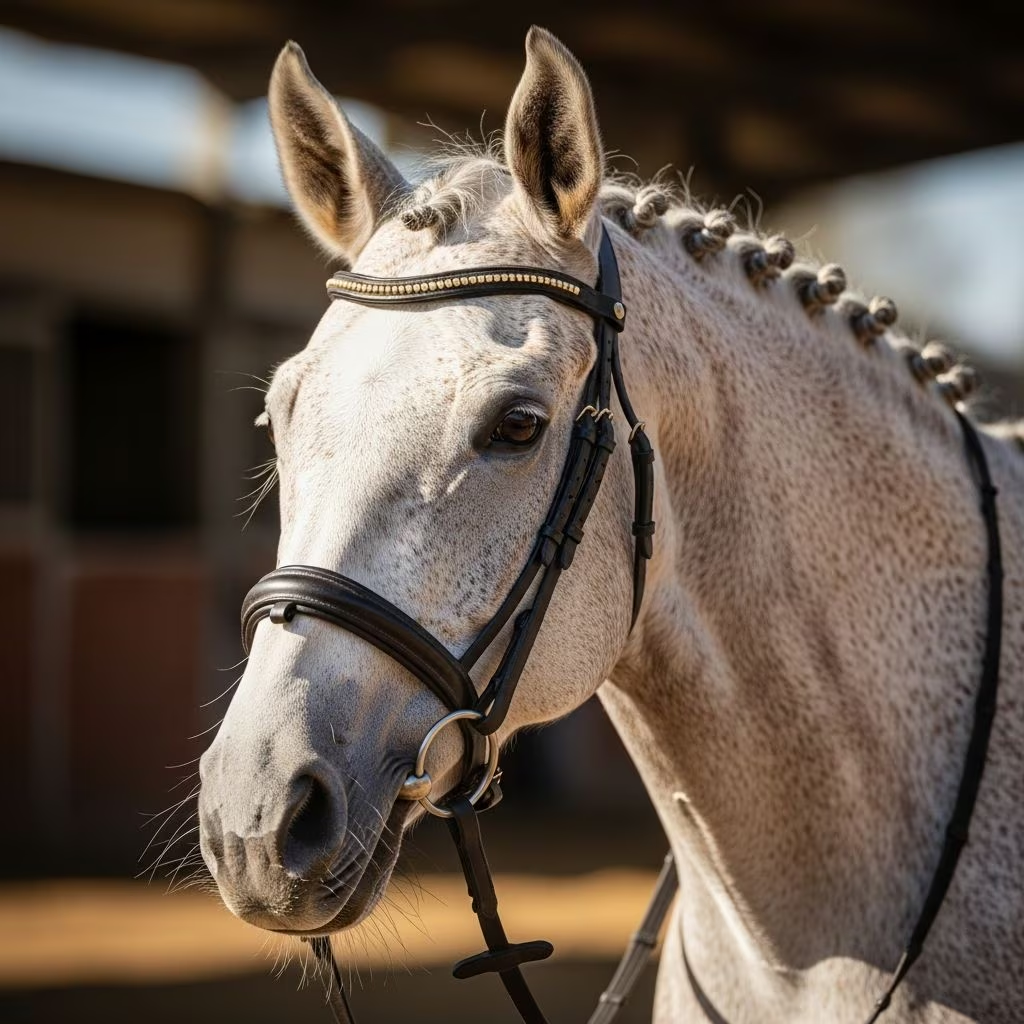
Horses require dedicated care to thrive, including proper nutrition, safe housing, regular veterinary attention, hoof maintenance, exercise, grooming, and protection from extreme weather. This guide synthesizes best practices from authoritative sources to help owners ensure their horses’ health and welfare.
Nutrition
The foundation of **horse health** begins with a balanced diet centered on forage. Horses are non-ruminant herbivores designed to consume roughage like hay or pasture continuously throughout the day. An average adult horse needs 1-2% of its body weight in roughage daily, roughly 20 pounds for a 1,000-pound horse, plus at least 8 gallons of clean, unfrozen water.
Good-quality hay free of dust and mold forms the bulk of the diet for most pleasure horses; grain is unnecessary unless energy demands exceed forage provision. When supplementing with grain, feed small amounts frequently—typically twice daily—to mimic natural grazing and prevent digestive issues like colic.
- Provide constant access to clean water and adjust intake based on work level, weather, and lactation.
- Introduce feed changes gradually over 7-10 days to avoid colic or founder.
- Maintain a consistent feeding schedule; horses’ internal clocks make routine disruptions stressful.
For working horses, balance rations with veterinary guidance, prioritizing fiber for gut health. Overfeeding grain leads to inefficient digestion and health risks.
Vaccinations and Deworming
Regular **vaccinations** and deworming are critical for preventing diseases. Core vaccines recommended by the American Association of Equine Practitioners (AAEP) include protection against tetanus, Eastern/Western equine encephalomyelitis, West Nile virus, and rabies, administered annually.
Deworming schedules vary by age, travel, and location; fecal egg counts guide targeted treatments to combat resistance. Consult a veterinarian for a tailored protocol, as needs differ based on risk factors.
Annual veterinary exams facilitate these alongside dental checks, ensuring comprehensive preventive care.
Housing, Rest and Exercise
Horses are social herd animals that benefit from roaming and interaction. Ideal housing allows daily turnout in a secure paddock or pasture with sturdy, non-barbed fencing to prevent injuries.
Provide a three-sided shelter for protection from weather, cleaned daily of manure to maintain hygiene. Stalled horses need socialization opportunities and enrichment to avoid stress; no horse should be confined 24/7 without veterinary advice.
**Exercise** is essential: supplement riding with free movement space. Pastures promote mental and physical health, reducing stall rest risks like obesity or boredom.
Extreme Weather Precautions
Horses tolerate cold better than heat if dry and sheltered. In **hot, humid conditions**, ensure ample shade, fresh water, electrolytes, and limit strenuous exercise to prevent heat stress.
During extreme cold, provide windproof shelter and consider blankets for clipped or thin-coated horses. Avoid wet conditions; moisture exacerbates chill and hoof issues.
Hoof Care
Hooves grow continuously, requiring professional **farrier** visits every 6-8 weeks for trimming, balancing, and shoeing if needed. Frequency varies by horse use, terrain, and hoof quality.
Daily owner checks for cracks, abscesses, or thrush, plus cleaning with a hoof pick, support farrier work. Proper hoof form ensures soundness and prevents lameness.
Grooming
Regular **grooming** maintains skin health, distributes oils, and builds horse-human bonds. A basic kit includes hoof pick, curry comb, soft and stiff brushes, mane/tail comb, shampoo, conditioner, sweat scraper, and fly spray.
- Curry in circular motions to loosen dirt, follow with stiff brush for mud, soft brush for shine.
- Pick hooves before/after work; apply conditioner to prevent cracks.
- Use fly masks, sheets, or boots in insect season for comfort.
Groom daily, especially before saddling to detect injuries early.
Other Important Supplies
Essential equipment ensures smooth care routines:
| Category | Items | Purpose |
|---|---|---|
| Basics | Halter, lead rope (breakaway style), wheelbarrow, muck fork, shovel, water buckets/tubs, scrub brush | Safety handling, manure management, clean hydration |
| Feed Storage | Tight-lidded bins or freezers off ground | Prevent spoilage, pests, moisture |
| Protection | Fly gear, blankets | Insect/ weather defense |
Maintain spares at barns or vehicles for convenience.
Frequently Asked Questions
What should a horse’s basic diet consist of?
Primarily grass, good-quality hay, and constant clean water; grain only if needed for extra energy.
How often does a horse need farrier care?
Every 6-8 weeks for trimming/shoeing, adjusted per individual needs.
What core vaccines do horses require?
Tetanus, EEE/WEE, West Nile, rabies annually per AAEP guidelines.
Can horses live outside year-round?
Yes, with access to safe shelter, but provide blankets in extreme cold and shade in heat.
How much exercise do horses need?
Daily turnout plus riding or work; avoid full stall confinement.
What grooming tools are essential?
Hoof pick, curry comb, brushes, comb, fly protection.
References
- How to Care for a Horse | Humane World for Animals — Humane Society International. 2023. https://www.humaneworld.org/en/resources/horse-care-guidelines
- Horse Care | ASPCA — ASPCA. Accessed 2026. https://www.aspca.org/pet-care/horse-care
- Preparing for Your New Horse | ASPCA — ASPCA. 2023. https://www.aspca.org/news/preparing-your-new-horse
- Routine Care to Keep Your Right Horse Right as Rain | ASPCA — ASPCA. 2023. https://www.aspca.org/news/routine-care-keep-your-right-horse-right-rain
- A Guide to Proper Hoof Function & Form — ASPCA Pet Insurance. Accessed 2026. https://vet.aspcapetinsurance.com/ce/proper-hoof-function-and-form/



