

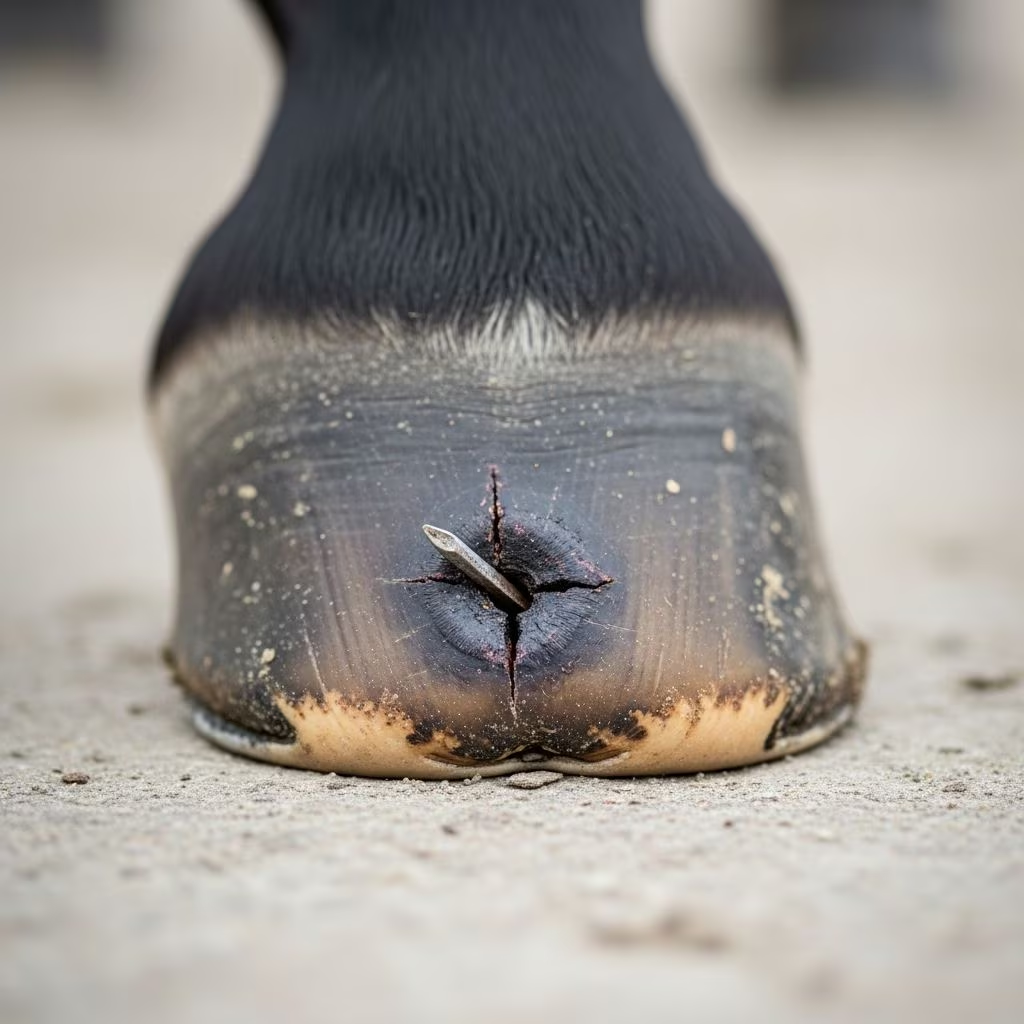
Hoof puncture injuries represent one of the most frequent yet potentially devastating traumas in equine practice, often resulting from nails, screws, or sharp debris penetrating the sensitive sole. These wounds can lead to rapid bacterial invasion due to the hoof’s limited blood supply, potentially causing abscesses, bone infections, or synovial structure contamination if not addressed swiftly.
Common Causes and Risk Factors
Horses encounter puncture risks in various environments, particularly in paddocks littered with construction waste, urban debris, or poorly maintained arenas. Nails from discarded pallets, wire fragments, or even glass shards commonly embed into the hoof during movement. Certain management practices heighten vulnerability: turnout on gravelly or industrialized ground, inadequate shoeing that leaves soles exposed, or working on hard surfaces without protective padding.
- Environmental hazards: Construction sites, farms with scrap metal, or trails with hidden sharp objects.
- Activity-related: Trail riding, jumping over rough terrain, or stabling near workshops.
- Horse-specific: Thin-soled breeds like Thoroughbreds or horses with overgrown hooves that alter weight distribution.
Statistics from veterinary reports indicate these injuries account for a significant portion of lameness cases, with forelimbs affected more often due to weight-bearing dynamics.
Recognizing the Signs of a Hoof Puncture
Owners often discover punctures when a horse suddenly becomes lame after stepping on an object, but subtle signs can precede overt lameness. Acute pain manifests as reluctance to bear weight, heat in the hoof, or bounding digital pulses. The entry point appears as a small, dark hole in the sole, sometimes with embedded material visible. Swelling above the hoof or discharge of pus signals advancing infection.
| Symptom | Early Stage | Advanced Stage |
|---|---|---|
| Lameness | Mild, intermittent | Severe, non-weight bearing |
| Hoof Temperature | Slightly warm | Hot, throbbing |
| Discharge | None | Pus or foul odor |
| Digital Pulse | Bounding | Very strong, painful |
Diagnostic tools like hoof testers pinpoint tenderness, while radiographs reveal foreign bodies, gas pockets indicating abscesses, or bone changes like osteitis.
Immediate First Aid Protocols
Upon suspicion of a puncture, resist the urge to remove the object yourself, as this can drive debris deeper or disrupt clotting. Secure the horse in a stable, clean the visible area gently with water, and apply a temporary protective wrap using clean gauze and vet wrap to minimize contamination. Administer tetanus antitoxin immediately if vaccination status is outdated, as Clostridium tetani thrives in anaerobic hoof environments.
- Isolate the horse from hazards.
- Avoid pulling embedded items.
- Bandage loosely for protection.
- Contact a veterinarian urgently.
These steps buy critical time, preventing secondary contamination while awaiting professional care.
Professional Diagnostic Approaches
Veterinarians employ a systematic evaluation starting with a thorough history and lameness exam. Hoof radiography in multiple views detects penetration depth, bone involvement, or synovial communication via contrast studies. Ultrasonography assesses soft tissues like the deep digital flexor tendon (DDFT), and exploratory probes determine tract extent. For suspected joint or bursa involvement, intrasynovial anesthesia or fluid analysis confirms sepsis.
Key imaging findings include lucencies in bone suggesting sequestra or gas shadows from anaerobic bacteria. Advanced cases may require MRI for detailed soft tissue mapping.
Treatment Strategies for Superficial Wounds
Most punctures remain superficial, penetrating only the sole without deeper compromise. Treatment focuses on establishing drainage, controlling infection, and promoting healing. Initial debridement enlarges the entry under standing sedation, paring away 1-2 cm of sole around the site to expose the tract. Copious lavage with sterile saline or dilute antiseptics flushes debris.
- Epsom salt soaks: Daily for 20-30 minutes to draw out infection.
- Poulticing: Ichthammol or sugardine packs soften sole and encourage abscess release.
- Bandaging: Antiseptic-impregnated gauze under a protective pad.
Systemic broad-spectrum antibiotics like penicillin or trimethoprim-sulfamethoxazole pair with phenylbutazone for pain and inflammation. Protective shoeing, such as hospital plates, shields the defect while allowing topical access.
Advanced Interventions for Deep Penetrations
When wounds breach the corium, bone, or synovial structures like the navicular bursa (NB), podotrochlear bursa, or distal interphalangeal joint, aggressive surgery becomes essential. A tourniquet at the fetlock controls bleeding, enabling precise debridement. Curettage removes necrotic bone, and regional antibiotic perfusion delivers high concentrations directly to the site.
For NB sepsis, options include street-nail procedures—extensive sole resection for direct access—or endoscopic lavage through arthroscopy. The latter offers 81-90% success rates for athletic return, involving joint flushing and primary closure. Bone grafts fill dead space in severe defects, accelerating regeneration.
Hindlimb cases generally fare better than forelimb due to biomechanics, but DDFT involvement worsens outlook.
Post-Treatment Management and Monitoring
Recovery demands meticulous aftercare. Daily bandage changes, continued soaks, and serial radiographs track progress. Horses benefit from stall rest on clean bedding, with gradual hand-walking after 7-10 days. Anti-inflammatories taper as lameness resolves, typically within 2-4 weeks for superficial cases.
Complications like laminitis from prolonged toxemia require vigilant monitoring of hoof temperatures and pulses. Long-term, farrier adjustments prevent recurrence, incorporating pads or rims for sole support.
Prognosis Factors and Outcomes
Success hinges on depth, timeliness, and structures involved. Superficial wounds resolve in 24-48 hours with conservative care, boasting excellent prognoses. Deep infections treated within 4 days yield good results, but delays elevate risks of chronic osteomyelitis or euthanasia.
Horses with synovial sepsis achieve 80%+ athletic return via endoscopy, outperforming open surgery. Early aggressive intervention trumps conservative delays.
Prevention Tactics for Horse Owners
Proactive measures drastically reduce incidence. Regular arena and pasture inspections remove debris, while turnout boots or rim shoes protect thin soles. Maintain tetanus boosters annually and trim hooves to even weight distribution. Educate staff on hazard recognition and enforce no-go zones near workshops.
- Daily visual checks of turnout areas.
- Protective footwear for high-risk activities.
- Consistent vaccination schedules.
- Farrier collaboration for sole thickness.
Frequently Asked Questions (FAQs)
Should I remove a nail from my horse’s hoof immediately?
No, leave it in place to avoid pushing bacteria deeper; seek veterinary help promptly.
How long does recovery take from a hoof puncture?
Superficial cases heal in 1-2 weeks; deep wounds may require 2-6 months with surgery.
Can puncture wounds cause laminitis?
Yes, untreated infections release toxins that trigger laminitis, emphasizing rapid treatment.
What antibiotics are used for equine hoof punctures?
Broad-spectrum options like penicillin, gentamicin, or regional perfusions tailored by culture.
Is surgery always needed for hoof punctures?
No, only for deep or synovial-involving cases; most respond to conservative care.
References
- Puncture Wounds of the Foot in Horses — Merck Veterinary Manual. 2023. https://www.merckvetmanual.com/musculoskeletal-system/disorders-of-the-foot-in-horses/puncture-wounds-of-the-foot-in-horses
- Puncture Wounds in Horses — PetVet Care Centers. 2023-03-15. https://www.petvetcarecenters.com/site/blog/2023/03/15/puncture-wounds-horses
- An In-Depth Look at Puncture Wounds to the Foot — EquiPodiatry. N/A. https://www.equipodiatry.com/news/32
- Puncture Wounds to the Hoof in Horses — Vetster. N/A. https://vetster.com/en/conditions/horse/puncture-wounds-to-the-hoof
- Horse Hoof Puncture Wounds — The Horse. N/A. https://thehorse.com/1107856/horse-hoof-puncture-wounds/
- Treating Puncture Wounds — NAFric. N/A. https://www.nanric.com/post/treating-puncture-wounds



